
1. Introduction to AI in Creative Processes
Understanding Artificial Intelligence’s Role in Creative Brainstorming & Digital Prototyping
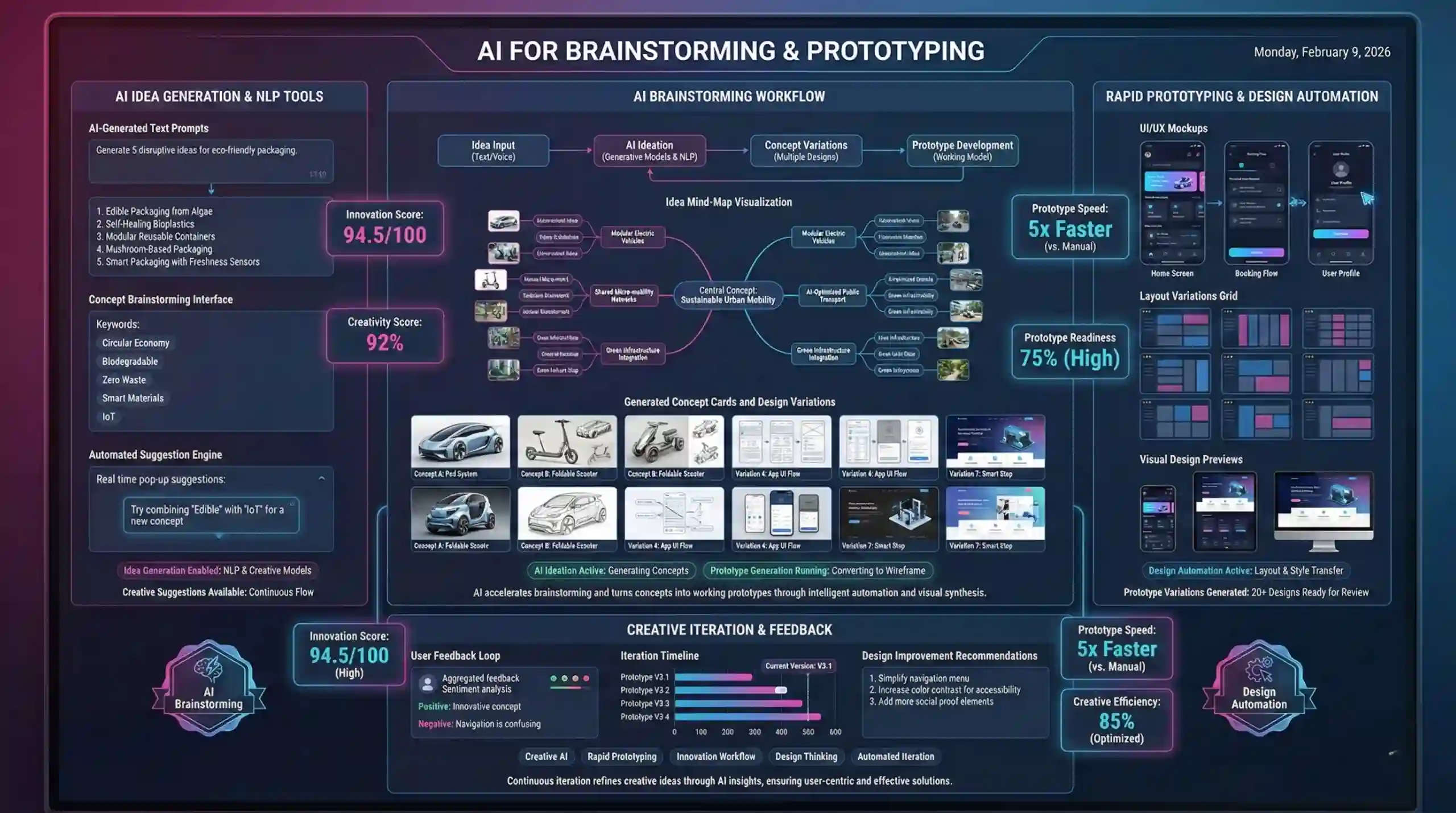
Artificial Intelligence (AI) plays a transformative role in creative workflows by augmenting human ingenuity with computational intelligence. In brainstorming, AI facilitates rapid generation of diverse ideas, expanding the creative horizon beyond traditional cognitive limits through models such as natural language processing (NLP) and generative algorithms. For digital prototyping, AI automates complex design tasks—optimizing layouts, generating visuals, or simulating user interactions—thus accelerating the development cycle.
Example: AI-powered content generation tools like ChatGPT assist marketing teams to brainstorm campaign slogans; generative adversarial networks (GANs) produce realistic product images for prototypes.
Benefits of Integrating AI-Driven Ideation & Rapid Prototyping for Innovation
Integrating AI into creative processes offers multiple advantages: increased productivity by automating repetitive tasks, diversification of ideas through machine-generated suggestions, and shortened iteration cycles. This synergy fosters rapid innovation, enabling teams to test concepts swiftly and adapt designs based on AI insights, leading to more compelling, user-centric solutions.
Outcome example: A startup uses AI-fueled prototyping to rapidly create and test multiple UI variations, reducing time-to-market by 30%.
2. Foundations of AI Technologies for Creative Applications
Machine Learning (ML) Fundamentals for Creative AI and Design Automation
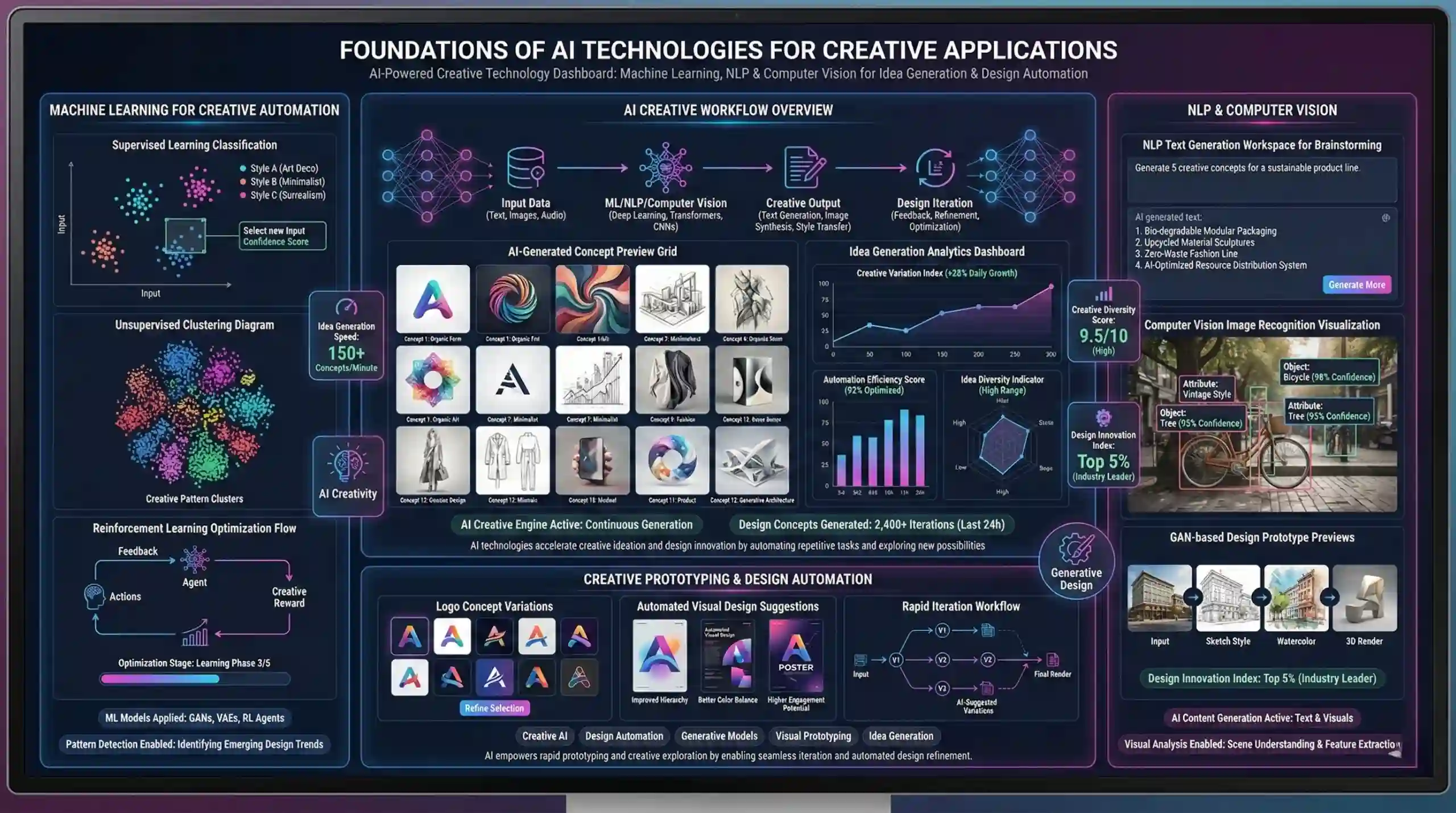
Machine Learning (ML) involves algorithms that enable computers to learn from data. Supervised learning uses labeled datasets to predict outcomes—applicable in automating tasks like image classification in visual design. Unsupervised learning detects patterns or clusters within data, useful in organizing similar ideas during brainstorming. Reinforcement learning trains agents through trial-and-error, enabling autonomous systems to optimize creative decision-making.
Example: Using supervised ML for classifying user interface styles or unsupervised clustering to group similar ideas from brainstorming sessions.
Natural Language Processing (NLP) for AI-Generated Content & Idea Generation
NLP allows machines to understand, interpret, and generate human language. In creative workflows, NLP models like transformers (e.g., GPT series) generate textual content, facilitate automated brainstorming, or refine ideas through structured prompts. These models can produce fresh messaging, story ideas, or design-related descriptions, enhancing creative diversity.
Example: An AI model generates alternative product slogans based on initial input, improving branding options.
Computer Vision for Visual Prototyping & Design Automation
Computer vision involves algorithms that interpret visual data—images, videos, or graphics. Techniques such as image recognition and object detection automate identification of components in visual prototypes. Generative models like GANs create new images or modify existing visuals, enabling designers to rapidly develop and iterate visual prototypes.
Outcome: Generating varied logo designs using GANs to inspire creative concepts.
3. AI Tools for Brainstorming & Creative Ideation
Popular AI-Powered Brainstorming Tools: ChatGPT, Jasper AI & More
Conversational AI tools like ChatGPT facilitate ideation through natural language dialogue, helping users explore ideas, troubleshoot design challenges, or co-create content. Content generators like Jasper AI can produce blog posts, marketing content, or creative narratives, serving as virtual brainstorming partners.
Practise Activity: Use ChatGPT to generate 10 different app names for a fitness application.
Leveraging Generative AI Models for Concept Expansion & Idea Refinement
Generative AI models such as GPT-based Transformers and Generative Adversarial Networks (GANs) enable concept expansion by creating variations of initial ideas, thus fueling creative exploration. These models can augment human input, producing novel concepts and refining existing ones with minimal manual effort.
Example: Using a GAN trained on fashion images to generate new clothing design prototypes.
AI-Assisted Mind Mapping & Idea Clustering for Creative Thinking Enhancement
AI algorithms can automatically generate mind maps by identifying related ideas or cluster similar concepts using clustering algorithms like K-Means. This process helps organize thoughts systematically, uncover hidden relations, and foster comprehensive brainstorming.
Practice: Applying k-means clustering on idea vectors to identify thematic groups in design concepts.
4. AI in Rapid Prototyping & Digital Design Automation
AI-Driven Rapid Prototyping Tools: Figma Plugins, Adobe Sensei, DALL·E & More
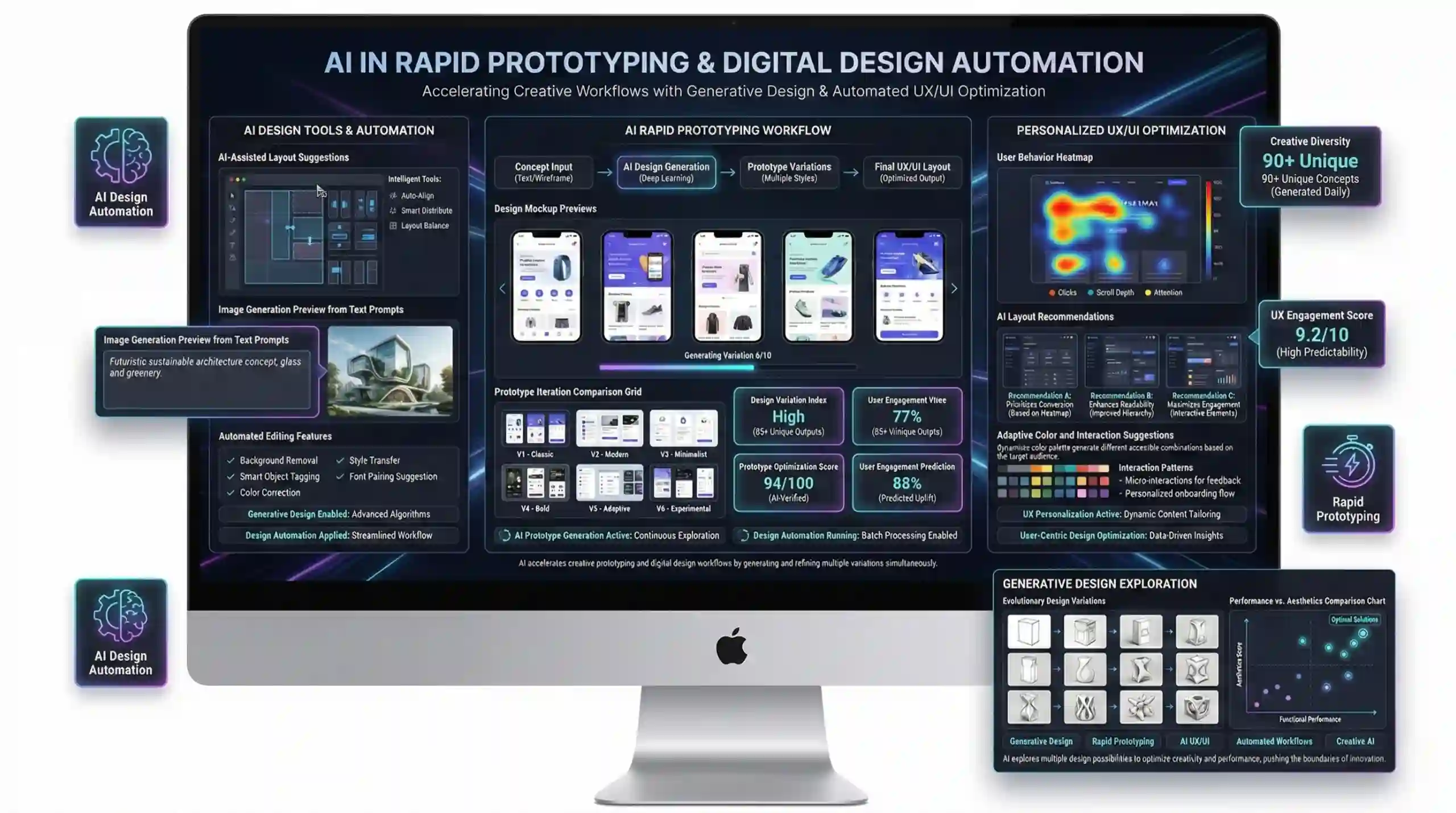
Design platforms increasingly integrate AI capabilities—for instance, Figma plugins powered by AI suggest design variations; Adobe Sensei automates tasks like image tagging and background removal; DALL·E generates high-quality images from textual prompts, accelerating visual content creation.
Example: Designer uses DALL·E to generate multiple background options for a digital product prototype.
Generative Design Using AI Algorithms for Creative Prototype Development
Generative design algorithms leverage AI to explore numerous design options based on constraints like material, size, or functionality. These algorithms, often employing evolutionary strategies or GANs, optimize prototypes for performance, aesthetics, or sustainability.
Outcome: Using generative design in architecture to produce innovative building layouts that meet environmental standards.
Personalized UX/UI Prototyping with AI for User-Centric Digital Experiences
AI tailors prototypes according to user data, enabling personalized user experience (UX) or UI design. By analyzing user behavior, AI can suggest layout adaptations, color schemes, or interactive elements that better engage specific user segments.
Outcome: AI-driven customization leads to higher user retention during the prototyping phase.
5. Data Collection & Model Training for Creative AI Innovations
Curating High-Quality Data Sets for AI-Powered Brainstorming & Design
Effective AI models depend on diverse, relevant, and high-quality data. For creative tasks, datasets include annotated images, design repositories, textual data, or user feedback, ensuring models learn rich representations of creative domains.
Example: Assembling a dataset of logo designs with metadata to train a generative logo creation model.
Data Augmentation Techniques for Diverse AI Prototyping & Idea Generation
Data augmentation enhances datasets by applying transformations—such as rotations, color shifts, or synthetic data generation—thus increasing diversity and robustness of AI models working on creative content.
Example: Using image augmentation to expand a dataset of sketches for training a visual style transfer model.
Transfer Learning Strategies for Custom AI Model Fine-Tuning in Creative Domains
Transfer learning involves adapting pre-trained models to specific creative tasks with minimal additional data. This approach accelerates development and improves performance in niche applications like custom art style transfer or domain-specific content generation.
Example: Fine-tuning a GPT-3 model on a specialized domain of architecture descriptions for accurate design suggestions.
6. Workflow Integration & Automation in Creative AI Projects
Embedding AI Tools in Agile Creative Development & Iterative Design
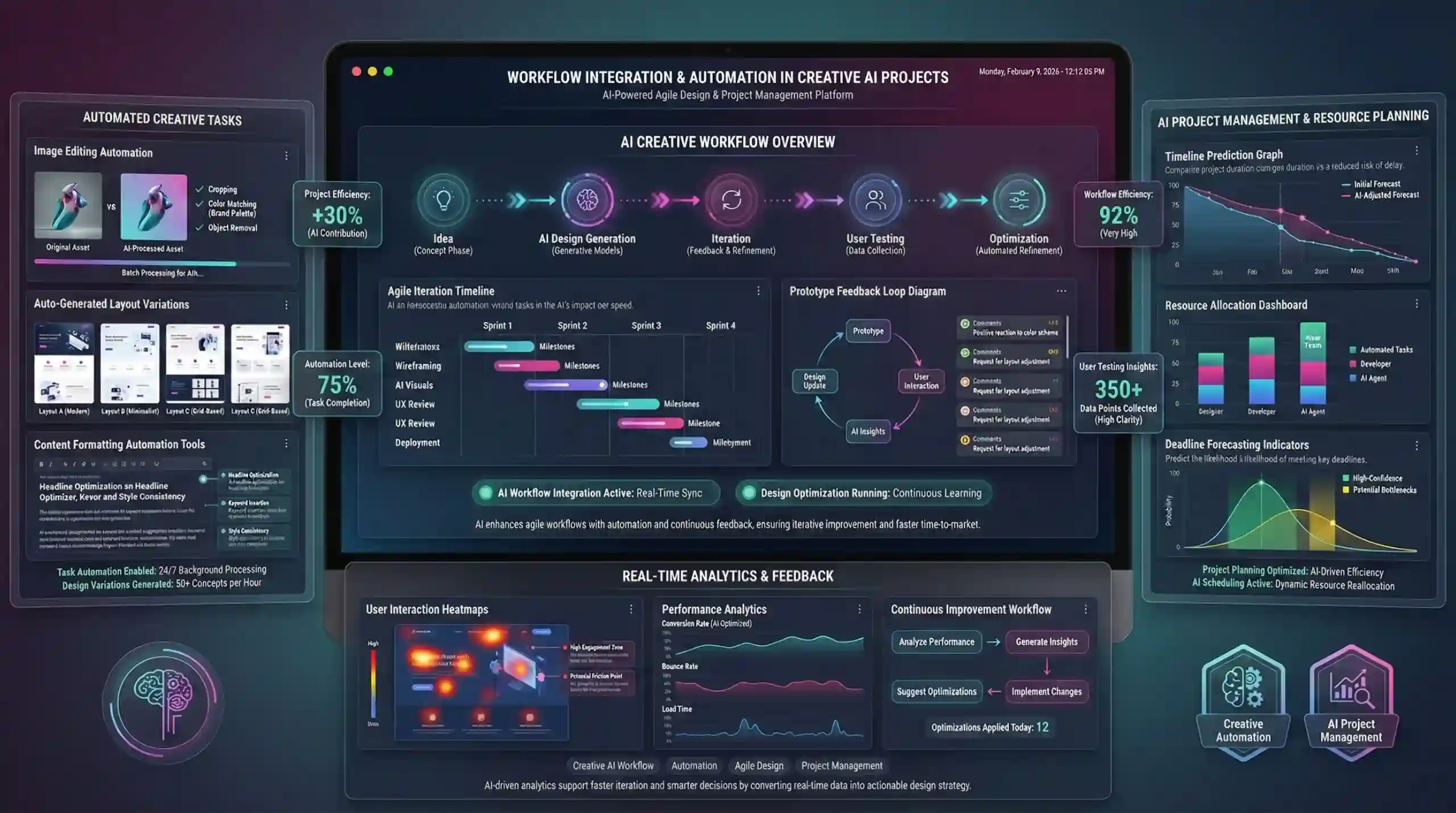
AI tools integrate into iterative design workflows, allowing rapid prototyping and continuous refinement. Agile methodologies benefit from AI-driven feedback loops, enabling teams to adapt quickly based on model outputs or user testing results.
Practical: Using AI-powered analytics to gather real-time user interaction data during prototype testing.
Automating Routine Creative & Design Tasks with AI Workflow Automation
AI automates repetitive tasks like image cropping, color matching, or content formatting, freeing human creators for higher-level strategic design thinking.
Example: Using AI to auto-generate multiple UI layout versions, facilitating quick comparison and selection.
AI-Driven Project Management & Resource Planning for Creative Teams
AI assists in project scheduling, resource allocation, and deadline predictions, helping creative teams optimize their workflows and meet project milestones efficiently.
Outcome: AI forecasts project timelines based on historical data, reducing delays.
7. Ethical Considerations & Emerging Trends in Creative AI
AI Ethics for Creative Applications: Addressing Bias, Originality & Intellectual Property
Ethical deployment of AI in creative domains includes ensuring fairness, avoiding bias in generated content, and clearly defining intellectual property rights of AI-created works. Transparency in AI processes builds trust with stakeholders.
Practise: Implementing bias detection algorithms before publishing AI-generated art.
Emerging AI Innovations Shaping Future Brainstorming & Prototyping
Future trends involve multimodal models combining text, images, and sound for richer creativity; explainable AI systems providing transparent decision-making; and collaborative AI platforms enhancing human-AI synergy in innovation.
Example: Multi-sensor AI systems collaboratively generating immersive virtual environments.
AI for Collaborative Creativity & Remote Team Innovation
AI fosters remote collaboration by enabling seamless idea exchange, real-time feedback, and joint design sessions, thus overcoming geographical barriers and promoting inclusive creativity.
Outcome: Distributed teams co-create prototypes in real-time, facilitated by AI-assisted platforms.
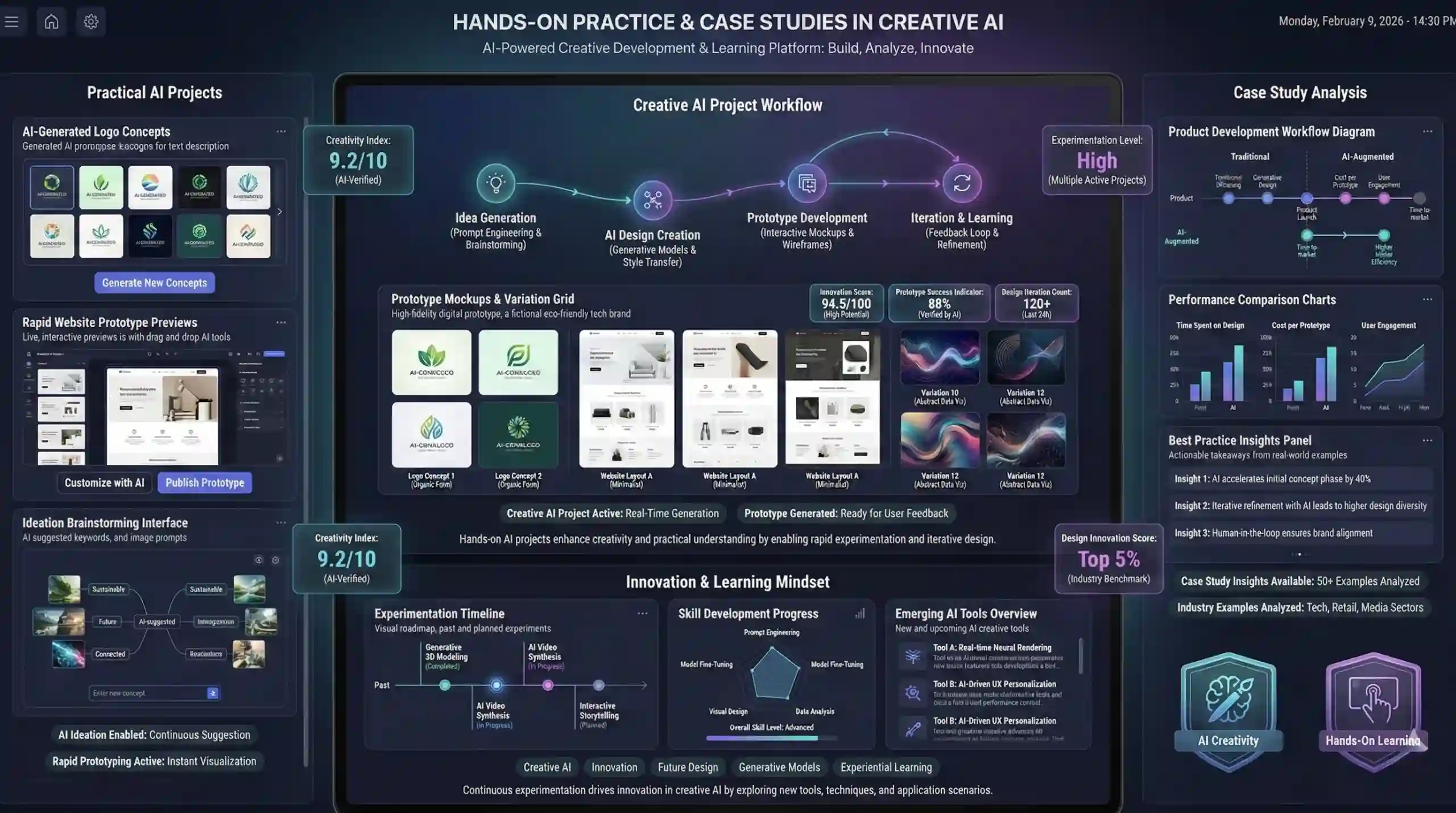
8. Hands-On Practice & Case Studies in Creative AI
Practical Projects Utilizing AI for Ideation & Rapid Prototyping
Engaging in tangible projects—such as designing AI-generated logos or developing prototype websites—is essential for applying theories and understanding practical implications.
Analyzing Successful AI-Powered Product Development Case Studies
Examining industry examples such as AI-driven fashion design platforms or automated UI prototyping tools highlights real-world impact and best practices.
Fostering Innovation through AI-Enabled Creativity & Future-Oriented Mindset
Cultivating an innovative mindset involves continuous learning about emerging AI capabilities and experimenting with new tools to redefine creative boundaries.
Resources for Further Learning
- Coursera: AI For Everyone – Introductory course on AI fundamentals.
- edX: Artificial Intelligence (Columbia University) – In-depth AI concepts.
- OpenAI: GPT Models – Documentation and usage guides for NLP models.
- Fast.ai: Practical Deep Learning for Coders – Hands-on AI training.
More Courses
- Social Media Marketing course with Gen AI
- Advance Digital Marketing & SEO course with Gen AI
- Advanced Certificate in Digital Design & Marketing course with Gen AI
- Meta & Google Ads course with Gen AI