
1. Introduction to AI in Digital Content Creation
Overview of Artificial Intelligence in Digital Storytelling and Multimedia Content
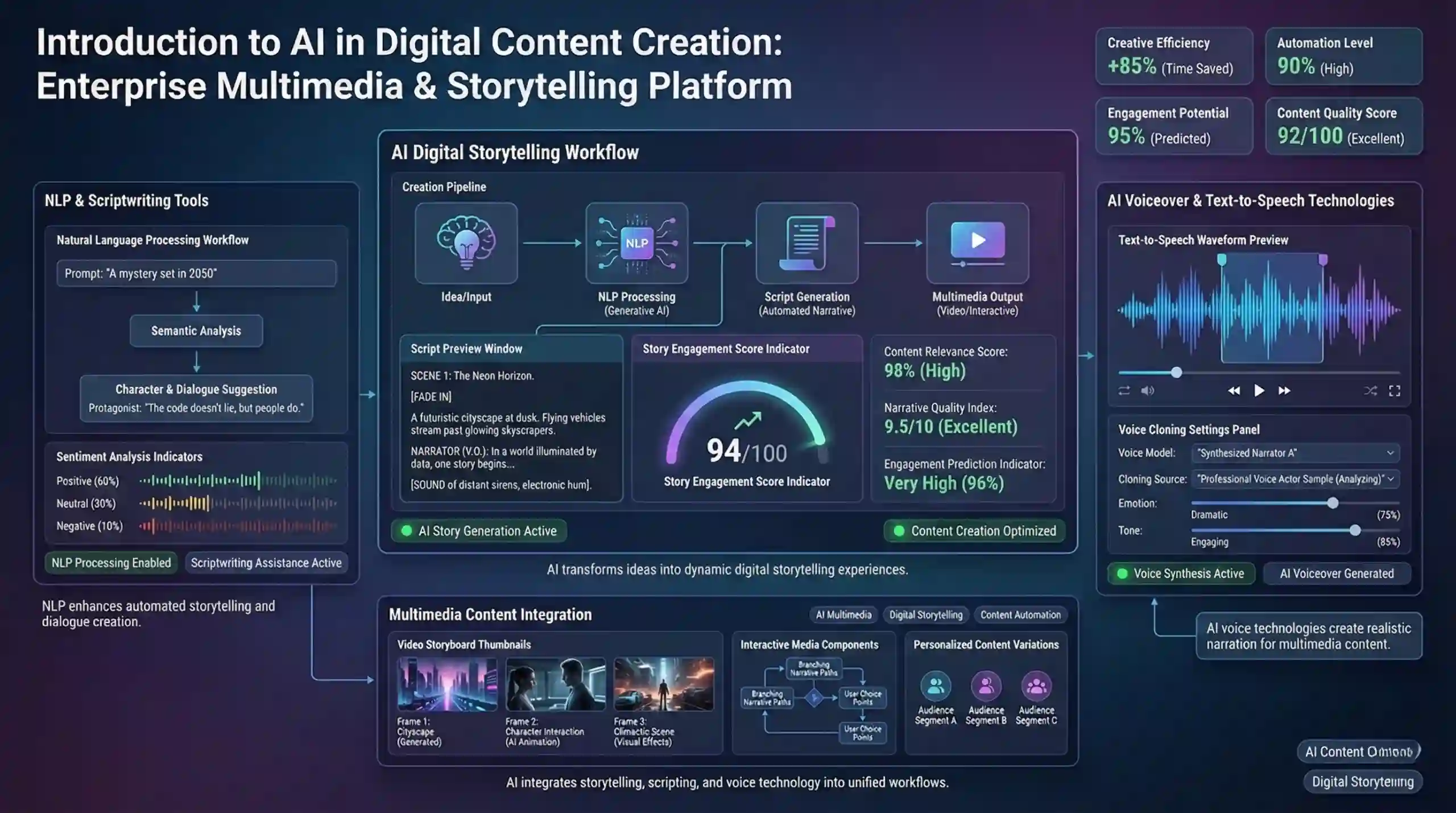
Artificial Intelligence (AI) significantly transforms digital storytelling by automating content creation, enabling realistic voice synthesis, and facilitating interactive media experiences. AI algorithms analyze vast datasets to generate engaging narratives, craft personalized content, and adapt storytelling techniques to audience preferences. For example, AI-driven tools can automatically generate video summaries or adapt stories dynamically based on user responses, enhancing user engagement and efficiency in content production.
Understanding NLP (Natural Language Processing) and Its Role in Scriptwriting
Natural Language Processing (NLP) is a subset of AI that enables machines to understand, interpret, and generate human language. In scriptwriting, NLP techniques include text generation, sentiment analysis, and language modeling, which facilitate automated story development and dialogue creation. For example, AI models can assist screenwriters by suggesting plot continuations or refining dialogue for emotional impact, ultimately accelerating the creative process.
Exploration of AI-Powered Voiceover Technologies (Text-to-Speech (TTS), Voice Cloning)
AI voice synthesis technologies like Text-to-Speech (TTS) convert written text into natural-sounding speech, used in audiobooks, virtual assistants, and multimedia content. Voice cloning involves replicating a specific person’s voice using AI, enabling personalized and versatile voiceovers. These technologies are powered by neural networks trained on voice datasets, allowing for high fidelity, expressive speech output tailored to various applications.
2. Foundations of AI & Machine Learning in Content Creation
Basic Concepts of Machine Learning Algorithms for Content Generation
Machine Learning (ML) involves algorithms that learn patterns from data to make predictions or generate content. In AI for scriptwriting and voice synthesis, supervised learning (training on labeled datasets) helps model language and speech patterns. For example, language models like GPT are trained on extensive text corpora to produce coherent narratives and dialogues.
Importance of Deep Learning in Neural Voice Synthesis & Script Optimization
Deep Learning, a subset of ML using neural networks with many layers, enables realistic neural voice synthesis and intelligent script optimization. Neural networks learn complex voice features, allowing AI to generate expressive speech closely matching human nuances. In scriptwriting, deep learning models optimize story flow, character development, and dialogue realism, enhancing both creativity and automation.
Key Tools and Frameworks: TensorFlow, PyTorch, and OpenAI Models
Frameworks like TensorFlow and PyTorch are essential for developing custom AI models in voice synthesis and script generation. OpenAI’s GPT models (such as GPT-4) are pre-trained on massive datasets for natural language understanding and generation, making them valuable tools for automating content creation tasks like drafting scripts or generating dialogue ideas.
3. Advanced AI-Driven Voiceover Technologies
Text-to-Speech (TTS) Systems: Google WaveNet, Amazon Polly, IBM Watson TTS
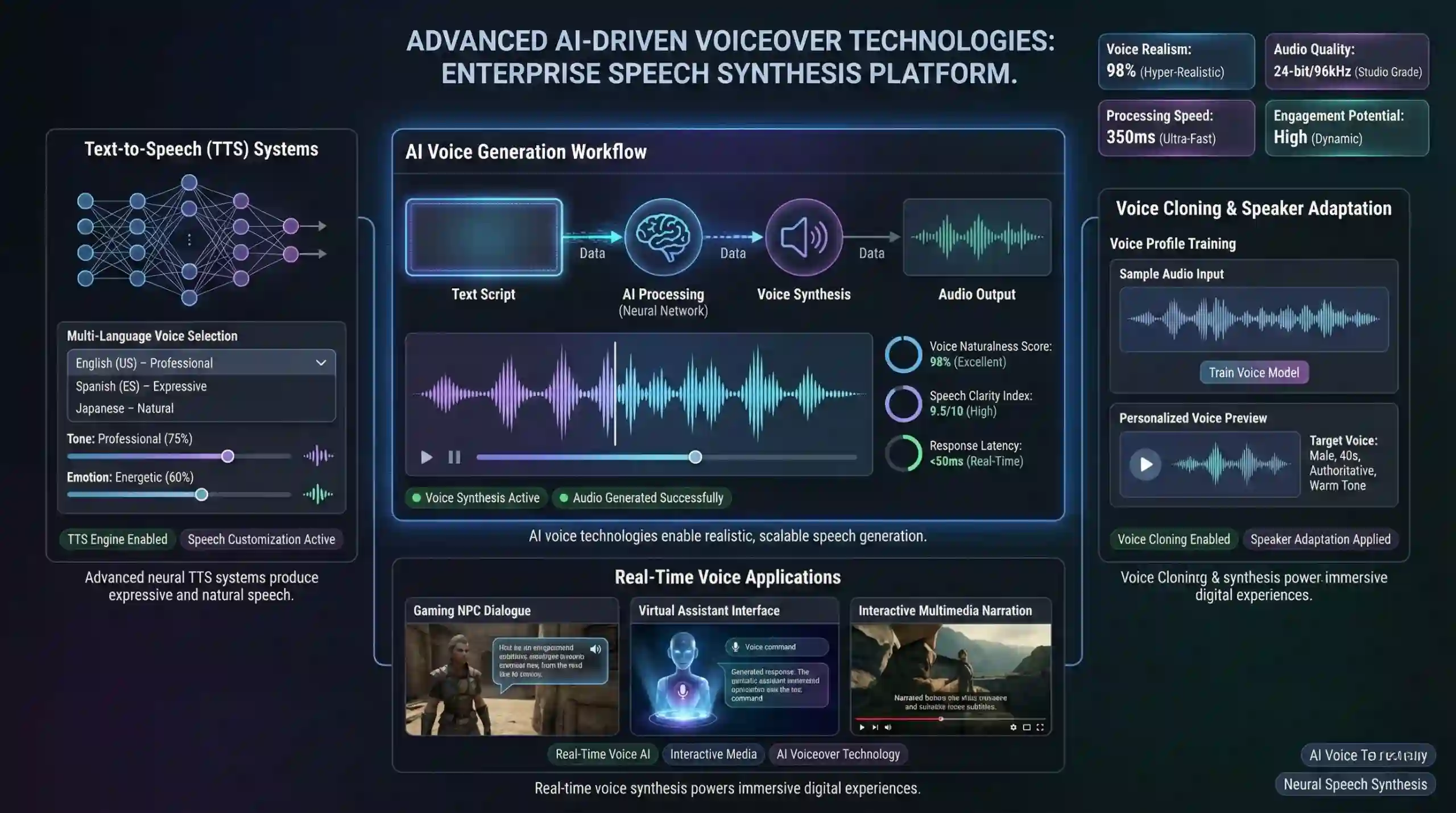
Leading TTS systems include Google WaveNet, which utilizes deep neural networks to produce highly naturalistic speech with varied intonations and emotions. Amazon Polly offers scalable, customizable speech synthesis, supporting multiple languages and voice styles. IBM Watson TTS provides enterprise-grade speech services suitable for diverse multimedia applications, from virtual assistants to media production.
Voice Cloning and Speaker Adaptation: Resemble AI, Descript Overdub, ElevenLabs
Voice cloning platforms like Resemble AI, Descript Overdub, and ElevenLabs enable replication of specific voices by training on a sample dataset. These allow content creators to generate personalized voiceovers, maintain brand consistency, or revive historical voices ethically. For example, a voice actor’s voice can be cloned to produce multiple voiceovers without repeated recordings, saving time and costs.
Real-Time Voice Synthesis Applications for Multimedia, Gaming, & Virtual Assistants
Real-time AI voice synthesis powers applications in multiplayer gaming, virtual assistants, and interactive media, providing immediate and expressive speech outputs. Such systems are used in gaming NPCs with adaptive dialogues, virtual customer service bots, and assistive technologies. Their responsiveness and naturalness contribute to immersive user experiences.
4. AI for Scriptwriting & Content Automation
NLP Techniques for Script Generation and Story Development
NLP techniques like sequence modeling and transformers underpin automated story development. Algorithms analyze narrative structures, character arcs, and dialogues, generating coherent and contextually relevant scripts. For example, AI can continue a scene based on initial prompts, ensuring plot consistency.
AI-Powered Content Writers: GPT Models (ChatGPT, GPT-4) for Brainstorming & Drafting
Large language models such as GPT-4 facilitate rapid scriptwriting, brainstorming, and content refinement. They generate dialogues, plot ideas, or entire drafts by understanding context and stylistic cues. These tools streamline the creative process and foster innovation by providing diverse narrative options.
Sentiment Analysis & Keyword Optimization for SEO-Optimized Scripts
AI-driven sentiment analysis evaluates emotional tones, ensuring scripts resonate with target audiences. Keyword optimization using AI algorithms enhances searchability, making scripts SEO-friendly. These techniques improve audience engagement and content discoverability across digital platforms.
5. Ethical Use & Future Trends in AI Voice & Script Technologies
Ethical Use of AI Voice Technology & Copyright Implications
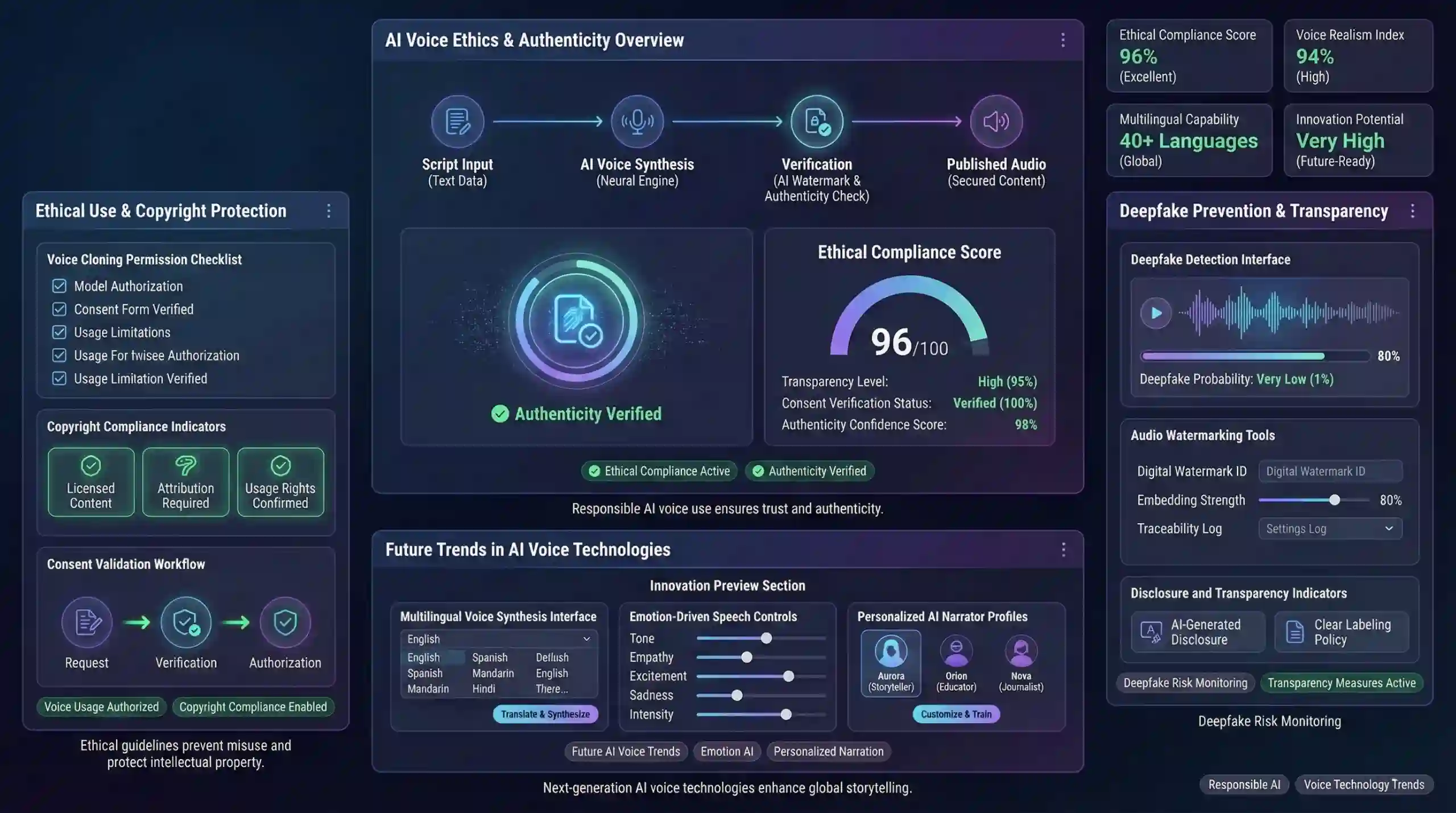
Ethics in AI voice synthesis involve respecting intellectual property rights and preventing misuse, such as unauthorized voice cloning. Developers and users must adhere to regulations and obtain necessary consents, ensuring responsible deployment of synthetic media.
Ensuring Authenticity & Avoiding Deepfake Misuse in Voiceovers
To prevent deepfake misuse, content creators should implement verification protocols, watermarking, and transparency measures. Maintaining authenticity involves clearly disclosing AI-generated content, especially in sensitive or political contexts.
Emerging Trends: Multilingual AI Voiceovers, Emotion-Driven Speech Synthesis, Personalized AI Narrators
Future developments include multilingual voice generation for global audiences, emotion-driven speech synthesis to mimic human feelings accurately, and personalized AI narrators tailored to individual preferences, expanding storytelling possibilities and audience engagement.
6. Practical Skills & Tools for AI Voiceover & Scriptwriting
Hands-on with AI Scriptwriting Software & Voice Synthesis Platforms
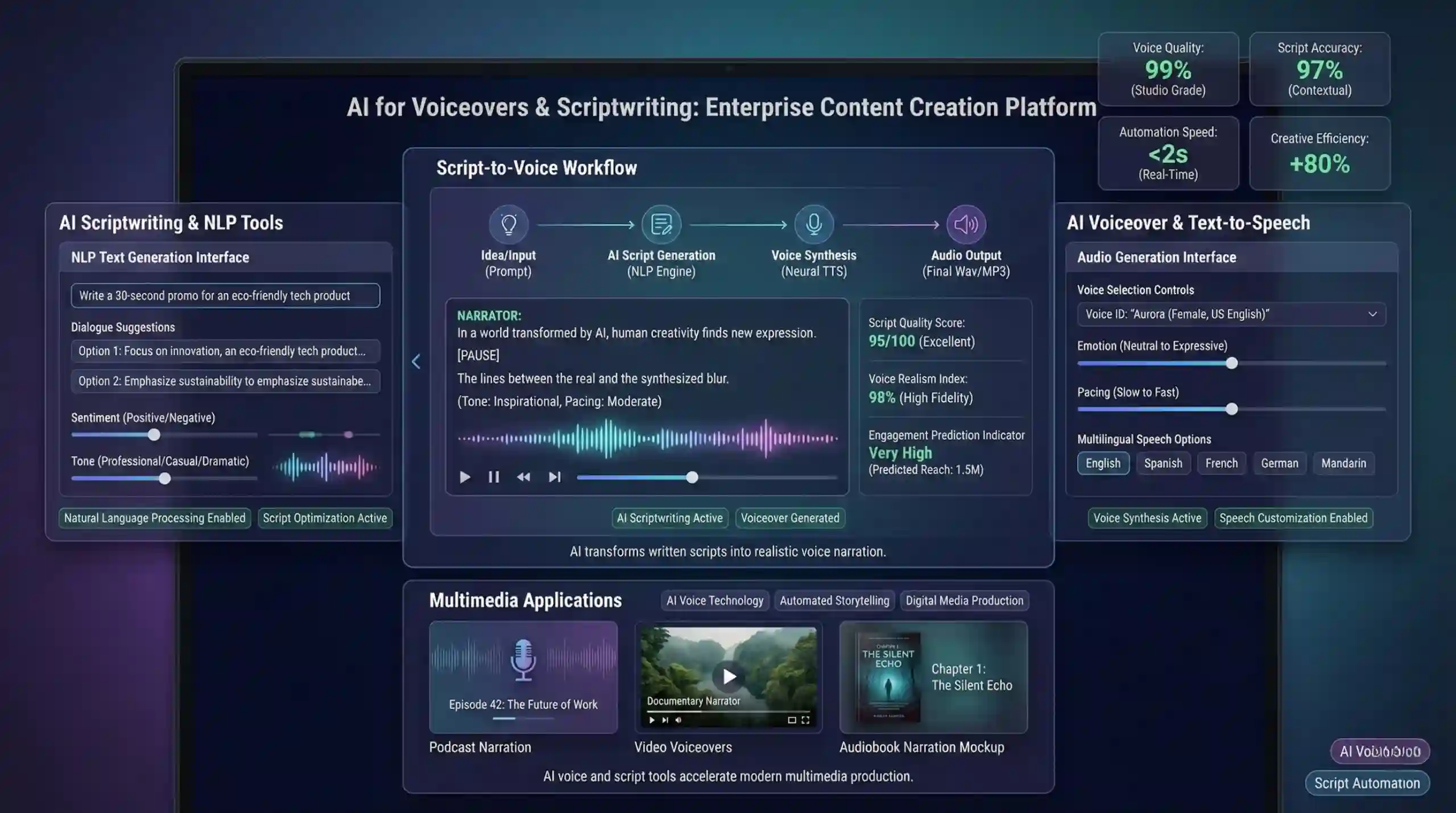
Students should familiarize themselves with tools like ChatGPT, Jasper, Resemble AI, and Murf to develop skills in automated script generation and voice synthesis. Practical experience involves inputting prompts, customizing voice parameters, and integrating outputs into projects.
Integrating AI Voiceover Solutions into Multimedia & Video Projects
Effective integration requires understanding APIs, SDKs, or direct platform exports to embed AI-generated voices into videos, e-learning content, or podcasts. Skilled learners can produce seamless multimedia content that leverages AI advancements for professional quality.
Optimizing AI-Generated Scripts for SEO & Audience Engagement
Best practices include incorporating relevant keywords naturally, structuring scripts with clear narratives, and applying storytelling techniques to hold viewer interest. SEO optimization enhances visibility across platforms like YouTube, blogs, and social media.
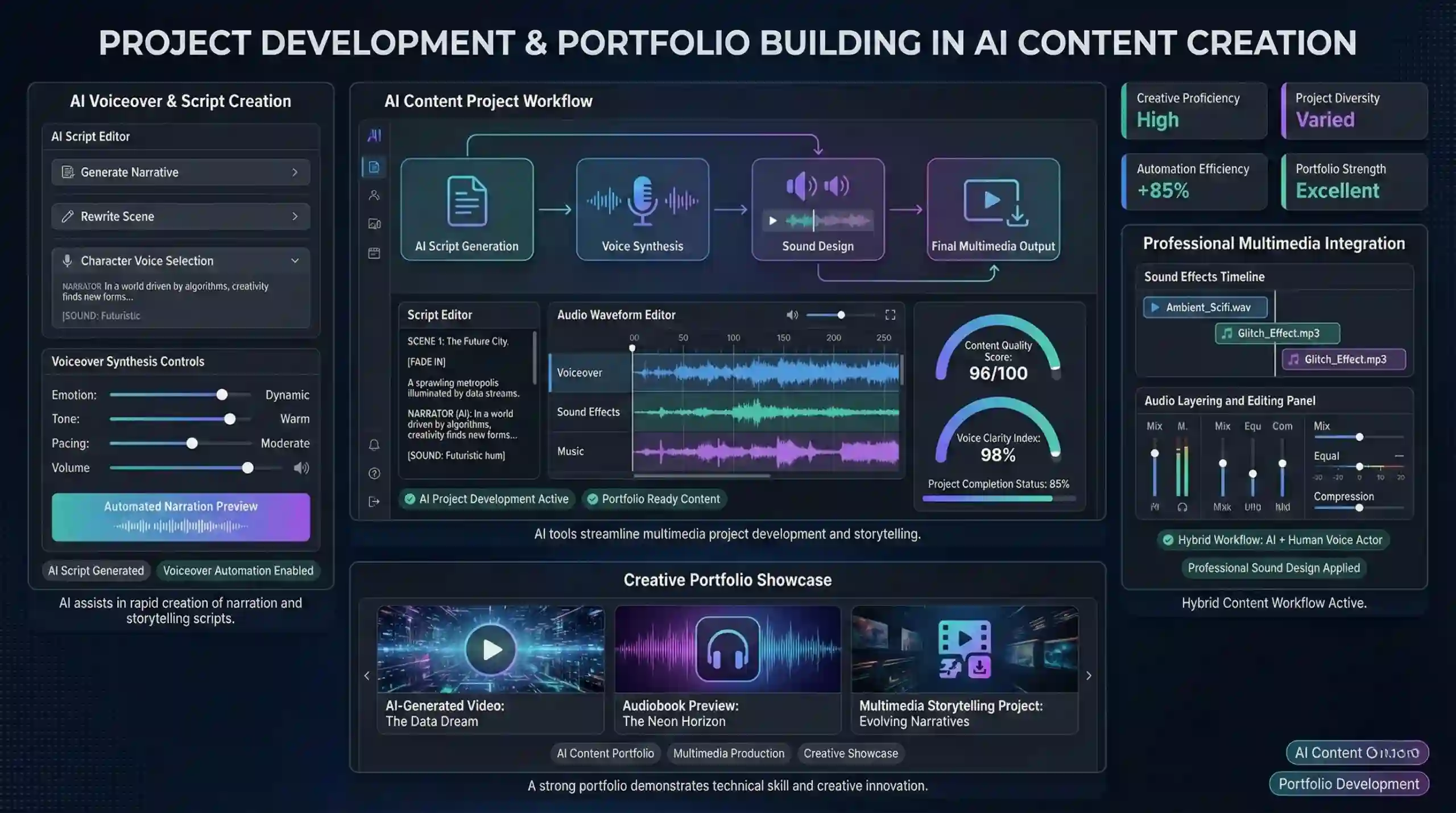
7. Project Development & Portfolio Building in AI Content Creation
Developing AI-Assisted Voiceover Projects
Students should undertake projects such as creating automated narration for videos or audiobooks, utilizing AI voice synthesis and script automation. These projects demonstrate practical application and understanding of AI tools.
Combining AI-Generated Scripts with Professional Voice Actors & Sound Design
Blending AI-produced scripts with human voice talent or sound effects creates high-quality content. For example, AI can generate the script, which is then voiced by a professional actor, combined with soundscapes for a polished multimedia product.
Showcasing Projects in a Portfolio to Demonstrate Skills in AI-Powered Content Creation
A comprehensive portfolio should include diverse samples: AI-generated scripts, synthesized voiceovers, integrated multimedia projects. Showcasing efforts attracts potential employers or clients by highlighting technical proficiency and creativity in AI content creation.
Resources for Further Study
This structured, theory-rich roadmap provides a comprehensive foundation for mastering AI in voiceovers and scriptwriting, equipping students to innovatively contribute to digital content creation, multimedia storytelling, and next-generation media technologies.
More Courses
- Social Media Marketing course with Gen AI
- Advance Digital Marketing & SEO course with Gen AI
- Advanced Certificate in Digital Design & Marketing course with Gen AI
- Meta & Google Ads course with Gen AI