1. Understanding the Transformative Role of Artificial Intelligence in Digital Marketing
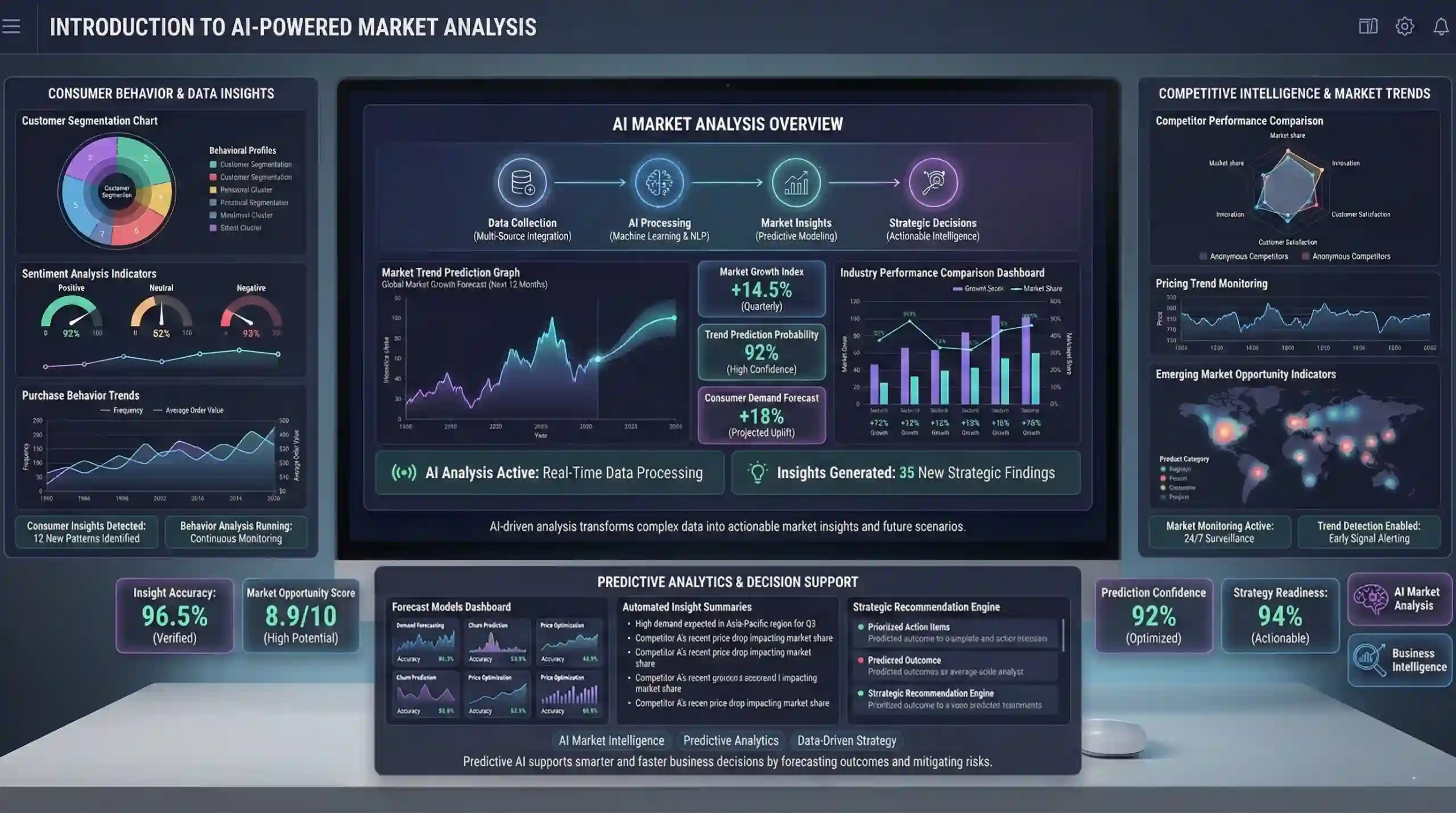
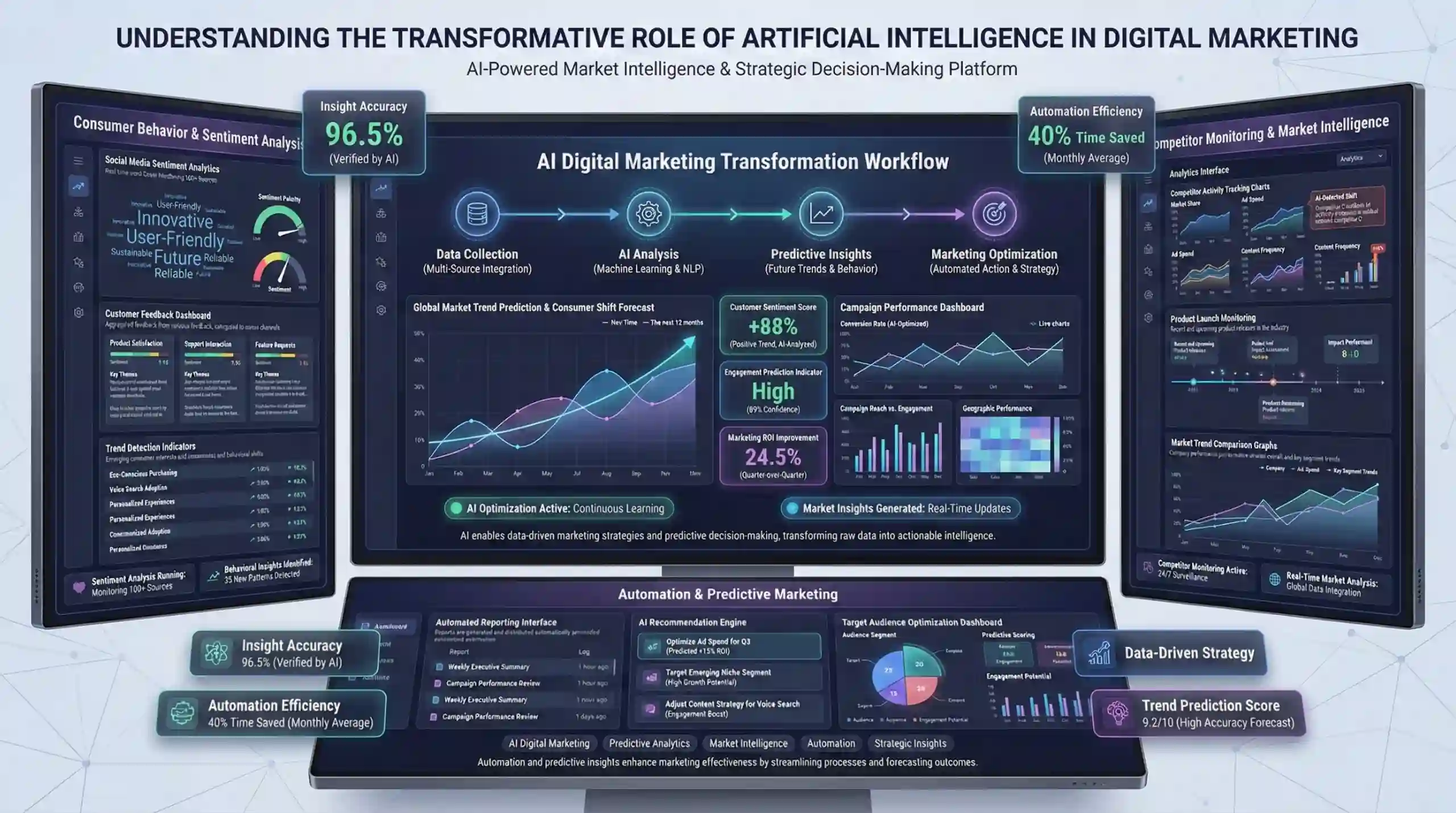
Artificial Intelligence (AI) has fundamentally revolutionized digital marketing by enabling data-driven decision-making, automation, and predictive insights. Traditional market research relied on manual data collection and analytical methods, which are often time-consuming and limited in scope. AI addresses these limitations by processing vast quantities of data swiftly and accurately to uncover patterns, predict trends, and generate actionable insights.
In the context of market research, AI-driven tools analyze consumer behaviors, preferences, and industry trends in real-time, providing marketers with a competitive advantage. For example, AI algorithms can evaluate social media sentiment, identify emerging topics, and analyze customer feedback with high accuracy. Similarly, in competitor analysis, AI automates the process of monitoring competitors’ marketing strategies, product launches, and customer engagement efforts.
Example:
A retail brand uses AI-powered sentiment analysis to monitor online reviews and social media comments. This helps identify shifts in customer satisfaction and guides product development, leading to increased customer loyalty and market share.
This strategic use of AI accelerates market insight generation, improves targeting precision, and enhances overall digital marketing effectiveness.
2. AI-Driven Data Collection and Pattern Recognition in Consumer Insights
Data collection in AI-powered market analysis harnesses advanced algorithms to gather data from diverse sources—websites, social media, forums, and transactional databases—often through automated data scraping techniques. Pattern recognition, a core component of AI, involves identifying recurring trends, behaviors, and anomalies within vast datasets.
AI Data Collection:
AI tools, such as web scrapers combined with Natural Language Processing (NLP), extract relevant data like product descriptions, pricing, reviews, and promotional content. These tools operate continuously, ensuring real-time data acquisition that reflects the latest market dynamics.
Pattern Recognition:
AI employs machine learning algorithms to detect patterns within consumer behaviors, such as purchasing trends, content preferences, and sentiment shifts. These patterns enable businesses to tailor their marketing campaigns more effectively.
Example:
A fashion retailer uses AI to analyze seasonal sales data, customer feedback, and social media trends to identify upcoming fashion preferences. This insight allows the retailer to optimize inventory and marketing strategies towards trending styles.
Enhanced understanding of consumer behavior and industry trends leads to better segmentation, targeted marketing, and improved ROI.
3. Leveraging AI for Competitive Intelligence
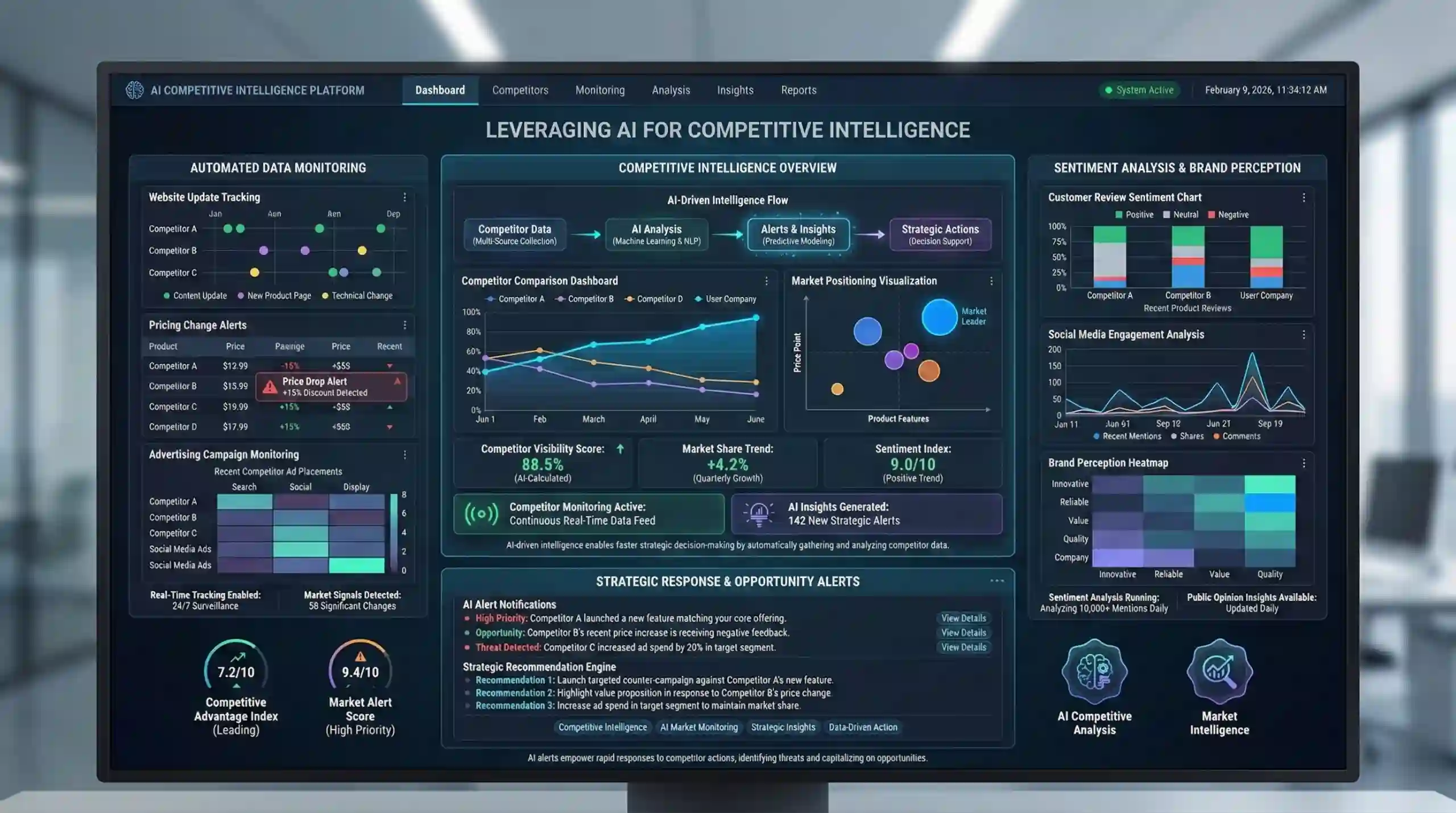
Competitive intelligence involves systematically gathering and analyzing information about competitors to inform strategic decisions. AI enhances this process by automating data collection, analysis, and visualization, thereby reducing manual efforts and increasing accuracy.
AI for Competitive Intelligence:
Tools like AI-powered market monitoring platforms can track competitors’ website updates, pricing changes, ad campaigns, and customer reviews continuously. Sentiment analysis further reveals public perception about competitors’ brands and products.
By leveraging AI, companies gain timely insights into competitors’ activities, enabling faster responses to market threats and opportunities. For instance, if a competitor launches a new product or promotional campaign, AI alerts can prompt an immediate strategic counter-action.
4. Setting Up AI Tools for Market & Competitor Insights
Essential AI Digital Marketing Analytics Tools:
- AI Competitor Monitoring Software: Automates tracking of competitors’ web content, social media activity, and advertising efforts (e.g., SEMrush, SimilarWeb, Ahrefs).
- Market Intelligence Platforms: Aggregate industry data, perform benchmarking, and identify market trends (e.g., Statista, Crayon).
Implementing AI Data Scraping:
Automated web scraping tools can extract website content, product listings, pricing, and promotional material. Languages like Python, with libraries such as Beautiful Soup or Scrapy, are common for developing custom scrapers.
import requests
from bs4 import BeautifulSoup

url = 'https://example-competitor.com'
response = requests.get(url)
soup = BeautifulSoup(response.text, 'html.parser')
product_titles = soup.find_all('h2', class_='product-title')

for title in product_titles:
    print(title.get_text())
Natural Language Processing (NLP):
NLP analyzes unstructured data like reviews or social media comments to extract sentiment, intent, and key themes. This informs strategic adjustments based on customer perceptions.
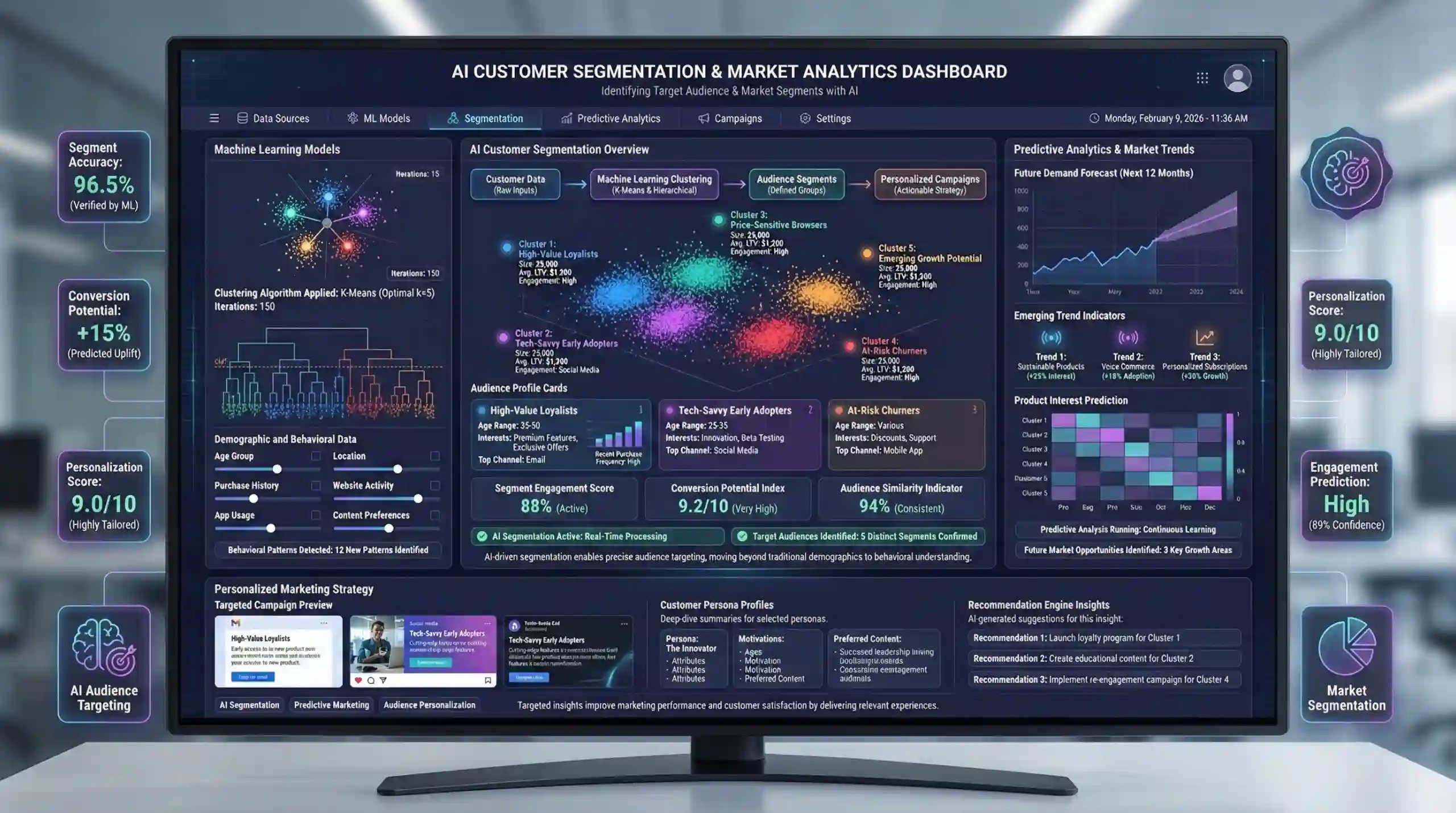
5. Identifying Target Audience & Market Segments with AI
AI Customer Segmentation:
Machine learning algorithms (e.g., K-means clustering, hierarchical clustering) segment consumers based on demographics, psychographics, and behavior patterns. This facilitates precise target marketing and personalized messaging.
Predictive Analytics:
By analyzing historical data, AI models forecast future market trends and customer needs. For example, predictive models can identify emerging demand in eco-friendly products, enabling early market entry.
Example:
A health-food brand uses AI to segment customers into health-conscious and convenience-seeking groups, tailoring marketing campaigns that significantly improve engagement rates.
Targeted marketing campaigns increase conversion rates and customer satisfaction, driving revenue growth.
6. Conducting Competitor Benchmarking Using AI
AI Competitive Benchmarking Tools:
Platforms evaluate key aspects like SEO performance, social media engagement, content strategy, and ad placements. Examples include SimilarWeb, MOZ, and Brandwatch.
AI Sentiment Analysis:
Analyzing customer feedback on competitors’ products reveals perception drivers—what customers like or dislike—helping to identify gaps or opportunities.
Example:
A company compares its social media engagement metrics against top competitors, discovering that competitors’ Twitter campaigns generate higher customer interaction, prompting strategic improvements.
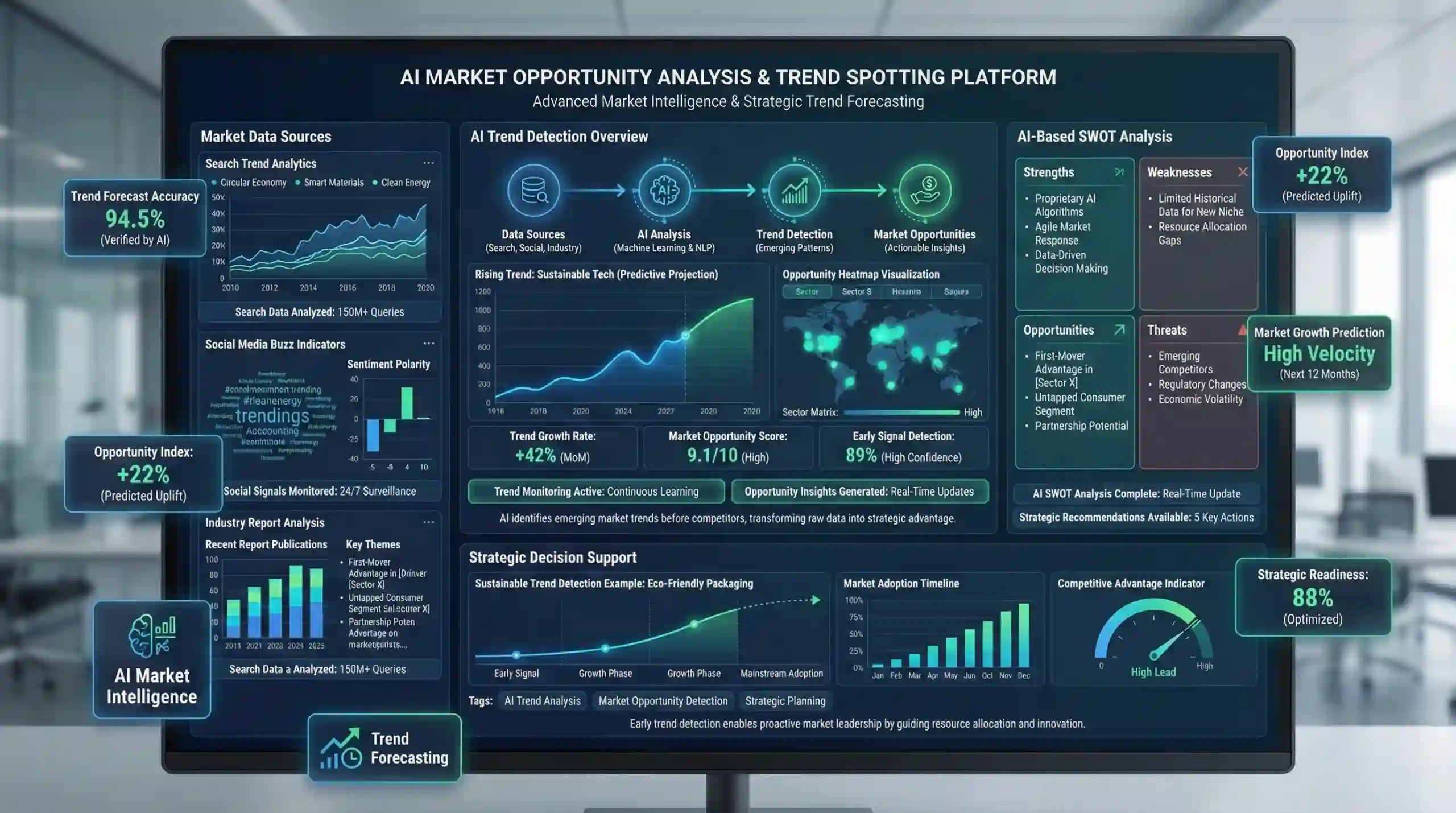
7. Market Opportunity Analysis & Trend Spotting
AI Market Trend Analysis Platforms:
Tools like Trendalytics or Google Trends analyze search data, social media buzz, and industry reports to identify early signals of shifting consumer interests or disruptive events.
AI-based SWOT Analysis:
AI models evaluate internal strengths and weaknesses against external opportunities and threats by aggregating and analyzing market data, enabling more comprehensive strategic planning.
Example:
AI detects a rising interest in sustainable packaging, prompting early adoption, and securing market leadership.
8. Optimizing Content & Keywords via AI
AI Content Analysis Tools:
Applications like MarketMuse or BrightEdge identify high-value keywords, content gaps, and topic clusters, informing content creation aligned with audience interests.
SEO Optimization:
AI-powered SEO tools optimize on-page elements, meta tags, and content structure, improving search engine rankings and organic traffic.
Example Code Snippet (Keyword Optimization):
Using Python and a hypothetical API to identify high-performing keywords:
import requests

api_url = 'https://api.keywordtool.io/v2/search'
params = {
    'apikey': 'your-api-key',
    'keyword': 'digital marketing strategies',
    'metrics': 'volume,cpc,difficulty',
}
response = requests.get(api_url, params=params)
keywords_data = response.json()

for keyword in keywords_data['results']:
    print(f"{keyword['keyword']}: Volume={keyword['volume']}")
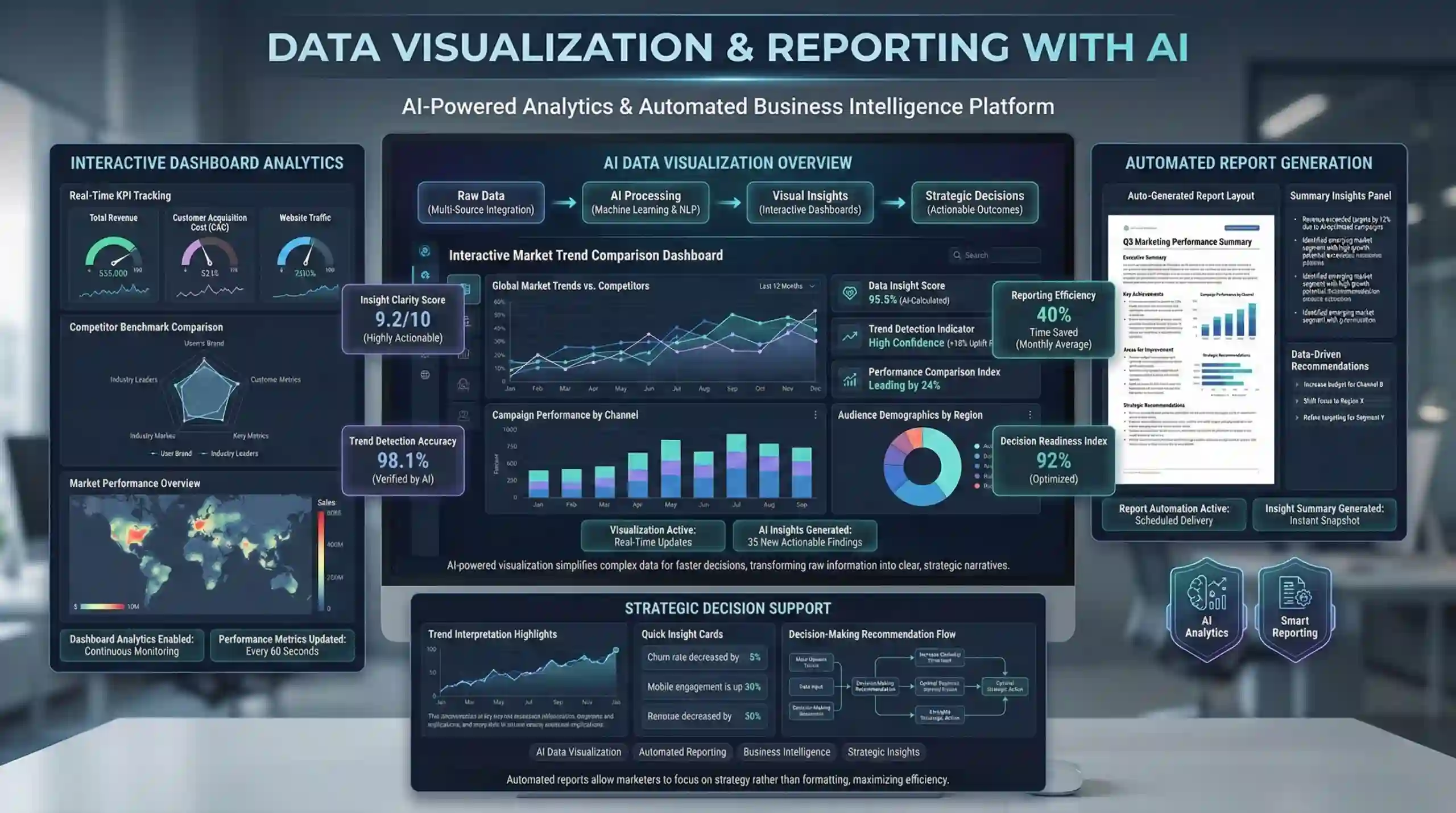
9. Data Visualization & Reporting
AI-powered Data Visualization Platforms:
Tools like Tableau, Power BI, or DataRobot create insightful visuals that communicate complex data succinctly, aiding strategic decision-making.
Automated Report Generation:
AI can generate comprehensive reports with minimal manual input, enabling marketers to focus on insights rather than formatting.
Quick interpretation of market trends and competitor benchmarks supports timely strategic adjustments.
10. Ethical Considerations & Data Privacy
AI deployment in market analysis must respect ethical standards and privacy laws such as GDPR. Responsible data collection involves transparency about data sources and obtaining user consent where necessary. Anonymizing data and ensuring secure storage are critical to maintaining trust and compliance.
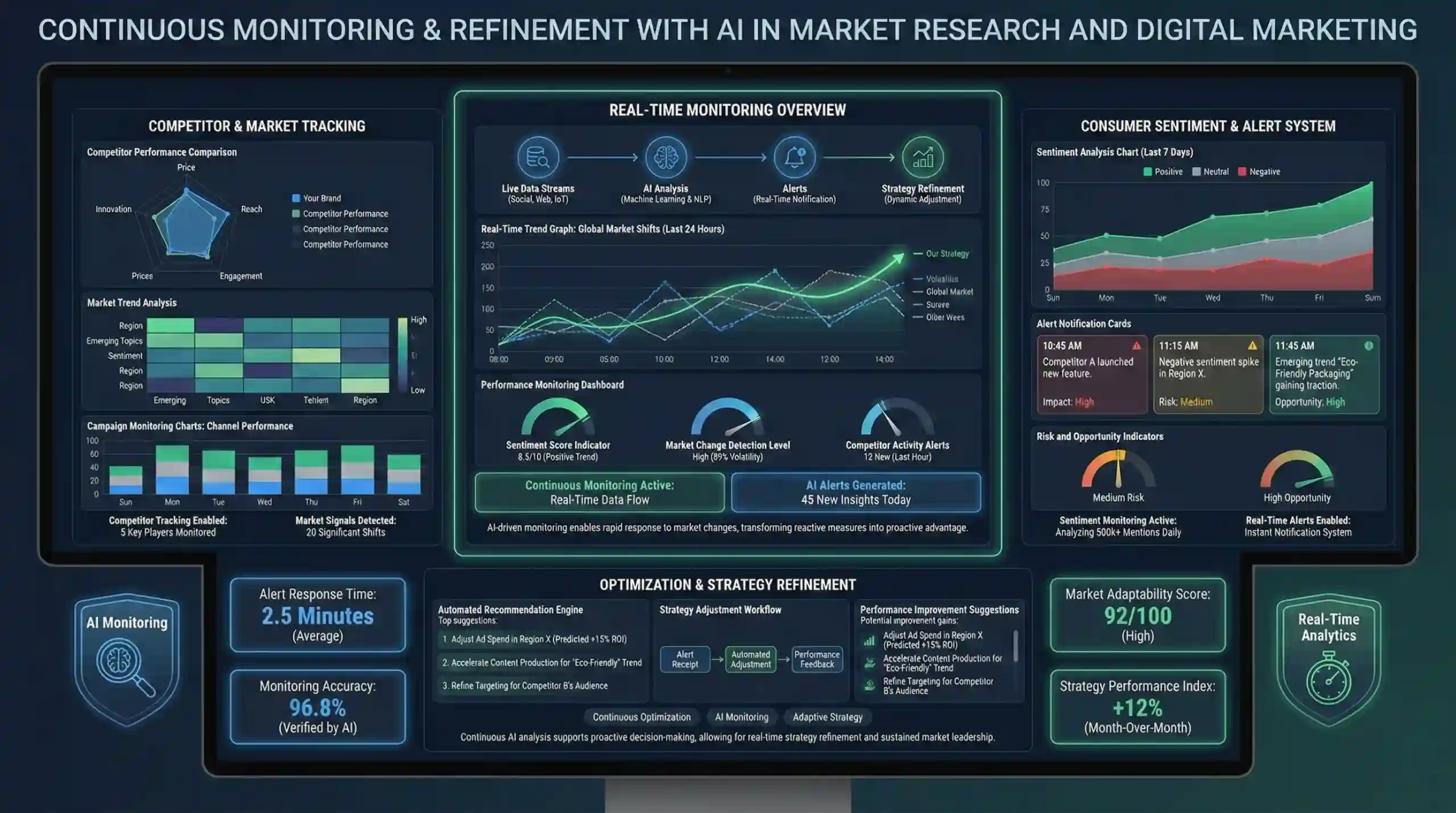
11. Continuous Monitoring & Refinement
Market landscapes are dynamic. Continuous AI-driven monitoring tools track competitors, market shifts, and consumer sentiment in real time. Alerts and dashboards ensure rapid response to emerging threats or opportunities.
Example:
An AI alert system notifies a business of sudden negative online sentiment about its product, prompting immediate corrective action.
12. Future Trends in AI for Market & Competitor Research
Upcoming innovations such as advanced machine learning, voice search analytics, and AI-powered personalization continue to enhance market analysis capabilities. Exploring these developments ensures sustained competitive advantage in digital marketing landscapes.
Practice Questions
- Define AI-driven market research and illustrate its advantages over traditional methods.
- Describe how pattern recognition in AI enhances consumer insight analysis.
- Write a Python example to scrape product titles from a competitor’s website.
- Explain the role of NLP in analyzing customer reviews for competitor insights.
- Discuss how AI customer segmentation improves targeted marketing strategies.
- Illustrate with an example how predictive analytics can forecast emerging market trends.
- Describe how competitive benchmarking tools help evaluate digital marketing efforts.
- Explain the significance of AI-based SWOT analysis in strategic planning.
- Explore ethical considerations involved in AI-powered market research.
- Identify future AI innovations that could impact market and competitor analysis.
<<Sample code output:>>
For the web scraper example:
Product Title 1
Product Title 2
Product Title 3
...
Resources and Study Websites
- Google Trends
- SEMrush Blog – Digital Marketing Insights
- Coursera – AI for Everyone by Andrew Ng
- Kaggle – Data Science and Machine Learning
This structured learning module on AI for Market & Competitor Research provides theoretical depth and practical approaches, empowering students to leverage AI tools ethically and effectively within digital marketing strategies.
More Courses
- Social Media Marketing course with Gen AI
- Advance Digital Marketing & SEO course with Gen AI
- Advanced Certificate in Digital Design & Marketing course with Gen AI
- Meta & Google Ads course with Gen AI