1. Understanding Keyword Gap Analysis Fundamentals
Definition of Keyword Gap Analysis and Its SEO Significance
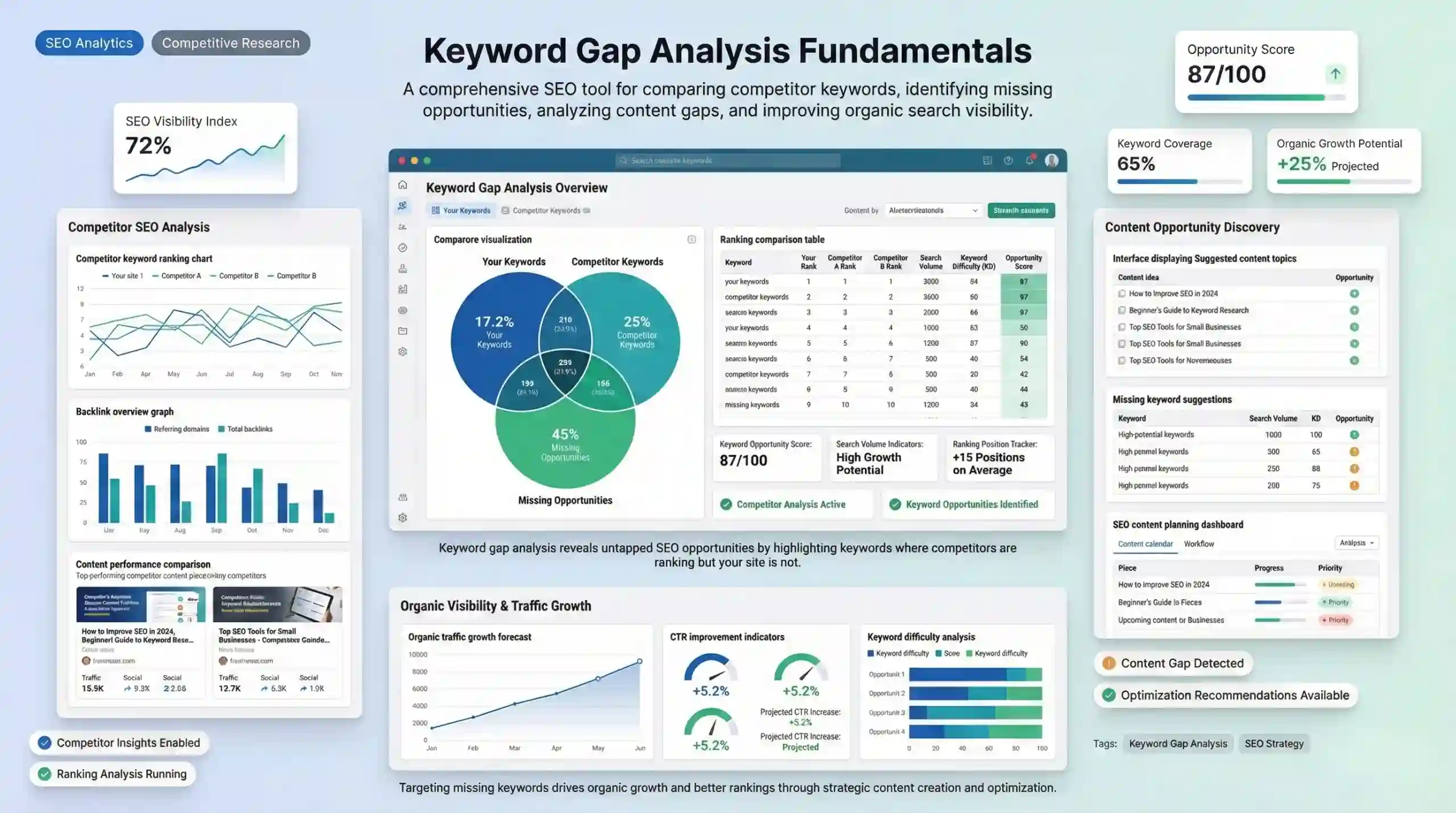
Keyword gap analysis is a strategic process used by SEO professionals to pinpoint keywords that competitors are ranking for but are missing from your current content strategy. Its primary goal is to uncover missing keyword opportunities and content gaps that, once targeted, can significantly increase organic traffic. This analysis plays a crucial role in improving your website’s search engine rankings by identifying untapped opportunities for SEO content creation.
Example:
Suppose your website sells fitness equipment, and your competitor ranks high for “home gym setup.” If your site lacks content targeting this keyword, creating a dedicated page about “Home Gym Setup Tips” presents an immediate opportunity to improve rankings and attract targeted visitors.
How Keyword Gap Analysis Boosts Organic Visibility and Drives Targeted Traffic
By identifying keywords that competitors are successfully ranking for, you can craft targeted SEO content, making your website more visible to users seeking specific information or products. This process helps increase organic traffic and enhances search engine rankings, ultimately giving your site a competitive edge.
Real-world outcome:
Implementing targeted content around high-volume, low-competition keywords uncovered through gap analysis can lead to rapid ranking improvements, increased click-through rates (CTR), and higher conversions.
Role of Competitor SEO Analysis in Discovering Content Opportunities
Competitor SEO analysis encompasses examining their (a) keyword strategies, (b) backlink profiles, and (c) content performance. This comprehensive approach reveals content gaps — areas where your competitors have optimized content that you lack — enabling strategic content development to outperform them.
Example:
If a competitor ranks well for “best DSLR cameras,” analyzing their page structure, keywords, and backlinks offers insights to develop superior content for similar topics.
2. Identifying Your Top Competitors for SEO Benchmarking
Using SEO Tools to Find Your Direct SEO Competitors
Tools like SEMrush, Ahrefs, and Moz are essential for identifying direct competitors in search engine results. By inputting your website’s URL, these tools generate a list of sites that rank for similar keywords, thereby establishing industry benchmarks.
Practical example:
Entering your website’s URL in SEMrush reveals competitors ranking for keywords like “digital marketing courses,” providing a competitive landscape map.
Compile a List of Relevant Competitors Based on Niche Authority and Engagement Metrics
Focus on competitors with similar domain authority, traffic volume, and user engagement metrics. This ensures your analysis targets genuine competition, making your SEO efforts more precise.
Outcome:
Prioritizing high-authority sites with proven search visibility increases the effectiveness of your keyword gap analysis.
3. Gathering Competitor Keyword Data
Conducting Competitor Keyword Research to Extract Ranking Keywords
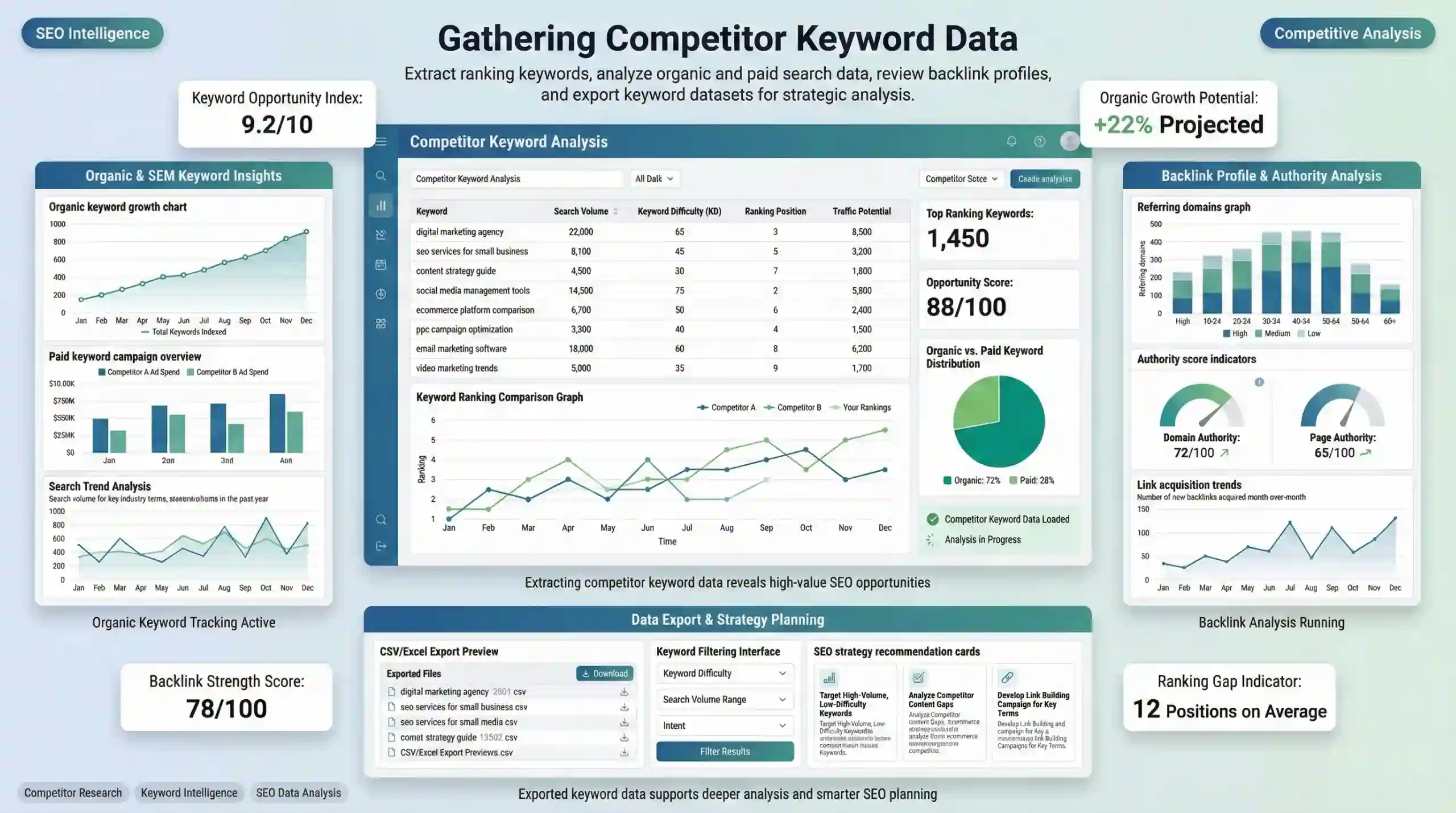
Once competitors are identified, advanced SEO tools allow extraction of detailed data such as their top ranking keywords, corresponding search volumes, keyword difficulty, and ranking positions. This forms the foundation for understanding their content strategy.
Example:
A competitor ranks highly for “best gaming laptops,” with a search volume of 15,000 monthly searches, indicating a strong keyword opportunity if your site lacks optimized content for this term.
Analyzing Organic Keywords, SEM Keywords, and Backlink Profiles
A comprehensive keyword strategy involves analyzing organic keywords (unpaid search), paid keywords (SEM campaigns), and backlink profiles to assess content authority and relevance.
Outcome:
This multi-faceted approach enables you to identify opportunities for organic ranking improvement and adopt effective backlink strategies.
Exporting Keyword Data for Analysis
Most SEO tools provide options to export data into CSV or Excel formats, facilitating deeper analysis, cross-comparison of keyword lists, and visualization of gaps.
4. Performing Keyword Gap Analysis
Inputting Your Website and Competitors’ Sites into SEO Tools
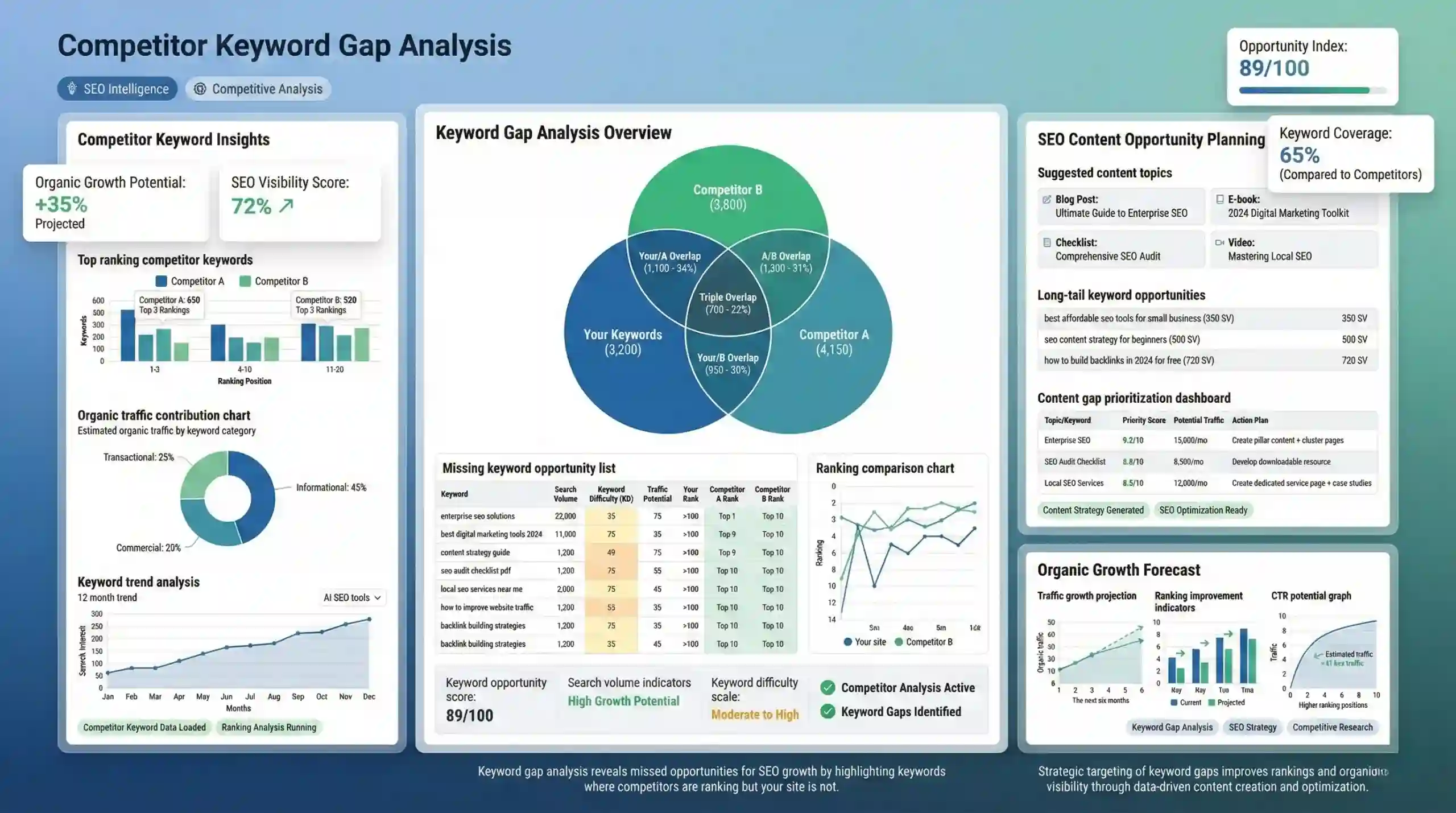
Use dedicated features like SEMrush’s Keyword Gap Tool or Ahrefs’ Content Gap to compare keywords across multiple sites. Input your domain and competitor domains to generate reports highlighting missing keywords.
Identifying Keywords Your Competitors Rank for That You Don’t Target
Focus on high-volume, relevant keywords that are absent from your site but present in competitors’ rankings — these are quick-win opportunities to target.
Spotting High-Search Volume, Low-Competition Keywords for Quick Wins
Prioritize keywords with substantial search volume and manageable keyword difficulty. These low-hanging fruits can be targeted for rapid increase in rankings and traffic.
Example:
Finding a keyword like “home workout routines for beginners” with high volume and low difficulty can lead to quick content creation and improved visibility.
5. Categorizing Keyword Gaps
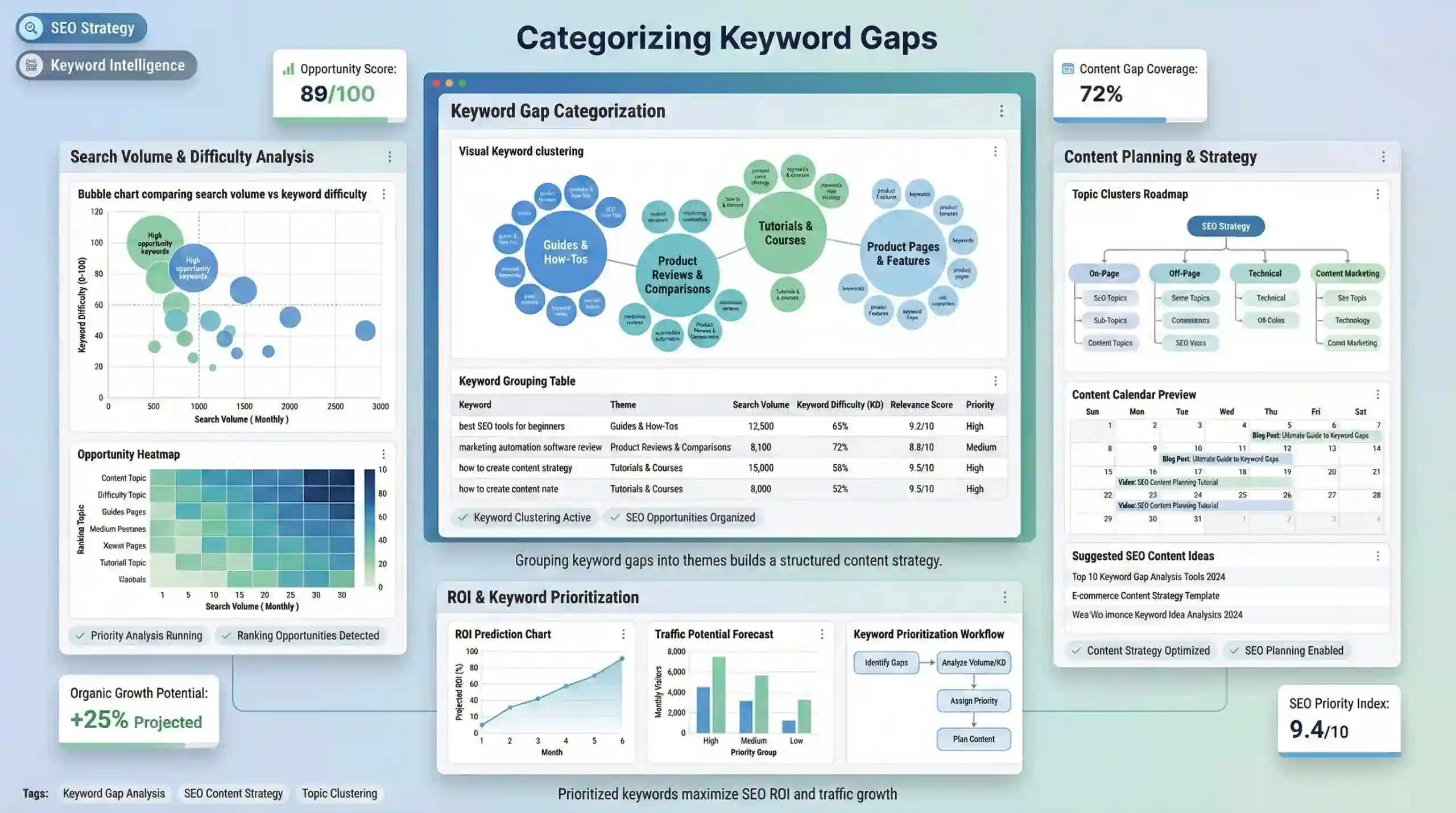
Grouping Gaps Into Content Themes or Topics
Organize identified keywords into logical categories or themes. This systematic grouping aids in developing a structured content strategy aligned with user intent.
Prioritizing Keywords Based on Search Volume, Keyword Difficulty, and Relevance
Assign priorities based on:
– Search volume: Higher volume indicates greater traffic potential.
– Keyword difficulty: Lower difficulty suggests easier ranking opportunities.
– Relevance: Ensure keywords align with your business or content goals.
Outcome:
This prioritization ensures you focus on terms that deliver maximum ROI for your SEO efforts.
6. Assessing Keyword Relevance and Search Intent
Analyzing Search Intent Behind Competitor Keywords
Understand whether a keyword signifies informational (e.g., “how to lose weight”), transactional (e.g., “buy running shoes”), or navigational intent. This guides your content creation to meet user expectations, increasing engagement.
Aligning Your Targeted Keywords With Your Content Strategy
Select keywords that match your existing or planned content. Proper alignment with search intent enhances user satisfaction, reduces bounce rates, and boosts rankings.
Example: Targeting an informational keyword like “how to organize a home office” with a comprehensive guide supports both user needs and SEO objectives.7. Developing an SEO Content Strategy
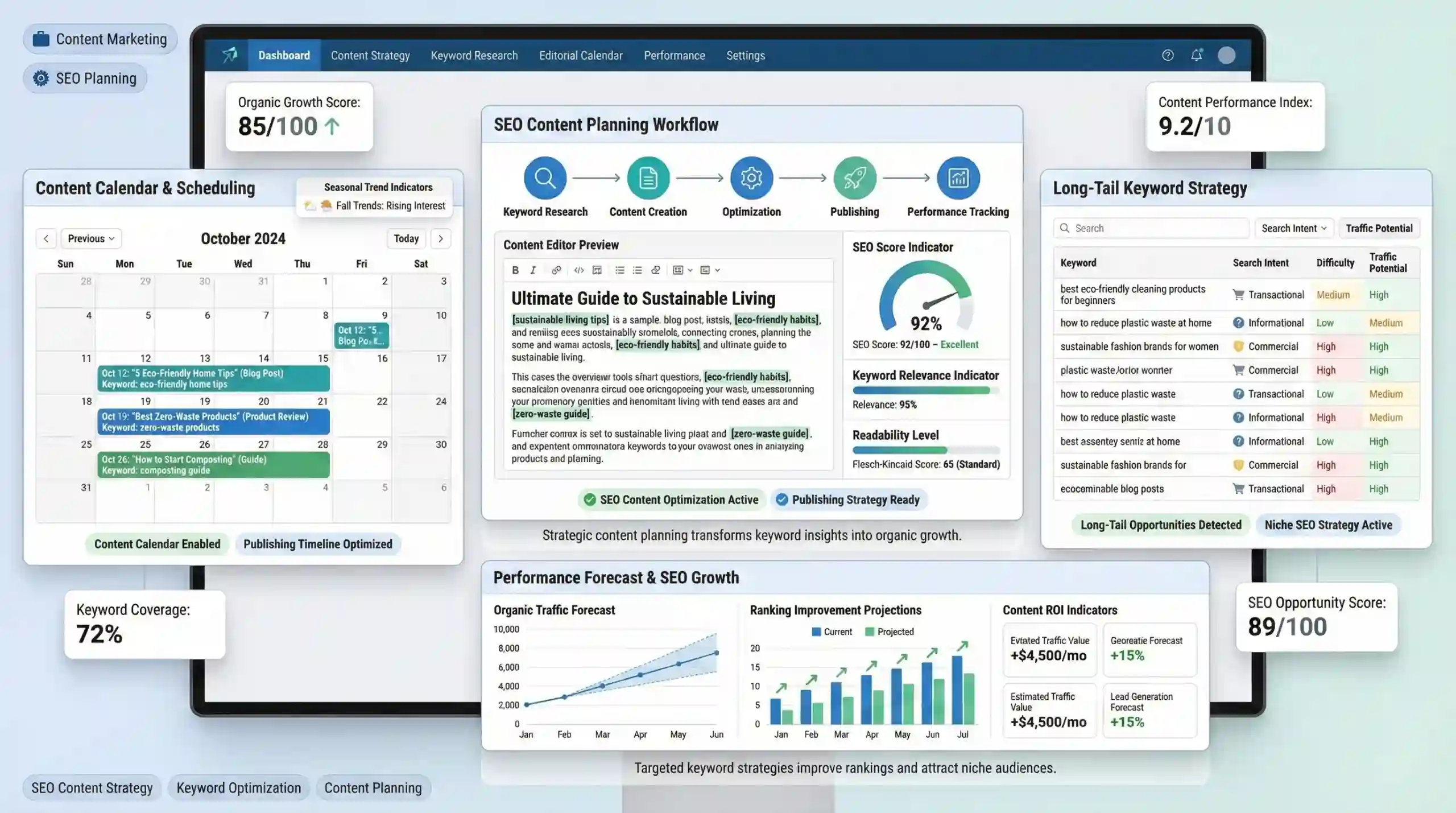
Creating or Optimizing Content Around Gap Keywords
Develop new SEO-optimized pages or update existing content by integrating targeted keywords naturally into titles, headers, and body text while maintaining readability.
Planning a Content Calendar for High-Priority Keywords
Schedule content publication around high-priority keywords based on their potential impact, ensuring consistent output aligned with seasonal or industry trends.
Incorporating Long-Tail Keywords for Niche SEO
Use long-tail keywords like “affordable ergonomic office chairs for small spaces” to target niche searchers, reduce competition, and diversify your SEO portfolio.
8. Monitoring and Refining Your SEO Strategies
Tracking Keyword Rankings and Organic Traffic Over Time
Utilize tools like Google Search Console, SEMrush, or Ahrefs to monitor keyword ranking fluctuations and organic traffic trends, evaluating your SEO efforts.
Regularly Updating Competitor Keyword Data for New Opportunities
Schedule periodic analysis to identify new keywords, shifts in competitor strategies, or emerging trends, maintaining an adaptive SEO plan.
Adjusting Content and SEO Techniques Based on Performance Data
Refine content, keyword targeting, and onsite SEO strategies based on analytics insights, ensuring continuous improvement.
9. Leveraging Additional SEO Techniques
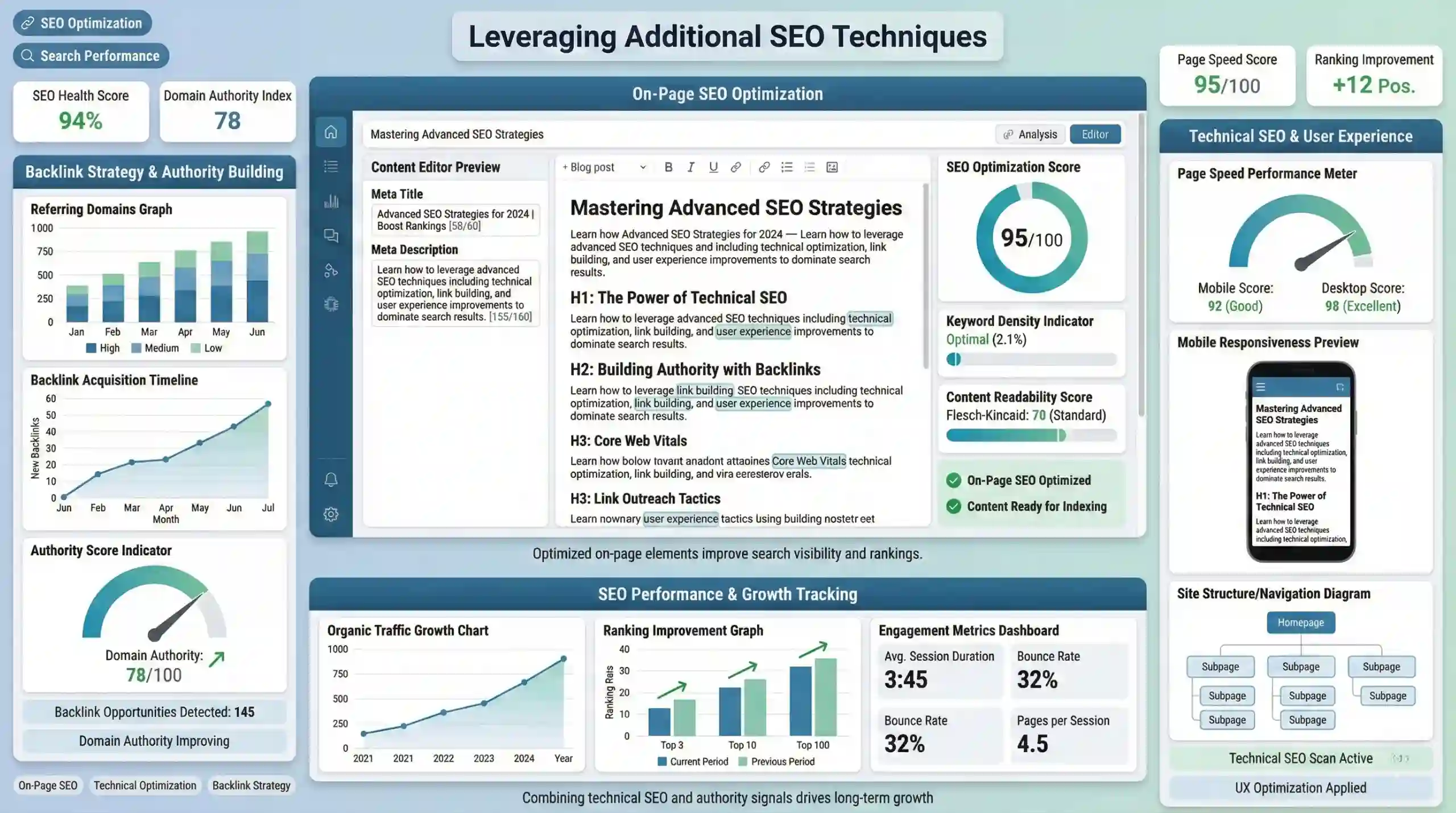
Implementing On-Page SEO Best Practices
Optimize meta titles, descriptions, header tags, and keyword placement within your pages to improve relevancy and ranking potential.
Building Backlinks to Authority Content
Secure backlinks from authoritative, relevant sites to strengthen your content’s authority and improve domain ranking.
Optimizing User Experience and Technical SEO
Enhance website load speed, ensure mobile responsiveness, and improve site navigation to meet technical SEO standards and improve user engagement.
10. Utilizing SEO Study Resources
Exploring Online SEO Tutorials and Courses
Practicing with Free SEO Tools
Practice Questions
- Define keyword gap analysis and explain its importance in SEO.
- Describe how competitor SEO analysis can reveal content gaps.
- List three popular SEO tools used for identifying top competitors.
- Explain the process of extracting competitor keyword data.
- What metrics are important when prioritizing keywords for content targeting?
- How does understanding search intent influence keyword selection?
- Outline the steps to categorize keyword gaps into content themes.
- Describe how long-tail keywords benefit niche SEO efforts.
- What are key on-page SEO practices to optimize for identified gap keywords?
- Name two resources for beginners to learn SEO effectively.
Expected Code Outputs (If Applicable)
While this guide is primarily theoretical, in practical applications, tools like SEMrush or Ahrefs display data such as:
Keywords Your Site Ranks For:
- "digital marketing strategies" (Position 15, Volume 8,000)
Competitor Ranks for:
- "digital marketing strategies" (Position 1, Volume 8,000)
Missing Keyword:
- "content marketing tips" (Position 0, Volume 5,000)
This indicates an opportunity to target the keyword “content marketing tips” with optimized content.
Study Resources
- SEMrush Academy
- Moz Beginner’s Guide to SEO
- Yoast SEO Blog
- Neil Patel’s SEO Resources
- Google Keyword Planner
- Ubersuggest
- Keyword Surfer
Conclusion
This structured, theory-oriented overview of Competitor Keyword Gap Analysis provides a strong foundation for beginners to understand the significance of keyword strategy, how to perform competitor analysis, and how to leverage insights for effective SEO content planning. Combining theoretical knowledge with practical application enables a progressive mastery of organic search optimization and competitive positioning in digital marketing.
More Courses
- Social Media Marketing course with Gen AI
- Advance Digital Marketing & SEO course with Gen AI
- Advanced Certificate in Digital Design & Marketing course with Gen AI
- Meta & Google Ads course with Gen AI