
Introduction
For many in India, the aspiration to learn a new language, especially English, is a gateway to better opportunities. This desire created the perfect market for Duolingo, an American ed-tech company founded in 2011. When it entered India in 2016, it wasn’t just offering lessons; it was offering a new way to learn—one that was free, fun, and addictively game-like. By transforming the often tedious task of language learning into an engaging daily habit, Duolingo and its now-iconic green owl mascot, Duo, have successfully cracked one of the world’s most dynamic and diverse markets.
Digital Marketing & SEO Strategy
Duolingo’s digital strategy is a masterclass in using data, personality, and platform-native content to drive mass adoption and engagement.
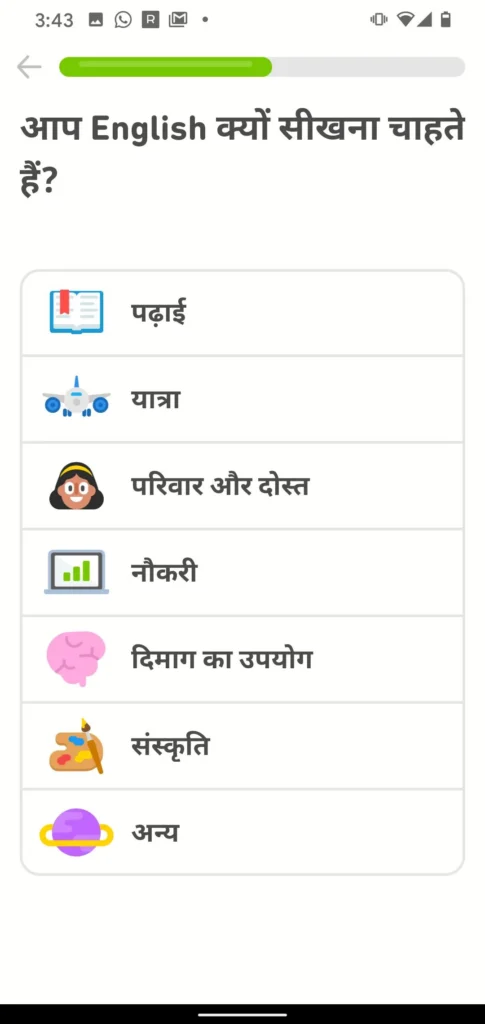
- SEO (Search Engine Optimization) & ASO (App Store Optimization): Duolingo’s strategy is heavily data-driven. After discovering that a significant number of Indian users were learning English with Hindi as their interface language, they revamped their app listing in the Indian Google Play Store. They prominently showcased the option to “Learn English from Hindi,” a simple but powerful change that massively improved discoverability for their target audience. This is a prime example of using user data to inform ASO for a local market.
- Social Media Marketing: This is where Duolingo’s genius truly shines. Instead of traditional corporate messaging, they have built a personality-driven strategy around their mascot.
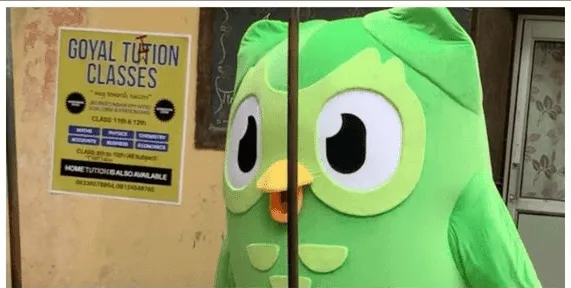
- Mascotizing: Duo the owl isn’t just a logo; he is the brand’s main character. On platforms like Instagram (where duolingo_india has over 211K followers), Duo is portrayed as quirky, humorous, and sometimes unhinged. This “mascotizing” approach humanizes the brand, making it relatable and highly entertaining.
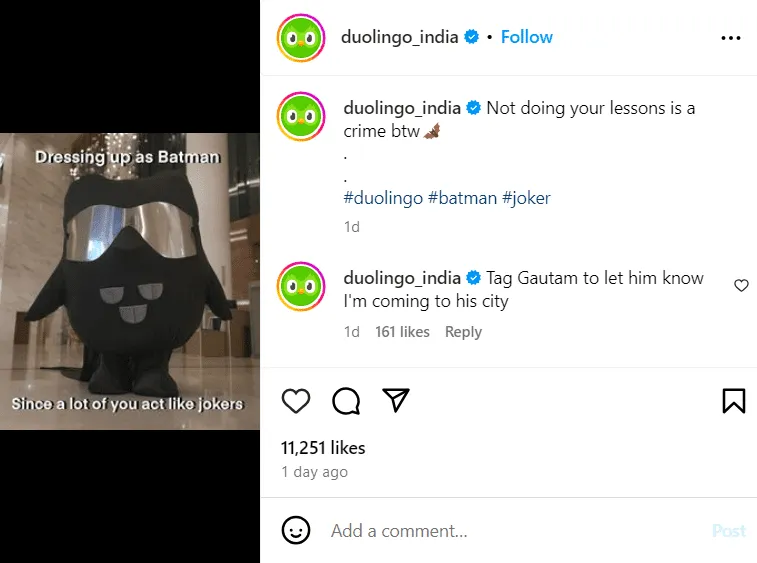
- Meme Marketing & Trendjacking: Their feed is a stream of clever memes and content that plays on internet culture, like their Batman-themed meme with a witty “Gautam” pun. This keeps the brand relevant and shareable.
- Content Marketing: Duolingo’s content strategy is less about long-form blogs and more about creating engaging, bite-sized interactions.
- In-App Content: The absurd and often hilarious sentences within the app’s lessons have become a form of viral content themselves, with users frequently sharing screenshots on social media.
- Localized Campaigns: The #SwachhBhashaCampaign was a brilliant, India-specific initiative. Drawing a parallel to the government’s well-known #SwachhBharatCampaign (Clean India Mission), Duo was shown playfully correcting grammatical errors on public signs. This was a culturally resonant way to promote the importance of fluent English.
STP Analysis
- Segmentation: Duolingo segments the vast Indian market with precision:
- Demographics: Primarily targets students and young professionals who are tech-savvy and mobile-first.
- Psychographics: Appeals to self-motivated learners who are goal-oriented but may lack the time or resources for traditional classes. They are highly responsive to gamification and social competition.
- Behavioral: Targets users with a strong desire to learn English for career advancement or higher education. They also cater to a growing segment interested in learning other global languages like French, Spanish, or Korean.
- Targeting: Duolingo’s primary target is the massive population of Indians seeking to improve their English proficiency. They specifically target users who are looking for a flexible, low-cost, and engaging way to learn. By understanding that “Hinglish” (a mix of Hindi and English) is common, they tailored their content to bridge the gap between informal and formal language, making the learning process more intuitive.
- Positioning: Duolingo positions itself as the fun, free, and effective alternative to boring, traditional language education. Their mission to make education “universally available” resonates strongly in a price-sensitive market like India. They are not just an app; they are a daily habit, a fun game, and a supportive learning companion.
The 4 Ps of Marketing
- Product: The core product is the Duolingo language-learning app, built on a foundation of gamification. Key features include:
- Gamified Lessons: Points, rewards, and badges for completing lessons.
- The Streak: A powerful motivational tool that encourages daily practice.
- Leaderboards: Fostering a sense of friendly competition.
- Diverse Characters & Inclusivity: The app features a cast of characters and uses gender-neutral language, making it a welcoming platform for all.
- Price: Duolingo operates on a freemium model, which has been a game-changer in India. The free version is incredibly robust, offering the full learning curriculum. This removes the financial barrier to entry, allowing millions to try and benefit from the app. A paid subscription, Super Duolingo, offers an ad-free experience and additional features, acting as the primary monetization channel.
- Place: The product is delivered exclusively through digital channels—its mobile apps for iOS and Android, and its website. This digital-first approach ensures universal accessibility for anyone with a smartphone and internet connection.
- Promotion: Promotion is driven by its unique brand personality and viral growth loops.
- Viral Social Media: Humorous and engaging content featuring Duo.
- Gamified Notifications: Playful and quirky push notifications that users find amusing rather than annoying.
- Word-of-Mouth: The effectiveness and fun of the free product encourages users to recommend it to others.
- PR Campaigns: Culturally specific campaigns like #SwachhBhashaCampaign generate positive media attention.
Influencer Marketing & Collaborations
Duolingo has redefined influencer marketing by turning its own mascot into its biggest star.
- Strategy: Instead of relying heavily on paid partnerships with human influencers, Duolingo has built an entire ecosystem of content around Duo.
- Duo as the Ultimate Influencer: Duo is the face of the brand on all social media platforms. He has a distinct personality, engages with users, participates in viral trends, and creates a consistent and recognizable brand voice. This is more authentic and cost-effective than traditional influencer campaigns.
- User-Generated Content (UGC): Duolingo actively encourages users to share their progress, streak counts, and funny in-app sentences. This effectively turns millions of its users into micro-influencers, creating a powerful network of organic promotion.
- Goal: The goal is to build a genuine community and a brand that people feel a personal connection with. This fosters deep loyalty and turns users into passionate brand advocates.
Challenges & Competition
- Challenges:
- Monetization: Converting users from the feature-rich free tier to a paid subscription is a major challenge in a price-sensitive market like India.
- Long-Term Retention: While gamification is effective for initial engagement, keeping users motivated to learn a language over months and years remains a core challenge.
- Depth of Learning: Critics sometimes argue that while Duolingo is great for beginners, it may not be sufficient for achieving true fluency, which could cause advanced learners to switch to other platforms.
- Competition:
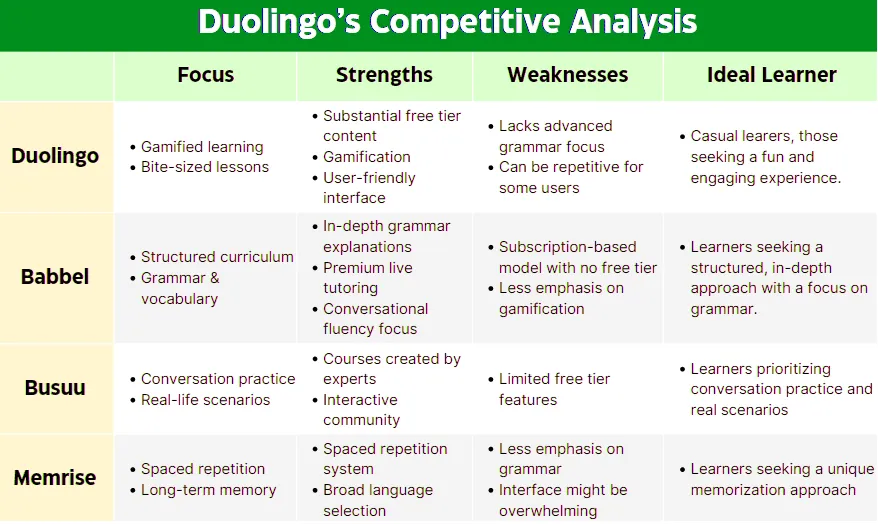
- Direct Competitors: Other language apps like Babbel (which focuses more on conversational skills), Memrise, and Rosetta Stone offer different methodologies and features.
- Indirect Competitors: Traditional language coaching centers, private tutors, and free educational content on platforms like YouTube also compete for a learner’s time and attention.
All trademarks, logos, and images are the property of their respective owners. Their use in this educational case study is for commentary and illustrative purposes, and does not imply any ownership or endorsement.


Connect With Us
Follow us for updates on our latest courses and events!