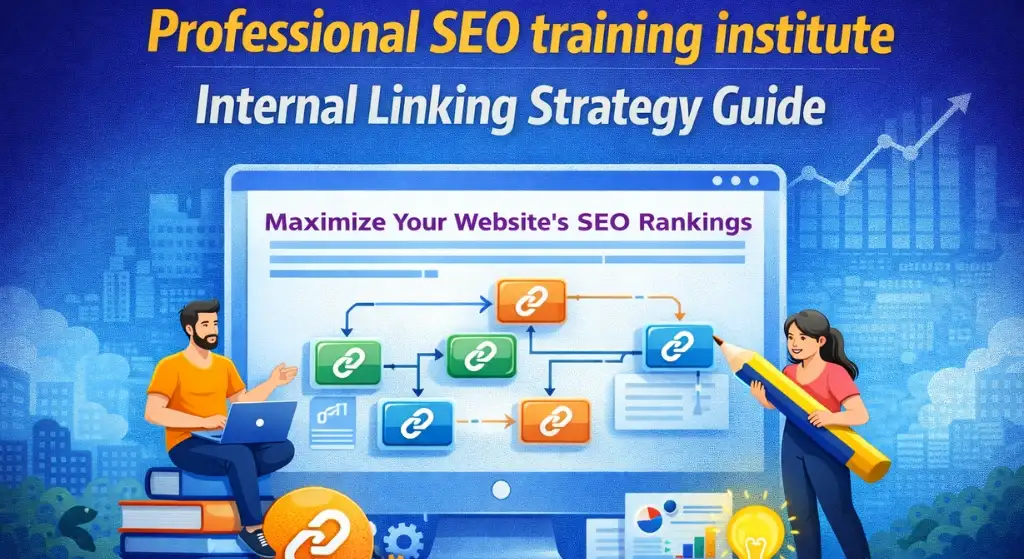
If you want stronger rankings, better user experience, and powerful SEO performance, internal linking is one of the most important strategies to focus on. Whether you are learning through an Advanced SEO course, training via a digital marketing seo course, studying at a Professional SEO training institute, enrolling in the best digital marketing courses, or learning from an Expert SEO training institute, mastering internal linking can dramatically improve your SEO results.
⭐ What is Internal Linking?
Internal linking means adding links from one page of your website to another page of the same website.
These links help users navigate your site and help Google understand your website structure.
Internal linking is like building roads inside your website.
The better your roads, the easier it is for users and Google to reach the right place
Why Internal Linking is Important?
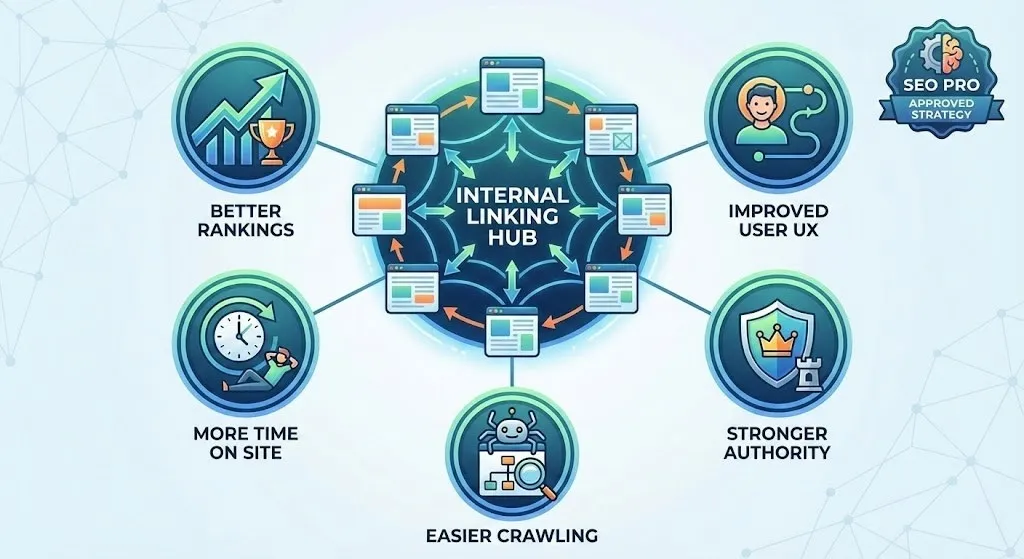
Good internal linking helps in:
➡️Better Google rankings
➡️More time spent on website
➡️Improved user experience
➡️Stronger website authority
➡️Better crawling and indexing
Even expert trainers in a Professional SEO training institute say internal linking is a smart SEO weapon.
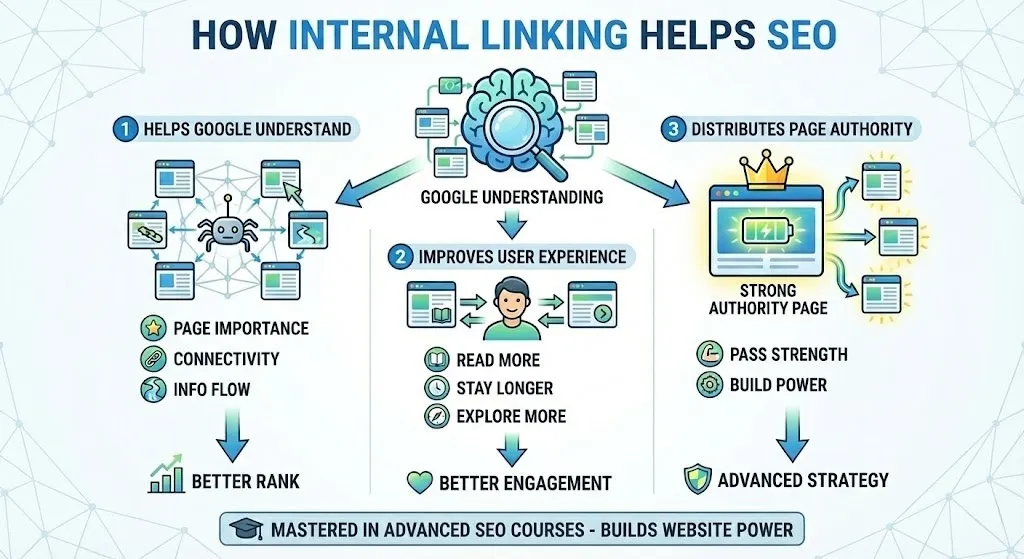
How Internal Linking Helps SEO
1️⃣ Helps Google Understand Your Website
Internal links tell Google:
- Which pages are important
- How pages are connected
- How information flows
Better understanding = Better ranking.
2️⃣ Improves User Experience
When users get useful suggested links:
- They read more
- Stay longer
- Explore your site more
This improves engagement.
3️⃣ Distributes Page Authority
If one page ranks well and has strong authority, internal linking passes that strength to other pages.
This concept is often taught deeply in an Advanced SEO course because it builds overall website power.
Internal Linking Benefits
- Better SEO
- Better navigation
- Better ranking opportunity
- Better crawling
- Better engagement
Internal linking = Smart growth.
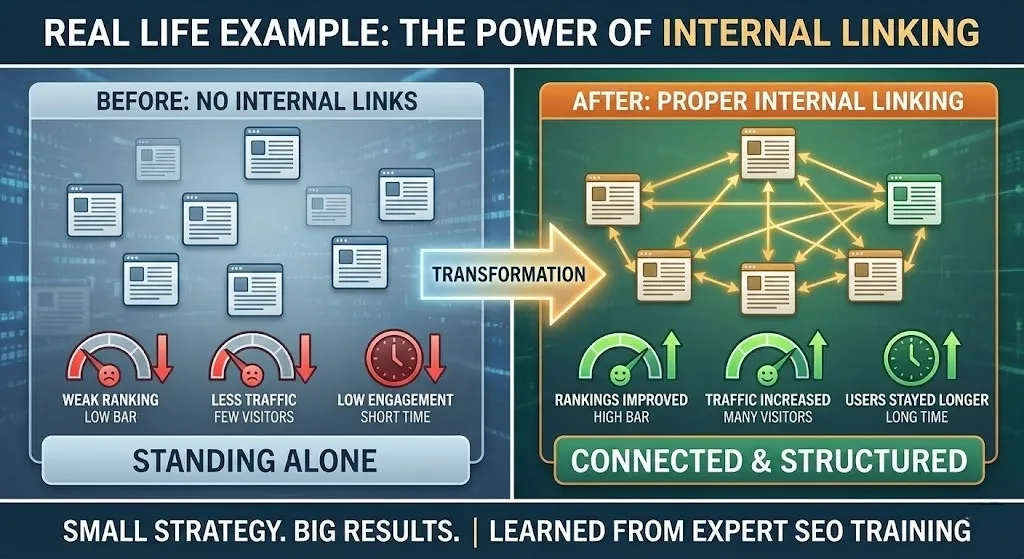
💡 Real Life Example 1
A blogging website published many great blogs.
But each blog was standing alone.
No internal links.
Result?
- Weak ranking
- Less traffic
- Low engagement
Later, after learning from an Expert SEO training institute, they added proper internal linking:
- Linked related blogs
- Connected important pages
- Built clear structure
What happened?
- Traffic increased
- Rankings improved
- Users stayed longer
Small strategy. Big results.
🧠 Types of Internal Links
| Type | Purpose | Example |
| Navigation Links | Menu structure | Home, Blog, Services |
| In-Content Links | Guide readers | Related topic links |
| Footer Links | Supportive links | Policies, extra pages |
| Sidebar Links | Suggested content | Popular posts |
Every good digital marketing seo course explains these types because each has its own benefit.
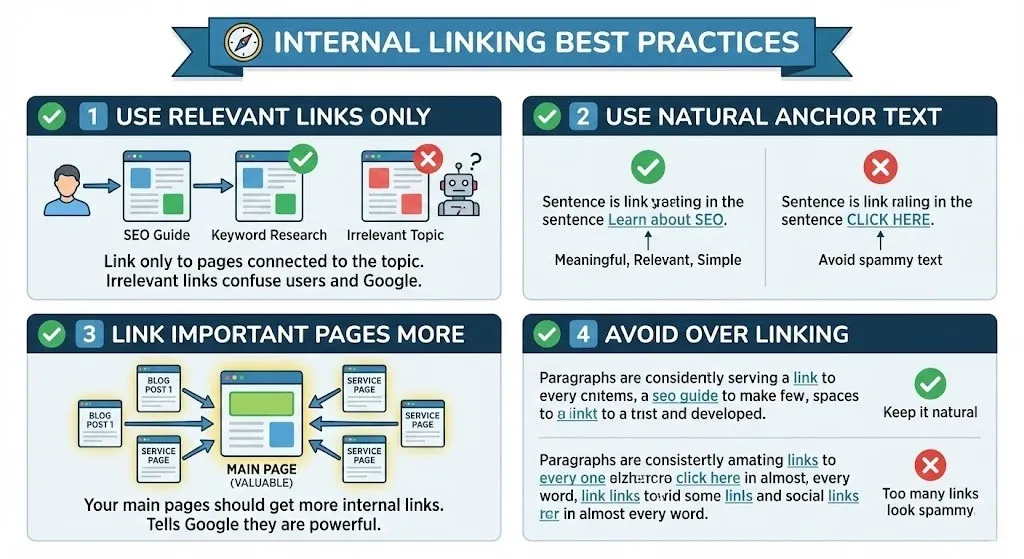
🧭 Internal Linking Best Practices
1️⃣ Use Relevant Links Only
Link only to pages that are connected to the topic.
Irrelevant links confuse users and Google.
2️⃣ Use Natural Anchor Text
Anchor text is the clickable text of your link.
It should:
- Be meaningful
- Relevant
- Simple
Avoid spammy text like “click here”.
3️⃣ Link Important Pages More
Your main pages should get more internal links.
This tells Google they are powerful and valuable.
4️⃣ Avoid Over Linking
Too many links look spammy.
Keep it natural.
PRO TIP
Always balance:
- SEO
- User experience
- Readability
Internal linking must feel helpful, not forced.
💡 Real Life Example 2
A training institute had a great course page, but it wasn’t ranking.
The reason?
No internal links pointing to it.
After learning through one of the best digital marketing courses, they:
- Added internal links from blogs
- Linked from home page
- Linked from service pages
Soon:
- That page started ranking
- Traffic increased
- Student enquiries grew
Internal linking gave visibility and power.
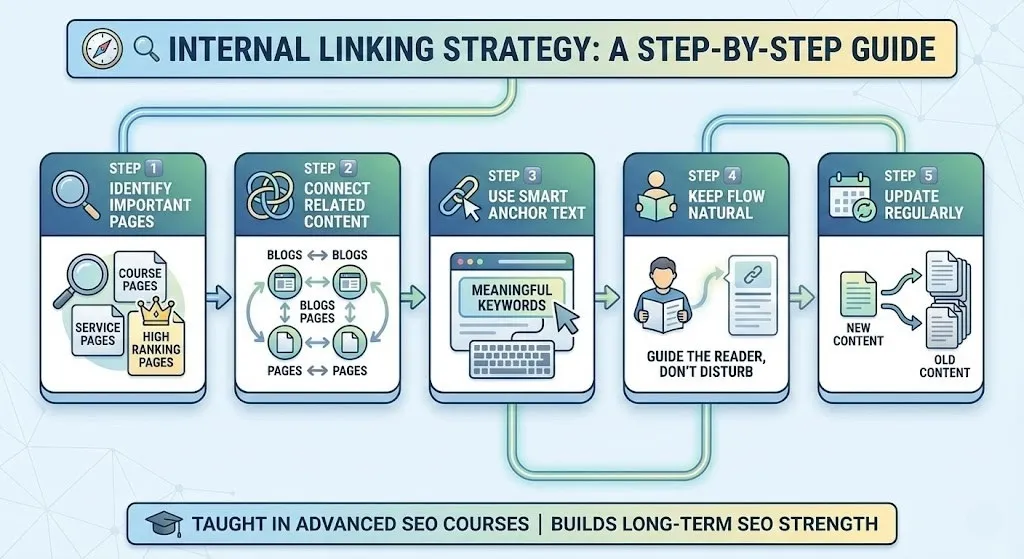
🔍 How to Create Internal Linking Strategy (Step By Step)
1️⃣ Identify Important Pages
Find your most valuable pages like:
- Course pages
- Service pages
- High ranking pages
2️⃣ Connect Related Content
Link blogs to blogs
Blogs to pages
Pages to pages
3️⃣ Use Smart Anchor Text
Make anchor text meaningful.
4️⃣ Keep Flow Natural
Links should guide the reader, not disturb reading.
5️⃣ Update Regularly
Whenever you publish new content, connect it with old content.
This strategy is taught deeply in an Advanced SEO course because it builds long-term SEO strength.
📊 Internal Linking Strategy Table
| Step | Action | Result |
| 1 | Identify key pages | Clear direction |
| 2 | Add links logically | Better experience |
| 3 | Use anchor text wisely | Stronger SEO |
| 4 | Maintain balance | Natural flow |
| 5 | Update regularly | Continuous growth |
💡 Real Life Example 3
A student created a blog website.
He wrote good content but didn’t know about internal linking.
Traffic was low.
Then he joined an Expert SEO training institute,
understood link architecture,
applied it smartly.
Within months:
- Traffic improved
- Engagement increased
- Rankings grew
Learning + Implementation = Results.
❌ Common Internal Linking Mistakes
Avoid these mistakes:
- Linking just for SEO
- Too many links in one paragraph
- Using same anchor text everywhere
- Linking irrelevant pages
- Ignoring important pages
Good SEO is smart SEO.
🧾 Internal Linking Checklist
Use this checklist every time:
✔ Relevant linking
✔ Avoid over linking
✔ Meaningful anchor text
✔ Support important pages
✔ Support user journey
✔ Update regularly
Follow this and your internal linking will support your rankings beautifully.
🎯 Final Thoughts
Internal linking is not complicated.
It is simple, powerful, and extremely effective.
Whether you study in an Advanced SEO course, learn through a digital marketing seo course, gain experience from a Professional SEO training institute, enroll in the best digital marketing courses, or train at an Expert SEO training institute, mastering internal linking will always help you build a stronger, smarter, and better-performing website.
If you plan properly, structure wisely, and link smartly —
your website will rank better, perform better, and grow continuously.
Disclaimer: The images and videos used in this blog are for educational and illustrative purposes only. Some visuals may be generated using AI tools, while others are sourced from publicly available platforms. We do not claim ownership of any third-party images or videos. All rights and credits belong to their respective owners.