1. Understanding the Digital Advertising Landscape
Digital Advertising Channels Overview
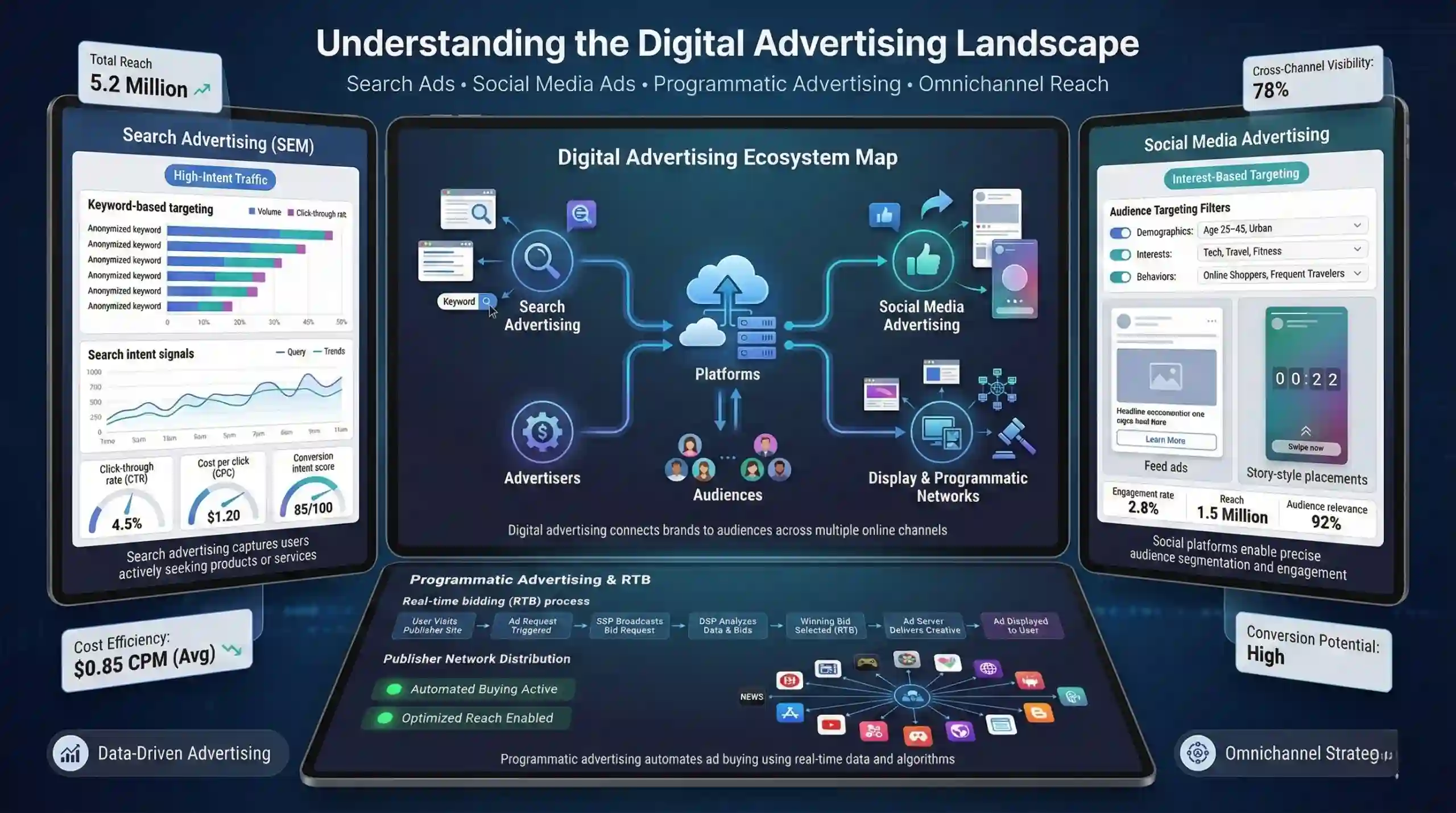
Digital advertising encompasses multiple channels that facilitate targeted outreach and engagement with potential customers. Major platforms such as Google Ads, Facebook Ads, and programmatic advertising platforms enable marketers to reach audiences across search engines, social media, and display networks.
Google Ads primarily focuses on search engine marketing (SEM) and display advertising, allowing advertisers to place targeted ads on Google search results and its partner websites. For example, a local bakery might use Google Ads to appear at the top of search results when users look for “fresh bread near me.”
Facebook Ads leverage social media’s vast user base, offering rich targeting options based on demographics, psychographics, and behaviors. A clothing retailer might target users interested in fashion brands or frequent online shoppers.
Programmatic advertising platforms employ automated, real-time bidding (RTB) systems to buy ad impressions across a network of publishers. This maximizes ad reach efficiency and precision targeting. For instance, a tech startup might use programmatic platforms to dynamically reach audiences interested in emerging gadgets.
PPC Campaigns and Models
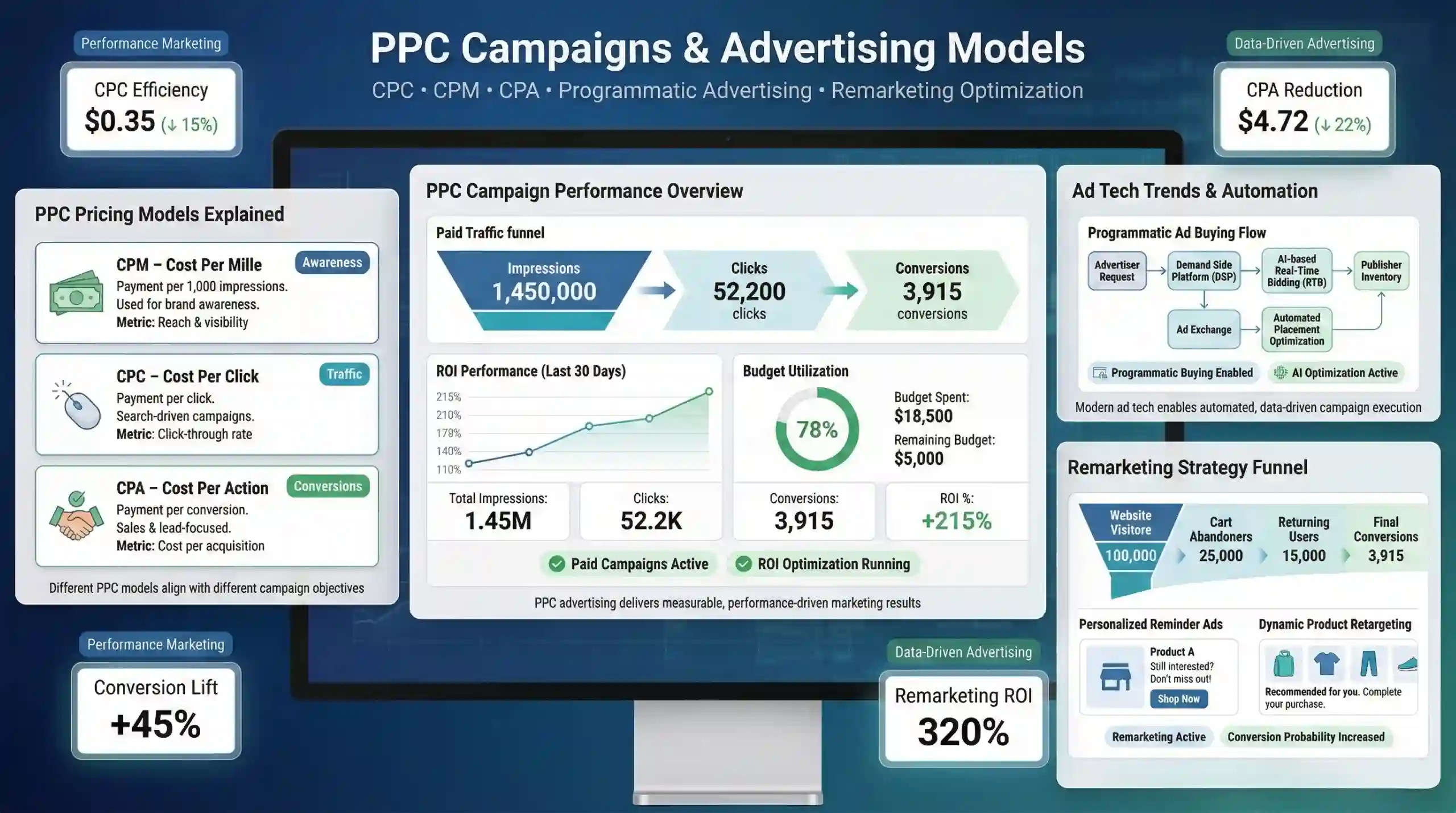
Pay-Per-Click (PPC) advertising is a model where advertisers pay only when users click on their ads. Key PPC models include:
- Cost-Per-Mille (CPM): Payment for every 1,000 ad impressions. Typically used for brand awareness campaigns. For example, a TV channel running display ads to increase brand recall.
- Cost-Per-Click (CPC): Payment only when a user clicks the ad. Commonly used in search advertising. An online course platform pays only when a user clicks to enroll.
- Cost-Per-Action (CPA): Payment when a specific action (purchase, sign-up) occurs. An e-commerce site may pay for each successful transaction initiated through an ad.
Mastering these models allows marketers to optimize ad spend, ensuring maximum return on investment (ROI).
Ad Tech Trends & Remarketing Strategies
Staying current with ad technology trends is essential. Programmatic ad buying offers automated, real-time optimization of ad placements based on audience data. Audience targeting involves selecting specific user groups based on behaviors and interests, enhancing relevance.
Remarketing techniques re-engage users who previously interacted with a brand but did not convert. For instance, showing ads of an abandoned shopping cart to visitors who left without purchasing. This strategy increases conversion likelihood by reinforcing brand presence through personalized messaging.
2. Setting Clear Advertising Goals
Key Performance Indicators (KPIs) for Digital Ads
Defining measurable KPIs is fundamental for evaluating campaign efficacy. The primary KPIs include:
- Click-Through Rate (CTR): Percentage of ad impressions leading to clicks. Higher CTR signifies compelling ad copy.
- Conversion Rate: Percentage of users completing desired actions post-click; indicative of ad relevance and landing page effectiveness.
- Cost-Per-Acquisition (CPA): Cost associated with acquiring a customer or lead.
- Return on Ad Spend (ROAS): Revenue generated per dollar spent, critical for assessing profitability.
SMART Objectives for Paid Campaigns
Creating SMART goals ensures clarity and focus. Examples include:
- Specific: Increase online sales of product X.
- Measurable: Achieve a 10% conversion rate.
- Achievable: Based on past data, a 10% increase is feasible.
- Relevant: Directly supports business revenue targets.
- Time-bound: Within the next three months.
Analytics Tools for Goal Tracking
Utilize tools like Google Analytics and Facebook Insights for real-time monitoring. They provide detailed reports on ad performance metrics, enabling iterative adjustments to improve outcomes.
3. Audience Segmentation and Targeting
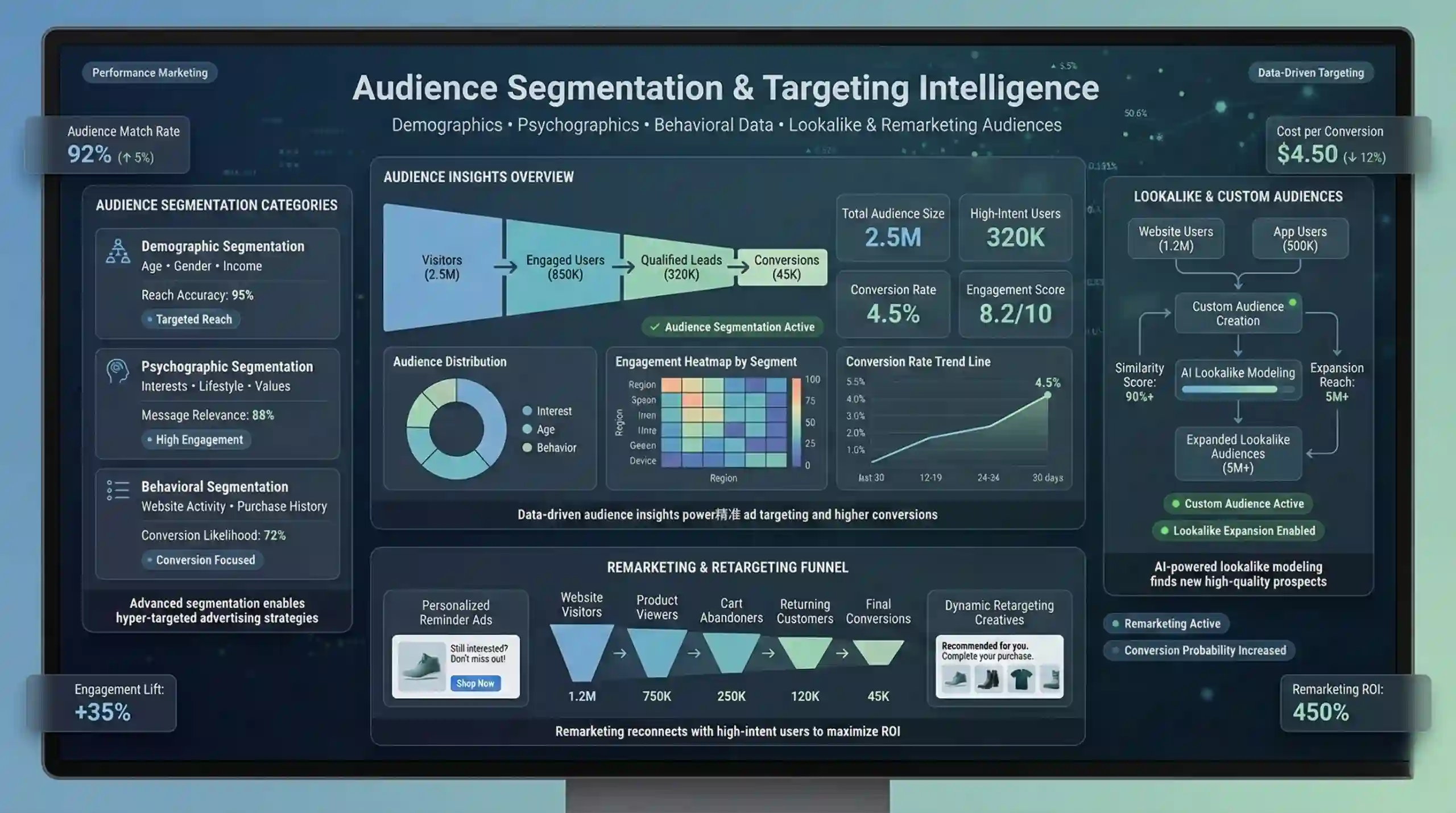
Audience Research & Data Segmentation
Effective ad campaigns demand detailed segmentation:
- Demographics: Age, gender, income level.
- Psychographics: Lifestyle, interests, values.
- Behavioral Data: Purchase history, online activity, engagement patterns.
Segmenting audiences enables hyper-targeted advertising, which enhances relevance and engagement. For example, a fitness brand might target middle-aged adults interested in health and wellness activities.
Personas Development for Ad Personalization
Buyer personas are fictional representations of ideal customers, synthesized through data collection. For example, a persona for a luxury watch brand may include high-income professionals aged 30-50 who value craftsmanship and exclusivity. Personalization entails tailoring ad messaging to reflect such characteristics, increasing resonance and conversion rates.
Lookalike & Custom Audiences
Platforms like Facebook enable lookalike audience creation, where new prospects are identified based on characteristics of existing customers. Similarly, custom audiences allow targeting users who interacted with your website or app. This targeted approach optimizes ad relevance and reach efficiency.
4. Keyword Research & Optimization
SEO and SEM Keyword Tools
Employ tools such as Google Keyword Planner, SEMrush, and Ahrefs to identify keywords with high search volume and relevance. Selecting effective keywords improves ad visibility on search engine results pages (SERPs).
Keyword Strategy for Paid Search Campaigns
Focus on long-tail keywords that indicate clear intent, such as “buy affordable ergonomic office chairs.” These tend to have lower competition and higher conversion rates, leading to better Quality Scores—a critical factor for ad ranking and cost efficiency.
Ad Copy Optimization with Keywords
Natural integration of keywords into ad headlines and descriptions enhances ad relevance. For instance:
"Buy ergonomic office chairs – Free shipping | Limited offer"This strategic keyword placement improves ad rank and visibility.
5. Crafting High-Converting Ad Copy & Creatives
Ad Copywriting for Conversion Optimization
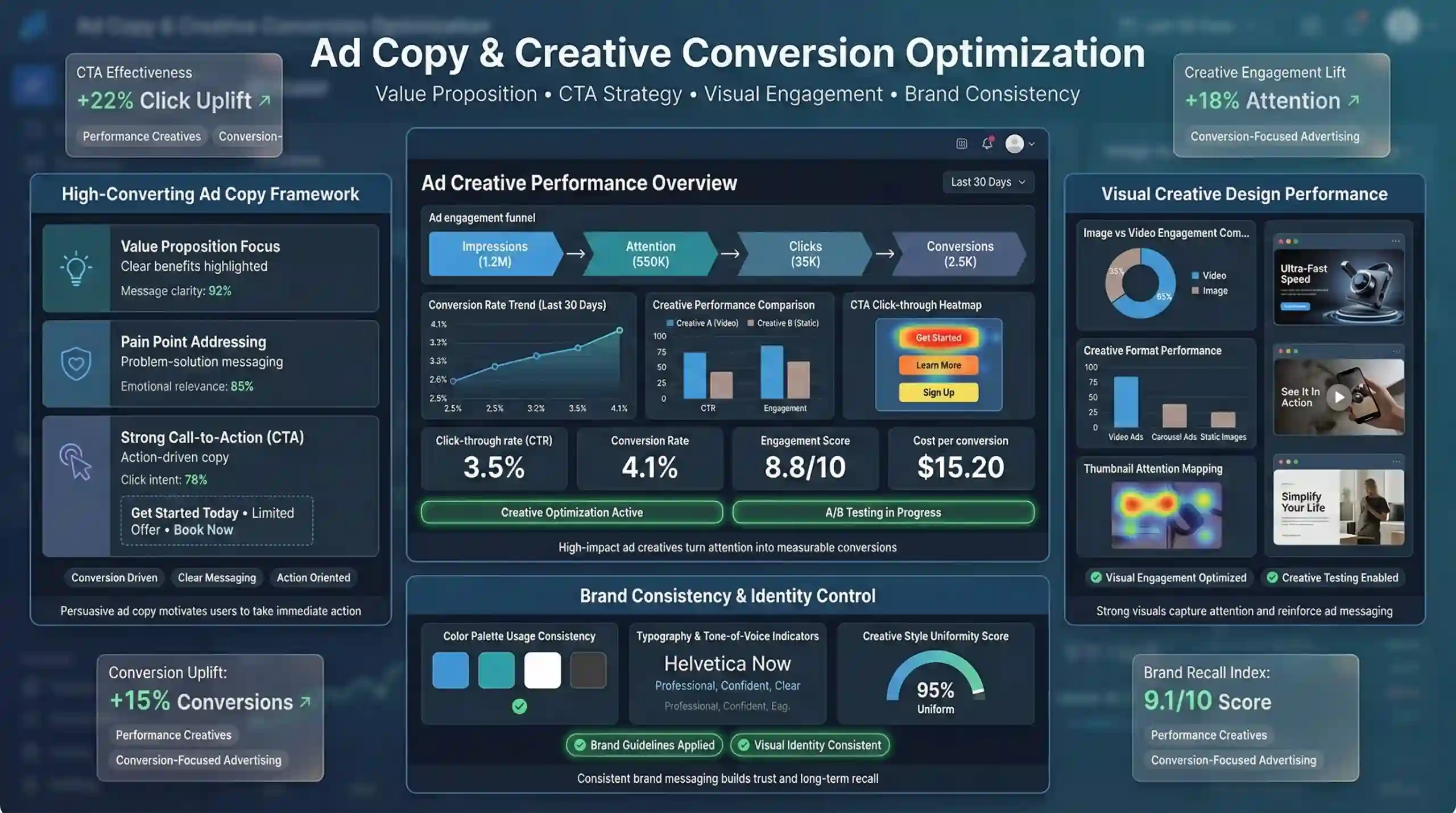
Effective ad copy emphasizes value propositions, addresses customer pain points, and includes clear CTAs. For example, a law firm ad might say:
"Secure your future today – Free consultation. Call now!"Strong copy persuades users to act.
Designing Engaging Visual Content
Visuals serve to capture attention and reinforce messaging. Using high-quality images, concise text overlay, and compelling videos can significantly increase engagement. For example, product demo videos showcase features, boosting trust and click-through rates.
Consistent Brand Messaging
Maintaining consistent brand identity—logos, color schemes, tone of voice—in all ad creatives fosters familiarity and brand recall. For instance, a fashion brand must ensure every ad aligns with its aesthetic style.
6. Budget Planning & Bidding Strategies
Ad Budget Allocation & Campaign Planning
Allocate budgets based on performance potential and marketing priorities. For example, investing more in high-performing channels such as Google Search ads while monitoring return rates.
Bidding Strategy Selection
Select appropriate bidding strategies:
- Manual CPC: Fine control over bids.
- Enhanced CPC: Bids adjusted automatically for conversions.
- Target ROAS: Bids optimized for specific revenue goals.
- Automated Bidding: Platforms like Google Ads automatically optimize bids for desired outcomes.
ROI Monitoring & Cost Optimization
Regularly analyze spend versus conversions. If CPA exceeds target, refine keywords, ad copy, or bid amounts to improve profitability.
7. Campaign Launch & Management
Campaign Setup & Platform Optimization
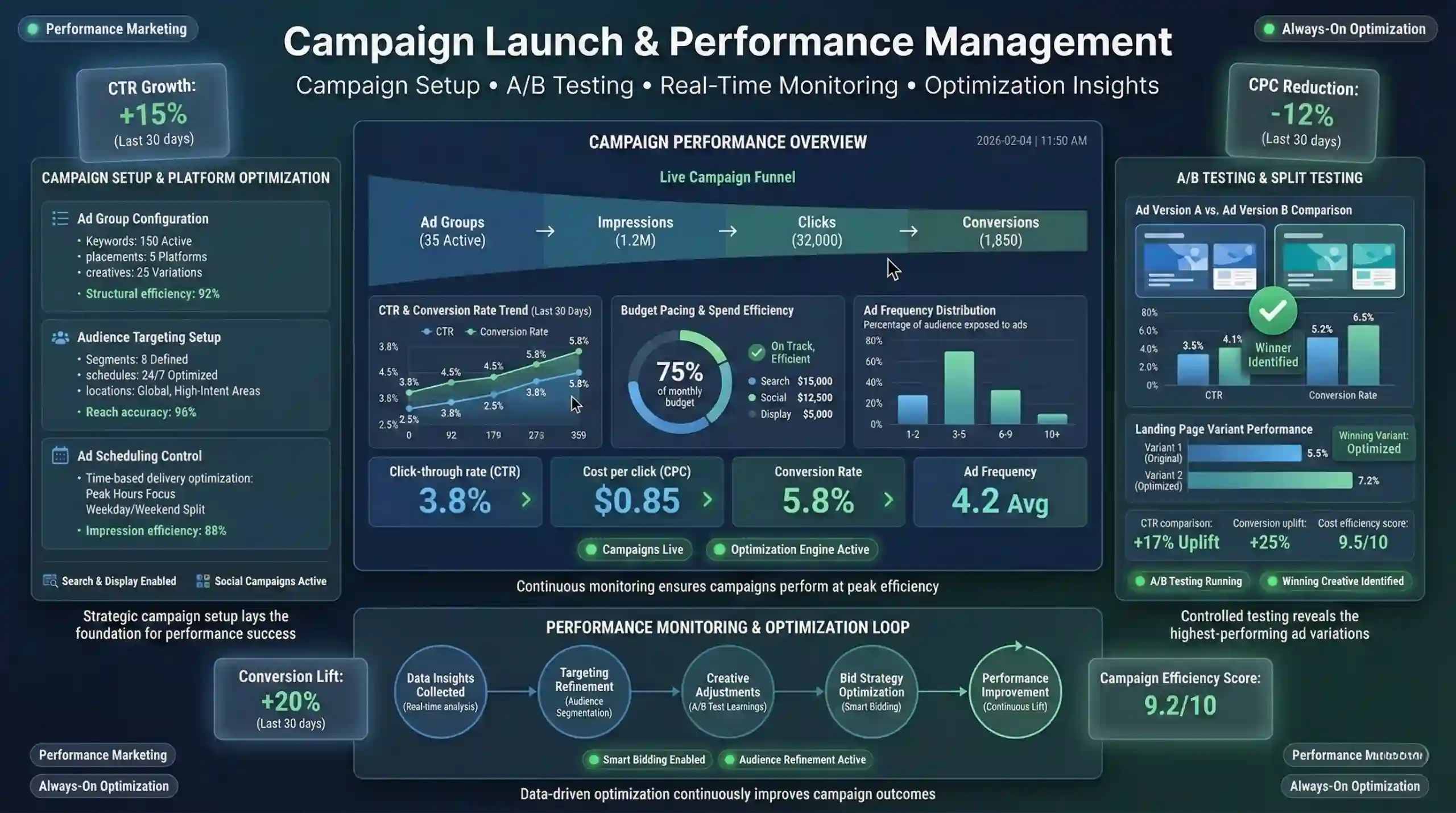
Proper setup involves defining ad groups, target audience segments, and setting ad scheduling. Utilize Google Ads Manager and Facebook Business Manager for streamlined management.
A/B Testing & Split Testing
Conduct controlled tests to compare different ad creatives or landing pages:
- “Ad Version A” vs. “Ad Version B”
Analyze results to identify best performers, thereby continuously improving campaign efficacy.
Performance Monitoring & Optimization
Track metrics such as CTR, CPC, conversion rate, and ad frequency. Use insights to refine targeting, ad copy, and bidding strategies for optimal results.
8. Data Analysis & Performance Optimization
Analyzing Paid Ad Metrics
Leverage Google Analytics and platform dashboards to interpret key metrics, enabling data-driven decisions. Suppose a drop in CTR indicates the need for fresher ad creatives.
Refining Ad & Targeting Strategies
Use insights to refine audience segmentation, optimize ad copy, and tweak landing pages. For instance, if a particular demographic underperforms, reallocating budget elsewhere may be prudent.
Retargeting & Dynamic Ads
Implement retargeting campaigns to reach users who abandoned shopping carts or visited product pages. These dynamic ads display personalized product recommendations, increasing the probability of conversions.
9. Staying Updated with Industry Trends
Follow Leading Digital Marketing Blogs
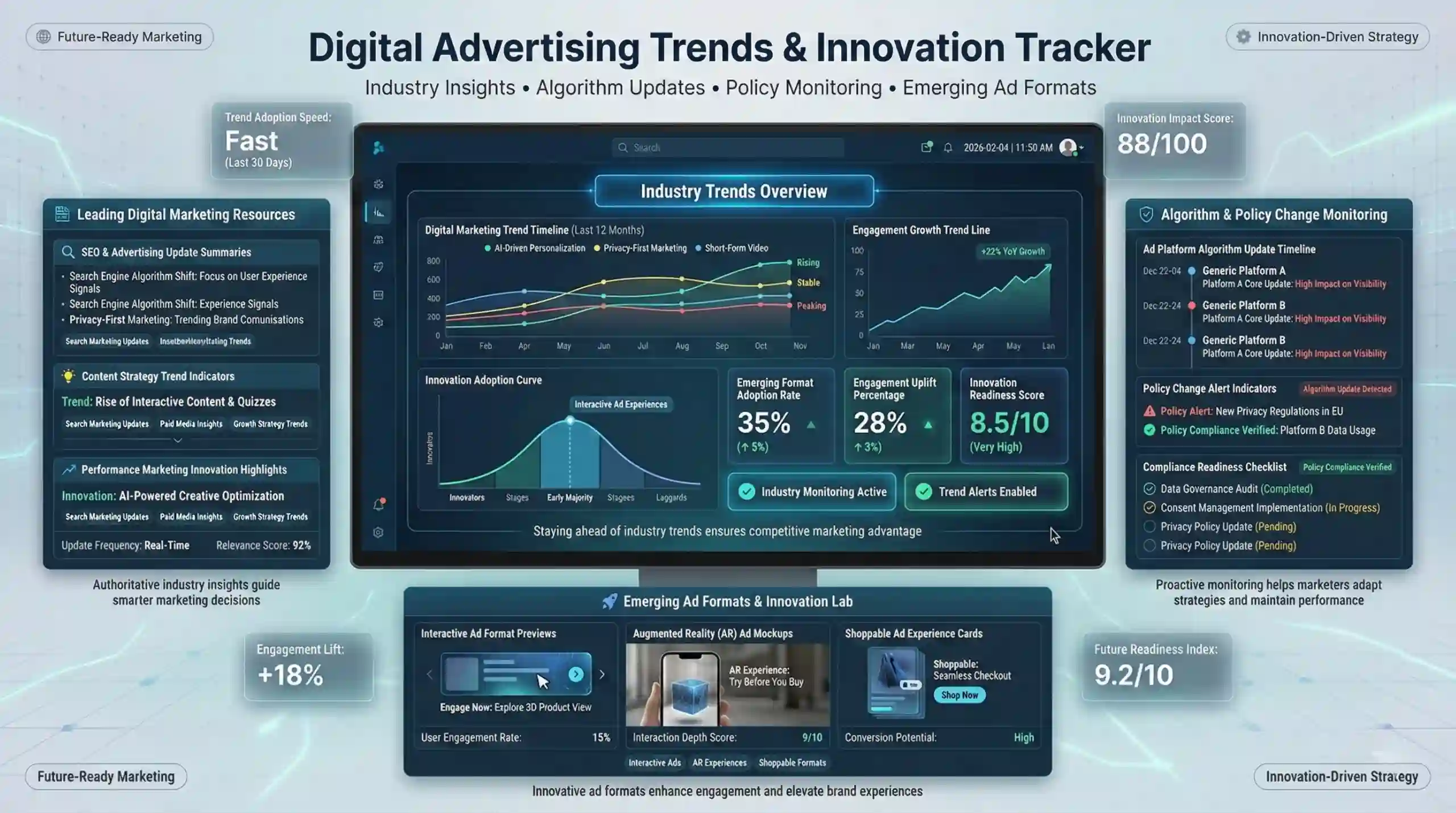
Stay informed through authoritative sources like Moz, HubSpot, and Neil Patel, which publish updates on digital ad innovations, SEO, and emerging strategies.
Monitor Algorithm & Policy Changes
Regularly review updates from platforms like Google Ads and Facebook Ads to stay compliant and adapt strategies, ensuring sustained campaign performance.
Experiment with Emerging Ad Formats
Innovate with new formats such as interactive ads, augmented reality (AR) ads, and shoppable ads to elevate user engagement and enhance brand experience. For example, AR ads allowing users to virtually try products.
10. Continuous Learning & Certification
Digital Marketing Certification & Courses
Obtain credentials such as Google Ads Certification, Facebook Blueprint, or HubSpot Inbound Marketing Certification to validate proficiency in ad strategy development.
Attend Webinars & Industry Events
Participate in online seminars, workshops, and conferences to learn about new ad tech tools and marketing trends, fostering ongoing professional development.
Test & Implement New Tools & Techniques
Experiment with automation platforms, AI-driven ad optimization, and creative innovations. Continuous testing ensures campaigns remain effective amid evolving digital ad landscapes.
Practice Questions
- What are the primary differences between CPM, CPC, and CPA advertising models?
Answer: CPM charges per 1,000 impressions; CPC charges per click; CPA charges per desired action or conversion. - How does remarketing improve conversion rates in digital advertising?
Answer: Remarketing re-engages users who previously interacted with the brand, delivering personalized ads to increase the likelihood of conversion. - Which tools are commonly used for keyword research in SEM campaigns?
Answer: Google Keyword Planner, SEMrush, Ahrefs. - Describe the importance of ad relevance and how keyword integration affects ad rank.
Answer: Higher relevance improves ad rank by aligning ad content with user search intent, leading to better placement and lower costs; natural keyword integration enhances relevance. - What role do buyer personas play in ad campaign targeting?
Answer: Buyer personas help tailor ad messaging and targeting strategies to specific audience segments, increasing engagement and conversion potential. - Explain the concept of A/B testing in ad management.
Answer: It involves comparing two versions of an ad or landing page to determine which performs better based on key metrics, enabling optimization. - How can dynamic ads personalize marketing messages?
Answer: Dynamic ads automatically generate personalized content based on user behavior and preferences, increasing relevance and chances of conversion. - Why is continuous monitoring important in digital advertising?
Answer: It allows for real-time adjustments to optimize performance, control costs, and adapt to platform algorithm changes. - Which platforms offer certification programs for digital advertising proficiency?
Answer: Google Ads Certification, Facebook Blueprint, HubSpot Certification. - Name two emerging ad formats that can enhance user engagement.
Answer: Interactive ads, augmented reality (AR) ads.
Code Output (Sample scenario)
Suppose a marketer runs two ad campaigns: One with ad copy A and another with ad copy B. After A/B testing, the results show:
| Metric | Version A | Version B |
|---|---|---|
| CTR (%) | 3.2 | 4.5 |
| Conversion Rate (%) | 1.8 | 2.7 |
| Cost per Conversion ($) | 15 | 12 |
This indicates Version B performs better in engagement and conversions, demonstrating the importance of iterative testing and optimization.
Resources for Further Study
- Google Ads Help Center
- Facebook Business Resources
- HubSpot Academy
- Moz Blog
- Neil Patel Digital
- GeeksforGeeks Marketing Articles
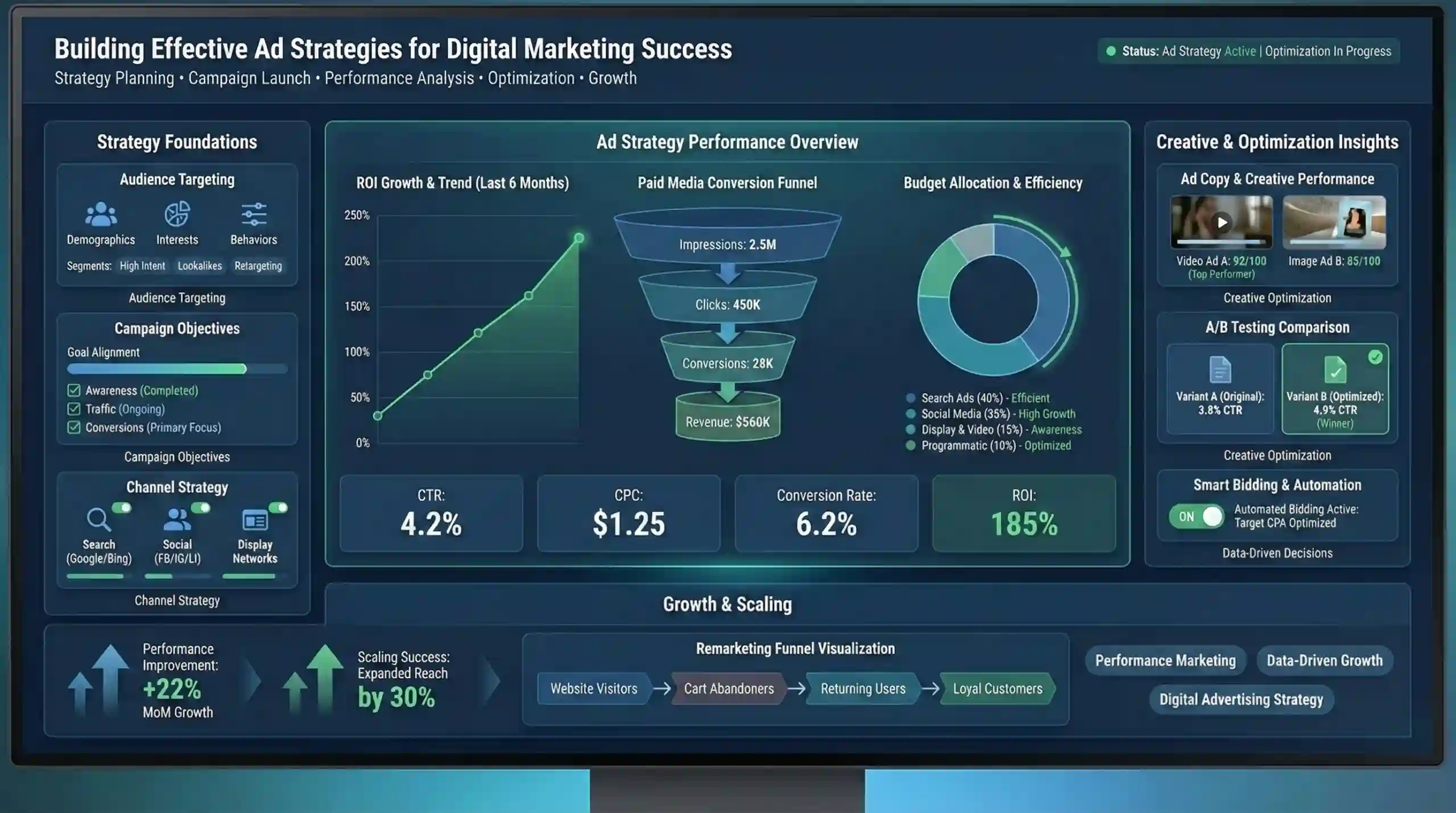
This structured approach provides deep theoretical insights into building effective ad strategies for digital marketing success, combining essential concepts with practical application.
More Courses
- Social Media Marketing course with Gen AI
- Advance Digital Marketing & SEO course with Gen AI
- Advanced Certificate in Digital Design & Marketing course with Gen AI
- Meta & Google Ads course with Gen AI