
1. Introduction to Keyword Types in SEO
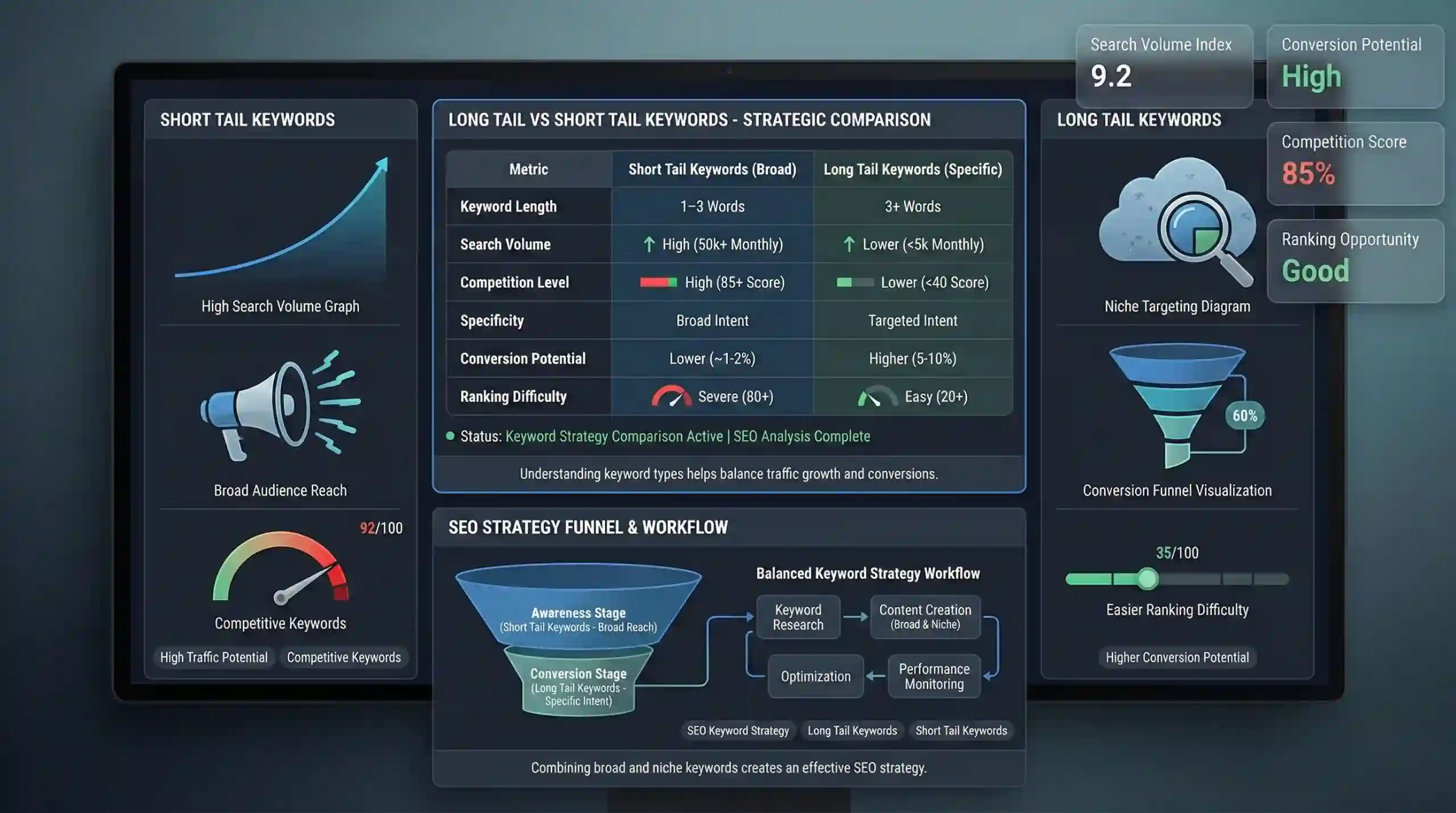
In the realm of Search Engine Optimization (SEO), understanding the nature of keywords is fundamental for devising an effective strategy to enhance a website’s visibility in search engine results. Keywords are the terms and phrases that users type into search engines to find information, products, or services. Recognizing the different types of SEO keywords—primarily short tail and long tail keywords—is crucial for targeting the right audience and improving your website’s ranking. Mastery of keyword types enables SEO practitioners to balance broad reach with targeted traffic, optimizing content for both visibility and relevance.
2. What Are Short Tail Keywords in SEO?
Definition of Short Tail Keywords
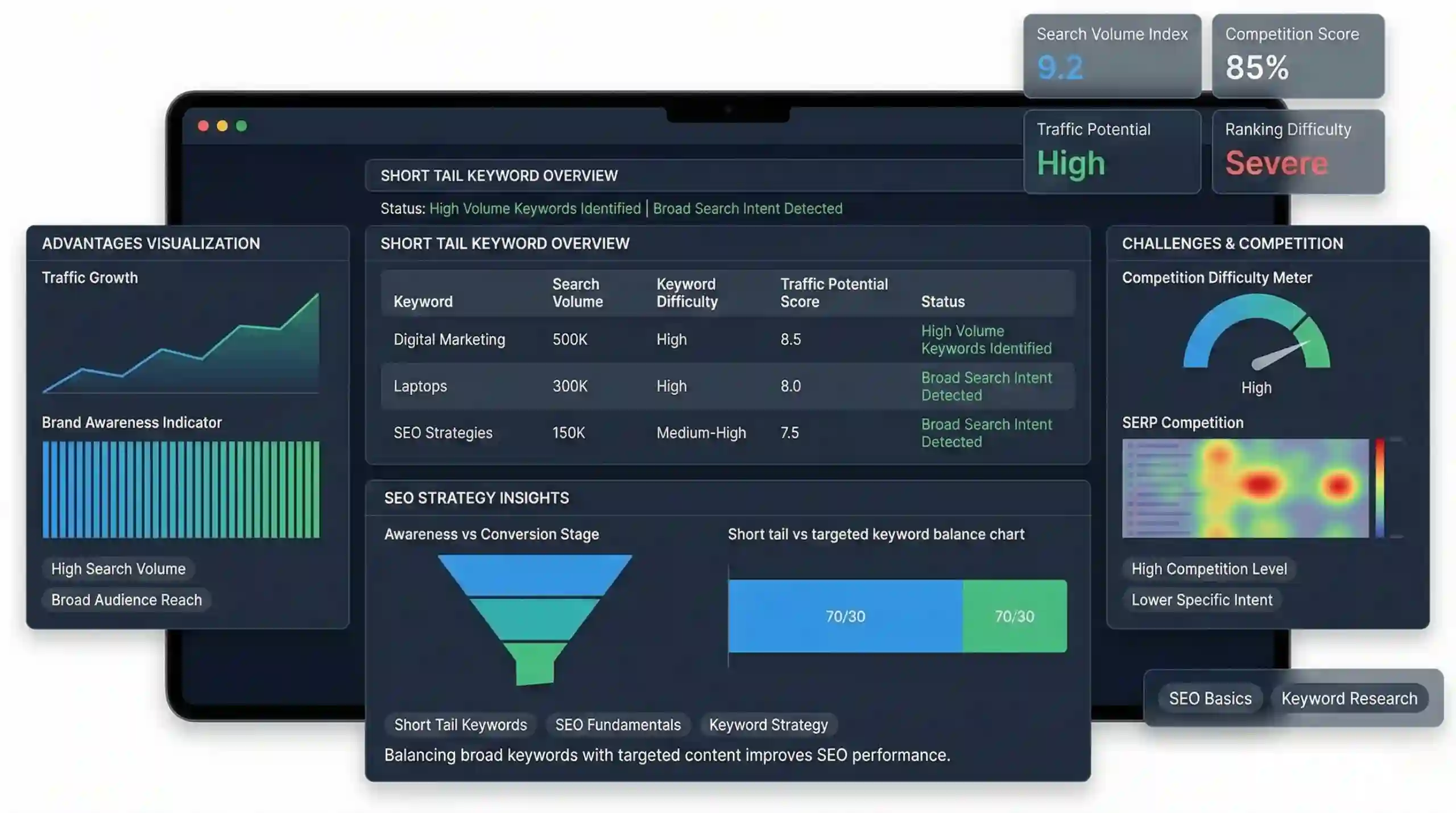
Short tail keywords, often called broad keywords or head keywords, are phrases consisting of one to three words. They embody general concepts or broad topics and are typically used by users when initiating a search query that is less specific.
Examples of Short Tail Keywords
- “Digital Marketing”
- “Laptops”
- “SEO Strategies”
Advantages of Short Tail Keywords in SEO
Short tail keywords tend to have high search volume, meaning they are searched frequently by users. This high volume directly correlates with increased potential website traffic and brand awareness. Additionally, optimizing for short tail keywords can help establish domain authority rapidly, especially in competitive niches, because these keywords generally attract a broad audience.
Disadvantages of Short Tail Keywords in SEO
Despite their benefits, short tail keywords pose challenges. The competition for ranking on these broad terms is intense because multiple websites target these keywords. Their lower specificity often results in attracting irrelevant traffic, leading to lower conversion rates. Consequently, while they boost traffic, they may not significantly increase conversions or sales without supplementary targeted content.
3. What Are Long Tail Keywords in SEO?
Definition of Long Tail Keywords
Long tail keywords are phrases containing three or more words. They are distinctly specific to particular user queries, often reflecting detailed search intent or specific information needs.
Examples of Long Tail Keywords
- “Best affordable laptops for students”
- “How to improve SEO for ecommerce websites”
Advantages of Long Tail Keywords in SEO
Long tail keywords usually encounter less competition, allowing new or smaller websites to rank more easily. They attract highly targeted traffic because the keywords reflect precise user intent, resulting in higher conversion rates. For example, a person searching “buy ergonomic office chair online” is more likely to convert into a customer than someone searching simply for “chairs.”
Disadvantages of Long Tail Keywords in SEO
The primary challenge with long tail keywords is their lower search volume, which limits overall traffic potential unless a large number of specific keywords are targeted collectively. They require meticulous research, ongoing content creation, and comprehensive optimization strategies to maximize their benefits.
4. Differences Between Long Tail and Short Tail Keywords in SEO
| Aspect | Short Tail Keywords | Long Tail Keywords |
|---|---|---|
| Length | 1-3 words | 3 or more words |
| Search Volume | High | Lower |
| Competition | High | Lower |
| Specificity | Broad, general intent | Very specific, targeted intent |
| Conversion Potential | Lower | Higher |
| Keyword Difficulty | Higher due to competition | Easier to rank for less competitive keywords |
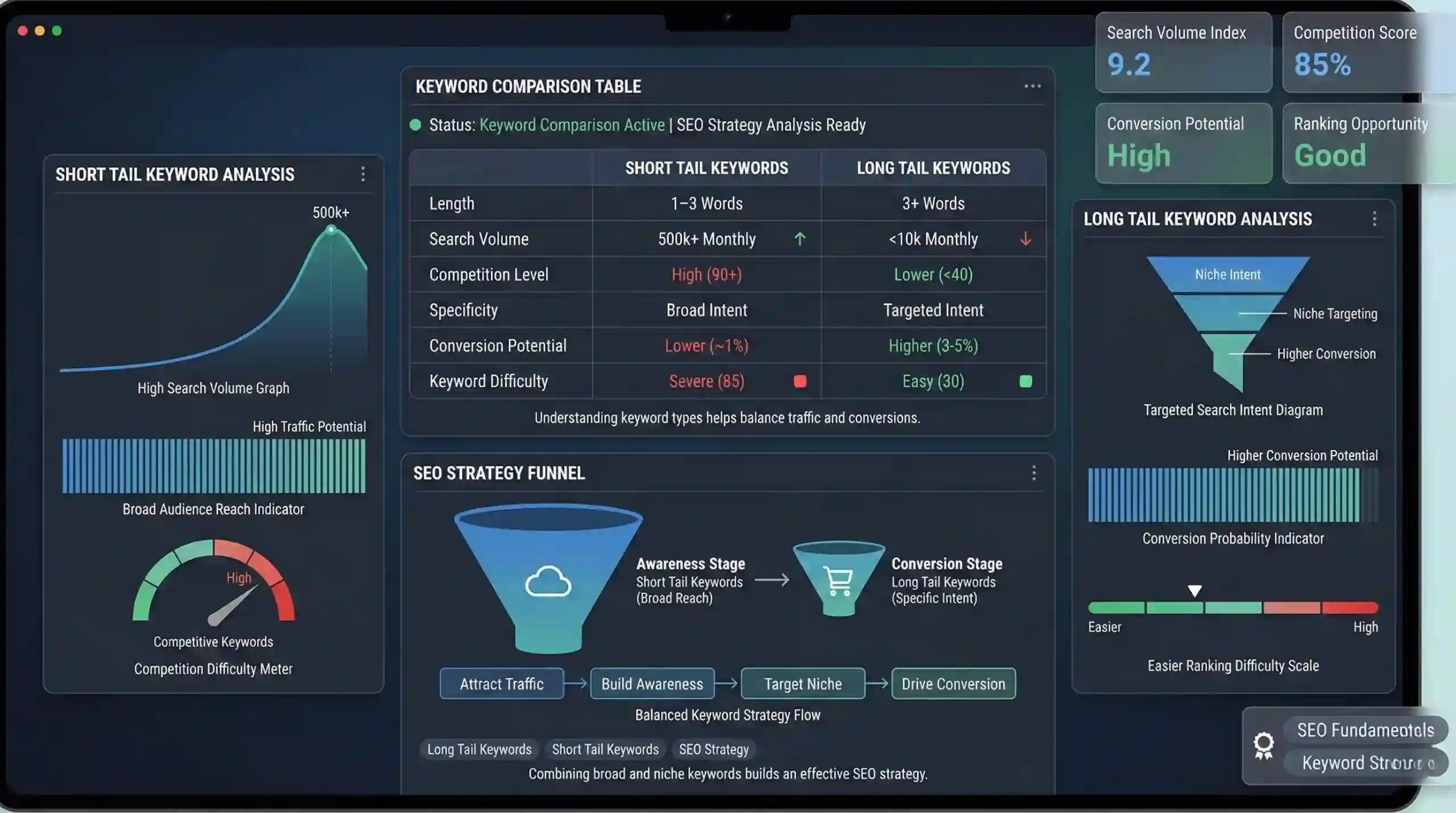
Summary: Short tail keywords boost website visibility through high traffic but are challenging to rank for due to competition. Long tail keywords, though less competitive, focus on niche queries, offering better conversion opportunities.
5. SEO Strategies for Short Tail Keywords
Keyword Focus in SEO
Use broad keywords to strengthen overall domain authority. These are especially effective on the homepage or main category pages, serving as foundational SEO elements that support detailed keyword targeting.
Tools for Short Tail Keyword Research
Leverage tools such as Google Keyword Planner, SEMrush, and Ubersuggest to analyze search volume, competition, and trending patterns. These tools facilitate understanding which broad keywords can yield the best results considering your industry niche.
Combining Short and Long Tail Keywords in SEO
Integrate both keyword types for comprehensive SEO coverage. Use broad short tail keywords to reach a wide audience and long tail keywords for niche-specific targeting. For example, optimize your homepage for “Digital Marketing” and individual blogs for long tail variants like “Digital marketing strategies for small businesses.”
Optimization Tips in SEO
Ensure on-page SEO elements—title tags, meta descriptions, headers—include your broad keywords. Content should subtly incorporate these keywords, maintaining readability and relevance, to gradually build authority and increase rankings.
6. SEO Strategies for Long Tail Keywords
Targeted Content Creation
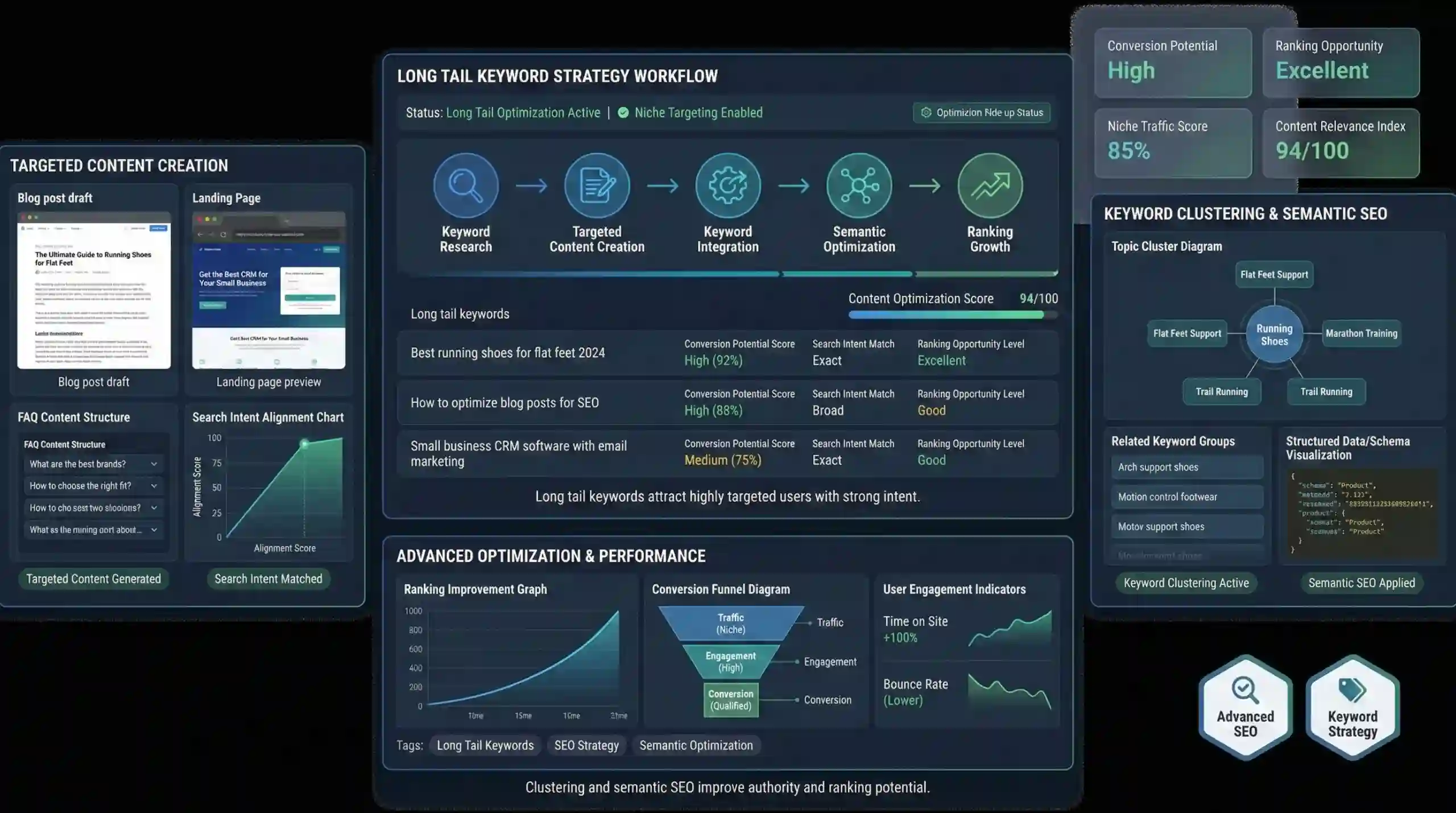
Develop content aligned with specific long tail search queries. Detailed blog posts, FAQs, product descriptions, and landing pages tailored to these queries attract committed visitors with high purchase intent.
Keyword Integration in SEO
Incorporate long tail keywords naturally within content, meta tags, image alt texts, and URLs. For example, a product page for a “wireless gaming mouse” should include that phrase seamlessly within content and metadata.
Keyword Clustering in SEO
Group related long tail keywords to establish topical authority. Creating comprehensive content around clusters of related long tail terms (e.g., “wireless gaming mice,” “best wireless gaming mice under $50,” “wireless mice for gaming”) increases the likelihood of ranking for multiple variations.
Advanced Optimization in SEO
Use semantic SEO techniques—like structured data and contextually related terms—to enhance search relevance and user experience, further aligning your content with user search intent.
7. Understanding Keyword Intent in SEO
Types of Keyword Intent
- Informational: Users seek knowledge (e.g., “what is SEO?”).
- Navigational: Users look for a particular website or brand.
- Transactional: Users intend to make a purchase or complete an action (e.g., “buy iPhone 14 online”).
Mapping Long Tail Keywords to Intents
Most long tail keywords epitomize informational or transactional intent, making them ideal for content that educates, informs, or prompts purchases. Recognizing this allows for better content formulation—educational blog posts or product pages—that directly target user needs, thereby improving search engine rankings and conversions.
8. Tools and Techniques for Effective Keyword Research in SEO
Keyword Research Tools
Use Google Keyword Planner, Ubersuggest, Ahrefs, and SEMrush to identify high-volume, low-competition keywords, analyze search intent, and recognize emerging trends. These tools help refine your SEO keyword roadmap for both short tail and long tail strategies.
Competitive Analysis in SEO
Study competitor websites to discover which keywords they rank for, especially in your niche. Tools like SEMrush or Ahrefs facilitate gap analysis, revealing opportunities to outrank competitors by targeting untapped long tail keywords.
Trend Analysis
Employ Google Trends to monitor seasonality and trending keywords. Understanding when specific keywords surge in popularity allows you to time your content and SEO efforts for maximum visibility.

9. Content Optimization Tips in SEO
Optimizing for Short Tail Keywords
Prioritize homepage and pillar content by incorporating short tail keywords in critical on-page elements—titles, headers, and meta descriptions—to maximize site-wide visibility.
Optimizing for Long Tail Keywords
Create in-depth, high-quality blog posts, FAQs, and product pages that naturally embed long tail keywords. Use relevant semantic keywords to enhance relevance and avoid keyword stuffing.
Best Practices for SEO Content
Write compelling, relevant content that addresses user intent. Maintain optimal keyword density and ensure readability. Semantic SEO—using related terms—improves content relevance and search performance.
10. Conclusion & Best Practices in SEO Keyword Strategy
Combining short tail and long tail keywords fosters a balanced SEO approach, enriching your site’s visibility and conversion potential. Focus on long tail keywords for niche targeting and higher quality traffic, while utilizing short tail keywords to build overall authority. Regularly analyze and update your keyword list leveraging analytics tools like Google Analytics and Search Console, keeping pace with search trends and market shifts. Prioritize user intent and content relevance to ensure your SEO keyword roadmap remains effective and sustainable.

Final Note
This SEO Keyword Roadmap provides foundational knowledge necessary for beginners to understand the roles, differences, and strategies associated with long tail and short tail keywords. Mastery of these concepts will markedly improve search engine rankings, attract qualified traffic, and increase conversions.
Study Resources
- W3Schools SEO Tutorial – Beginner-friendly overview of SEO concepts.
- GeeksforGeeks SEO Articles – In-depth tutorials and articles.
- Moz Beginner’s Guide to SEO – Comprehensive SEO introduction and strategy.
- Google Keyword Planner – Official tool for keyword research.
- Google Trends – Analyze keyword trends over time.