

Introduction
In a culture where the question “When are you getting married?” is a familiar refrain, the concept of arranged marriage is a deeply embedded tradition. Long before dating apps became mainstream, Anupam Mittal launched Shaadi.com in 1996, a time when the internet was still in its infancy in India. The platform was a revolutionary idea: digitizing the age-old process of matchmaking. It offered families and individuals a way to look for compatible partners beyond the confines of their immediate social circles. Today, having facilitated over 3.2 million successful marriages, Shaadi.com stands as a testament to a brand that successfully navigated the complex intersection of tradition and technology.
Digital Marketing & SEO Strategy
Shaadi.com’s marketing success is built on a deep understanding of its audience’s journey, combining a powerful digital presence with strategic offline touchpoints.
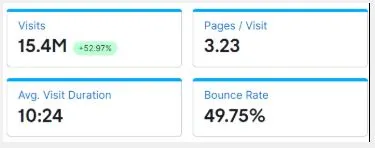
- SEO (Search Engine Optimization): SEO is a cornerstone of Shaadi.com’s strategy for capturing high-intent users. They optimize their website to rank for crucial keywords like “online matchmaking India,” “Indian matrimony,” and “arranged marriage websites.” Their strong brand authority and content have resulted in significant organic traffic, with 885.45K organic search visits in March 2024 alone. This demonstrates strong brand recall, as many users search for them directly. Their SEO strategy also has a global focus, successfully capturing a large segment of the Indian diaspora; of their total website visits, 1.17 million came from the USA, highlighting their effectiveness in reaching NRIs (Non-Resident Indians).
- Social Media Marketing: Shaadi.com uses platforms like Instagram, where they have over 102K followers, to connect with a younger demographic. Their tone is informal, entertaining, and highly engaging, using memes and relatable content to stay relevant. They also promote their language-specific domains on social media, catering to India’s diverse linguistic landscape. The strategy is to build a community and keep the brand top-of-mind in a friendly, low-pressure environment.
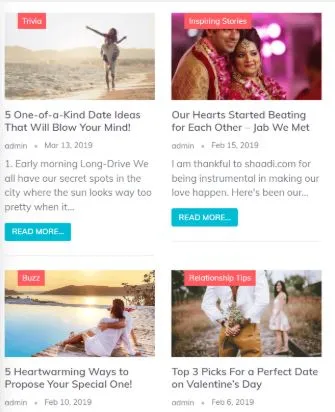
- Content Marketing: The brand positions itself as a trusted authority on relationships through its content. The Shaadi.com blog is a key asset, offering valuable content on topics like relationship advice, tips for creating an effective profile, and navigating family expectations. Crucially, they heavily feature success stories, which act as powerful testimonials and social proof, building credibility and trust.
- Paid Advertising Channels (SEM): To complement their organic efforts, Shaadi.com leverages paid search marketing (SEM) on platforms like Google Ads. They run highly targeted campaigns based on demographics (age, location), interests (religion, community), and intent. This generated 144.82K paid search visits in March 2024, proving effective in capturing users actively looking for matchmaking services.
STP Analysis
- Segmentation: Shaadi.com segments its market based on a nuanced understanding of the matrimony landscape:
- Demographics: Primarily targets individuals aged 25-34, who are often professionally established and ready for marriage. They segment geographically between users in India and the vast global Indian diaspora (USA, UK, Canada, etc.).
- Psychographics: Caters to individuals who value family involvement and cultural traditions but seek a modern, efficient way to find a partner. This includes young professionals balancing careers, family-oriented individuals seeking guidance, and NRIs wanting to connect with their cultural roots.
- Behavioral: Targets users with a clear and high intent: finding a life partner for marriage within a specific cultural and social framework.
- Targeting: Shaadi.com’s primary target audience is not just the individual but the entire family unit involved in the arranged marriage process. They have created detailed user personas like “The Young Professional,” “The Family-Oriented Individual,” and “The NRI” to tailor their messaging and features to meet the specific needs and motivations of each segment.
- Positioning: Shaadi.com has masterfully positioned itself as a modern tool that enhances and facilitates, rather than replaces, traditional matchmaking. They are positioned as a safe, trusted, and culturally sensitive platform that empowers users with data and choice while respecting the importance of family and community.
The 4 Ps of Marketing
- Product: The core product is a sophisticated online matchmaking platform (website and app). Key features include:
- Detailed user profiles with verification for safety.
- Advanced search filters based on religion, community, education, location, and more.
- Secure communication channels.
- Data-driven matchmaking algorithms.
- An offline network of over 100 “Shaadi Centers” across India, providing in-person counseling and support.
- Price: Shaadi.com operates on a freemium model. Users can create a basic profile and browse matches for free. However, to access premium features like viewing contact details and sending personalized messages, users must subscribe to a paid plan. This allows them to capture a wide user base while monetizing high-intent users.
- Place: The service is primarily delivered through its digital platforms (website and mobile app), making it accessible globally. This is complemented by a strategic physical presence through their network of Shaadi Centers, creating a crucial omnichannel experience for those who prefer or require face-to-face interaction.
- Promotion: Their promotional strategy is multi-channel:
- Digital Marketing: SEO, SEM, and social media campaigns.
- Content Marketing: Blogs and success stories to build authority and trust.
- Public Relations: Actively promoting their success stories in the media.
- Offline Presence: The Shaadi Centers act as physical advertisements and trust-building hubs.
Influencer Marketing & Collaborations
For a brand built on trust and life-altering decisions, traditional influencer marketing takes a backseat to a more powerful form of social proof: real success stories.
- Strategy: The core of their collaboration strategy is to turn their successful users into their biggest advocates. They identify couples who met through the platform and feature their stories prominently.
- Types of “Influencers” & Campaigns: Their influencers are everyday couples. These real-life testimonials are showcased through detailed blog posts, video interviews, and social media features. This is far more authentic and persuasive than a paid endorsement from a celebrity.
- Goal of Collaborations: The goal is to build unparalleled trust and credibility. By showcasing tangible proof that the platform works, they directly address the skepticism associated with online matchmaking. Each success story serves as a powerful, emotional endorsement that reinforces the brand’s promise.
Challenges & Competition
When Shaadi.com started, it faced immense cultural and technological hurdles.
- Challenges:
- Overcoming Stigma: The biggest initial challenge was overcoming the societal skepticism and fear surrounding online matchmaking in a traditional society.
- Building Trust and Safety: Gaining the trust of parents and individuals was paramount. They had to implement robust verification processes to combat the risk of fraud and fake profiles.
- Balancing Tradition and Modernity: The platform has to continuously evolve to meet the expectations of a new generation without alienating the traditional values that are central to the arranged marriage process.
- Competition:
- Direct Competitors: Other established matrimony platforms like BharatMatrimony and Jeevansathi are major competitors.
- Indirect Competitors: Modern dating apps like Tinder and Bumble, while focused on dating, are changing the landscape of how young Indians meet and form relationships, indirectly competing for the same audience.
- Traditional Methods: The offline network of family matchmakers and community connections remains a form of competition, especially in more conservative circles.
All trademarks, logos, and images are the property of their respective owners. Their use in this educational case study is for commentary and illustrative purposes, and does not imply any ownership or endorsement.


Connect With Us
Follow us for updates on our latest courses and events!