Introduction
Launching a new coffee brand in India—a nation with a deep-rooted love for tea—is a bold move. Competing against established giants like Nestlé is even bolder. Yet, in 2016, three friends from Delhi, Arman Sood, Ajai Thandi, and Ashwajeet Singh, did just that. Starting from a 2-BHK apartment, they launched Sleepy Owl with a vision to make high-quality, convenient coffee accessible. Their strategy has paid off handsomely, with the company achieving a revenue of $3.63M in FY 2023. This case study decodes the savvy digital marketing and branding strategies that allowed a challenger brand to create a strong niche in a competitive market.
Digital Marketing & SEO Strategy
Sleepy Owl’s digital presence is a perfect example of a modern D2C brand built on community, convenience, and personality.
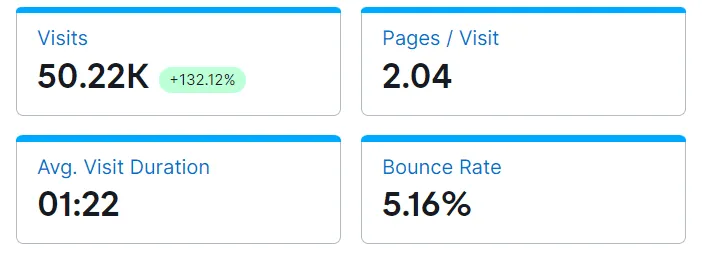
- SEO (Search Engine Optimization): Sleepy Owl’s website demonstrates a strong understanding of its mobile-first audience. In March 2024, 87.72% of their website visitors were on mobile devices. Crucially, the site has a very low bounce rate, and visitors explored an average of more than two pages in under two minutes. For students, this is a key lesson: a well-optimized, easy-to-navigate mobile website leads to higher user engagement and signals a positive user experience to search engines.
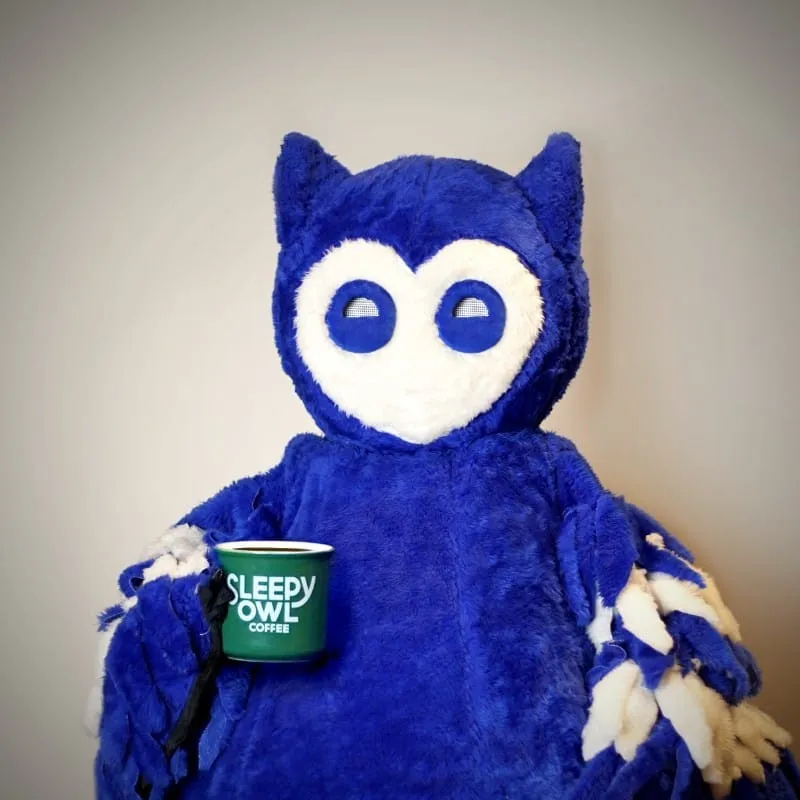
- Social Media Marketing: With 81.5K followers on Instagram, Sleepy Owl’s social media is not run by a corporate team but by their mascot, the owl itself. This unique and playful approach creates a highly interactive and memorable brand persona. Their content strategy includes:
- Product Reels: Stylized videos, often dubbed “thirst traps,” that make the products look irresistible.
- Mascot-led Engagement: Using the owl’s voice to interact with followers, run contests, and share humorous content.
- Content Marketing: Their content strategy revolves around making coffee approachable and fun. They avoid complex jargon, focusing on clear, concise messaging. Their website and social media channels serve as brand-building platforms, telling their story and fostering a direct connection with consumers.
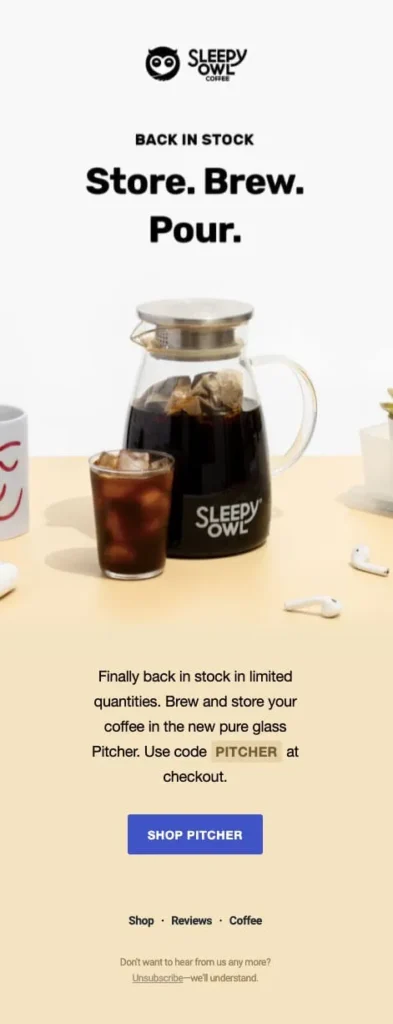
- Email Marketing: Sleepy Owl employs a sophisticated email marketing strategy using Klaviyo, an ESP known for its e-commerce focus. Their emails are simple and effective, typically featuring clear product information, an incentive (like a coupon code), and a strong Call-To-Action (CTA), designed to drive conversions directly from the inbox.
STP Analysis
- Segmentation: Sleepy Owl didn’t try to target everyone. They focused on a specific, underserved niche:
- Demographics: Primarily targets young adults aged 24-30, living in metro and Tier-1 cities.
- Psychographics: Their audience is the “young and ambitious” generation that identifies with “hustle culture.” They are often new to the world of specialty coffee and are looking for a brand that is modern, convenient, and not intimidating.
- Behavioral: Targets consumers with a need for quick, high-quality coffee solutions that fit into a busy lifestyle, such as cold brew, hot brew bags, and premium instant coffee.
- Targeting: Their primary target audience is new coffee drinkers. This was a strategic choice. Since this group has fewer established brand loyalties, Sleepy Owl could more easily convert them and build a loyal customer base from the ground up by being their first positive experience with gourmet coffee.
- Positioning: Sleepy Owl positions itself as a friendly and approachable challenger brand. Their tagline, “It’s That Good,” conveys confidence in their quality without being exclusive or pretentious. They are positioned as the cool, convenient, and simply good alternative to both mass-market instant coffee and complex specialty brands.
The 4 Ps of Marketing
- Product: Sleepy Owl’s product strategy began with innovation. They entered the market with packaged cold brew in 2016, a unique offering that immediately set them apart. Recognizing diverse consumer needs, they strategically expanded their portfolio to include:
- Packaged Hot Brew Bags: For a quick, mess-free hot coffee experience.
- Ready-to-Drink (RTD) Bottles: For ultimate on-the-go convenience.
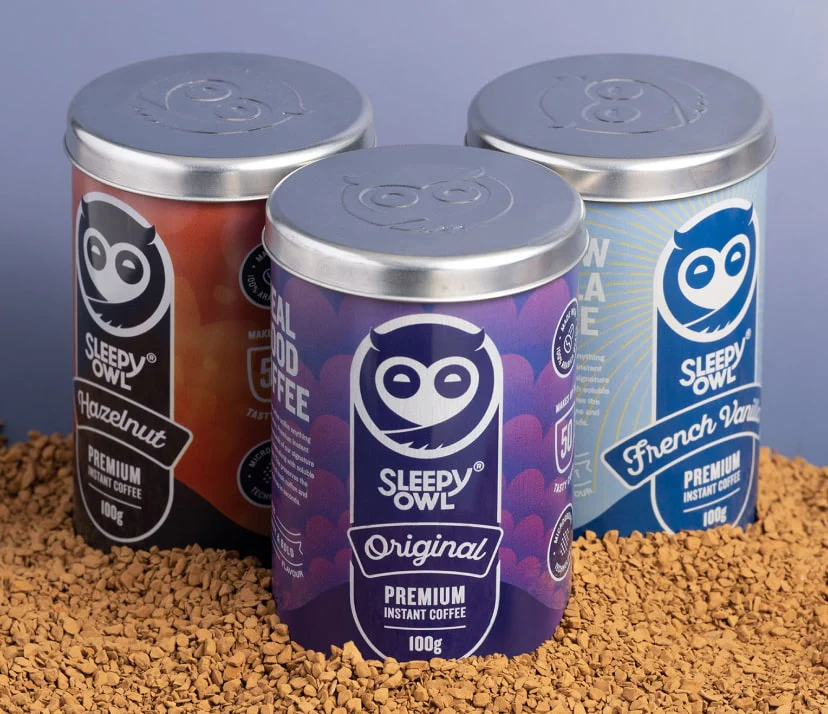
- Premium Instant Coffee: Catering to the demand for speed without sacrificing taste.
This diverse range ensures they have a product for every preference and lifestyle, significantly strengthening brand recall.
- Price: Sleepy Owl adopts a competitive, premium-value pricing strategy. Their products are priced higher than mass-market options like Nescafé, justifying the cost with superior quality and convenience. However, they remain more accessible than super-specialty coffee brands, hitting the sweet spot for their target audience.
- Place: They use a multi-channel approach to ensure their products are widely available:
- Online: Their D2C website acts as a primary brand-building channel. For sales and reach, they partner with major online marketplaces and quick commerce platforms like Blinkit and Zepto.
- Offline: They have a strong physical retail presence in major grocery stores, convenience stores, and cafes across India’s top cities.
- Promotion: Their promotional activities are centered on building a strong brand identity:
- Digital Marketing: A robust strategy across SEO, social media, and email.
- Brand Identity: The friendly owl mascot and clean, modern packaging are key promotional tools.
- User-Generated Content: Encouraging customers to share their Sleepy Owl moments online.
Influencer Marketing & Collaborations
While they may engage in traditional influencer marketing, Sleepy Owl’s most powerful strategy is leveraging its own community.
- Strategy: Their focus is on authenticity and community-building. They collaborate with lifestyle and food influencers who align with their approachable brand image, but their real strength lies in user-generated content (UGC).
- User-Generated Content (UGC): Sleepy Owl actively encourages its customers to share photos and videos with their products. By reposting and engaging with this content, they turn their customer base into a powerful network of organic micro-influencers.
- Goal: The goal is to build social proof and create an authentic community around the brand. When potential customers see real people enjoying Sleepy Owl, it builds trust far more effectively than a traditional advertisement. It reinforces their image as a beloved, relatable brand.
Challenges & Competition
- Challenges:
- Educating the Market: Introducing new formats like cold brew to a market dominated by tea and traditional instant coffee required significant consumer education.
- Competition from Giants: Competing for shelf space and mindshare against giants like Nestlé and Bru, who have massive marketing budgets and distribution networks.
- Crowded D2C Space: The direct-to-consumer coffee market in India is becoming increasingly crowded with brands like Blue Tokai, Rage Coffee, and Country Bean.
- Competition:
- Legacy Brands: Nestlé (Nescafé) and Bru are the primary competitors in the instant coffee segment.
- D2C Coffee Brands: Blue Tokai (focuses on specialty beans), Rage Coffee (focuses on flavored instant coffee), and others compete for the same online audience.
- Cafe Chains: Chains like Starbucks and Blue Tokai cafes compete for the consumer’s overall coffee budget.