1. Introduction to Performance Max Google Ads
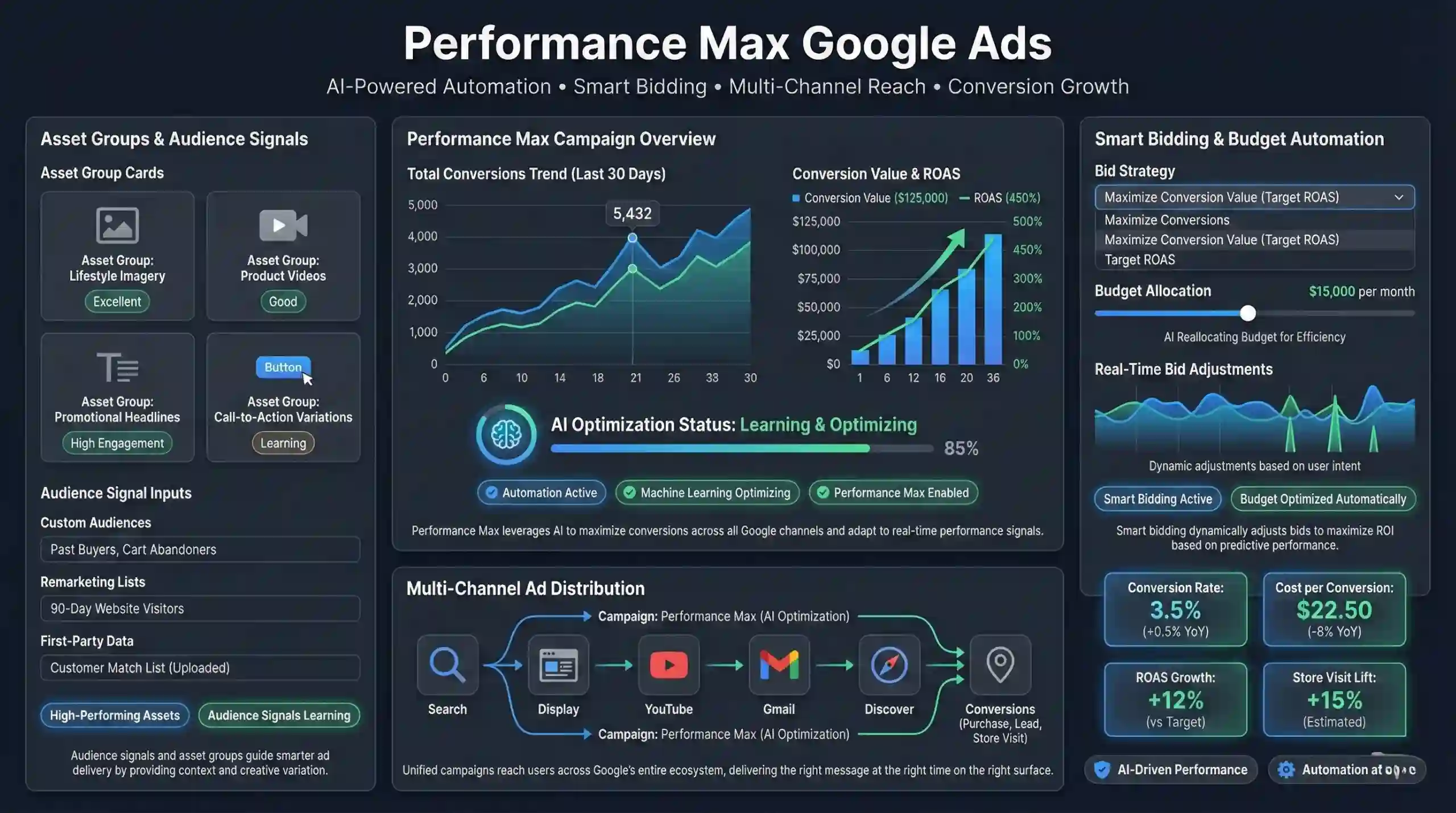
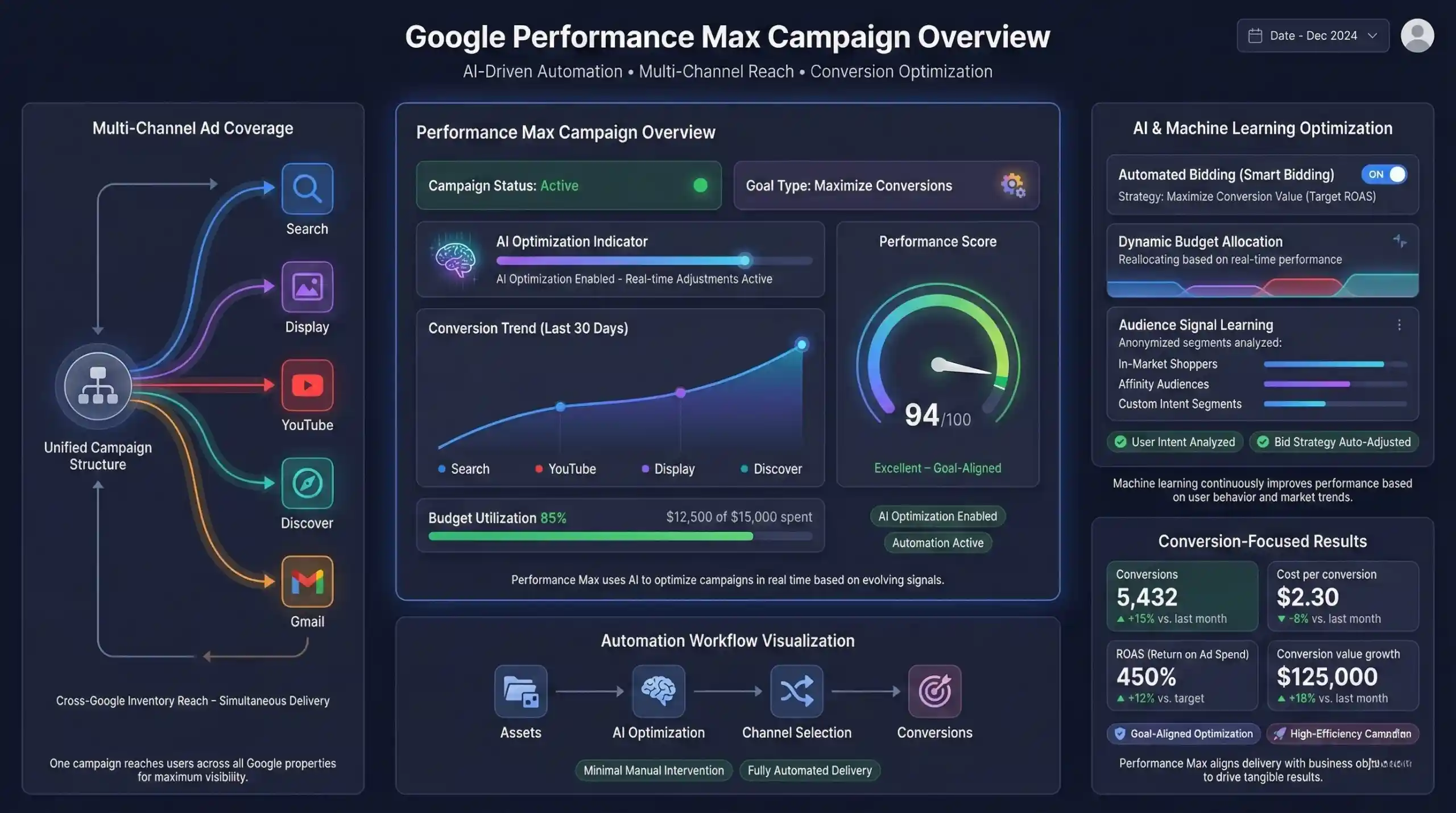
Performance Max campaigns represent an advanced automation-driven advertising solution within Google Ads, designed to maximize conversion outcomes across all Google properties. By leveraging Google’s artificial intelligence (AI) and machine learning algorithms, Performance Max simplifies campaign management by automating ad placement, bidding strategies, and budget allocation. This integration allows marketers to reach audiences on multiple channels, such as search, display, YouTube, Gmail, and Discover, through a unified campaign structure.
Benefits of automation in Performance Max include enhanced efficiency via real-time optimization, increased reach and relevance, and reduced manual intervention. This technology dynamically adjusts bids and placements based on user intent and behavior data, intended to achieve the best results aligned with business goals such as lead generation, online sales, or local store visits.
Practical example: An e-commerce retailer might set up a Performance Max campaign to promote a new product line. The campaign automatically optimizes the ad delivery across Google Search and YouTube, maximizing conversions while minimizing manual management.
2. Account Setup & Campaign Creation in Google Ads
Creating a Performance Max campaign involves utilizing the Google Ads Campaign Creation Wizard, which guides users through selecting campaign objectives, assets, and settings. The process begins with defining clear business goals, such as driving online sales or generating leads, which influence campaign setup and optimization strategies.
Linking Google Merchant Center is crucial for product-based or shopping campaigns. This allows the campaign to access product data, enabling dynamic product ads and more precise targeting.
Real-world example: A local bakery linking their Google Merchant Center account can promote their fresh bread across Google Search and Local Discover feeds, attracting nearby customers.
3. Audience Signal & Asset Group Optimization
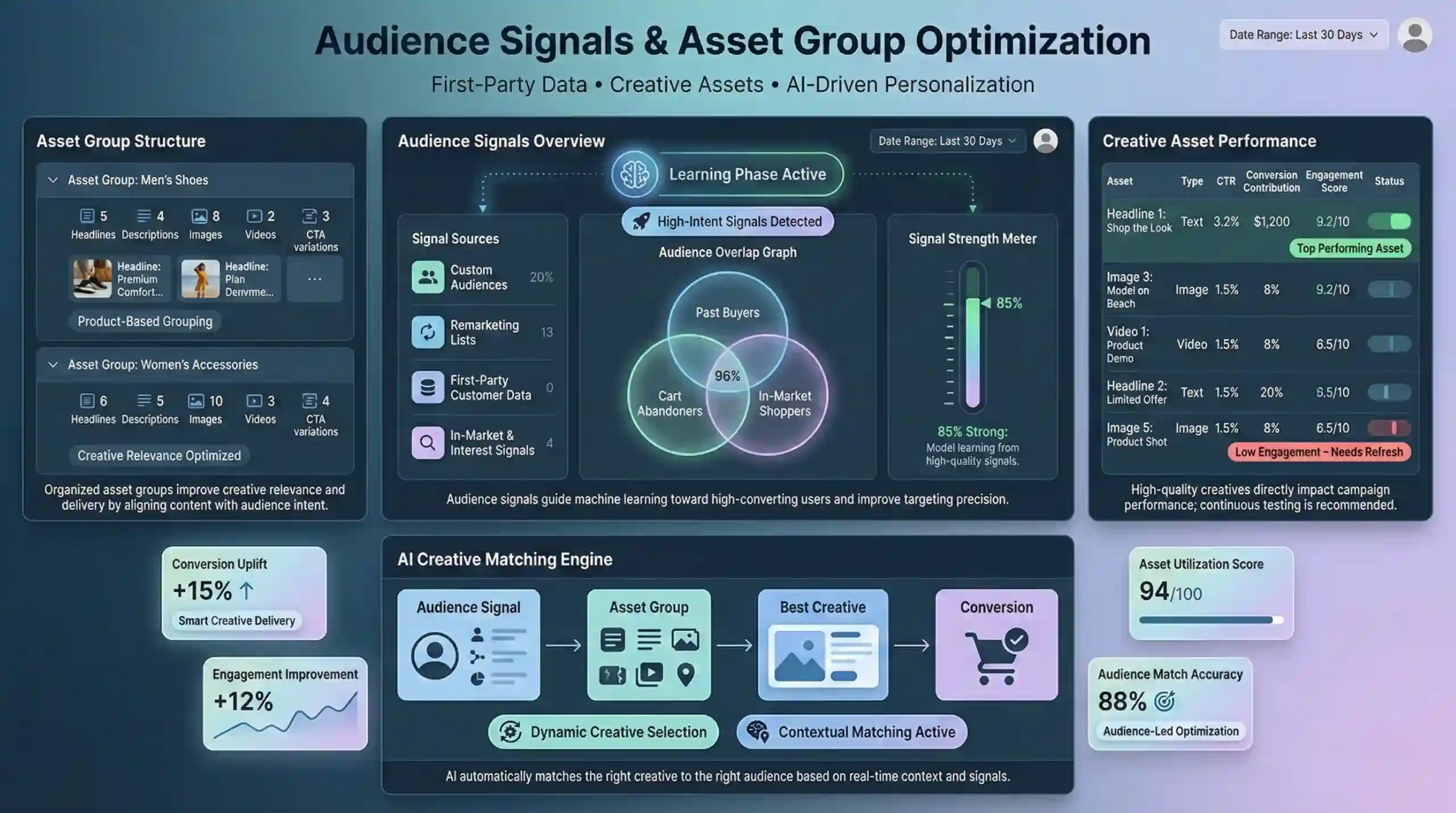
Developing audience signals means providing the automation system with insights about the target audience. This can include custom audiences, remarketing lists, or first-party customer data. Supplying clear audience signals enhances the efficiency of Google’s machine learning by guiding it toward high-converting segments.
Preparing high-quality asset creatives involves uploading various images, videos, headlines, descriptions, and compelling call-to-action (CTA) prompts. Assets should be optimized for relevance and engagement, as their performance directly impacts campaign success.
Organizing asset groups involves grouping assets by product categories or target demographics. This structure allows Google to deliver the most appropriate creative to specific audience segments, improving ad relevance and performance metrics.
Example: An online fashion retailer creates separate asset groups for men’s shoes and women’s accessories, enabling tailored ad delivery to respective audiences.
4. Bid Strategies & Budget Allocation
Selecting the appropriate bid strategy aligns campaign objectives with automation features. Choices include Maximize Conversions, Maximize Conversion Value, or Target ROAS. For instance, if a business aims to optimize revenue, Target ROAS might be preferred; for brand awareness, Maximize Conversions could be suitable.
Optimizing budget allocation involves distributing ad spend effectively across assets and audiences, ensuring sufficient conversion data for Google’s machine learning to optimize bid adjustments and ad delivery. Proper budget management facilitates campaign scaling and improves overall ROI.
Implementing enhanced conversions enhances tracking accuracy by sending hashed user data, leading to better attribution and campaign performance.
Practical tip: Regularly monitor and adjust bids based on performance insights, aligning with changing marketing objectives.
5. Tracking & Conversion Measurement
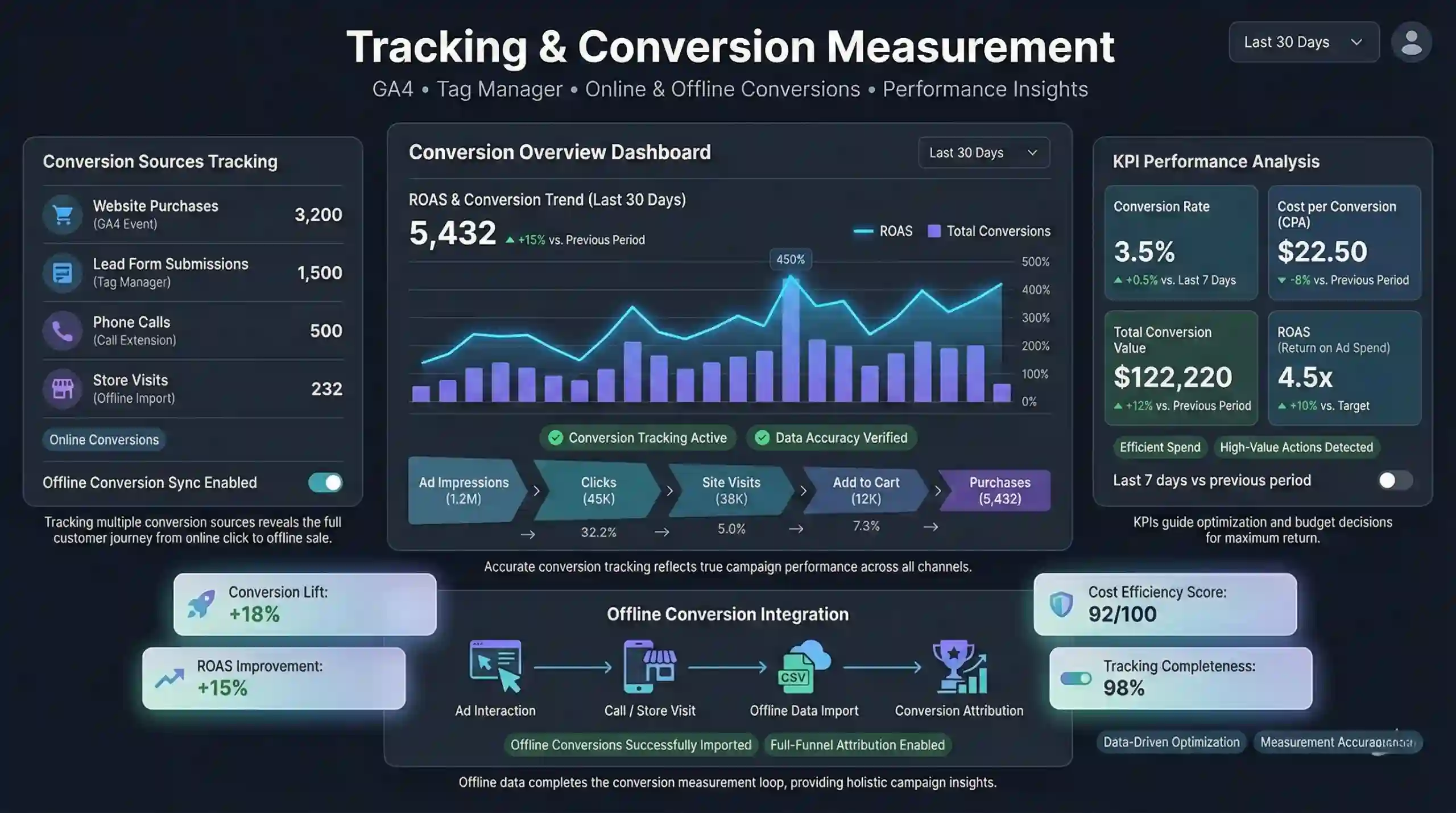
Implementing reliable conversion tracking is fundamental. Using tools like Google Tag Manager or Google Analytics 4 enables accurate measurement of actions like purchases, sign-ups, calls, or store visits. Proper implementation ensures that the campaign’s success metrics reflect real outcomes.
For offline conversions, such as in-store sales, integrating offline data imports allows businesses to measure the complete customer journey.
Performance analysis involves reviewing key KPIs such as conversion rate, cost per conversion, ROAS, and total conversions. These metrics offer insights into campaign efficiency and facilitate data-driven optimizations.
Example: A travel agency tracks both online bookings and phone inquiries to gauge campaign performance comprehensively.
6. Performance Monitoring & Optimization Strategies
Regularly analyzing Google Ads insights reports reveals which assets, audiences, or placements yield the best results. For example, high engagement rates on certain ad creatives suggest opportunities for further optimization.
Optimizing ad creative assets based on engagement and performance metrics—such as CTR and ad relevance scores—improves overall campaign effectiveness.
Adjustments to audience signals involve refining targeting based on data insights, possibly expanding successful segments or excluding underperformers.
Budget reallocation entails shifting funds towards top-performing assets or audiences to maximize ROI. Conducting asset experiments—testing different creatives—helps identify the best performing combinations.
Practical exercise: Analyze asset report data to moderate or enhance ad creatives, adjusting for higher engagement.
7. Advanced Optimization & Automation Tactics
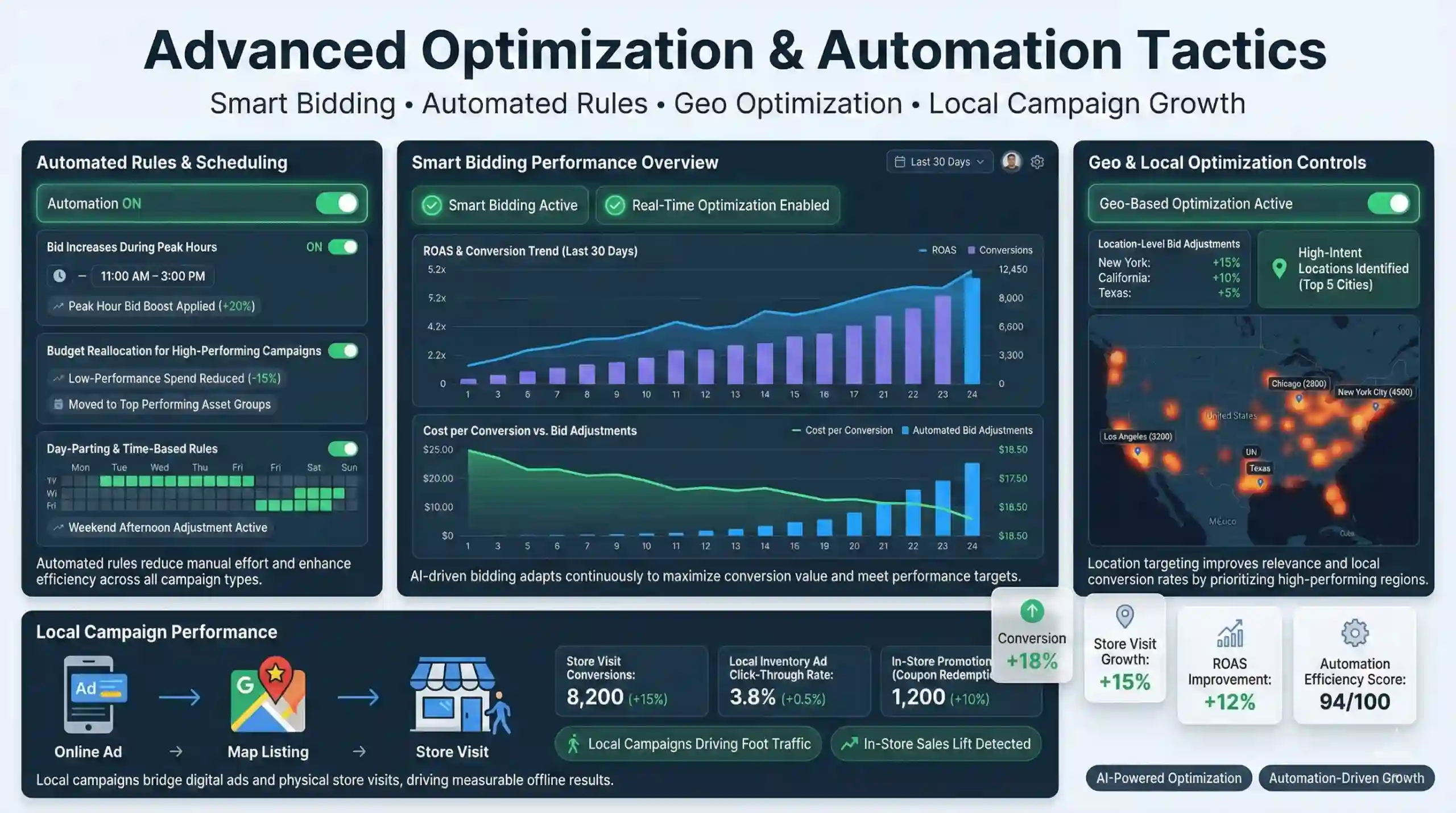
Utilize automated rules and Smart Bidding features to further optimize campaigns. For example, setting rules to increase bids during peak hours maximizes conversion opportunities or adjusting bids for specific geographic locations.
Local campaigns are specialized for store-based promotions, using location targeting and local inventory ads. They effectively drive local foot traffic by promoting in-store stock or offers.
Example: A chain of retail stores uses local campaigns to promote weekend sales, resulting in increased in-store visits during promotional periods.
8. Future Trends & Continuous Learning in Performance Max
Google’s AI and automation capabilities continually evolve. Staying current involves following Google’s updates, participating in Google Ads certifications, and engaging with webinars and industry webinars focused on Performance Max optimization techniques.
Integrating Performance Max campaigns with other Google marketing tools like YouTube Ads, Google Merchant Center, and Google Analytics 4 facilitates holistic marketing strategies—coordinating brand presence across channels to enhance overall campaign effectiveness.
Recommendation: Regularly update your knowledge base and experiment with new features introduced by Google to stay competitive in the dynamic online advertising landscape.
Practice Questions
- Define Performance Max Google Ads and explain how machine learning enhances campaign performance.
- Describe the process of setting up a Performance Max campaign in Google Ads.
- How does organizing asset groups improve ad relevance and campaign outcomes?
- List three bidding strategies available in Performance Max and explain their typical use cases.
- What are enhanced conversions, and why are they important for campaign tracking?
- How can offline conversions be integrated into Performance Max campaigns?
- Explain the role of audience signals in optimizing Performance Max campaigns.
- Why is performance analysis essential, and which key KPIs should be monitored?
- Discuss an effective optimization strategy for improving ad creatives based on insight reports.
- How do automatic rules support ongoing campaign optimization?
Code Output/Results (Sample)
There are no programming codes in typical Performance Max setups; however, data insights are derived from reporting dashboards:
| KPI | Before Optimization | After Optimization |
|---|---|---|
| Conversion Rate | 3.5% | 5.2% |
| Cost per Conversion | $15 | $10 |
| ROAS (Return on Ad Spend) | 300% | 450% |
| Total Conversions | 200 | 320 |
(Sample scenario indicating improved campaign performance after applying optimization strategies.)
Resources for Further Learning
This structured, theory-focused content provides students with foundational understanding, practical knowledge, and strategic insights into Performance Max Google Ads, equipping them for effective campaign setup and optimization to achieve maximum advertising ROI.
More Courses
- Social Media Marketing course with Gen AI
- Advance Digital Marketing & SEO course with Gen AI
- Advanced Certificate in Digital Design & Marketing course with Gen AI
- Meta & Google Ads course with Gen AI
Disclaimer: The images and videos used in this blog are for educational and illustrative purposes only. Some visuals may be generated using AI tools, while others are sourced from publicly available platforms. We do not claim ownership of any third-party images or videos. All rights and credits belong to their respective owners.