

When it comes to ranking higher on Google, keyword research is the most important step of On-Page SEO. Whether you are learning through a Social media marketing course, training at an SEO keyword research institute, joining Keyword research training classes, upgrading skills through a Keyword strategy course, or building knowledge at an SEO keyword learning institute, understanding keyword research is the foundation of successful SEO.
⭐ What is Keyword Research in On-Page SEO?
Keyword research means finding the exact words and phrases that people search on Google when they are looking for information, services, or products.
If you choose the right keywords, you can bring the right audience to your website.
Keyword research is not about ranking for every keyword.
It is about ranking for the right keyword.
✅ Why Keyword Research is Important?
Good keyword research helps you:
- Rank higher on Google
- Reach the right audience
- Get quality traffic
- Increase leads and conversions
- Understand user intent
Even top trainers in an SEO keyword research institute focus on keyword research first because it decides whether your blog ranks or not.
🧩 Core Concepts of Keyword Research
1️⃣ Understand Search Intent
Before choosing any keyword, understand why the user is searching.
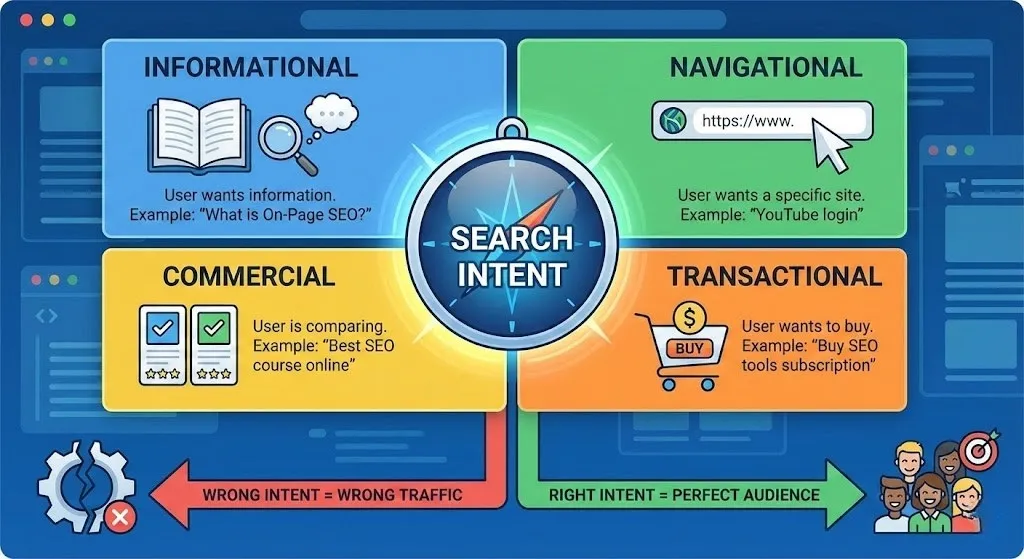
There are four types of search intent:
| Type of Intent | Meaning | Example |
| Informational | User wants information | “What is On-Page SEO?” |
| Navigational | User wants a specific site | “YouTube login” |
| Commercial | User is comparing | “Best SEO course online” |
| Transactional | User wants to buy | “Buy SEO tools subscription” |
Choosing wrong intent = Wrong traffic
Choosing right intent = Perfect audience
2️⃣ Types of Keywords
There are mainly three types of keywords:
Short Tail Keywords
1–2 words, highly competitive
Example: SEO, Marketing, Blogging
Medium Tail Keywords
2–3 words, moderate competition
Example: On page SEO, Keyword strategy
Long Tail Keywords
4+ words, easy to rank
Example: How to do keyword research step by step
For beginners, long-tail keywords work best.
3️⃣ How to Find Keywords?
There are many powerful keyword tools like:
- Google Keyword Planner
- Ubersuggest
- Ahrefs
- Google Search Suggestions
- SEMrush
- Google Trends
Even in Keyword research training classes, these tools are taught because they give real search data.
💡 Real Life Example 1
A small digital marketing institute was writing random blog topics like:
“SEO is important”
“Why SEO matters”
But nobody searched these topics.
So they learned proper keyword research.
They started targeting keywords like:
- best seo course near me
- advanced digital marketing course
- seo course with certification
Result:
Traffic increased
More leads started coming
Website ranking improved
Good keyword research = Real business growth
4️⃣ Check Keyword Difficulty
Not every keyword is easy to rank.
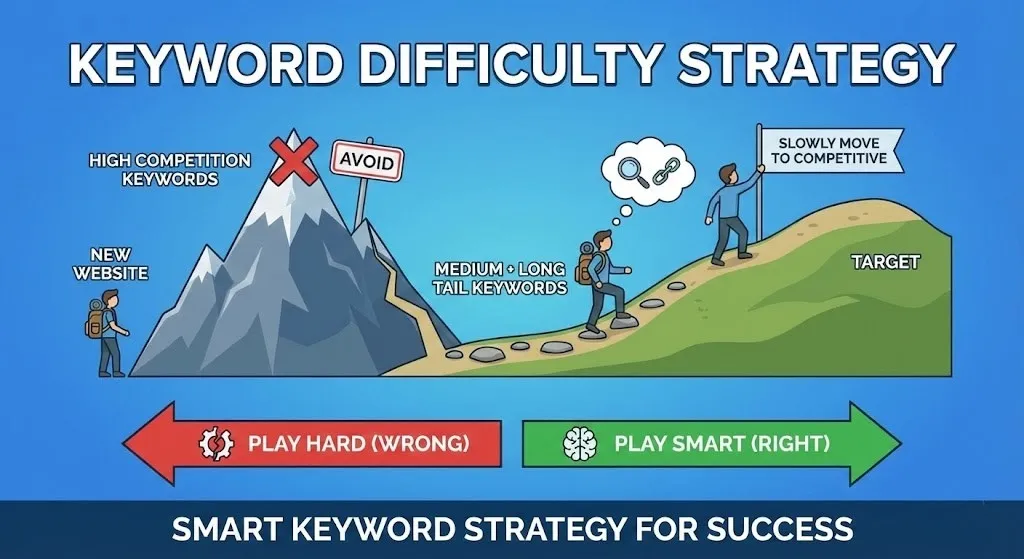
If you have a new website:
- Avoid highly competitive keywords
- Target medium + long tail keywords
- Slowly move to competitive ones
This is what every Keyword strategy course teaches — play smart, not hard.
5️⃣ Analyze Your Competitors
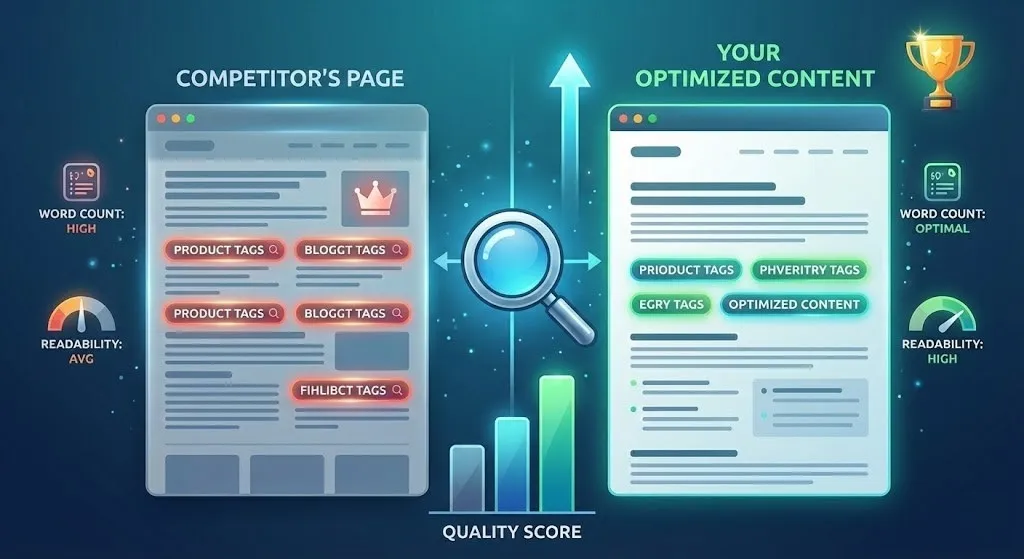
Check who is already ranking for your keyword.
Things to notice:
➡️Content quality
➡️Word count
➡️Headings
➡️Keywords used
➡️Readability
If you can write better than them, you can rank above them.
💡 Real Life Example 2
A blogger always picked random topics without checking the competition.
He wrote long blogs but never ranked.
Then he analyzed competitors, selected better keywords, and rewrote content.
Within 3 months:
- Ranking improved
- Traffic increased
- Earnings grew
Competitor research works!
6️⃣ Using Keywords in On-Page SEO
Finding keywords is not enough.
You must use them correctly.
Here is where you should place keywords:
| Placement | Importance |
| Title | Very Important |
| First Paragraph | Must |
| Headings (H2/H3) | Important |
| Content Body | Naturally |
| URL | Helpful |
| Image Alt Text | Helpful |
| Meta Description | Very Effective |
But remember:
❌ Do not overstuff
❌ Do not force keywords
✔ Use naturally
✔ Maintain flow
This is something every SEO keyword learning institute strictly teaches.
💬 Real Life Example 3
A business website stuffed keywords like:
“best seo course best seo course best seo course” everywhere.
What happened?
Google penalized the page.
They corrected it:
- Natural usage
- Better readability
- Simple English
Now they rank better and get quality traffic.
Sometimes less is more.
📊 Keyword Research Step-by-Step Table
| Step | Task | Result |
| 1 | Understand audience | Clear direction |
| 2 | Find keywords | Ideas list |
| 3 | Check intent | Relevant traffic |
| 4 | Check competition | Ranking chance |
| 5 | Select best keywords | Strong strategy |
| 6 | Place keywords properly | Better ranking |
🧠 Best Practices for Keyword Research
Use this checklist every time:
✔ Understand user need
✔ Choose relevant keywords
✔ Prefer long tail keywords
✔ Check search volume
✔ Check competition
✔ Avoid keyword stuffing
✔ Keep content human-friendly
Consistent keyword research brings long-term success.
🎯 Final Thoughts
Keyword research is the heart of On-Page SEO.
If your keywords are right, your SEO automatically becomes strong.
Whether you learn through a Social media marketing course, build expertise at an SEO keyword research institute, practice in Keyword research training classes, improve skills through a Keyword strategy course, or study at an SEO keyword learning institute, mastering keyword research will always give you a big advantage.
If you understand search intent, choose the right keywords, and use them smartly — your website can rank higher, attract better traffic, and grow continuously.

Disclaimer: The images and videos used in this blog are for educational and illustrative purposes only. Some visuals may be generated using AI tools, while others are sourced from publicly available platforms. We do not claim ownership of any third-party images or videos. All rights and credits belong to their respective owners.