
ntroduction
In India, mango isn’t just a fruit; it’s an emotion. And for over three decades, one brand has successfully bottled that emotion: Frooti. Launched in 1985 by Parle Agro, Frooti wasn’t just another drink; it was a revolution. At a time when carbonated soft drinks ruled the market, Frooti introduced India to the concept of a non-carbonated, ready-to-drink fruit beverage in a Tetra Pak.
From its iconic “Mango Frooti, Fresh and Juicy” jingle to its vibrant, modern rebranding, Frooti has successfully navigated generational shifts to remain India’s beloved mango drink, proving that even a single-flavor brand can become a timeless legacy.
The Innovation that Changed the Game: The Tetra Pak Revolution
Frooti’s initial success wasn’t just about taste; it was about format innovation.
- Solving a Hygiene Crisis: In 1985, the beverage market was dominated by glass bottles (which were heavy and breakable) and street vendors selling nimbu pani (which often had hygiene concerns). Frooti was the first to introduce Tetra Pak technology to India.
- Convenience as a USP: This packaging innovation offered extended shelf life without preservatives and, crucially, made the drink portable, unbreakable, and hygienic. It was a grab-and-go solution for school kids and commuters alike, creating a completely new category of “on-the-go” fruit drinks.
Digital Marketing & SEO Strategy
While Frooti is a mass-market brand built on TV advertising, its digital strategy is laser-focused on visual storytelling and engaging a younger demographic.
- SEO (Search Engine Optimization): Frooti’s SEO strategy is driven by brand recall. Users rarely search for “mango drink”; they search for “Frooti.” Their digital presence is optimized to capture this high-intent traffic. Additionally, searches for “Frooti price,” “small pack,” and “Frooti Fizz” drive significant organic traffic.
- Social Media Marketing: Frooti’s social media is a visual feast. Following their rebranding by Sagmeister & Walsh, their Instagram feed (thefrootilife) is distinct, using bold yellow colors, surrealist art styles, and stop-motion videos.
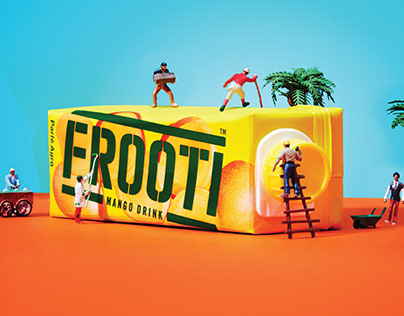
- The “Frooti Life” Campaign: This campaign uses quirky, miniature-style content that is highly shareable and visually striking. It positions the brand not just as a drink, but as a piece of pop art.
- Platform-Specific Content: They tailor content for engagement, using short, punchy visuals for Instagram and longer, narrative-driven ads for YouTube.
- Content Marketing: Their content is less about text and more about visual identity. The “Why Grow Up?” campaign was a massive content play that used nostalgia to connect with adults who drank Frooti as kids, while the surreal visuals appealed to Gen Z’s aesthetic sensibilities.
STP Analysis
- Segmentation:
- Demographic: Initially focused purely on children and teenagers. Over time, this has expanded to include young adults (18-30) and Millennials who grew up with the brand.
- Psychographic: Targets individuals who prioritize convenience, fun, and nostalgia. It appeals to those who want a quick, refreshing break and are drawn to playful, unpretentious brands.
- Geographic: A massive footprint covering urban, semi-urban, and deep rural markets.
- Targeting:
- Early Phase: Targeted kids and mothers (the buyers), emphasizing hygiene and taste.
- Modern Phase: Targets the youth and young adults with a “cool” quotient, while retaining the kid segment through the product’s inherent sweetness.
- Positioning: Frooti has masterfully shifted its positioning over the decades.
- Original Positioning: “Mango Frooti, Fresh and Juicy” – The hygienic, authentic taste of real mangoes.
- Current Positioning: “The Frooti Life” – A fun, surreal, and colorful world where the drink represents pure joy and a refusal to be boring. It positions itself as the cool, contemporary mango drink versus the more “traditional/family” positioning of competitors like Maaza.
The 4 Ps of Marketing
- Product:
- Core Product: The classic mango drink remains the hero.
- Innovation: Launching Frooti Fizz was a bold move to enter the carbonated fruit drink market, bridging the gap between fruit juice and soft drinks.
- Packaging: Constantly innovating with PET bottles, varied Tetra Pak sizes (from ₹5 triangles to 1-liter family packs), ensuring there is a pack for every occasion and budget.
- Price: Frooti employs a competitive, mass-market pricing strategy. It has historically been priced lower or at par with key competitors like Maaza and Slice. The introduction of small, affordable SKUs (like the ₹2.50 and ₹5 packs) was crucial for penetrating rural markets and securing its position as a pocket-money purchase.
- Place: Parle Agro’s distribution network is a behemoth.
- Rural Penetration: Frooti is available in the remotest villages, leveraging Parle’s deep distribution channels.
- Urban Ubiquity: Available in every supermarket, cinema hall, and college canteen.
- Global Reach: Exported to over 50 countries, catering to the global Indian diaspora.
- Promotion:
- Jingles: The original “Mango Frooti, Fresh and Juicy” is one of the most successful sonic branding examples in Indian history.
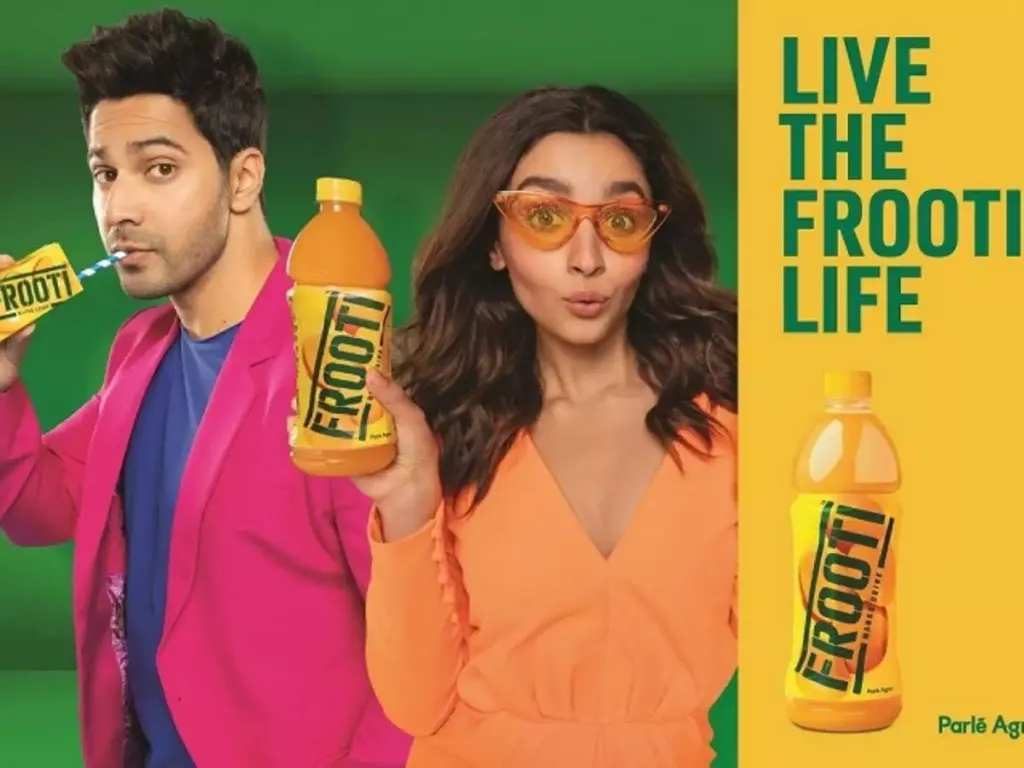
- Celebrity Power: Moving from animated characters to superstars like Shah Rukh Khan, Alia Bhatt, and Varun Dhawan to increase mass appeal.
- Visual Rebranding: The massive design overhaul gave the brand a distinct, premium, and modern look that stands out on shelves.
Brand Refresh: The “Why Grow Up?” Era
In the mid-2010s, Frooti faced a crisis of relevance. It was seen as a “kid’s drink.” To combat this, they executed one of the most successful rebranding exercises in Indian FMCG history.
- The Strategy: Partnering with design firm Sagmeister & Walsh, they completely overhauled the visual identity. They ditched the traditional “succulent mango” imagery for bold, flat colors and surreal visuals.
- The “Why Grow Up?” Campaign: This campaign, featuring Shah Rukh Khan, turned the brand’s perceived weakness (being a kid’s drink) into a strength. It celebrated the inner child, making it acceptable and “cool” for adults to drink Frooti. This expanded their target market significantly without alienating their core child audience.
Influencer Marketing & Collaborations
- Strategy: Frooti combines mega-celebrity endorsements with high-end artistic collaborations.
- Celebrity Endorsements:
- Shah Rukh Khan: Brought immense mass appeal and nostalgia, bridging the gap between the brand’s history and its adult consumers.
- Alia Bhatt & Varun Dhawan: Targeted the younger Gen Z and Millennial audience, reinforcing the “fun and fizzy” personality of Frooti and Frooti Fizz.
- Artistic Collaboration: The partnership with Sagmeister & Walsh was a form of B2B influencer marketing. By working with a world-renowned design agency, Frooti signaled to the industry and consumers that it was a modern, design-forward brand.
Challenges & Competition (SWOT Insights)
- Challenges:
- Single-Flavor Dependency: Frooti is synonymous with mango. While a strength, it limits diversification compared to brands with multi-fruit portfolios.
- Health Consciousness: The high sugar content in packaged fruit drinks is a growing concern for modern parents and health-conscious adults.
- Competition: The “Mango Wars” are fierce:
- Maaza (Coca-Cola): The market leader, positioned as the “indulgent, thick mango pulp” experience (Har Mausam Aam).
- Slice (PepsiCo): Positioned on “seduction and pleasure,” targeting adults (Aamsutra).
- Tropicana & Real: Compete in the 100% juice category, targeting the health-conscious segment.
The images, videos used in this post are for informational and educational purposes only. We do not own the rights to these images, videos and all rights remain with their respective owners.


Connect With Us
Follow us for updates on our latest courses and events!