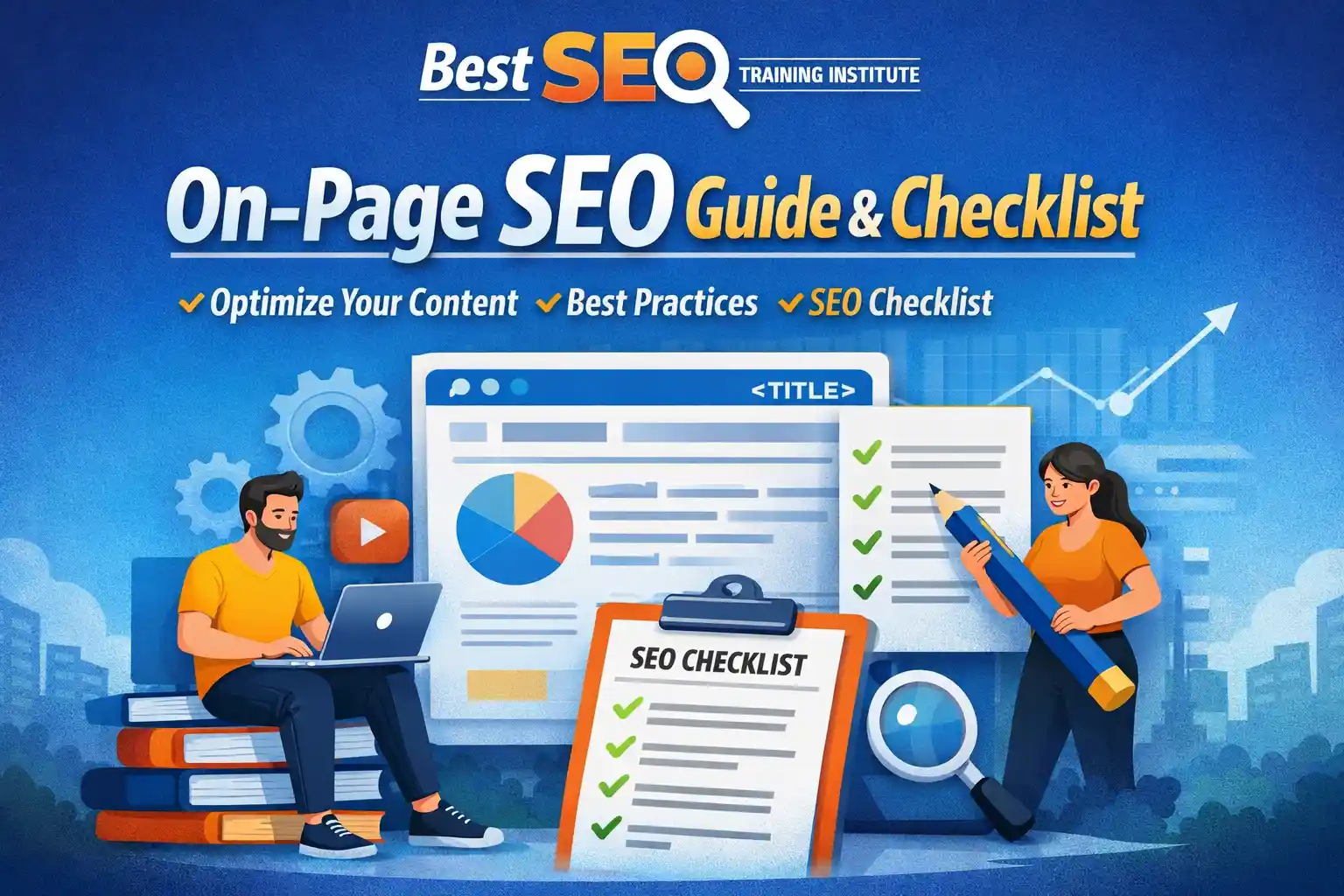
On-Page SEO is the foundation of ranking higher on Google, and whether you are learning through an On page SEO course, training at an On page SEO training institute, starting your journey with SEO classes for beginners, upgrading skills with an Advanced on page SEO course, or learning professionally from the Best SEO training institute, understanding On-Page SEO is the first and most important step to succeed in digital marketing.
Whether you are learning through an On page SEO course, joining an On page SEO training institute, starting your journey with SEO classes for beginners, upgrading skills with an Advanced on page SEO course, or learning from the Best SEO training institute, this guide will help you master On-Page SEO in a simple and practical way.
What is On-Page SEO?
On-Page SEO means optimizing the elements on your website page so that:
- Google can understand it better
- Users can enjoy reading it
- Your page can rank higher
On-Page SEO is completely in your control. That’s why every trainer in an On page SEO course says this is the first thing to learn in SEO.
Why Is On-Page SEO Important?
Good On-Page SEO helps in:
- Better Google rankings
- More website visitors
- More leads and conversions
- Strong trust and authority
Google wants to rank helpful, user-friendly, fast, and structured pages. On-Page SEO helps you do exactly that.
Core Elements of On-Page SEO
1️⃣ Title Tag
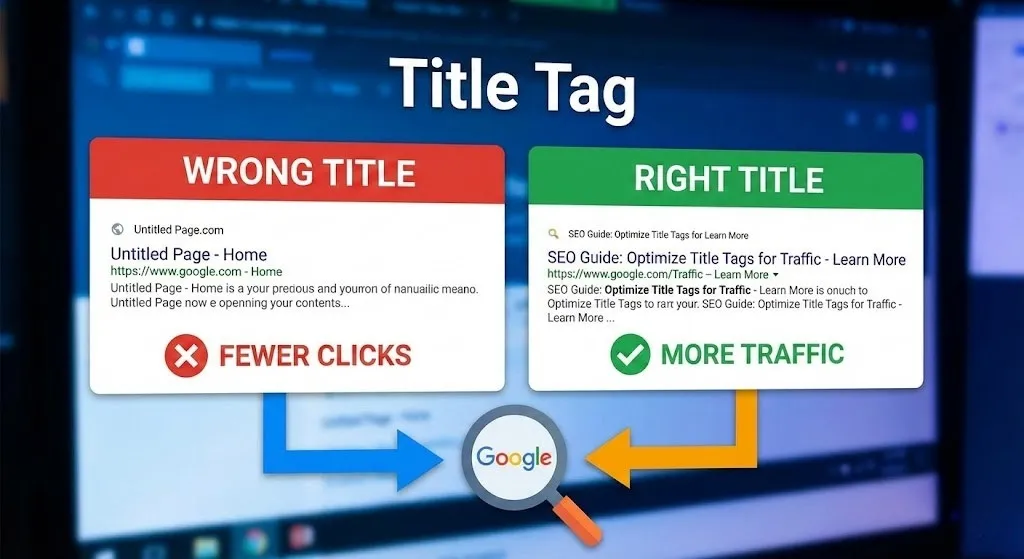
Your title is the first impression in Google search.
A good title has:
- Keywords
- Clarity
- Value
- Relevance
Wrong title → fewer clicks
Right title → more traffic
2️⃣ Meta Description
Meta description does not directly rank your page but helps improve clicks.
Think of it like a short advertisement for your page.
3️⃣ URL Optimization
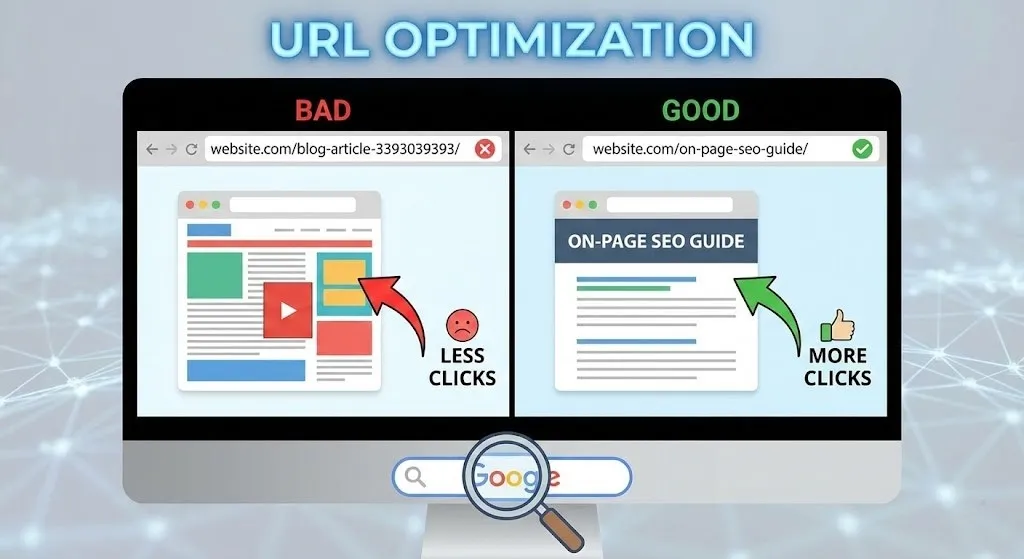
Short, clear, meaningful URLs work best.
Bad:
/blog-article-3393039393/
Good:
/on-page-seo-guide/
4️⃣ Header Tags (H1, H2, H3)
Headings make your content easy to read and structured.
They also help Google understand your content.
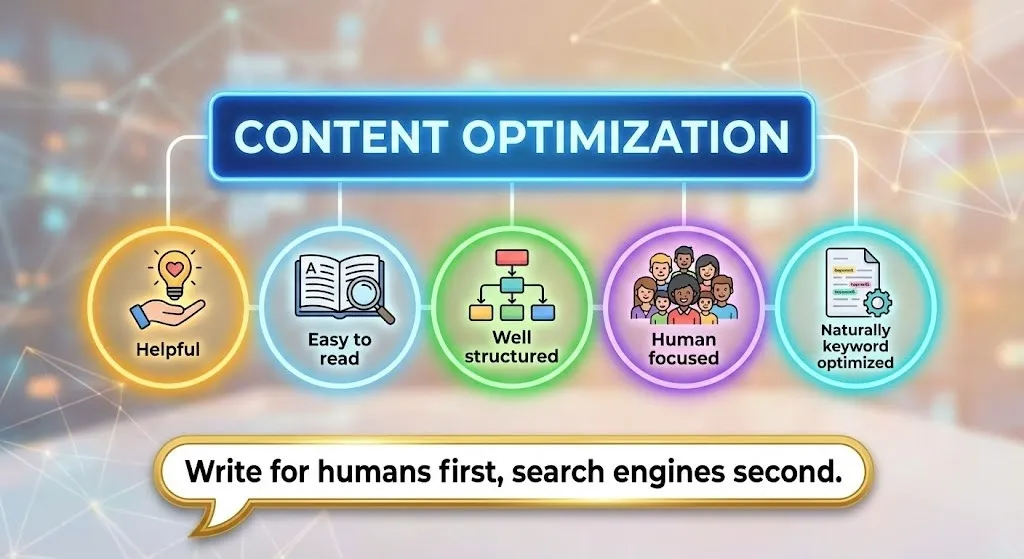
5️⃣ Content Optimization
Good content must be:
- Helpful
- Easy to read
- Well structured
- Human focused
- Naturally keyword optimized
Even in an Advanced on page SEO course, trainers say:
Write for humans first, search engines second.
Real Life Example 1
A digital marketing coaching website published many blogs but had no traffic.
Their content was robotic, difficult to read, and had no structure.
They rewrote their blogs:
- Simple language
- Clear headings
- Proper keywords
- Internal links
- Better formatting
Result:
Traffic increased 3 times within 2 months.
That is the power of On-Page SEO.
6️⃣ Internal Linking
Internal links help users and Google move between pages.
They improve time spent on site and reduce bounce rate.
7️⃣ Image Optimization
Google cannot “see” images. It reads alt text and file names.
So always:
- Compress images
- Add alt text
- Rename files properly
8️⃣ Mobile Optimization
Most users browse on mobile.
If your site is not mobile-friendly, rankings drop.
Google follows mobile-first indexing, so mobile experience is more important than desktop.
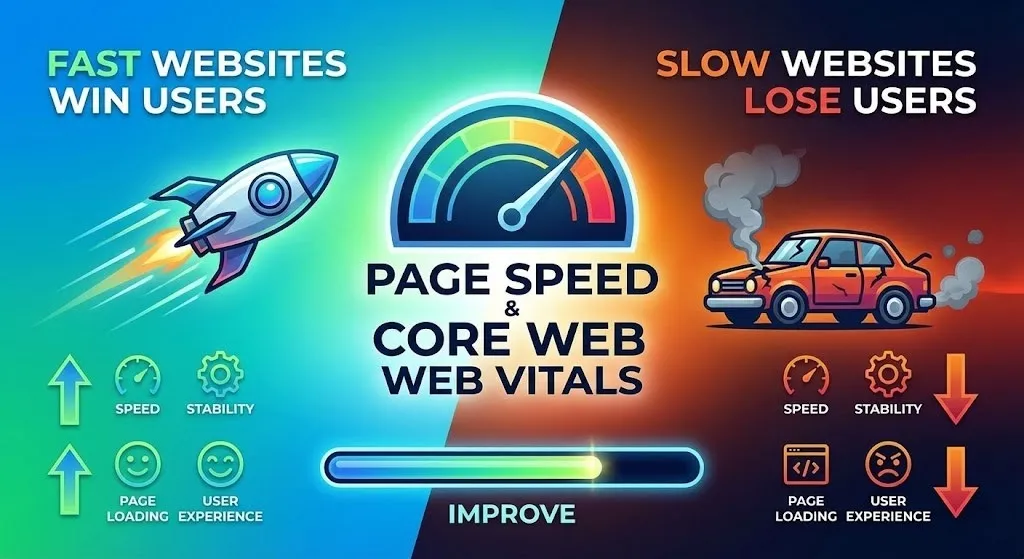
9️⃣ Page Speed & Core Web Vitals
Slow websites lose users.
Fast websites win users.
Improve:
- Speed
- Stability
- Page loading
- User experience
Real Life Example 2
The digital training institute website was beautiful but very slow.
The page took 8 seconds to load.
People left before seeing anything.
After speed optimization:
- Speed became 2.5 seconds
- Website rankings improved
- Student enquiries increased
Speed matters.
Real Life Example 3
A small education website added FAQ Schema to their blogs.
Soon they started appearing in People Also Ask section.
Their traffic and visibility increased.
Structured optimization works
On-Page SEO Table (Quick Overview)
| On-Page SEO Element | Purpose | Result |
| Title & Meta | Attract clicks | Better visibility |
| URL Optimization | Clear understanding | User trust |
| Headers | Structure content | Easy reading |
| Content Optimization | Quality & relevance | Higher ranking |
| Internal Links | Better navigation | More engagement |
| Image Optimization | Search understanding | More traffic |
| Mobile Optimization | Better experience | Better ranking |
| Page Speed | Fast usage | More conversions |
| Schema Markup | Rich results | Better presence |
On-Page SEO Best Practices Checklist
Use this checklist every time you create a page:
- Use keyword in title
- Use keyword naturally in content
- Internal links
- Fast loading
- Clear content
- Use keyword in first paragraph\
- Proper headings
- Image alt text
- Mobile friendly
- User focused approach
Consistent On-Page SEO gives long-term results.
Final Thoughts
On-Page SEO is not just about ranking.
It is about creating the best experience for users.
Whether you learn from an On page SEO course, a professional On page SEO training institute, beginner-friendly SEO classes for beginners, upgrade your skills through an Advanced on page SEO course, or join the Best SEO training institute, mastering On-Page SEO is the smartest first step.Once you get strong in On-Page SEO, every other part of SEO becomes easier.
Stay consistent, follow the checklist, and your website can truly grow.
Disclaimer: The images and videos used in this blog are for educational and illustrative purposes only. Some visuals may be generated using AI tools, while others are sourced from publicly available platforms. We do not claim ownership of any third-party images or videos. All rights and credits belong to their respective owners.