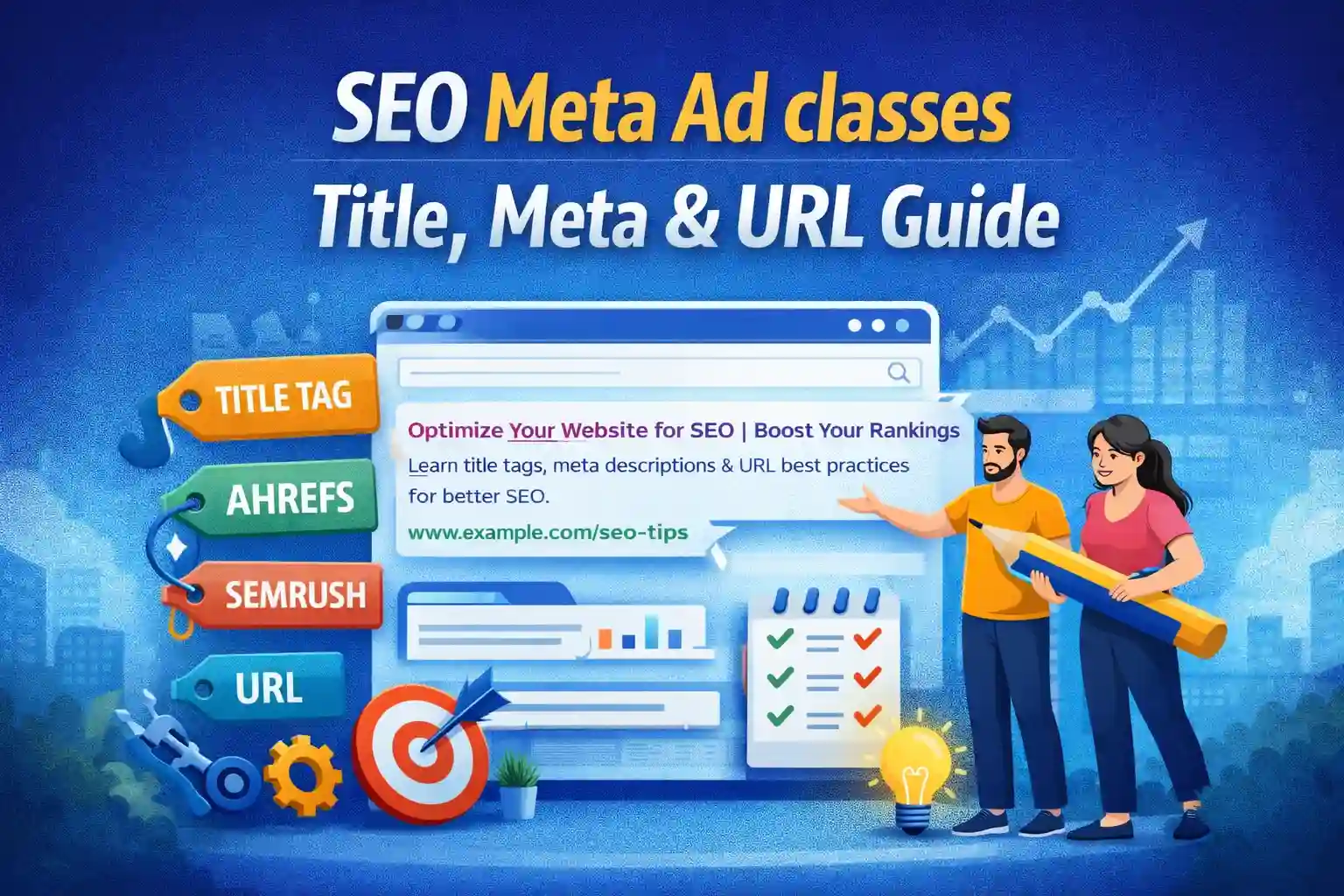
When it comes to ranking higher in Google, title tags, meta descriptions, and URLs play a very important role in On-Page SEO. Whether you are learning through an SEO course in surat, training at an On page optimization institute, improving skills through SEO meta ad classes, building content expertise with an SEO writing training course, or gaining knowledge in Website optimization classes, understanding these three elements is the foundation of powerful SEO.
⭐ Why Title Tags, Meta Descriptions & URLs Matter?
These three elements are the first things both users and Google see about your webpage.
They help in:
➡️Ranking better
➡️Attracting clicks
➡️Improving user trust
➡️Increasing website traffi
A strong title, a meaningful description, and a clean URL can convert a simple webpage into a high-performing SEO page.
🔥 Let’s Understand Them One by One
1️⃣ Title Tags – Your First Impression on Google
Title tags are the clickable headlines you see in Google results.
They tell both users and search engines what your page is about.
🧠 What Makes a Good Title?
A good title should be:
- Clear
- Keyword-rich
- Attractive
- Useful
PRO TIP
A title should:
- Be between 50–60 characters
- Show value
- Include your main keyword
- Avoid over-promise
✅ Example of Good vs Bad Title
❌ Bad Title:
SEO Tips
✅ Good Title:
Title Tags, Meta Descriptions & URL Optimization: Complete Beginner Guide
The second one gives clarity, value, and confidence.
2️⃣ Meta Descriptions – Your Click Booster
A meta description is a short summary under the title in Google search results.
It does not directly rank your page, but it strongly influences CTR (Click Through Rate).
More clicks → Better engagement → Better rankings over time.
✔ What Makes a Perfect Meta Description?
It should:
- Be 140–160 characters
- Explain page purpose
- Encourage user to click
- Feel natural and human
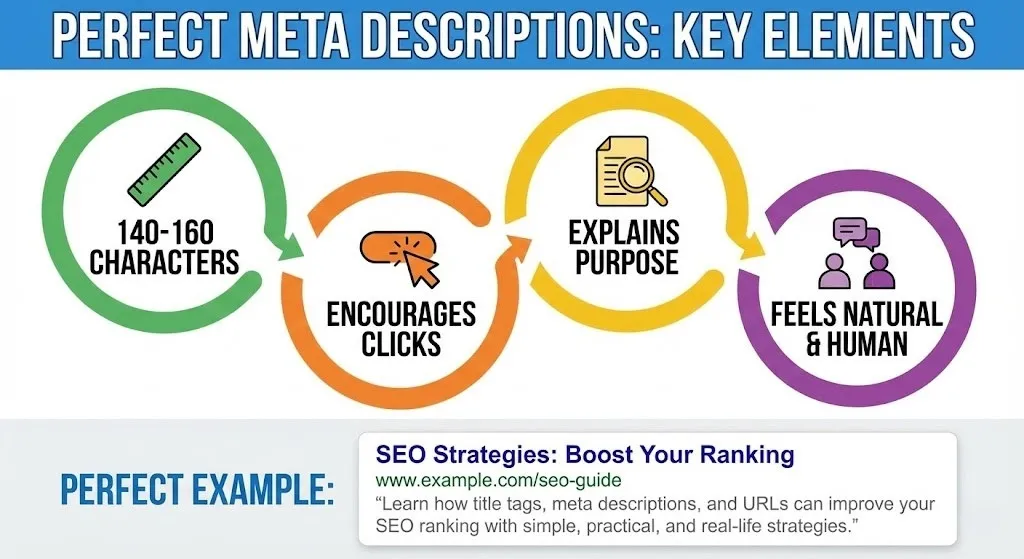
Example:
“Learn how title tags, meta descriptions, and URLs can improve your SEO ranking with simple, practical, and real-life strategies.”
3️⃣ URL Optimization – Clean & Smart Links
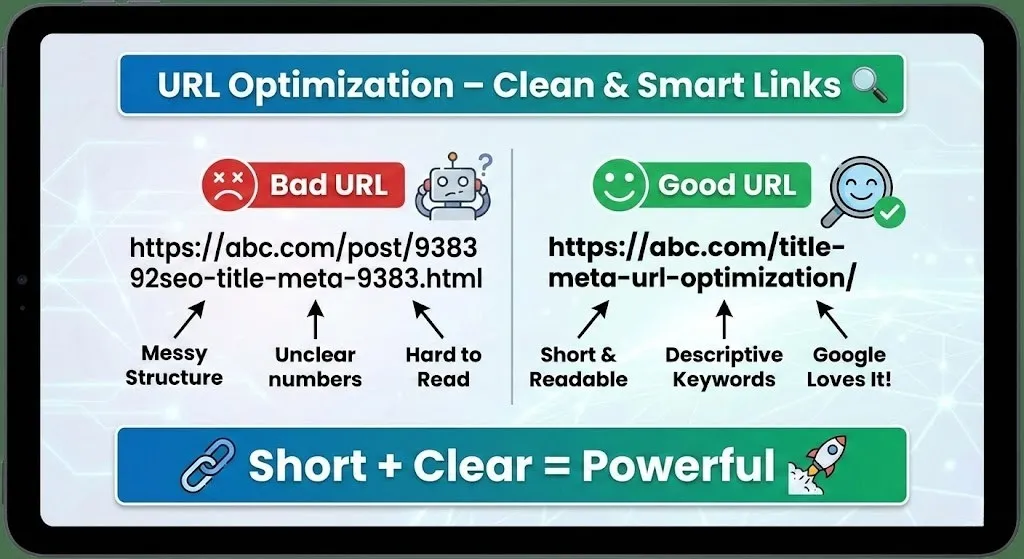
A good URL is short, readable, and meaningful.
Google loves clean structure.
❌ Bad URL
https://abc.com/post/938392seo-title-meta-9383.html✅ Good URL
https://abc.com/title-meta-url-optimization/
Short + Clear = Powerful
💡 Real Life Example 1
A digital learning platform was writing great blogs but still not getting traffic.
They ignored titles, descriptions, and URLs.
Their titles were dull.
URLs were long and confusing.
No proper description.
After learning from Website optimization classes, they optimized everything.
What happened?
- Clicks increased
- Traffic improved
- Rankings grew
Small changes made a big difference.
📊 Quick Comparison Table
| Element | Purpose | Impact |
| Title Tag | Defines topic | Higher CTR |
| Meta Description | Attracts users | More clicks |
| URL | Improves structure | Better ranking |
🧩 How to Create SEO-Friendly Titles, Descriptions & URLs?
🏷️ Title Optimization Rules
✔ Add primary keyword
✔ Keep short & meaningful
✔ Make it user friendly
✔ Avoid keyword stuffing
📝 Meta Description Rules
✔ Add keywords naturally
✔ Explain content
✔ Keep engaging
✔ Encourage action
🔗 URL Optimization Rules
✔ Keep it short
✔ Use keywords
✔ Avoid numbers & symbols
✔ Use hyphens instead of underscores
💡 Real Life Example 2
A training institute published a page like this:
Title: SEO Course
Description: Learn SEO
URL: /learn1234seo998/
No one clicked. No ranking.
They updated it after learning from SEO meta ad classes:
Title: Best SEO Course With Practical Training
Description: Learn SEO with real strategies, results, and simple training
URL: /best-seo-course-training/
Results?
Traffic improved.
Leads increased.
Page started ranking.
Highlight
Google ranks pages.
But people click titles.
So never ignore the title and meta description.
💡 Real Life Example 3
A new blogger wrote excellent content but received no traffic.
The problem was not content.
It had poor titles and weak descriptions.
He joined an SEO writing training course.
Learned proper structuring.
Changed his approach.
Within 2 months:
- His blogs started ranking
- Traffic became stable
- Engagement increased
Right training + right execution = Success.
🧠 Common Mistakes to Avoid
❌ Stuffing too many keywords
❌ Using very long titles
❌ Writing boring descriptions
❌ Using random numbers in URLs
❌ Ignoring user intent
Learn smart. Apply smart.
📋 Best Practice Checklist
Use this checklist every time:
- Keyword in title
- Simple and meaningful
- Keyword in description
- Human-friendly tone
- Keyword in URL
- Avoid spammy look
Follow this consistently and your website grows.

🎯 Final Thoughts
Title tags, meta descriptions, and URLs are not just technical SEO parts.
They are your brand identity in Google search.
Whether you study in an SEO course in surat, learn from an On page optimization institute, improve skills through SEO meta ad classes, enhance writing knowledge from an SEO writing training course, or practice in Website optimization classes, mastering these elements will always give you an advantage in ranking and traffic.
If you focus on clarity, user experience, and smart optimization, your website will not just rank — it will attract real users who trust your content.

Disclaimer: The images and videos used in this blog are for educational and illustrative purposes only. Some visuals may be generated using AI tools, while others are sourced from publicly available platforms. We do not claim ownership of any third-party images or videos. All rights and credits belong to their respective owners.