
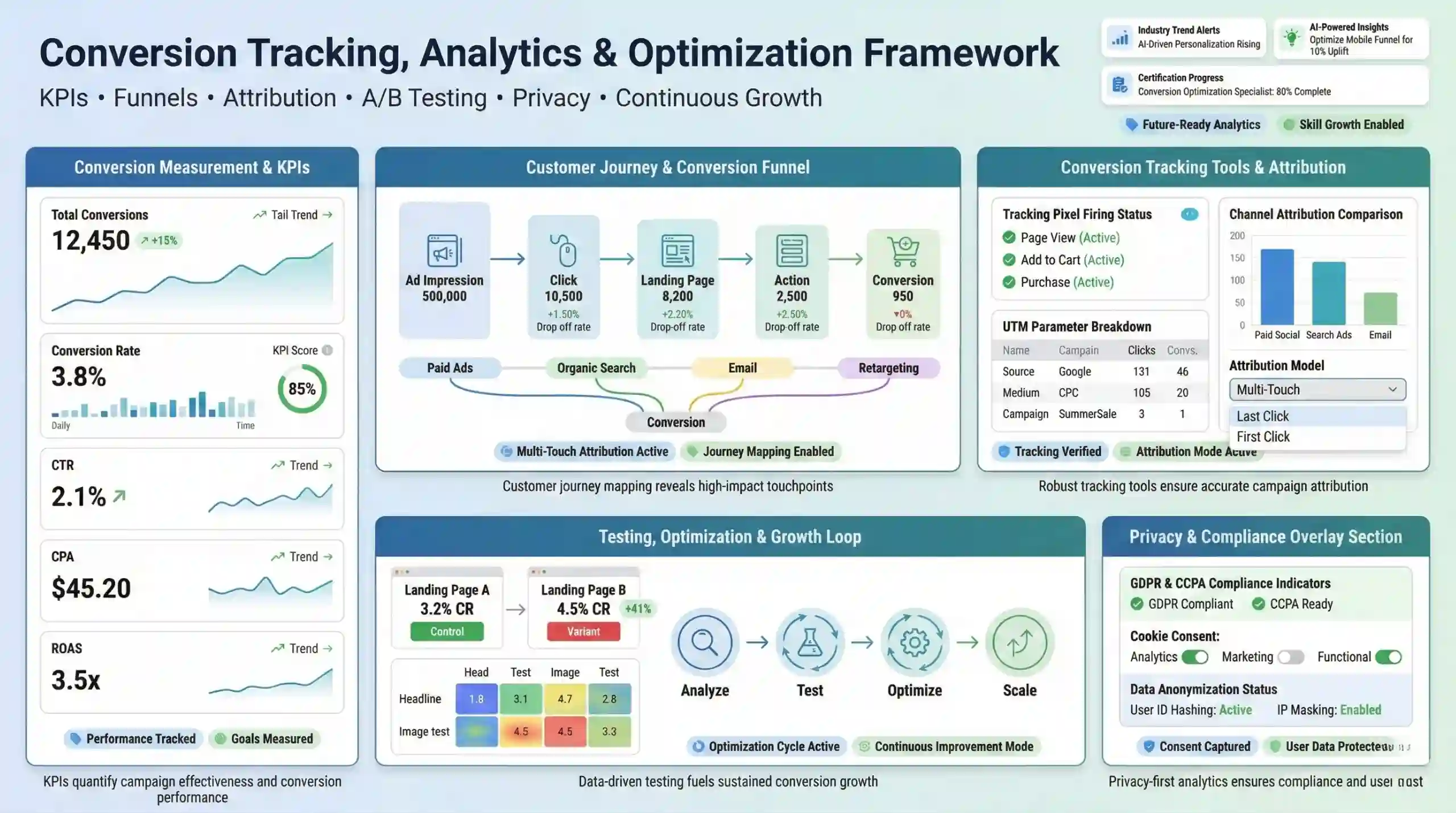
1. Understand Conversion Tracking Fundamentals
Conversion Measurement Basics:
Conversion tracking in digital marketing refers to the process of monitoring and analyzing user actions that signify valuable outcomes—such as purchases, form submissions, or newsletter sign-ups—on a website or app. This process enables marketers to evaluate the performance of their campaigns with accuracy. For example, employing tools like Google Analytics allows businesses to count how many visitors complete a desired action after engaging with an advertisement. Understanding how conversions are measured fundamentally supports the optimization of marketing efforts by providing quantifiable insights into user behavior.
Key Performance Indicators (KPIs):
KPIs are essential metrics that quantify how well a digital marketing campaign resonates with audience objectives. Metrics like click-through rate (CTR) indicate the effectiveness of ad creatives in generating interest. Cost per acquisition (CPA) measures the expense incurred to generate a new customer, while return on ad spend (ROAS) evaluates profitability relative to advertising investment. For instance, a campaign with a high CTR but high CPA suggests many clicks but poor conversion efficiency, indicating room for optimization.
Customer Journey Mapping in Digital Analytics:
Customer journey mapping involves analyzing a series of touchpoints—such as ad impressions, website visits, and interactions—that influence a user’s decision to convert. It helps assign credit accurately to each interaction, employing attribution models that determine which channels or points in the journey are most influential. A practical example could involve tracking whether a user first clicks on a Facebook ad, then visits the website via a Google search, and finally converts through an email campaign. Mapping these steps allows marketers to optimize the most impactful touchpoints.
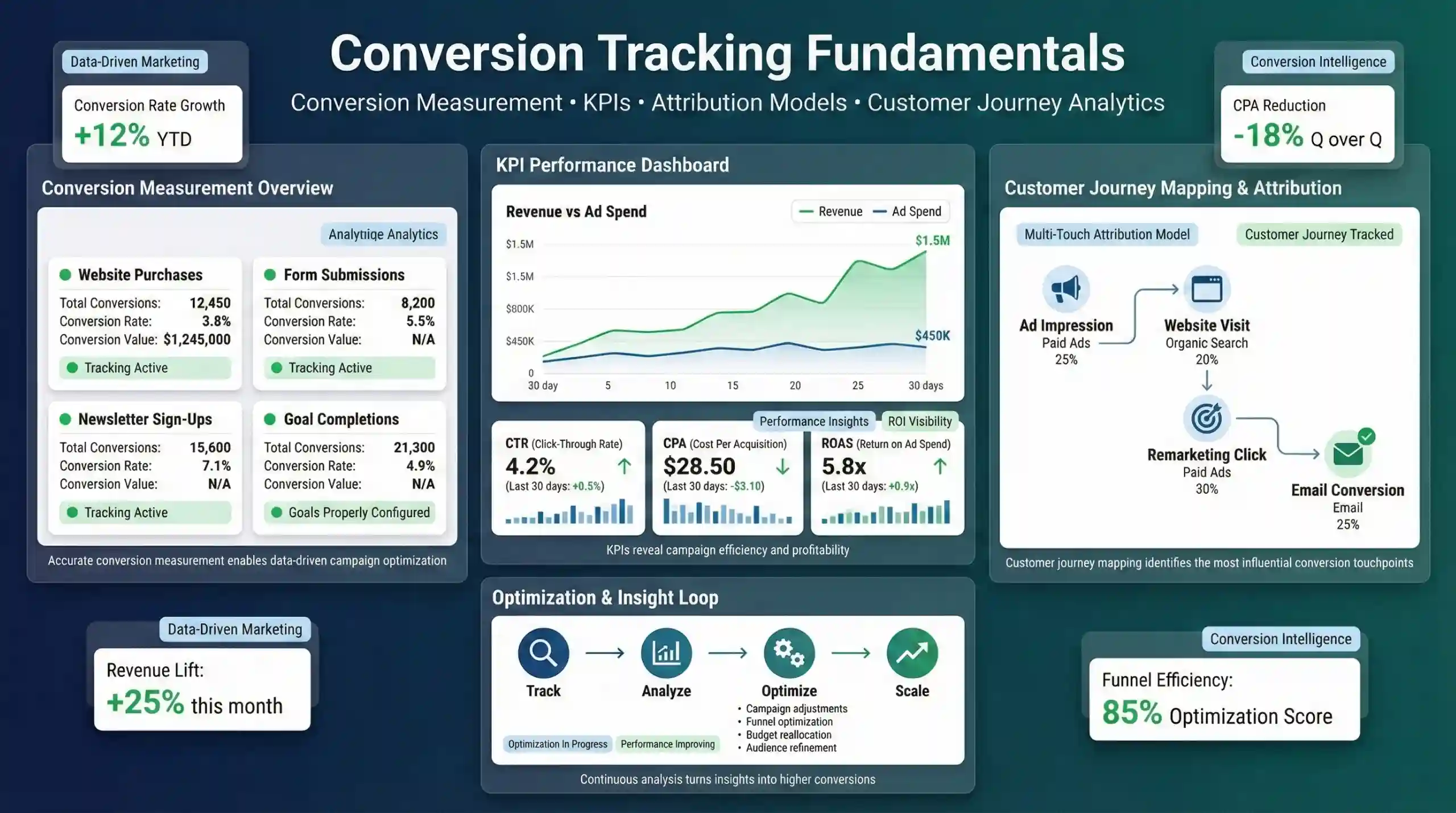
2. Set Clear Conversion Goals and Objectives
Defining Digital Sales & Lead Generation Goals:
Establishing specific, measurable goals—such as increasing online sales by 20% within three months or generating 50 qualified leads per week—aligns marketing efforts with overall business KPIs. Clear goals guide tracking setup and help determine whether campaigns achieve their intended outcomes.
SMART Goal Setting for Campaign Optimization:
SMART criteria ensure goals are well-defined and achievable. For example, instead of “increase conversions,” a SMART goal would be: “Increase form submissions by 15% within 30 days.” This facilitates precise performance measurement and targeted optimization strategies.
Utilizing Campaign Tracking Tools:
Implementing tools like Google Analytics Goals or Facebook Pixel events helps in tracking key actions such as purchases or lead form completions. For example, setting up a Google Analytics goal for a successful checkout completes when users reach the ‘Order Confirmation’ page, providing specific data for conversion tracking.
3. Implement Robust Conversion Measurement Tools
Conversion Tracking Pixels & Tag Management:
Conversion pixels are snippets of code embedded into web pages to record specific user actions. They help in attributing conversions to specific campaigns. Combining pixels with Google Tag Manager streamlines the deployment of multiple tags, simplifies maintenance, and reduces errors. For instance, deploying a Facebook Pixel across a landing page tracks conversion events and informs ad optimization.
UTM Parameters for Campaign Attribution:
UTM parameters are tags appended to URLs that identify marketing campaigns, sources, and mediums, enabling detailed campaign attribution in analytics platforms. For example:
https://example.com?utm_source=facebook&utm_medium=cpc&utm_campaign=spring_saleLanding Page & Funnel Tagging:
Proper pixel and tag implementation across landing pages and sales funnels ensures comprehensive tracking of user progression. For instance, tagging each step of a checkout process helps identify where users drop off, providing insights to optimize the funnel.
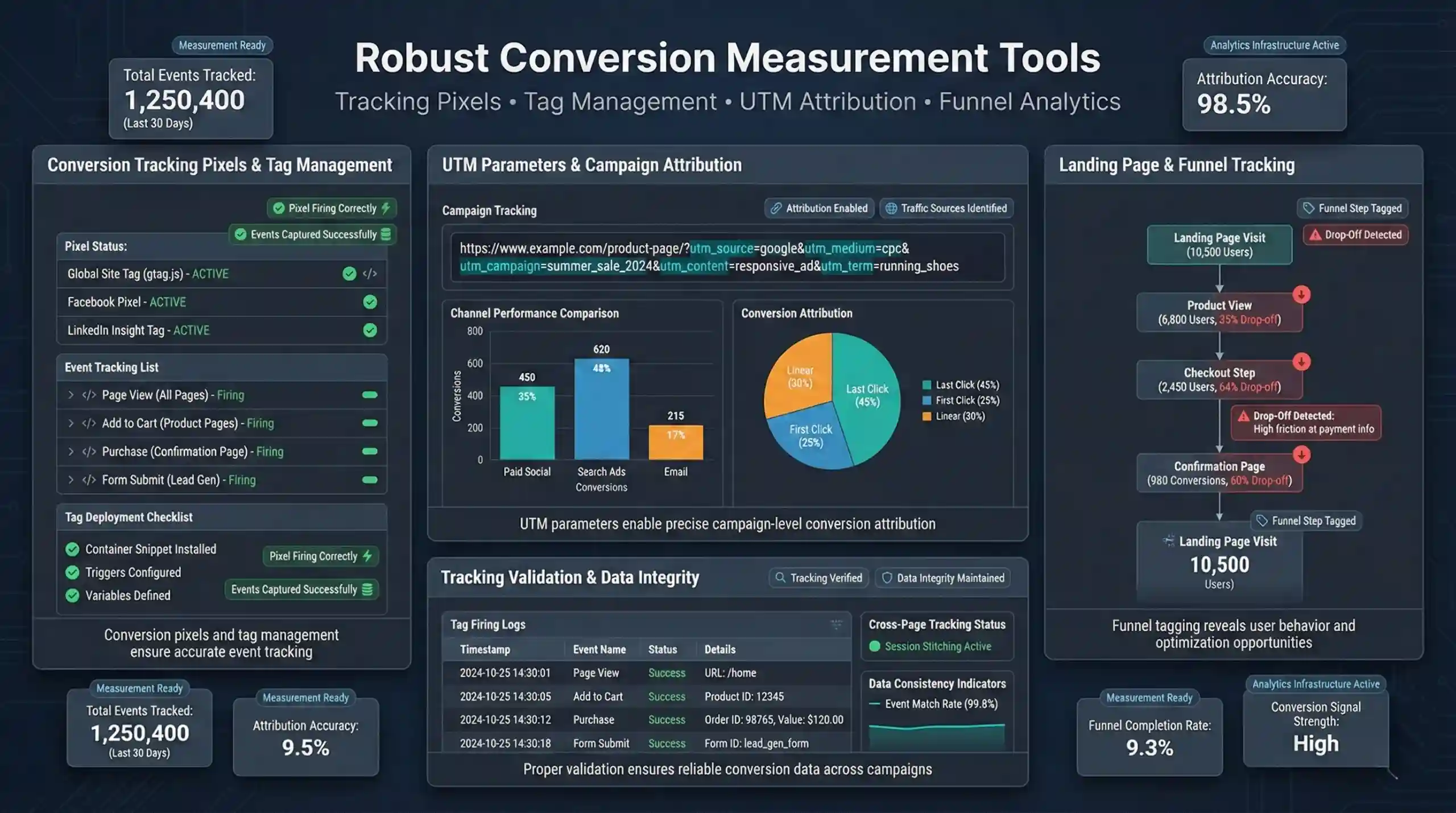
4. Conduct Conversion Tracking Setup & Validation
Tracking Code Verification & Debugging:
Tools like Google Tag Assistant verify that tracking codes are correctly installed and firing as intended. Regular validation prevents data inaccuracies. For example, upon deploying a new conversion pixel, testing via Google Tag Assistant ensures it triggers correctly on the confirmation page.
Cross-Device & Browser Testing:
Conduct testing across various devices and browsers to confirm consistent data collection. Conversion data might differ if a pixel isn’t firing on certain browsers or devices, leading to inaccurate analysis.
Regular Tracking Audit:
Periodic audits involve reviewing tags, scripts, and configurations to eliminate discrepancies. Ensuring that all relevant pages are tagged accurately maintains data integrity over time, especially after website updates.
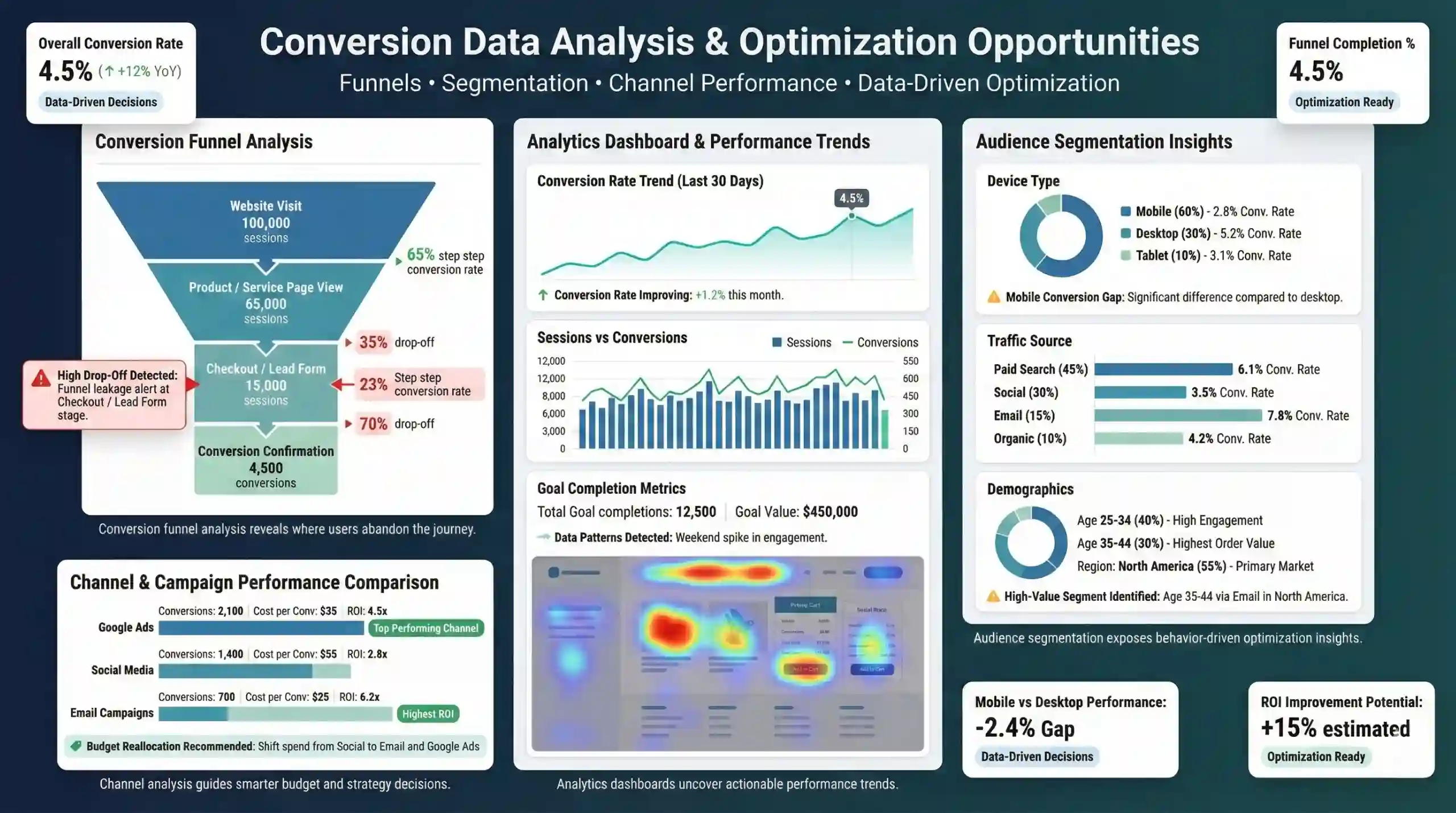
5. Analyze Conversion Data and Identify Optimization Opportunities
Analytics Dashboards & Conversion Funnel Analysis:
Use analytics dashboards to monitor the conversion funnel—tracking each step from initial visit to final conversion. Identifying drop-off points allows targeted improvement. For example, if many users abandon their carts at the payment stage, optimizing checkout processes could improve overall conversions.
Segmentation for Insights:
Dividing data by demographics, traffic sources, and device types uncovers specific audience behaviors. For example, analyzing conversions for mobile users may reveal a need to optimize mobile-friendliness.
Channel & Campaign Performance Analysis:
Evaluating which marketing channels perform best helps allocate budget effectively. If Google Ads campaigns generate higher conversions than social media ads, resources can be redirected accordingly for better return on investment.
6. A/B Testing & Multivariate Testing
Landing Page & CTA A/B Testing:
Split testing involves creating two versions of a landing page or CTA—Variations A and B—and comparing their performance. For example, testing different colors for a “Buy Now” button can significantly influence click rates.
Multivariate Testing for CRO:
Multivariate testing assesses multiple variables simultaneously—such as headlines, images, and button placement—to identify the most effective combinations. This allows comprehensive optimization of user experience.
Data-Driven Test Iteration:
Continuous testing based on empirical data ensures ongoing improvement. For instance, once a winning headline is identified, further testing can refine related elements for even higher conversions.
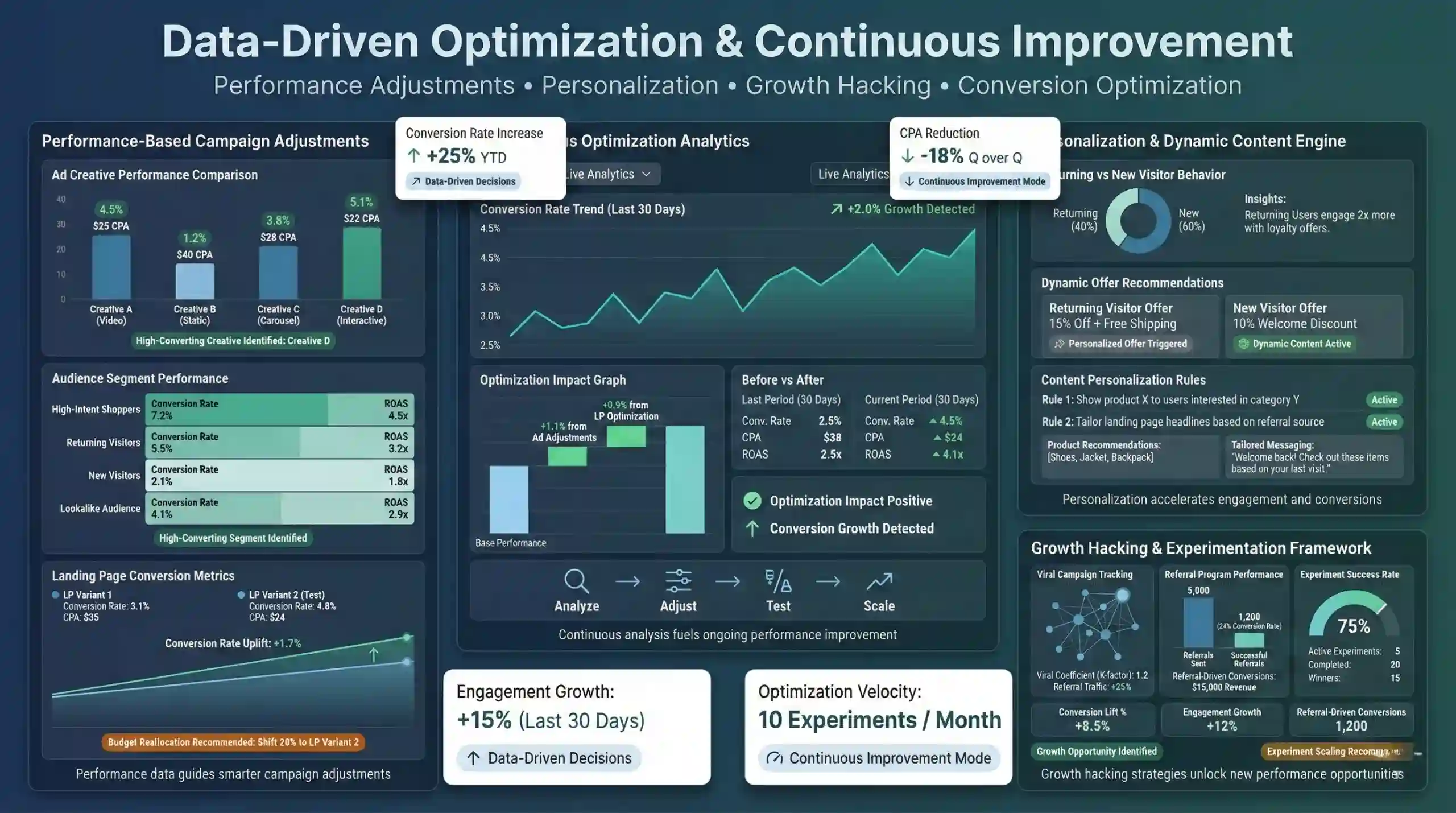
7. Optimize Based on Data & Continuous Improvement
Performance-Based Campaign Adjustments:
Analyzing conversion data enables marketers to tweak ad creatives, targeting, or landing pages to enhance results. For example, shifting ad budgets toward high-converting segments boosts overall performance.
Personalization & Dynamic Content:
Using visitor data to serve personalized content—such as product recommendations—can accelerate conversions. For ejemplo, showing returning visitors tailored offers increases engagement.
Growth Hacking & Metric Monitoring:
Employ innovative strategies, like viral campaigns or referral programs, while constantly monitoring key metrics. Regularly reviewing conversion rates helps identify new opportunities for growth.
8. Advanced Tracking & Attribution Models
Cross-Channel & Multi-Touch Attribution Models:
Implement models such as multi-touch attribution to evaluate the influence of each touchpoint, avoiding over-reliance on last-click attribution. For example, crediting both the initial ad click and final checkout provides a holistic view of touchpoint effectiveness.
Attribution Modeling Tools & Platforms:
Leverage specialized tools like Google Attribution or Adobe Analytics to model and analyze customer journeys across channels, aiding smarter budget allocations.
CRM Integration & Closed-Loop Reporting:
Link CRM systems with analytics to track how marketing efforts influence sales and customer lifetime value (CLV). Closed-loop reporting ensures that every touchpoint is accounted for in ROI calculations.
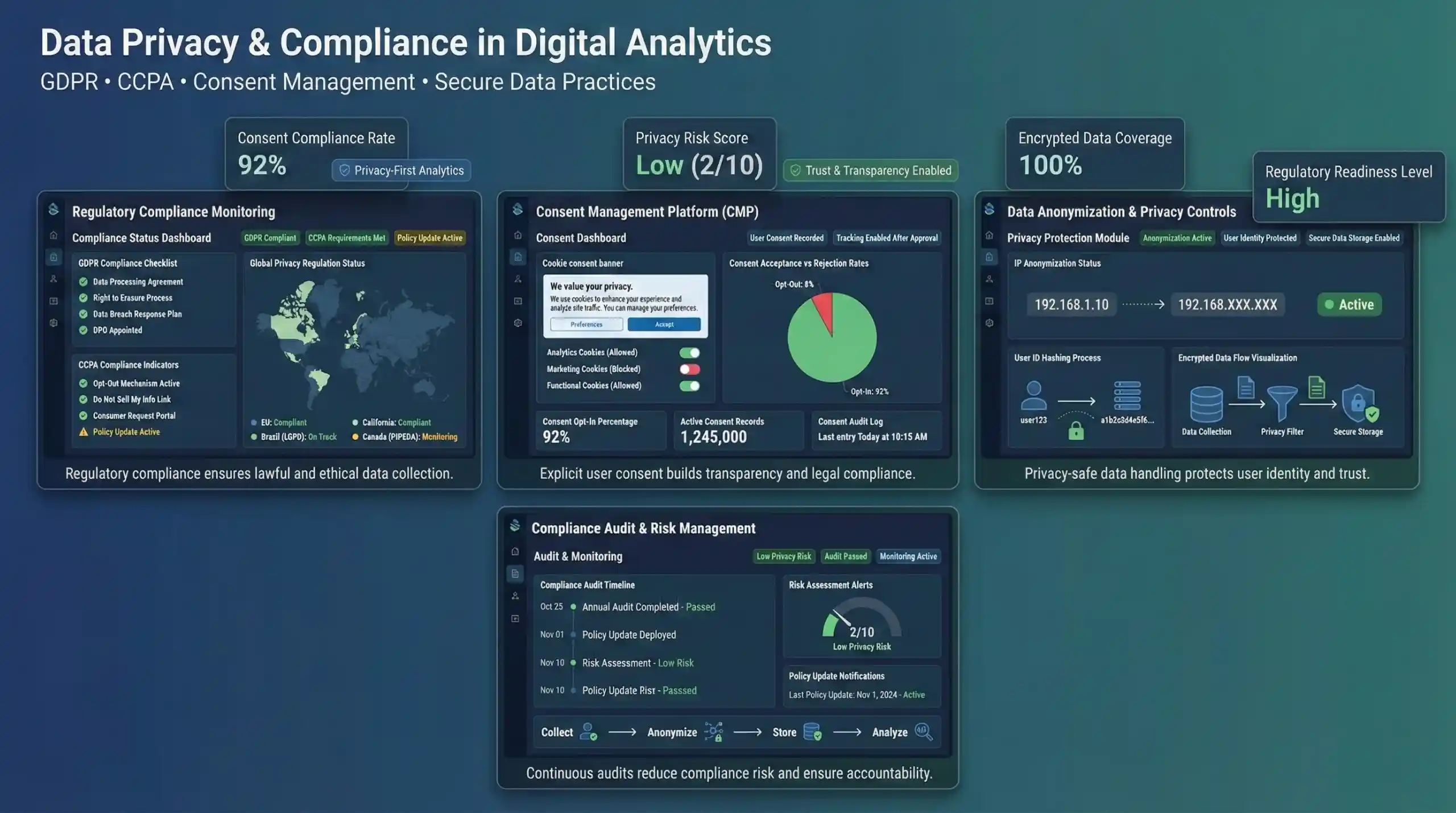
9. Ensure Data Privacy & Compliance
Regulatory Compliance in Digital Analytics:
Stay informed about regulations like GDPR and CCPA, which mandates user consent for data collection. Non-compliance can lead to legal penalties and damage brand reputation.
Consent Management Platforms:
Implement tools such as cookie banners and user permission systems to obtain explicit consent before deploying tracking pixels, aligning with privacy laws.
Data Anonymization & Privacy Standards:
Employ techniques like anonymizing IP addresses and hashing user IDs to protect user identity, fostering trust and compliance.
10. Stay Updated & Continual Learning
Industry Trends in Digital Analytics & CRO:
Follow leading blogs, webinars, and forums—like Moz, ConversionXL, or Google’s official blogs—to keep up with the latest techniques and tools in conversion tracking and optimization.
Emerging Tools & Technologies:
Explore advancements such as AI-powered analytics, automated bidding, and predictive modeling to enhance performance marketing strategies.
Certification & Continuous Education:
Pursuing certifications like Google Analytics Certification or HubSpot Inbound Certification deepens understanding and keeps skills current.
Practice Questions
- Q1: What are the main benefits of using UTM parameters in digital marketing campaigns?
- A: They enable precise attribution of traffic sources, mediums, and campaigns, facilitating accurate performance analysis and optimization.
- Q2: Describe how cross-device testing impacts conversion tracking accuracy.
- A: Cross-device testing ensures that conversion data is consistent and complete across all devices, preventing data gaps and misinterpretations.
- Q3: Explain the difference between A/B testing and multivariate testing.
- A: A/B testing compares two variants of a single element, while multivariate testing simultaneously evaluates multiple elements to find the most effective combination.
- Q4: How does multi-touch attribution improve understanding of the customer journey?
- A: It assigns credit to multiple touchpoints, providing a comprehensive view of all interactions influencing a conversion.
- Q5: Why is regular tracking code validation necessary?
- A: To prevent data discrepancies caused by improperly installed tags or technical errors, ensuring accurate conversion data collection.
Sample Code for UTM Tagging:
https://example.com/product?utm_source=google&utm_medium=cpc&utm_campaign=spring_saleSample Code for Google Tag Manager Trigger:
// Custom Trigger to track form submissions
<form id="leadForm" onsubmit="dataLayer.push({'event':'formSubmission'});">
  ...
</form>
Resources for Further Study
- Google Analytics Academy — Official training for tracking setup and analysis
- Moz Beginner’s Guide to SEO — SEO fundamentals and tracking best practices
- Google Tag Manager Help Center — Implementation and validation of tracking pixels and tags
This Conversion Tracking Optimization Roadmap provides a comprehensive, theory-focused framework combining foundational principles with practical application, empowering digital marketing students to master performance marketing through effective conversion tracking strategies.
Disclaimer: The images and videos used in this blog are for educational and illustrative purposes only. Some visuals may be generated using AI tools, while others are sourced from publicly available platforms. We do not claim ownership of any third-party images or videos. All rights and credits belong to their respective owners.
MORE COURSES
Advance Digital Marketing & SEO course with Gen AI
Advanced Certificate in Digital Design & Marketing course with Gen AI