
1. Introduction to SEO Keyword Clustering & Content Gap Detection
Overview
Effective SEO keyword research is fundamental to successful digital marketing strategies. It involves identifying the words and phrases that potential visitors use in search engines to find products, services, or information. Well-executed keyword research enhances a website’s visibility, attracts targeted organic traffic, and improves search engine results page (SERP) rankings by aligning content with search intent.
Significance of Keyword Research
- Understand search behaviors and preferences.
- Target high-value keywords with optimal search volume and competition.
- Focus on search intent, whether informational, transactional, or navigational.
- Increase organic traffic and conversion rates.
- Leverage long-tail keywords for niche dominance.
Role of Keyword Clustering
Keyword clustering involves grouping related keywords into cohesive sets based on semantic relevance and intent. This organization helps develop content that covers large topic areas comprehensively, establishing topical authority. Clustering also enhances internal linking structures, improves user experience, and signals topical relevance to search engines.
Content Gap Detection
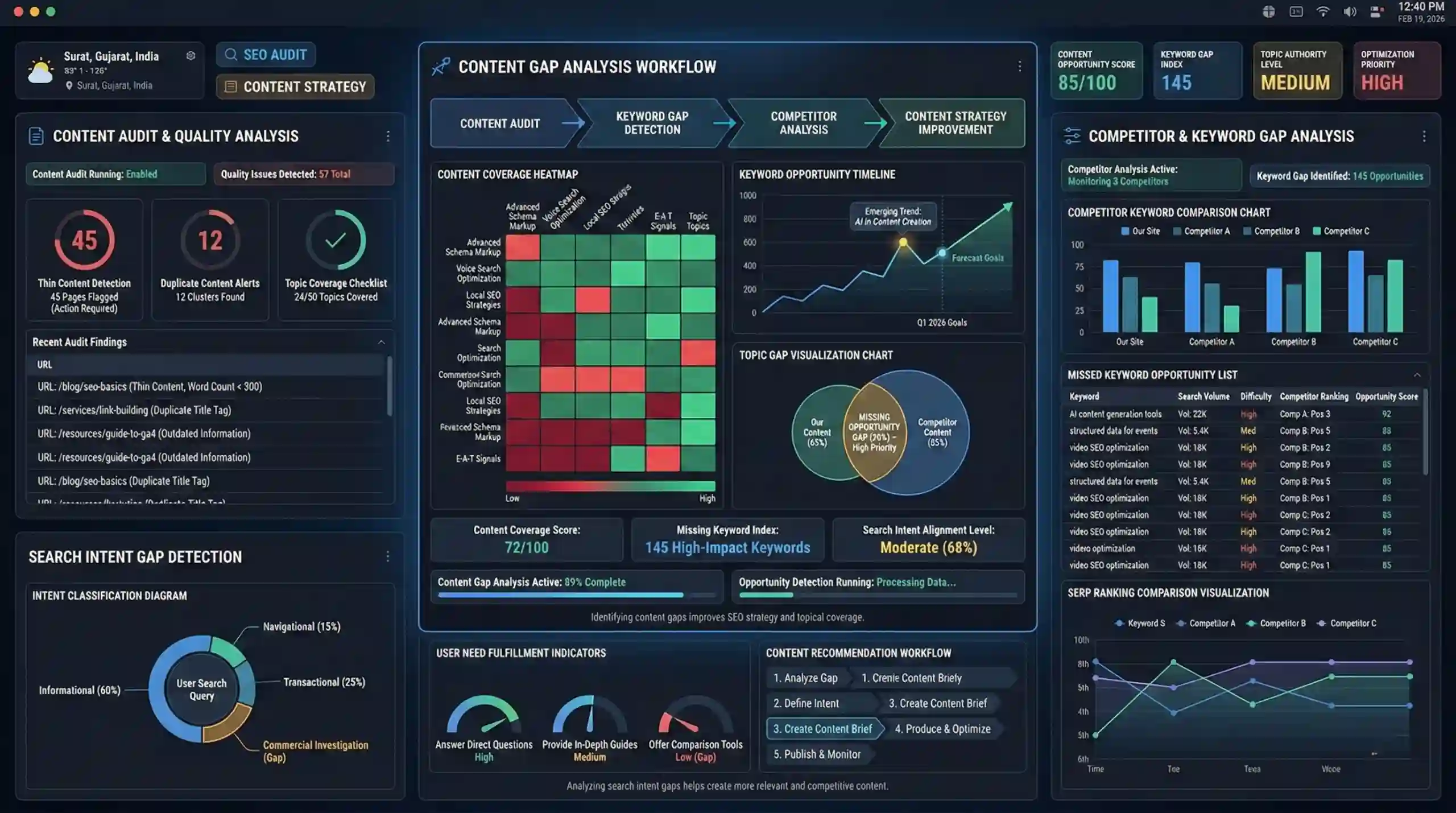
Content gap detection identifies opportunities where existing content fails to cover or optimize for pertinent keywords and search intents. By analyzing these gaps, website owners can develop new content or optimize existing pages, thereby maintaining competitive advantage and improving overall site authority.
2. Fundamentals of Keyword Research
Keyword Research Tools
Several tools facilitate in-depth keyword analysis:
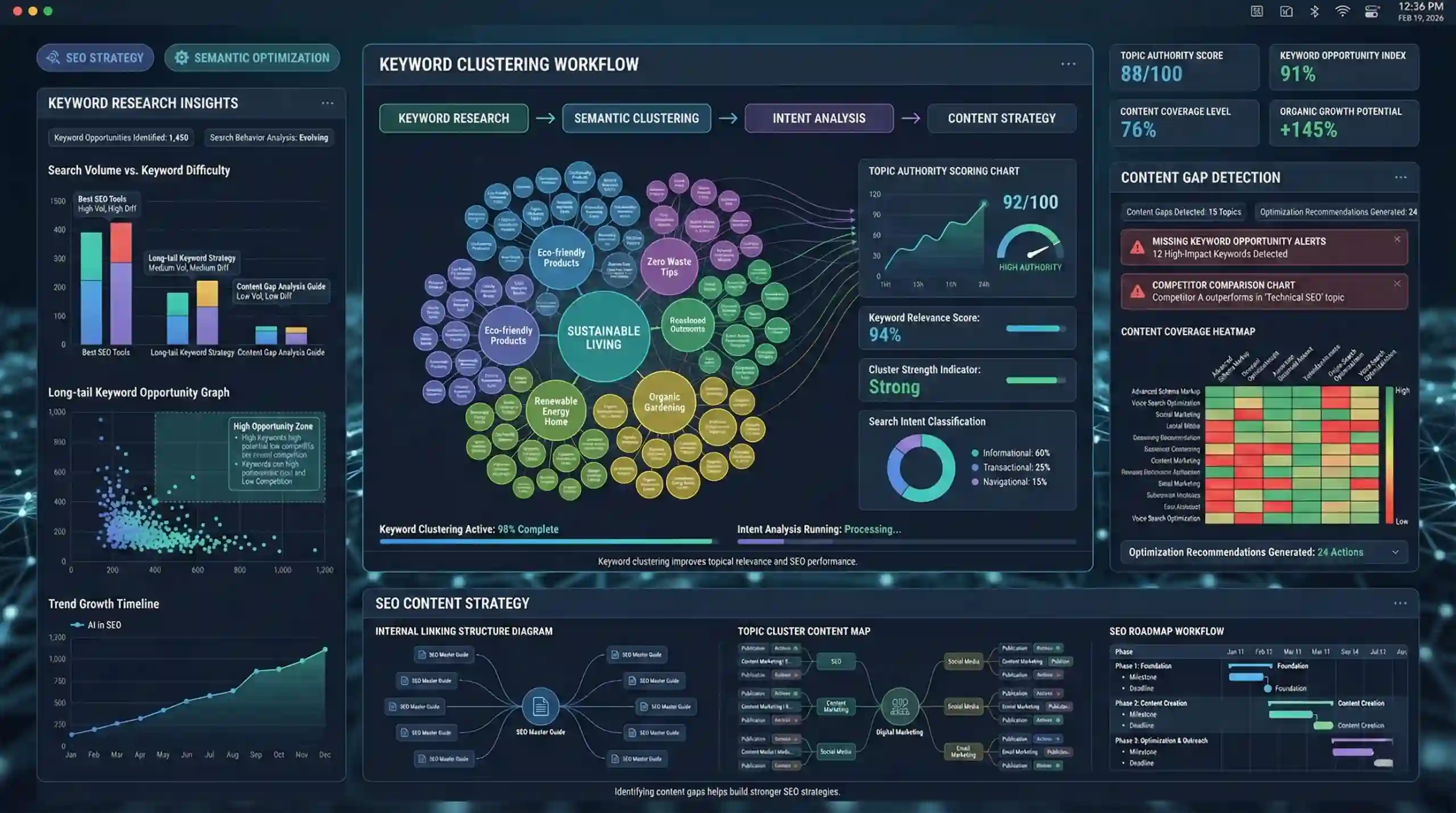
- Google Keyword Planner: Provides search volume, competition, and CPC data.

- Ahrefs: Offers comprehensive backlink profiles and keyword metrics.

- SEMrush: Combines keyword research, competitor analysis, and site audit features.

- Ubersuggest: Delivers keyword suggestions, search volume, and SEO difficulty.

- Moz Keyword Explorer: Focuses on keyword opportunity and priority.
Short-Tail vs Long-Tail Keywords
Short-tail keywords are broad, highly competitive, and generate large traffic volumes (e.g., “shoes”).
Long-tail keywords are specific, less competitive, and attract targeted visitors (e.g., “best running shoes for women in 2024”). Both types are vital: short-tail for brand awareness, long-tail for conversions.
Competitor Keyword Analysis
Analyzing competitors’ top-ranking pages uncovers:
- High-traffic keywords they target.
- Content strategies that perform well.
- Backlink profiles and content gaps they fill.
Keyword Metrics
Effective keyword prioritization hinges on:
- Search Volume: Average monthly searches.
- Keyword Difficulty: Level of competition.
- CPC (Cost Per Click): Paid advertising potential.
- Click Potential: Likelihood of organic clicks based on the keyword.
3. Keyword Clustering Techniques
Semantic Grouping
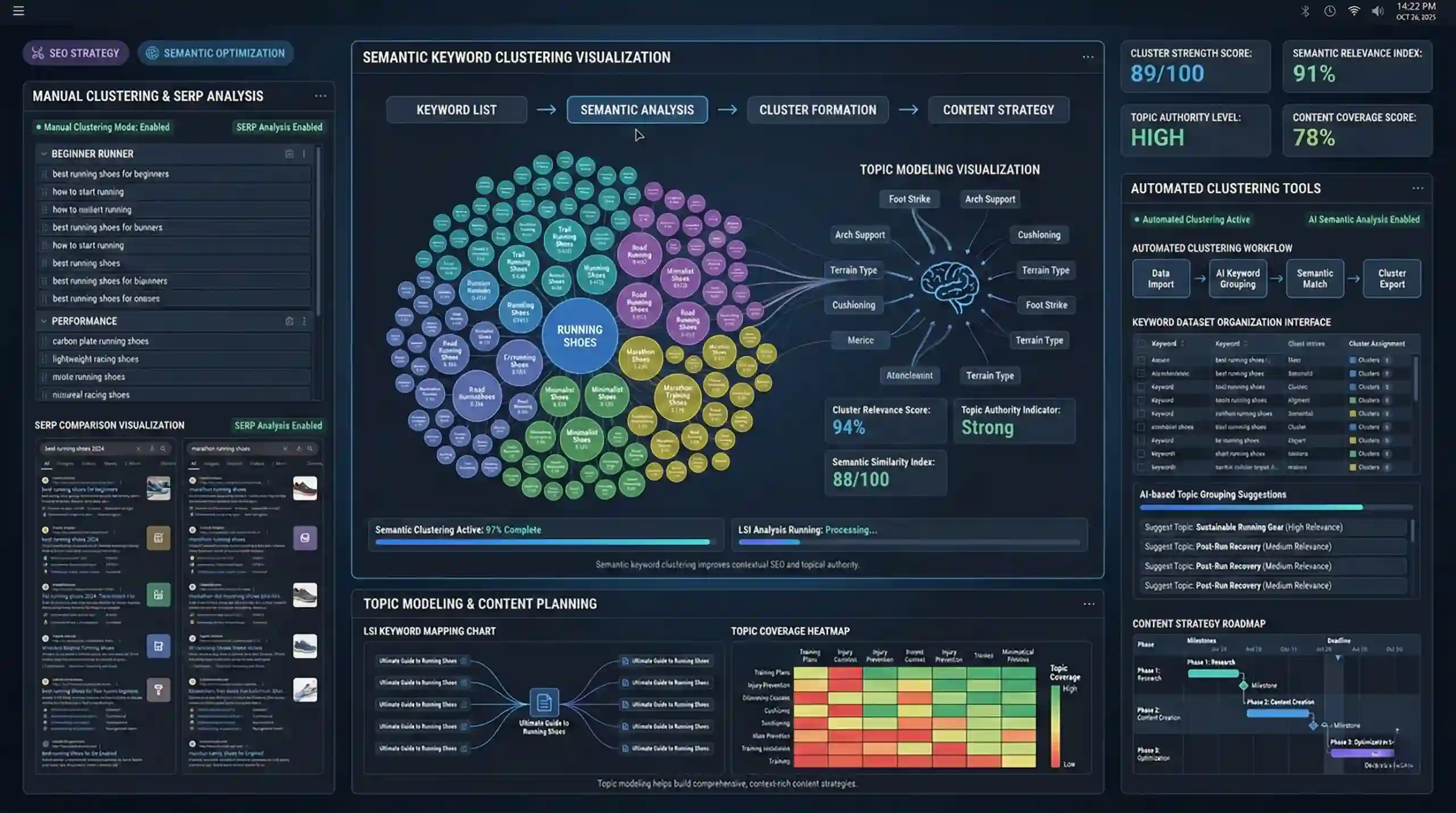
Keywords should be grouped based on semantic relevance—meaning the keywords share a common topic or intent. Techniques include using LSI (Latent Semantic Indexing) keywords, which are terms semantically related to core keywords, providing context that enhances content relevance.
Manual Clustering
Involves analyzing keyword meanings and SERP results to manually group keywords into logical clusters. For example:
- Cluster 1: “Running Shoes,” “Men’s Running Shoes,” “Women’s Running Shoes”
- Cluster 2: “Best Running Shoes,” “Top Running Shoes Brands”
Automated Clustering Tools
– Keyword Cupid: Uses semantic analysis for clustering.
– ClusterAI: Automates thematic grouping.
– SEMrush Keyword Manager: Organizes large datasets.
– Ahrefs: Offers cluster suggestions based on backlink profiles and related keywords.
Topic Modeling & LSI
Applying topic modeling and LSI enhances clustering by identifying latent themes within keywords. This leads to more contextually relevant content creation.
4. Building Effective Keyword Clusters
Creating Relevant Groups
Ensure each cluster covers related keywords that share a common theme, reinforcing topical authority. For instance, a cluster around “digital marketing strategies” might include keywords such as “social media marketing,” “content marketing,” and “email marketing.”
Aligning with Search Intent
Different intent types require tailored content:
- Informational: “What is SEO?”
- Transactional: “Buy SEO tools online”
- Navigational: “Semrush login page”
Clustering should reflect these intentions to align content with user needs.
Hierarchical Clustering
Structure content hierarchically:
- Primary clusters: Broad topics.
- Sub-clusters: Specific sub-topics for detailed focus.
This structure enhances internal linking and guides search engines through content relevance.
Mapping URLs to Clusters
Assign dedicated URLs, landing pages, or blog posts to specific keyword clusters. This targeted optimization increases rankings for those related keywords.
5. Content Gap Analysis Methodology
Conducting Content Audits
Review existing pages to assess coverage of identifying keyword clusters. Key goals:
- Detect duplicate or thin content.
- Determine coverage gaps in target topics.
Keyword Gap Analysis Tools
– SEMrush Content Gap: Finds keywords competitors rank for that you do not target.
– Ahrefs Content Gap: Identifies missed keywords and opportunities.
– Google Search Console: Monitors query performance and highlights low click-through keywords.
Competitor Content Analysis
Study top competitor content to:
- Discover underexplored topics.
- Identify high-value keywords they rank for.
- Find opportunities to create superior content.
Search Intent Gaps
Detect where searchers’ needs are unmet by your current content, guiding new creation or updates to fill identified gaps.
6. Tools for Content Gap Detection
- Ahrefs Site Explorer: Analyzes competitor backlinks and keyword profiles.
- SEMrush Gap Analysis: Finds keyword opportunities missing on your site.
- Google Search Console: Reports on search query performance, indicating underperforming keywords.
- Content Audit Spreadsheets: Organizes and tracks existing content coverage.
- SERP Analysis: Examines dominant content in search results to identify content patterns and unmet search intents.
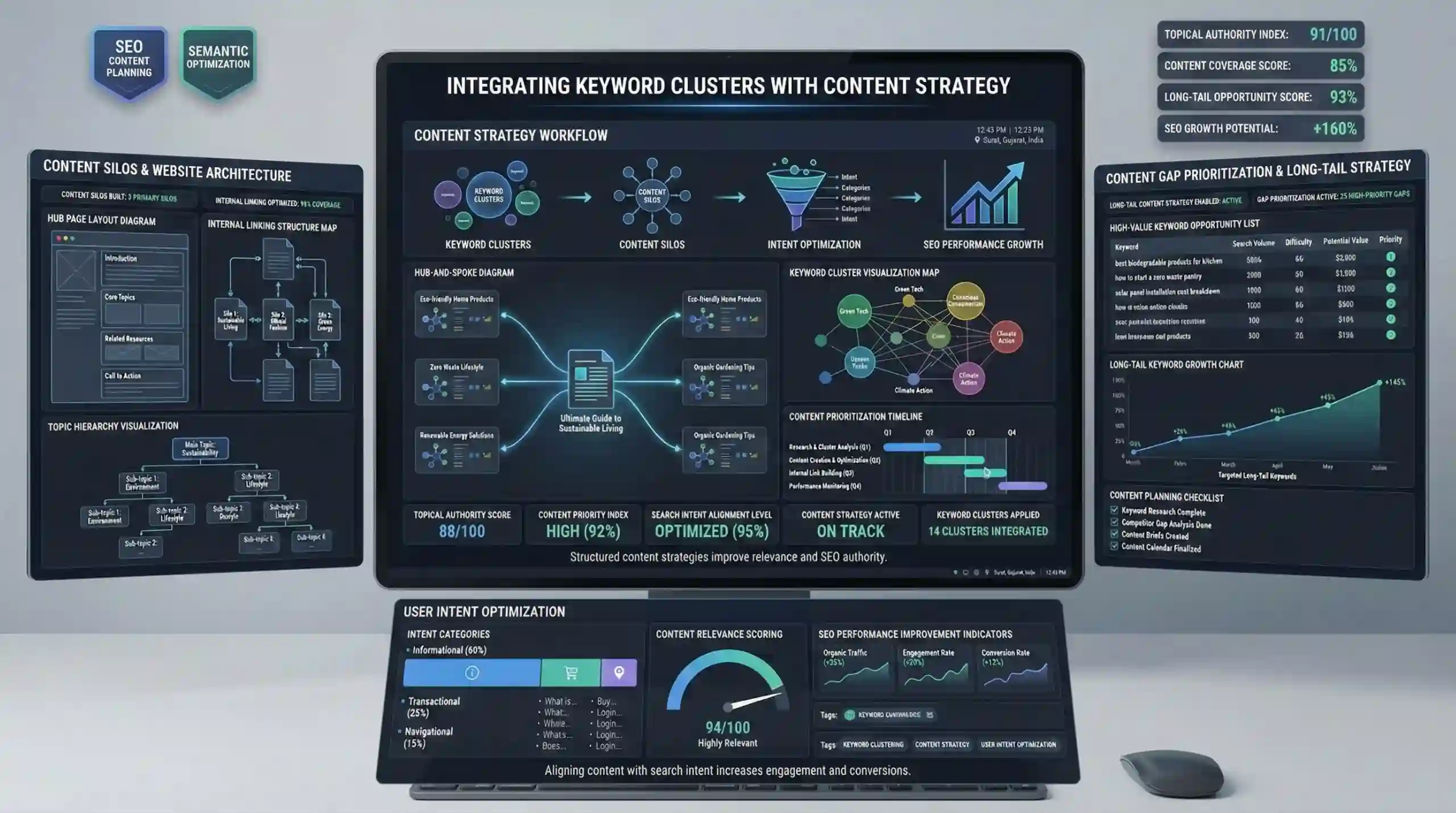
7. Integrating Keyword Clusters with Content Strategy
Developing Content Silos
Design website structures based on keyword clusters:
- Create comprehensive hub pages for main topics.
- Link to detailed sub-pages for related keywords.
Prioritizing Content Gaps
Focus first on high-volume or high-conversion keywords identified during gap analysis for quick wins and authority building.
Planning Long-Tail Content
Develop detailed blog posts, FAQs, or landing pages targeting long-tail keywords with less competition but high intent.
Optimizing for User Intent & Relevance
Each piece must serve the user’s search intent, whether providing information, facilitating transactions, or guiding navigation.
8. Practical Application & Continuous Optimization
Creating SEO Content Briefs
Use keyword clusters to develop detailed content briefs that specify target keywords, intent, and structure, ensuring consistency and SEO best practices.
Monitoring Performance
Regularly review:
- Keyword rankings.
- Organic traffic.
- Bounce rate and dwell time.
Content Updates
Refresh content based on analytics:
- Expand high-performing content.
- Update outdated information.
- Fill identified content gaps.
Staying Current
Follow authoritative industry blogs and resources, such as:
- Moz (moz.com/blog)
- Neil Patel (neilpatel.com)
- Backlinko (backlinko.com/blog)
- Search Engine Journal (searchenginejournal.com)
9. Resources & Tutorials
10. Summary & Best Practices
– Begin with comprehensive and structured keyword research using advanced tools.
– Apply semantic clustering techniques (LSI, topic modeling) to organize keywords.
– Regularly analyze content gaps both for your site and competitors.
– Develop targeted content that aligns with clusters and search intent.
– Continuously monitor SEO performance and refine your content strategy.
– Staying updated with SEO trends and best practices is vital for maintaining and improving organic rankings.
Additional Study Resources:
More Courses
- Social Media Marketing course with Gen AI
- Advance Digital Marketing & SEO course with Gen AI
- Advanced Certificate in Digital Design & Marketing course with Gen AI
- Meta & Google Ads course with Gen AI