

1. Introduction to SEO & Personalized Search Experience
Understanding SEO Fundamentals
Search Engine Optimization (SEO) is the process of enhancing a website’s visibility in search engine results pages (SERPs). It involves optimizing various elements such as keyword usage, site structure, backlinks, and content quality to improve organic traffic. The primary goal is to ensure that when users search for relevant topics, the website appears prominently.
For example, a local bakery optimizing its website with relevant keywords like “fresh bread in downtown” attracts nearby customers searching for bakery services, increasing foot traffic.
User Intent and Personalized Search
Modern search engines prioritize understanding the intent behind user queries—informational, transactional, navigational, or local. Personalized search results adapt to individual user preferences, search history, location, and browsing behaviors, providing highly relevant results.
For instance, if a user frequently searches for vegan recipes, search engines will prioritize vegan content in future searches, offering a tailored experience.
Impact of Personalization on Engagement and Rankings
Personalized SEO strategies enhance user engagement metrics such as dwell time and click-through rates, which influence search ranking algorithms. Providing users with content aligned with their interests encourages longer visits and reduces bounce rates, positively affecting SEO performance.
2. Foundations of Artificial Intelligence in SEO
Core AI Concepts Relevant to SEO
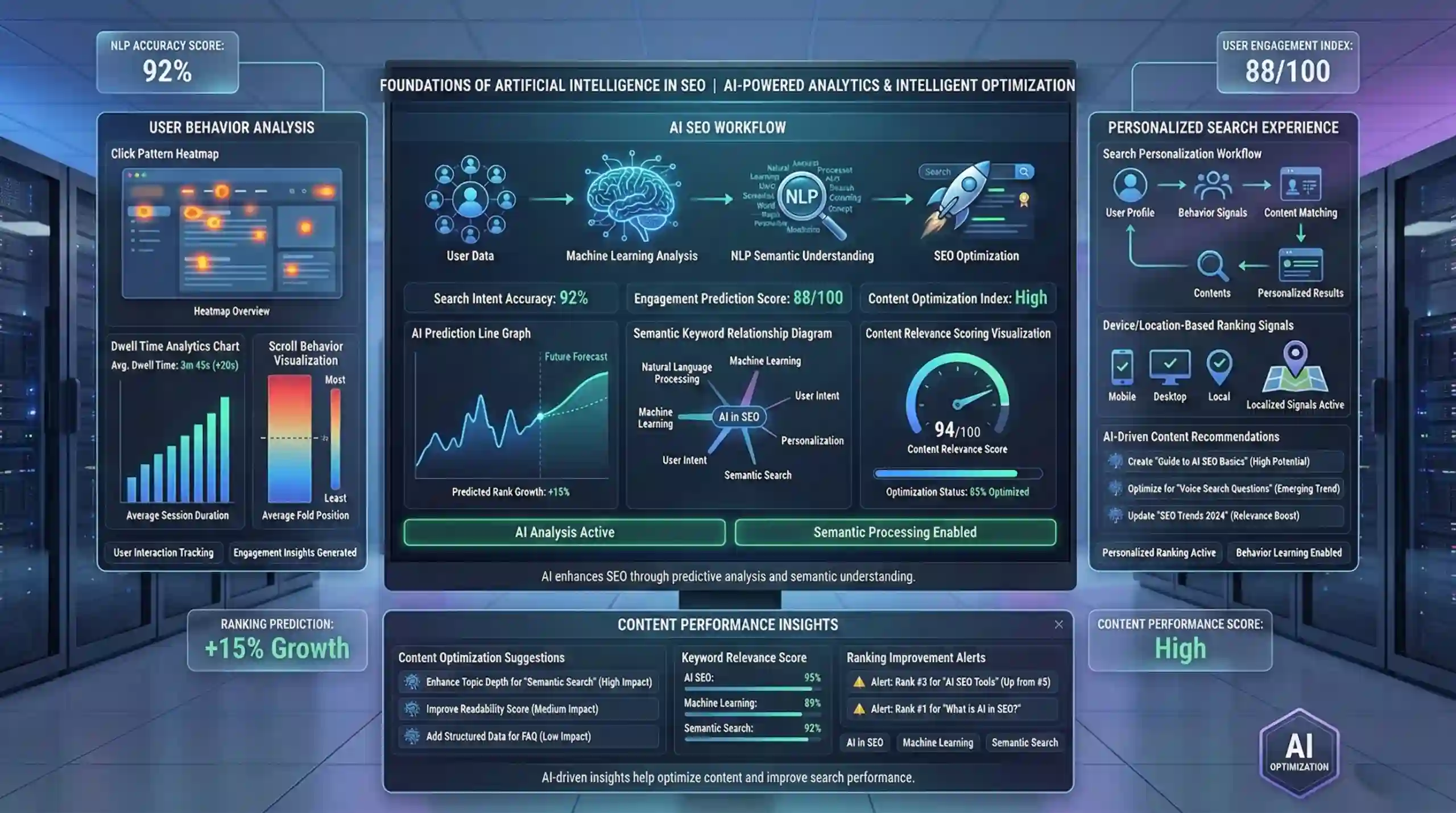
Artificial Intelligence (AI) leverages machine learning (ML), natural language processing (NLP), and deep learning to analyze data and automate SEO tasks.
- Machine Learning involves algorithms that learn from data patterns to make predictions.
- NLP enables understanding and processing human language, crucial for semantic SEO and content analysis.
For example, tools like Google’s BERT analyze context within search queries to deliver more relevant results.
Analyzing User Behavior and Content Performance with AI
AI algorithms monitor user interactions such as click patterns, time spent, and scroll behavior using tools like heatmaps and analytics platforms. This data enables content creators to identify what resonates with their audience, optimize existing content, and generate new ideas aligned with user preferences.
Outcome: A website sees improved engagement metrics and better ranking on target keywords.
AI’s Role in Delivering Personalized Search Experiences
AI personalizes search results by continuously learning from user data—search history, location, device type—to adjust search rankings dynamically. It ensures individual users receive tailored results that match their specific needs, increasing satisfaction and trust.
3. Data Collection & User Behavior Analysis
Tools for Tracking Engagement
Popular tools such as Google Analytics and heatmap software (e.g., Hotjar) enable tracking of user behavior, including page visits, click zones, scroll depth, and navigation paths, providing valuable insights into content effectiveness.
Ethical Data Collection Practices
Respecting user privacy involves adherence to regulations such as GDPR, ensuring informed consent, data anonymization, and secure storage of collected data. Techniques like anonymized tracking cookies and opt-out options foster trust while gathering meaningful insights.
Analyzing Search Patterns & Preferences
Advanced data analysis involves segmenting user data to identify common search queries, preferred content types, and interaction behaviors. This enables marketers to tailor content and SEO strategies effectively.
4. AI-Driven Content Recommendations & Optimization
Generating Content Suggestions Based on User Intent
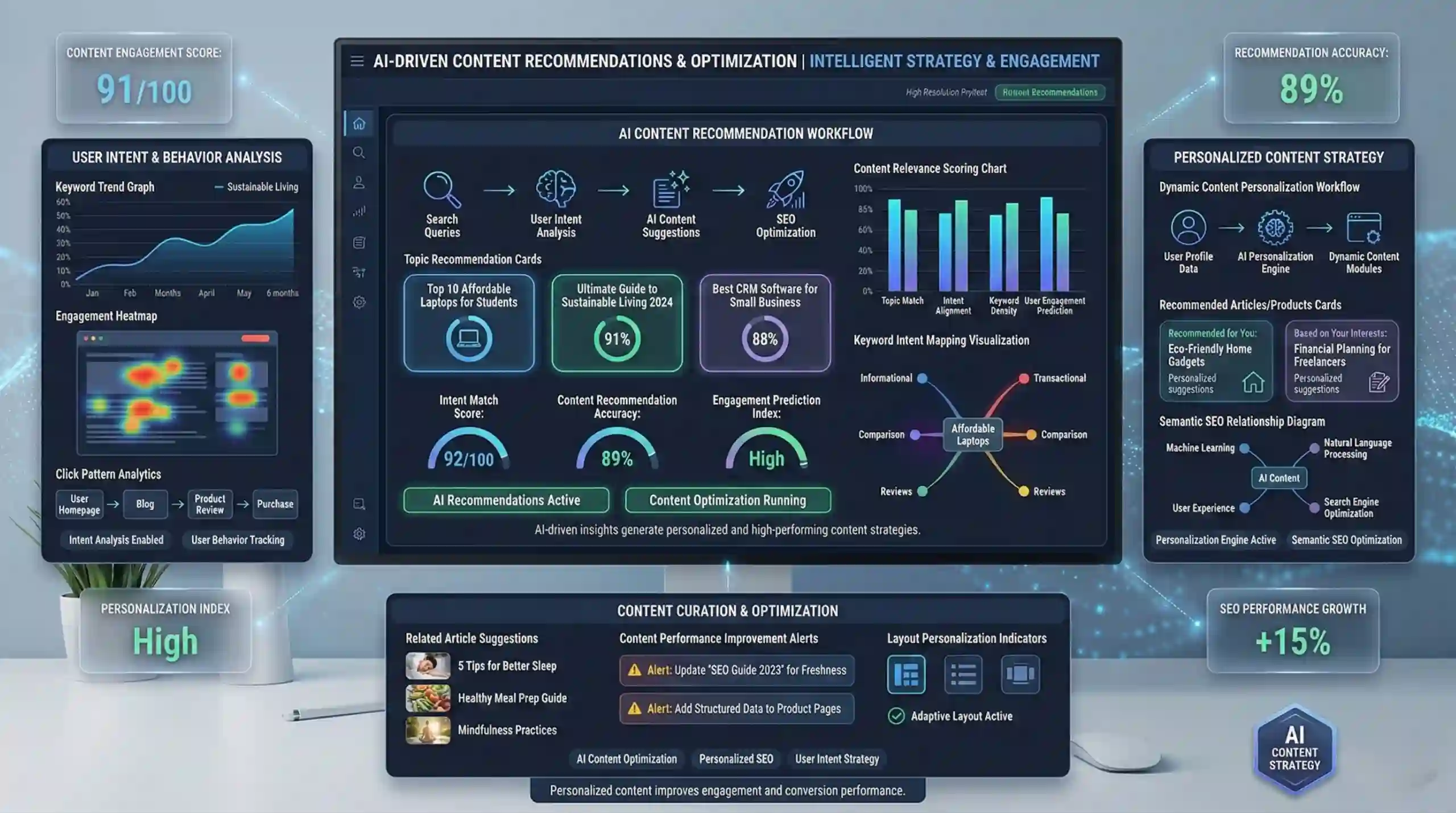
AI models analyze search queries and user engagement to recommend content topics that align with user intent. For example, if users frequently search for “best budget laptops,” AI might suggest article ideas like “Top 10 Affordable Laptops for Students.”
Implementing Personalized Content Strategies
AI-powered personalization involves dynamically displaying content such as personalized blogs, product recommendations, or landing pages based on individual user profiles. This strategy enhances relevance and increases conversion rates.
Content Curation with Personalization Algorithms
Algorithms can curate related articles, recommend relevant products, or customize layout elements, resulting in a more engaging user experience that leverages semantic SEO principles.
5. Keyword Optimization & Semantic SEO
Focus on Long-tail Keywords & User Query Intent
Long-tail keywords are specific phrases with lower competition, aligning closely with searcher intent. For example, “best gluten-free pizza recipes” attracts highly targeted traffic, leading to better ranking opportunities.
Tools for Keyword Research & Semantic Analysis
AI-driven platforms like MarketMuse and Clearscope analyze content topics and suggest semantically related keywords. This approach enhances content relevance and coverage, improving overall SEO.
Enhancing Content Relevance with AI-based Keyword Integration
Natural incorporation of keywords within content maintains readability while optimizing for SEO. Techniques include semantic keyword clustering and keyword stuffing avoidance, ensuring better ranking and user experience.
6. Content Creation & AI Content Generation Tools
Overview of AI Platforms
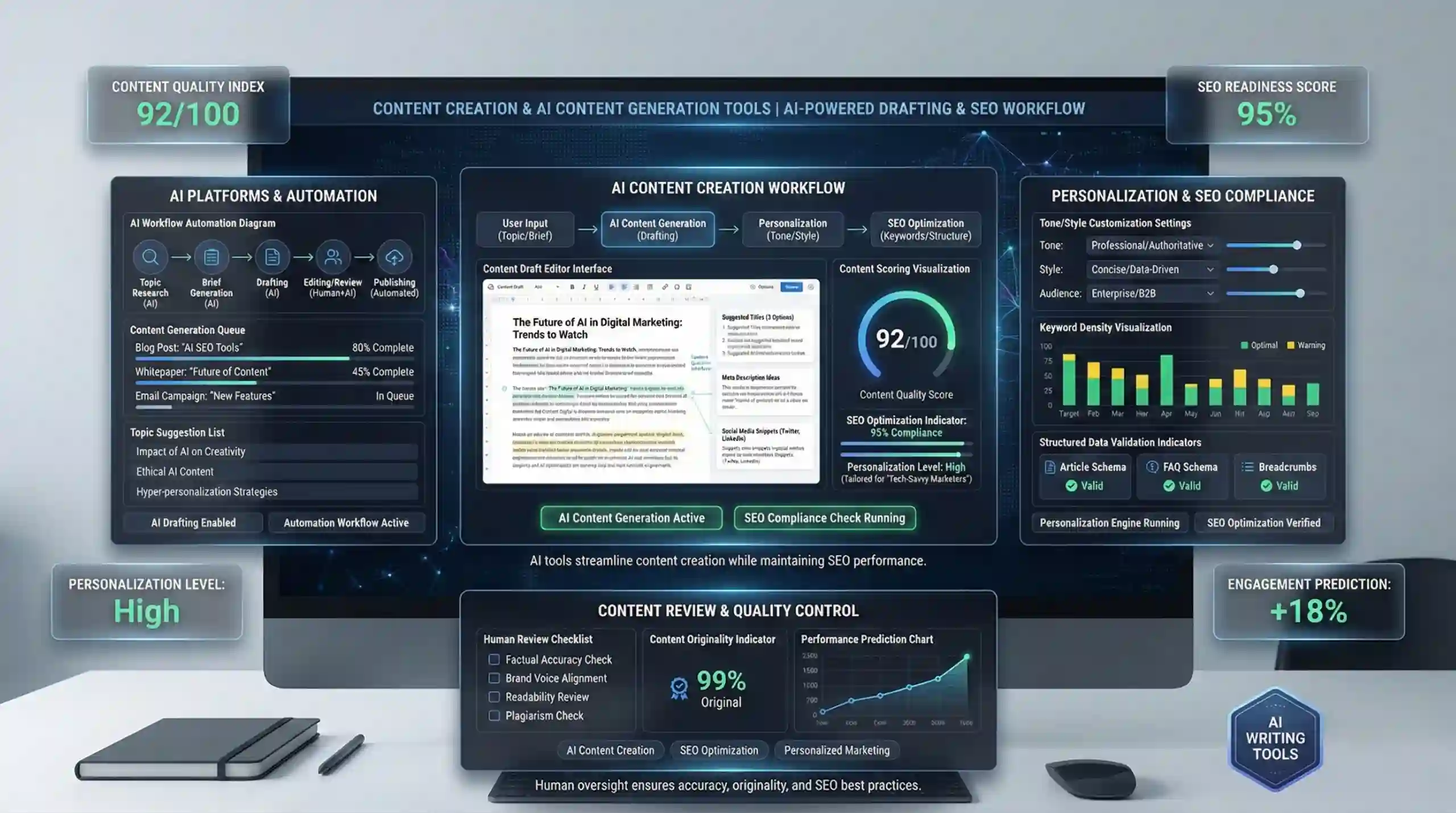
Popular AI content generation tools include GPT models, Jasper, and Copy.ai, which help produce high-quality drafts, meta descriptions, and social media snippets efficiently.
Strategies for Personalization
Using AI suggestions, content can be tailored to match the style, tone, and topics preferred by specific user segments, making the content more engaging and relevant.
Maintaining Quality & SEO Compliance
While AI can generate content swiftly, human oversight ensures adherence to factual accuracy, originality, and SEO best practices, including proper keyword density and structured data.
7. Technical SEO & Personalization
Website Architecture for Personalization
A well-structured website with scalable architecture supports dynamic content rendering based on user data. This includes clear URL structures, internal linking, and structured data to facilitate personalization.
Dynamic Content Blocks with AI in CMS
Content Management Systems like WordPress, combined with AI plugins, enable the creation of dynamic sections (e.g., recommended articles) tailored to individual visitors.
Optimization for Mobile & Speed
Responsive design and AI-powered image and script optimization improve load times and user experience on all devices, which is critical for SEO rankings.
8. AI-Powered SEO Tools & Platforms
Overview of SEO Automation Tools
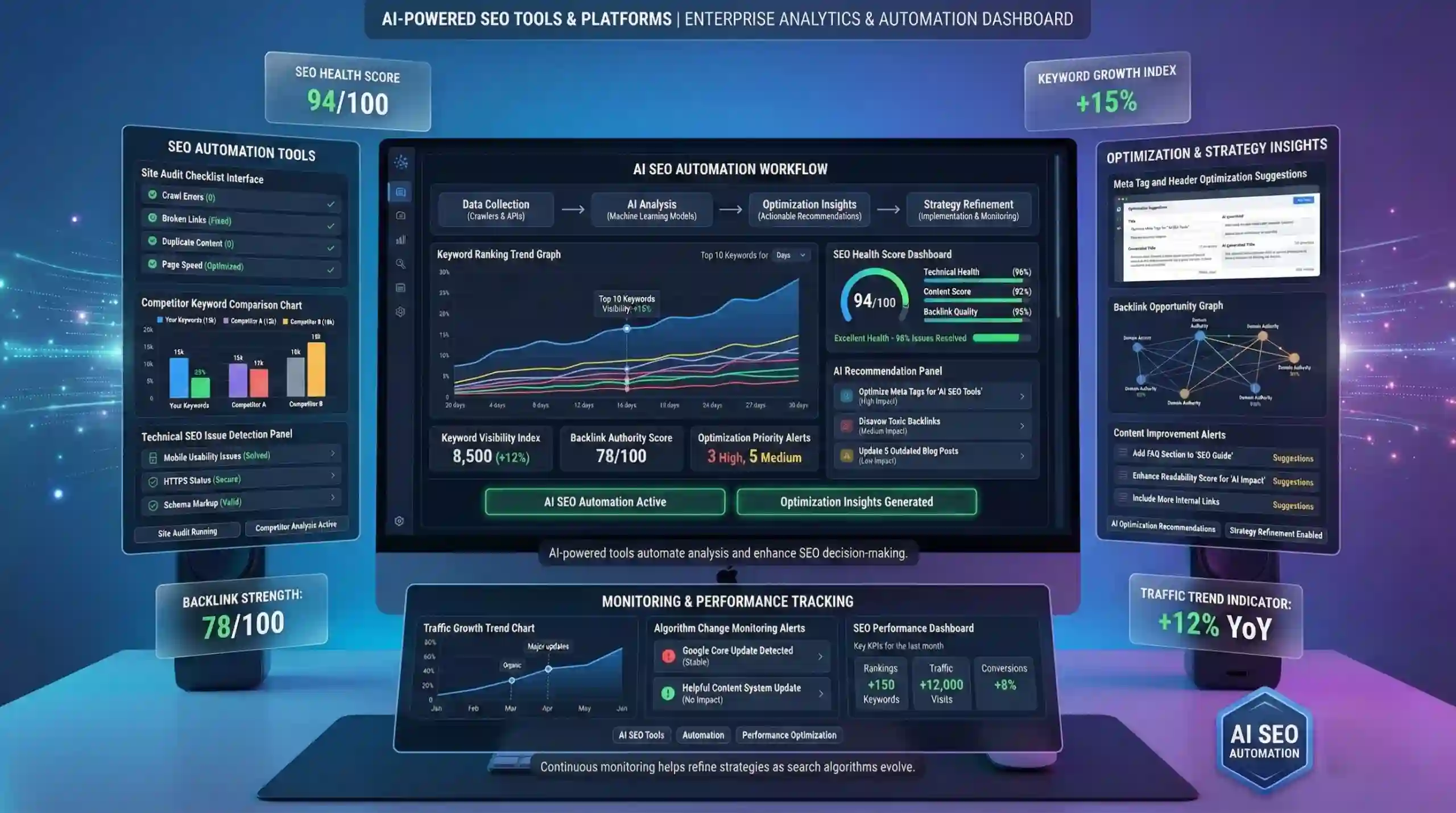
Platforms such as RankBrain, BrightEdge, and SEMrush integrate AI to automate keyword tracking, backlink analysis, site audits, and competitor analysis.
Utilizing Insights for Optimization
AI-generated insights help identify underperforming pages, optimize on-page elements (meta tags, headers), and develop off-page strategies such as backlink building.
Monitoring & Refinement
Continuous performance tracking with AI analytics facilitates iterative improvements, ensuring strategies adapt to changing search engine algorithms.
9. Measuring & Analyzing SEO Performance
Key Metrics
Focus on conversion rates, bounce rates, dwell time, and click-through rates to assess the effectiveness of personalized SEO efforts and AI-driven content suggestions.
Impact of AI Recommendations
Track if AI-suggested content improves rankings, engagement, and conversions through A/B testing and user feedback.
Continuous Optimization
Implement regular A/B testing for content variations and actively incorporate user feedback to refine personalized strategies and enhance SEO outcomes.
10. Future Trends in Personalized SEO & AI
Emerging AI Technologies
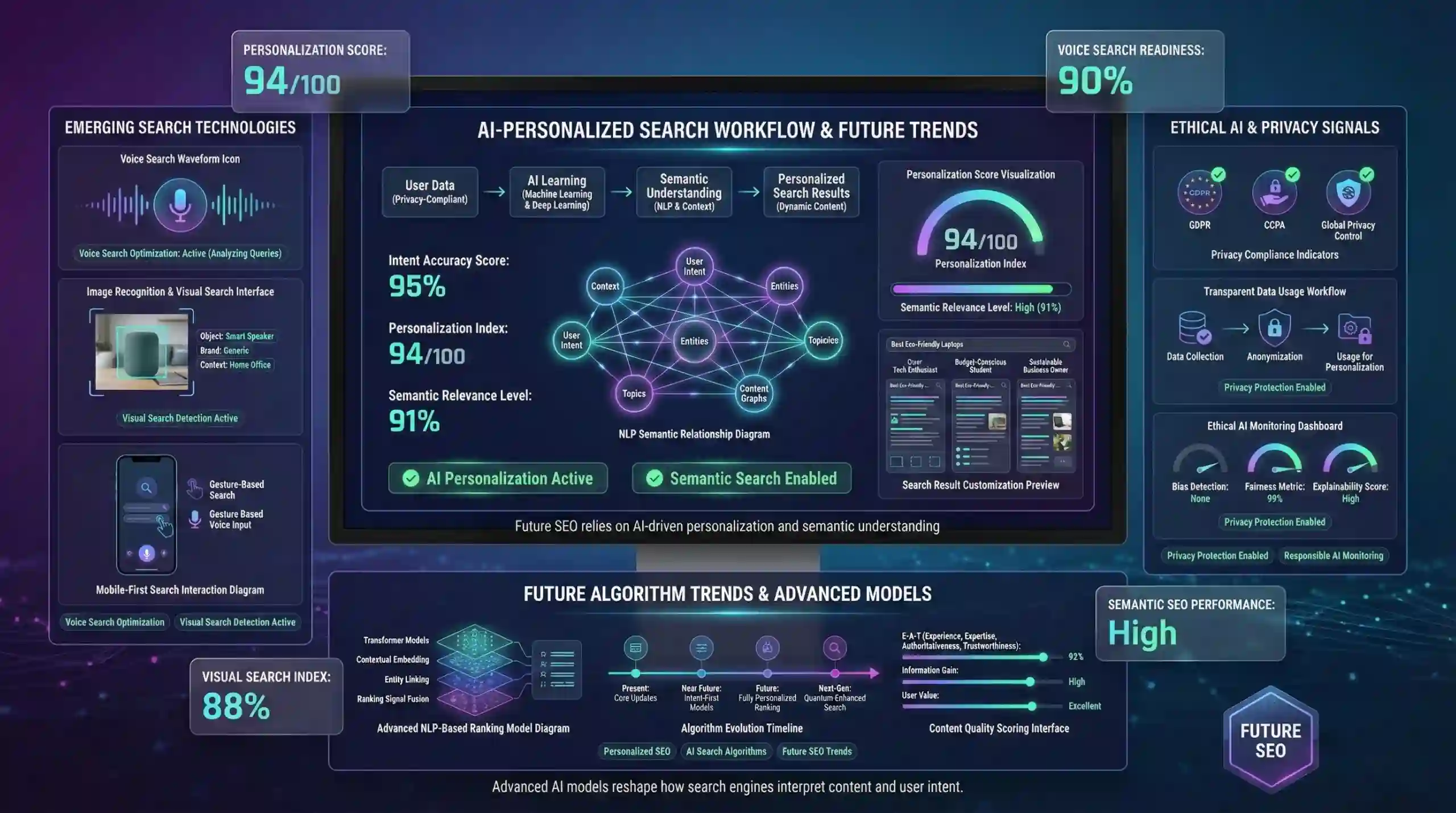
Voice search, image recognition, and visual search are transforming SEO. For example, optimizing images for visual search increases discoverability on platforms like Google Lens.
Ethical Considerations
Balancing personalization with user privacy involves transparent data policies, informed consent, and responsible AI usage to build consumer trust.
Evolving Search Engine Algorithms
Algorithms like Google’s BERT and MUM utilize advanced AI to better interpret natural language, emphasizing the importance of semantic SEO and content quality.
Practice Questions
- Define SEO and explain its importance in digital marketing.
- How does AI improve content relevance in SEO strategies? Provide a practical example.
- What are long-tail keywords, and why are they vital for personalized SEO?
- Describe how Google Analytics can be used to analyze user behavior for SEO enhancement.
- Explain the role of natural language processing in AI-powered content suggestions.
- Show a sample code snippet using Python to perform simple keyword density analysis.
- What ethical principles should be followed when collecting user data for personalized SEO?
- How can CMS platforms like WordPress facilitate AI-driven content personalization?
- List three AI tools used for semantic SEO analysis and their primary function.
- Discuss future AI trends likely to influence personalized SEO strategies.
Code Output Example:
# Simple keyword density analysis example
text = "AI-driven SEO strategies are transforming digital marketing."

keyword = "SEO"
density = text.lower().split().count(keyword.lower()) / len(text.split()) * 100
print(f"Keyword '{keyword}' density: {density:.2f}%")
Keyword 'SEO' density: 14.29%
More Courses
- Social Media Marketing course with Gen AI
- Advance Digital Marketing & SEO course with Gen AI
- Advanced Certificate in Digital Design & Marketing course with Gen AI
- Meta & Google Ads course with Gen AI