
1. Introduction to Ad Intelligence & Spy Tools
Understanding the Role of Ad Intelligence Software in Digital Marketing
Ad intelligence software plays a critical role in modern digital marketing strategies by enabling marketers to analyze advertising activities across platforms. These tools facilitate competitive insights into ad creatives, targeting strategies, spending patterns, and audience engagement. For example, an online retailer can utilize ad intelligence platforms like SEMrush or PowerAdSpy to monitor competitors’ Google Ads campaigns, enabling data-driven decisions such as optimizing their own ad copy or identifying market gaps.
Exploring Ad Spy Tools & Competitor Ad Research Techniques
Ad spy tools, such as AdSpy, BigSpy, and PowerAdSpy, are designed to uncover competitors’ active advertising campaigns. They provide detailed data on ad creatives, audiences targeted, and ad spend estimates. Facebook ad spy tools help advertisers understand what type of ads perform well within specific niches, aiding in crafting superior campaigns. Google Ads spy tools allow for insights into keyword strategies and budget allocations from industry leaders, which supports strategic planning and positioning.
2. Fundamental Concepts
Digital Advertising Analytics & Data-Driven Decision Making
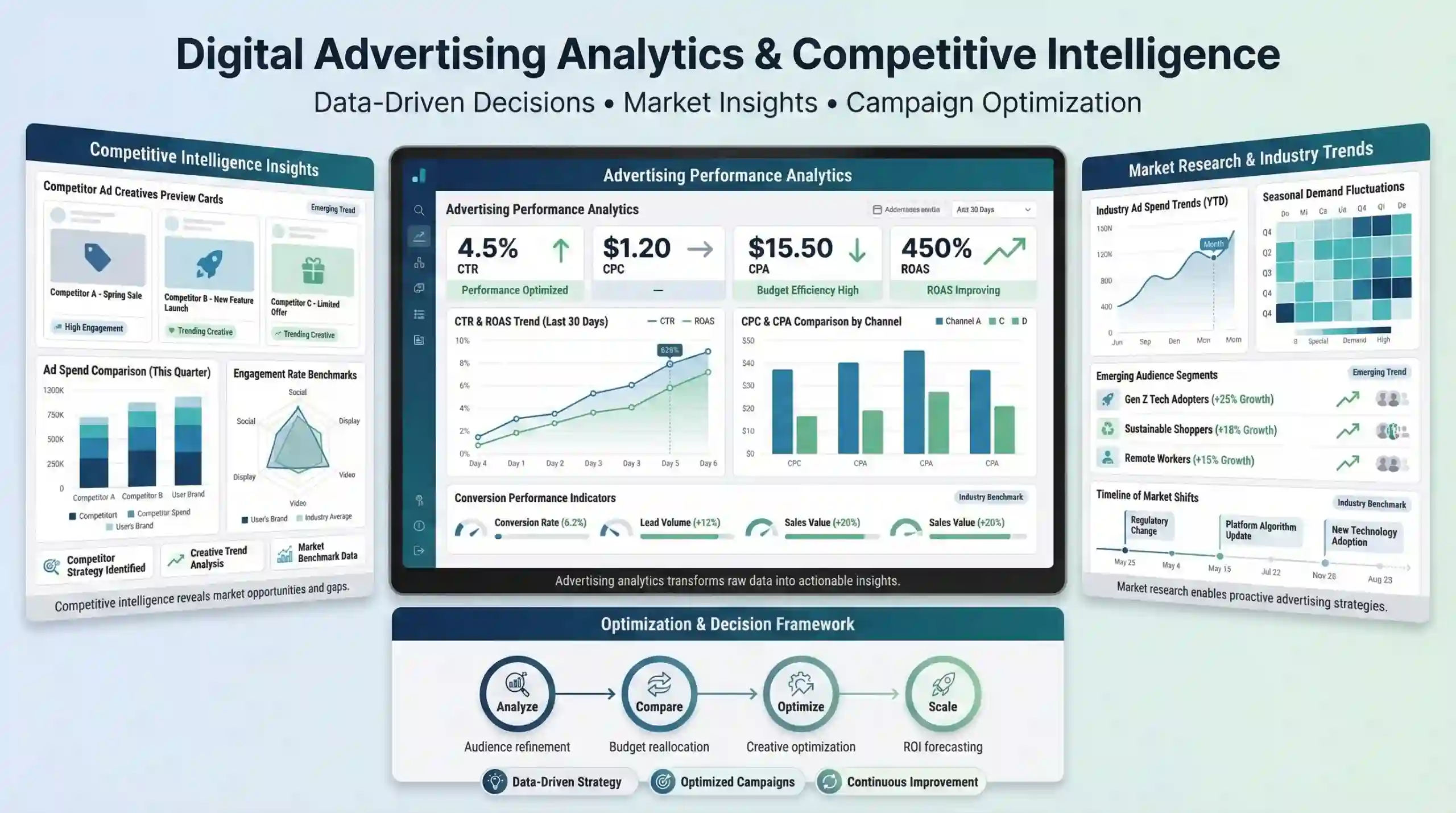
Digital advertising analytics involves assessing key performance metrics to evaluate ad effectiveness. Programmatic advertising platforms leverage automation and data analytics to optimize ad placements, reduce costs, and improve return on ad spend (ROAS). Interpreting metrics like click-through rate (CTR), cost-per-click (CPC), cost-per-acquisition (CPA), and ROAS enables marketers to refine targeting, budgets, and creative strategies to enhance campaign success.
Competitive Intelligence Strategies for Online Advertising
Competitive intelligence involves collecting and analyzing ad data from various sources to understand market dynamics. By examining competitors’ ad creatives, spending patterns, and audience engagement, marketers can identify industry benchmarks and innovative tactics. For instance, analyzing competitors’ landing pages and offer strategies can reveal effective conversion techniques, empowering marketers to adapt or differentiate their campaigns.
Market Research Tools & Industry Trend Tracking
Utilizing market research tools such as ad spend analysis platforms provides insights into overall industry advertising budgets, trending creatives, and preferred audience segments. These tools can reveal rising trends, seasonal fluctuations, and emerging niches, enabling proactive campaign adjustments. Benchmarking tools further help compare campaign performance against industry standards, guiding marketers toward continuous improvement.
3. Core Features of Ad Spy & Ad Intelligence Platforms
Ad Creative Discovery & Creative Analysis Tools
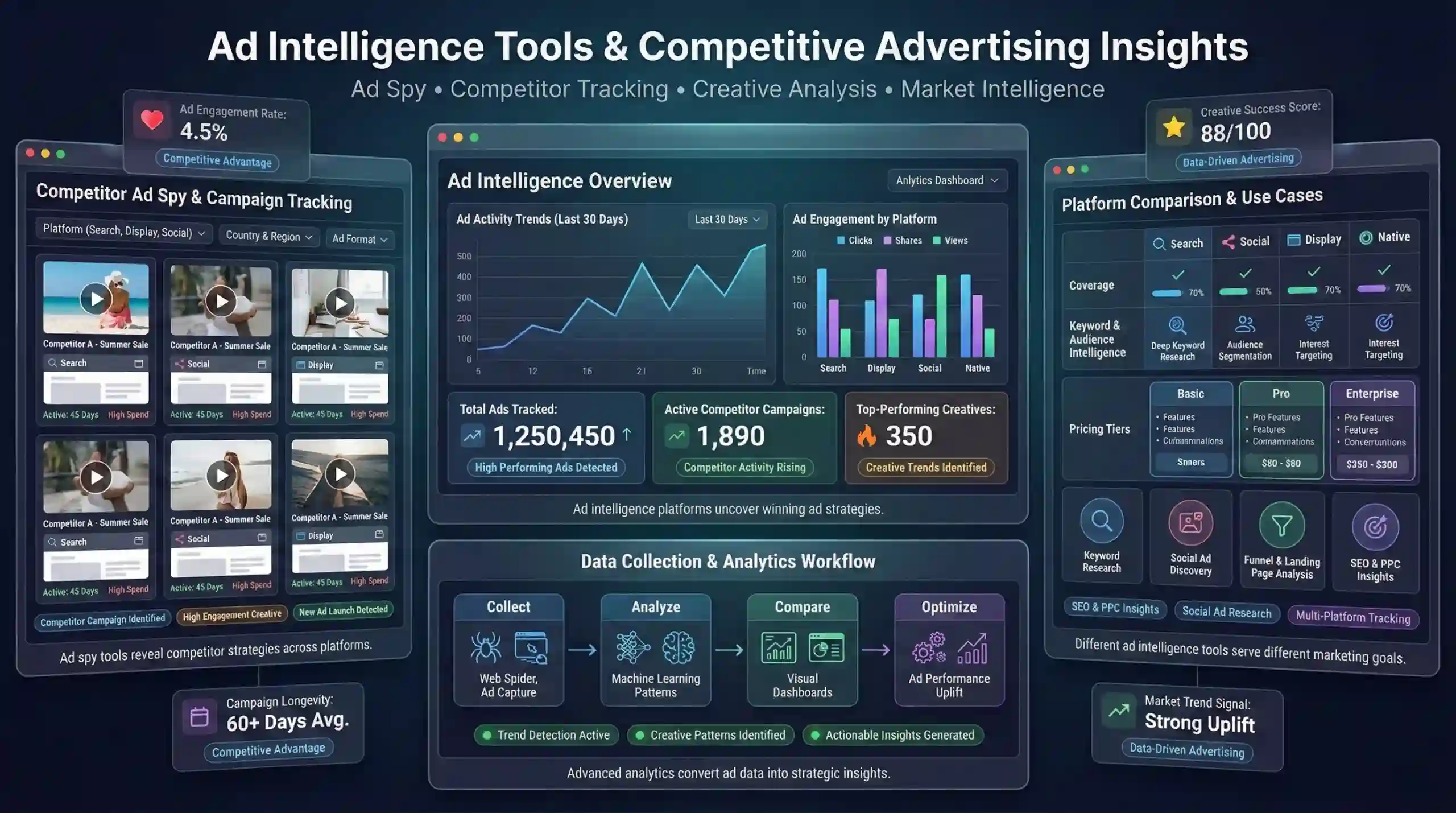
Platforms offer extensive databases of ad creatives, allowing users to search for high-performing ads within specific industries or platforms. Analyzing winning creatives helps in understanding visual elements, messaging, and call-to-actions, which inform the development of more effective ads.
Competitor Campaign Tracking & Monitoring Solutions
Real-time monitoring features enable continuous tracking of competitors’ ad launches, budget changes, and messaging updates. This ongoing surveillance helps identify shifts in advertising strategies promptly, allowing for agile responses.
Landing Page & Funnel Insights Tools
Many platforms analyze landing page elements—such as user flow, design, and content—to understand the user journey. These insights support conversion rate optimization by aligning ad creatives with effective landing page strategies.
Ad Spend & Budget Estimation Tools
Ad spend estimators approximate competitors’ advertising budgets based on observable ad activity and impression data. Marketers can utilize this intelligence to allocate their budgets more effectively, either by competing aggressively or exploiting market gaps.
Audience Demographics & Targeting Data Analysis
Access to audience insights, such as age, gender, geographic location, and interests, allows marketers to refine targeting parameters, increasing ad relevance and ROI.
4. Popular Ad Intelligence Tools & Platforms
Introduction to Leading Ad Spy & Intelligence Platforms
Key platforms like SEMrush Advertising Toolkit, AdSpy, BigSpy, Adplexity, and PowerAdSpy serve diverse needs in ad intelligence. SEMrush offers comprehensive digital marketing analysis, including advertising insights; AdSpy and BigSpy specialize in social media ad searches; AdPlexity and PowerAdSpy focus on competitor campaign tracking across multiple platforms.
Feature Comparison & Use Case Analysis of Ad Intelligence Platforms
While SEMrush provides extensive keyword and ad analytics suited for SEO and PPC campaigns, AdSpy excels in Facebook and Instagram ad research, ideal for social media marketers. Pricing varies: SEMrush offers subscription plans, while some tools like BigSpy have freemium models. Choosing the right platform depends on the specific platform (Facebook, Google, Instagram), campaign focus, and budget.
Data Collection & Analysis Techniques
Web scraping automates the collection of ad creatives, landing page screenshots, and campaign data. For example, custom Python scripts can extract ad copy from public ad archives. Incorporating machine learning algorithms helps detect ad pattern trends, consumer behaviors, and creative success factors. Visual analytics via tools like Tableau or Google Data Studio transforms raw data into actionable insights.
5. Data Collection & Analysis Techniques
Web Scraping & Data Extraction in Ad Intelligence
Web scraping involves automated data extraction from ad platforms or ad archive websites. Using Python libraries such as BeautifulSoup or Scrapy, marketers can gather large datasets of ad creatives, headlines, and landing pages for comparative analysis.
Applying Machine Learning Algorithms for Ad Pattern Detection
ML models can classify successful versus underperforming ads based on features like imagery, text tone, or CTA phrasing. Unsupervised learning (clustering) reveals common ad themes, while supervised models predict ad performance based on historical data, informing creative strategy.
Data Visualization for Campaign Insights
Data visualization tools such as Tableau, Power BI, or Google Data Studio assist in interpreting complex datasets. Visual dashboards can display key metrics, trends, and anomalies, facilitating clear communication of insights to stakeholders and optimizing decision-making processes.
6. Practical Applications & Case Studies
Conducting Competitor Ad Audits with Ad Spy Software
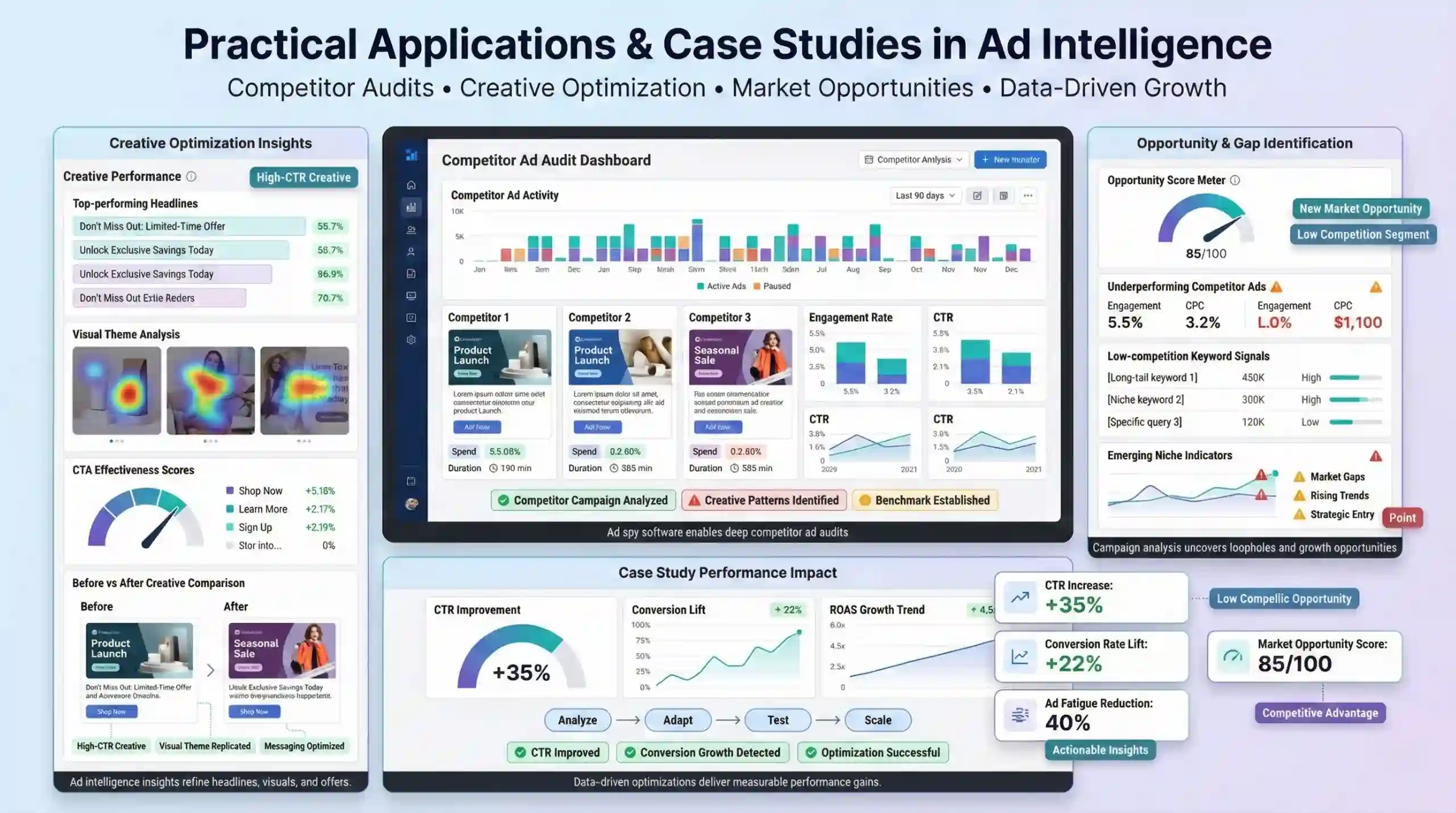
A case might involve auditing top competitors’ Facebook ad campaigns, analyzing creative variations, and audience segments targeted. Such audits reveal strengths and weaknesses, informing adjustments in creatives and targeting for your campaigns.
Optimizing Ad Creatives Using Ad Intelligence Insights
By studying high-performing ads from industry leaders, marketers refine headlines, images, and offers. For example, a case study might show improving CTR after adopting similar visual themes and messaging strategies.
Identifying Loopholes & Opportunities Through Campaign Analysis
Analyzing underperforming ads can uncover policy violations or ineffective targeting. Conversely, spotting emerging niches or low-competition keywords opens new avenues for market entry.
7. Ethical & Legal Considerations in Ad Intelligence
Understanding Digital Privacy Laws & Data Collection Regulations
Compliance with GDPR, CCPA, and other laws is essential when collecting ad data. For instance, scraping publicly available ad images and metrics is generally permitted, but collecting personally identifiable information without consent is illegal.
Adhering to Ethical Guidelines for Competitive Tracking
Marketers should avoid tactics that violate ad platform policies or intellectual property rights, such as copying ad creatives directly or using deceptive practices. Ethical considerations ensure sustainable and compliant campaign strategies.
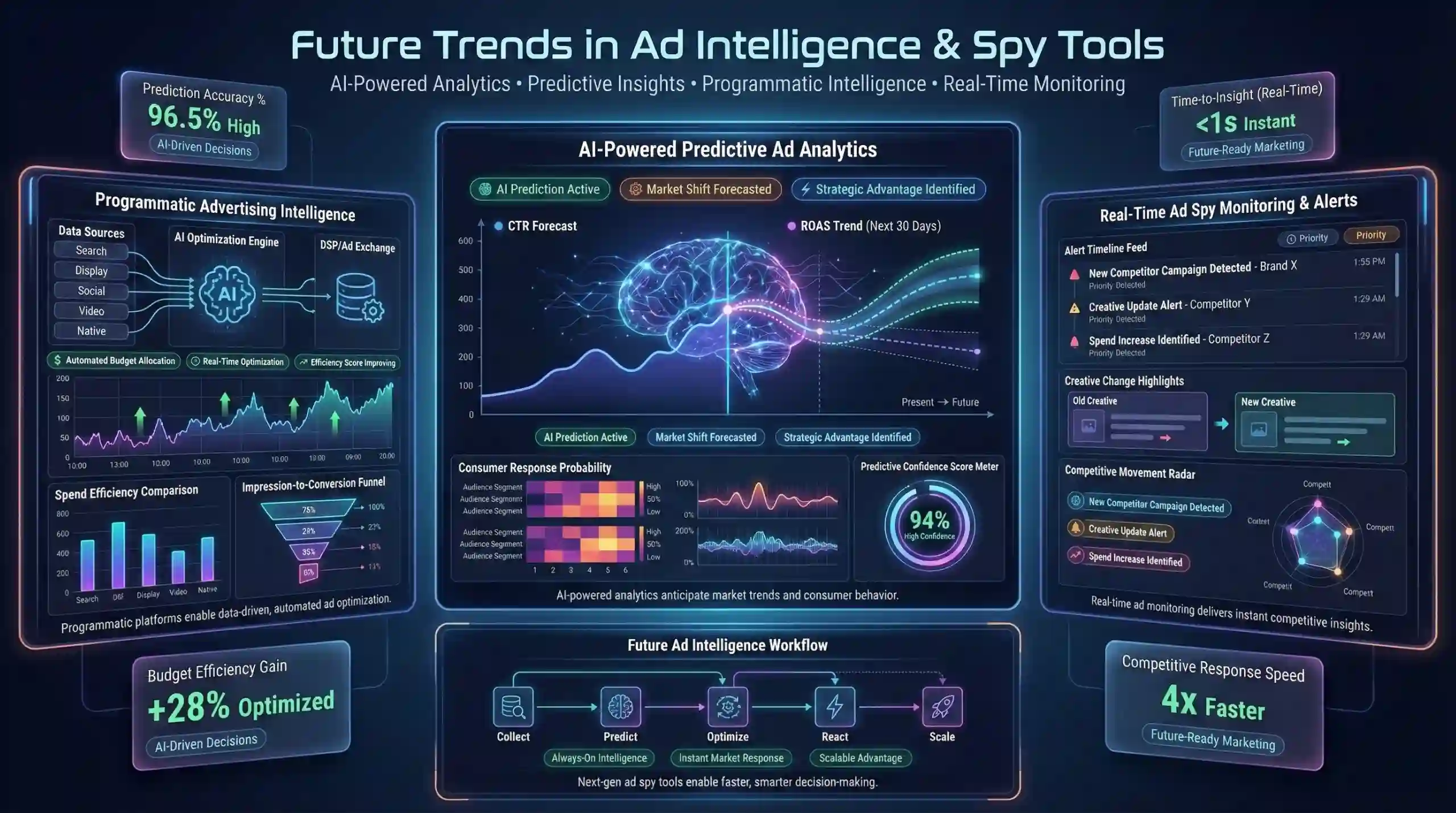
8. Future Trends in Ad Intelligence & Spy Tools
AI-powered Ad Analytics & Predictive Insights
Emerging AI techniques enable predictive modeling—anticipating market shifts or consumer responses—thus offering preemptive strategic advantages.
Impact of Programmatic Advertising in Data Collection & Optimization
Programmatic platforms automate ad buying, enabling real-time data collection and optimization. They incorporate campaign intelligence for better targeting and budget efficiency.
Real-Time Ad Monitoring & Instant Competitive Insights
Future ad spy tools aim to provide instant alerts on new campaigns, creative changes, or budget shifts, allowing marketers to react swiftly to competitors’ moves, gaining significant market advantages.
9. Practical Skills Development
Hands-on Training with Leading Ad Spy & Intelligence Tools
Practical exercises involve using platforms like AdSpy, BigSpy, and PowerAdSpy to analyze current active campaigns, reverse engineer successful creatives, and monitor competitor activities.
Data Interpretation & Effective Report Generation
Developing skills to analyze collected data, create comprehensive reports, and communicate insights clearly enhances strategic planning and stakeholder engagement.
Conclusion
Mastering ad intelligence and spy tools enables marketers to develop competitive, data-driven advertising campaigns. By understanding core concepts such as digital advertising metrics, analytical techniques, and ethical practices, students can leverage these tools for superior campaign performance and sustained market advantage.
Relevant Study Resources:
- W3Schools
- GeeksforGeeks
- HubSpot Digital Marketing Resources
- Moz Beginner’s Guide to SEO
- Google Digital Garage
This structured, comprehensive study material balances theoretical foundation with practical application, emphasizing SEO keywords such as “ad intelligence,” “spy tools,” “competitor ad research,” “digital marketing analytics,” and “ad performance metrics” to enhance relevance and search visibility.
More Courses
- Social Media Marketing course with Gen AI
- Advance Digital Marketing & SEO course with Gen AI
- Advanced Certificate in Digital Design & Marketing course with Gen AI
- Meta & Google Ads course with Gen AI