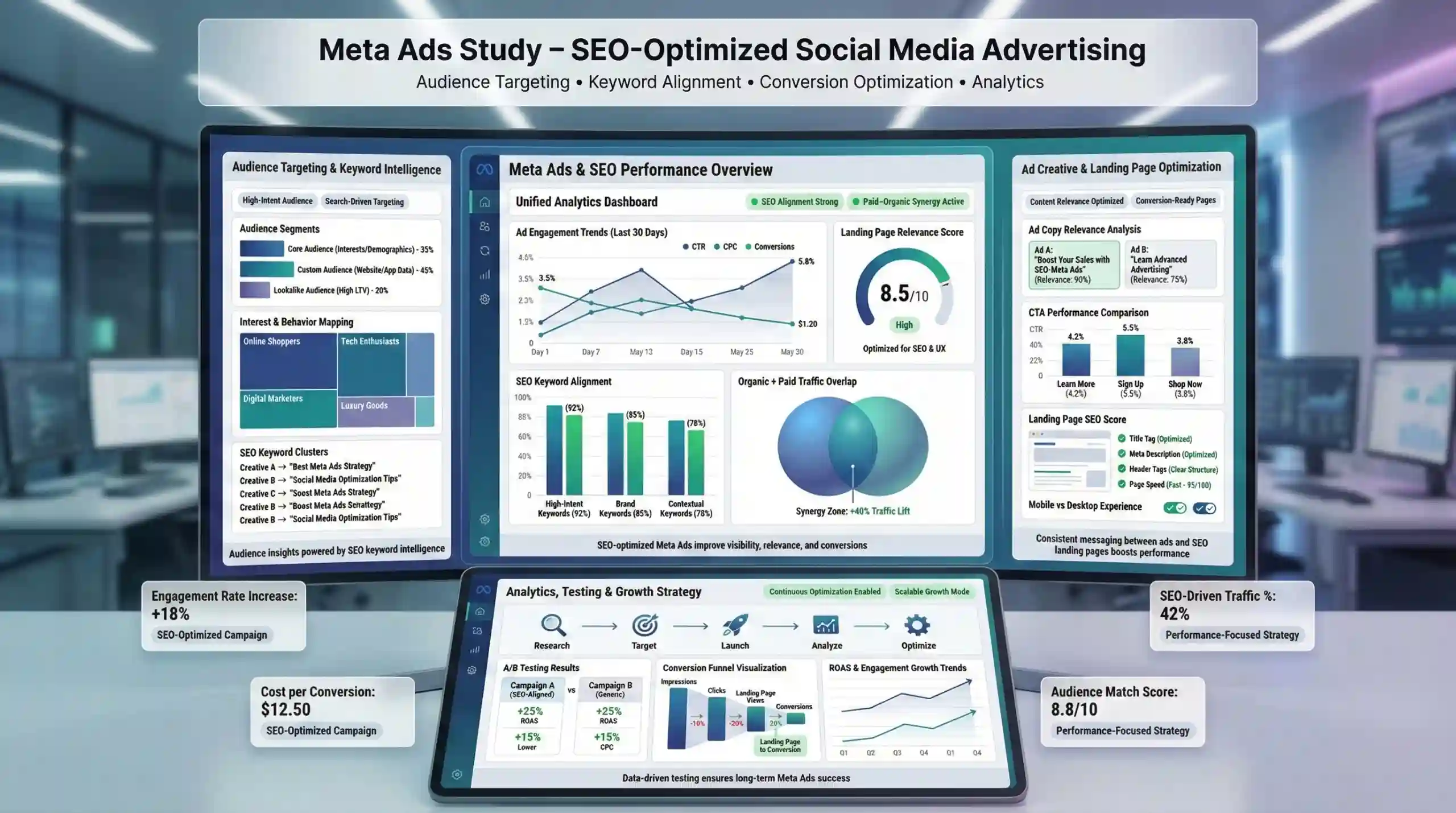
Introduction to Meta Advertising Platforms
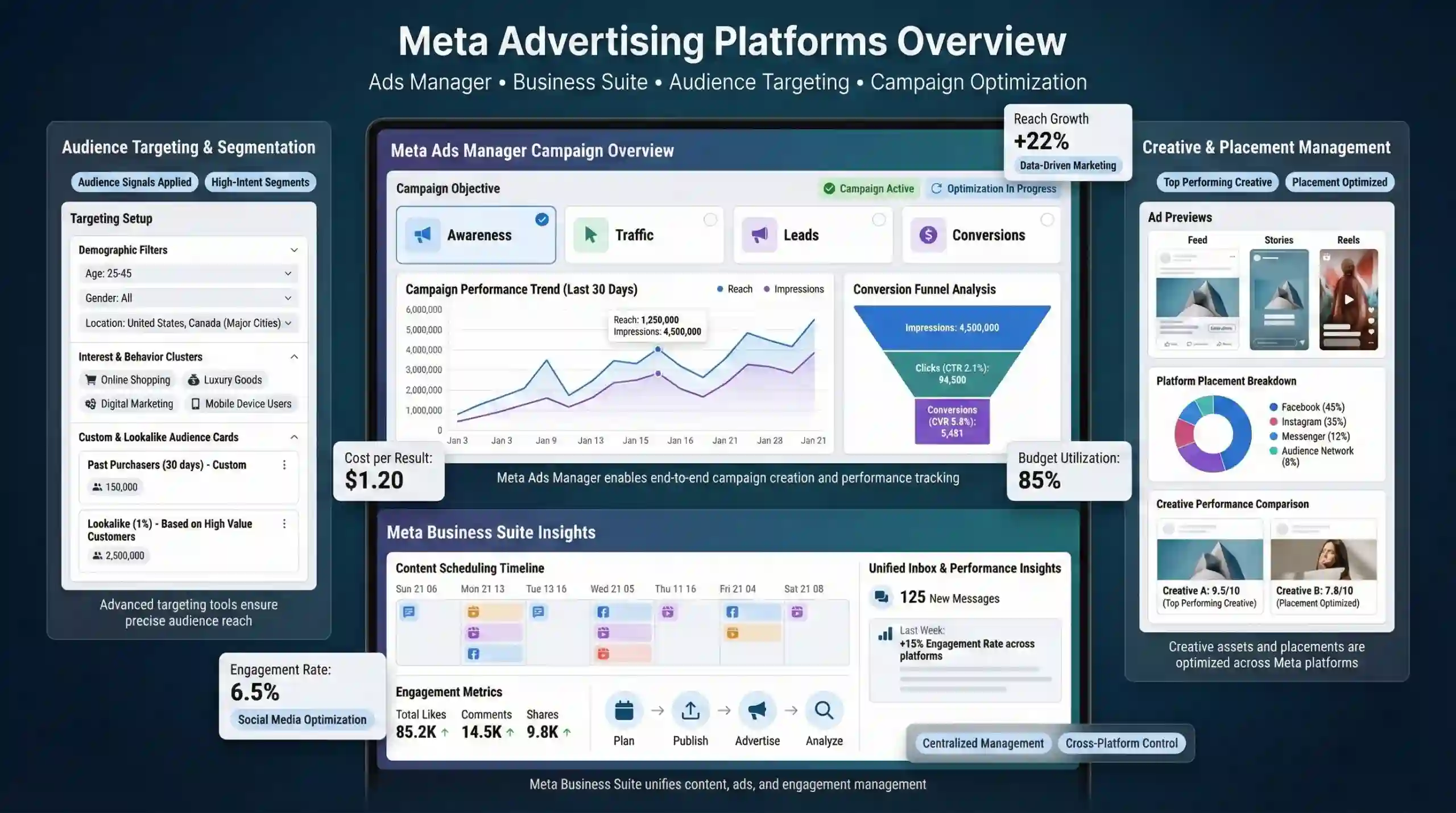
Meta advertising platforms, primarily powered by Meta Ads Manager, serve as the backbone of social media advertising strategies. Meta Ads Manager is a comprehensive tool designed to facilitate the creation, management, and optimization of advertising campaigns across Meta’s ecosystem, including Facebook, Instagram, Messenger, and Audience Network. Its user-friendly interface provides marketers with detailed targeting options, performance analytics, and budgeting controls, thereby streamlining social media marketing efforts.
Meta Business Suite further enhances this management by acting as a centralized dashboard. It integrates multiple Meta platforms, allowing marketers to oversee content scheduling, engagement, and advertising initiatives from a unified interface. Understanding these platforms is fundamental for digital marketing students aiming to master social media marketing and Ad campaign optimization.
Example:
A small business aiming to promote a new product can use Meta Ads Manager to create an Instagram story ad, targeting specific audiences based on interests and behaviors. Using Meta Business Suite, they can track engagement and adjust their ad budget accordingly.
Setting Up a Meta Ads Account
Establishing a Meta Business Manager account is a vital first step in social media advertising. This platform consolidates all ad accounts, pages, and payment information under a single management console. The setup process involves creating a new business account, verifying details, and assigning roles to team members, facilitating collaborative ad campaign management.
Next, setting up a dedicated ad account involves linking your Facebook Page and configuring billing settings. The alignment ensures that ads are correctly associated with your business entity, and payments are processed securely. Correct payment method configuration is crucial to avoid disruptions and ensure seamless ad delivery.
Example:
A digital marketing agency creates a Meta Business Manager to handle clients’ Facebook and Instagram campaigns. They link each client’s Facebook Page and set up individual ad accounts for better campaign management and billing transparency.
Practice Questions:
- What is the primary purpose of Meta Business Manager?
– To manage multiple Facebook Pages and ad accounts centrally. - How can you secure your ad account payments?
– By adding and verifying payment methods in Meta Business Suite. - Why is linking your Facebook Page important?
– It ensures your ads are associated correctly and allows for effective campaign management. - How do you verify your business in Meta Business Manager?
– Follow the business verification process during setup, providing necessary legal documents. - Is it possible to assign different roles in Meta Business Manager?
– Yes, roles such as admin or editor can be assigned to team members.
Code Snippet: (No code required for setup, but API access can be configured for automation via Facebook’s Marketing API.)
Audience Targeting & Segmentation
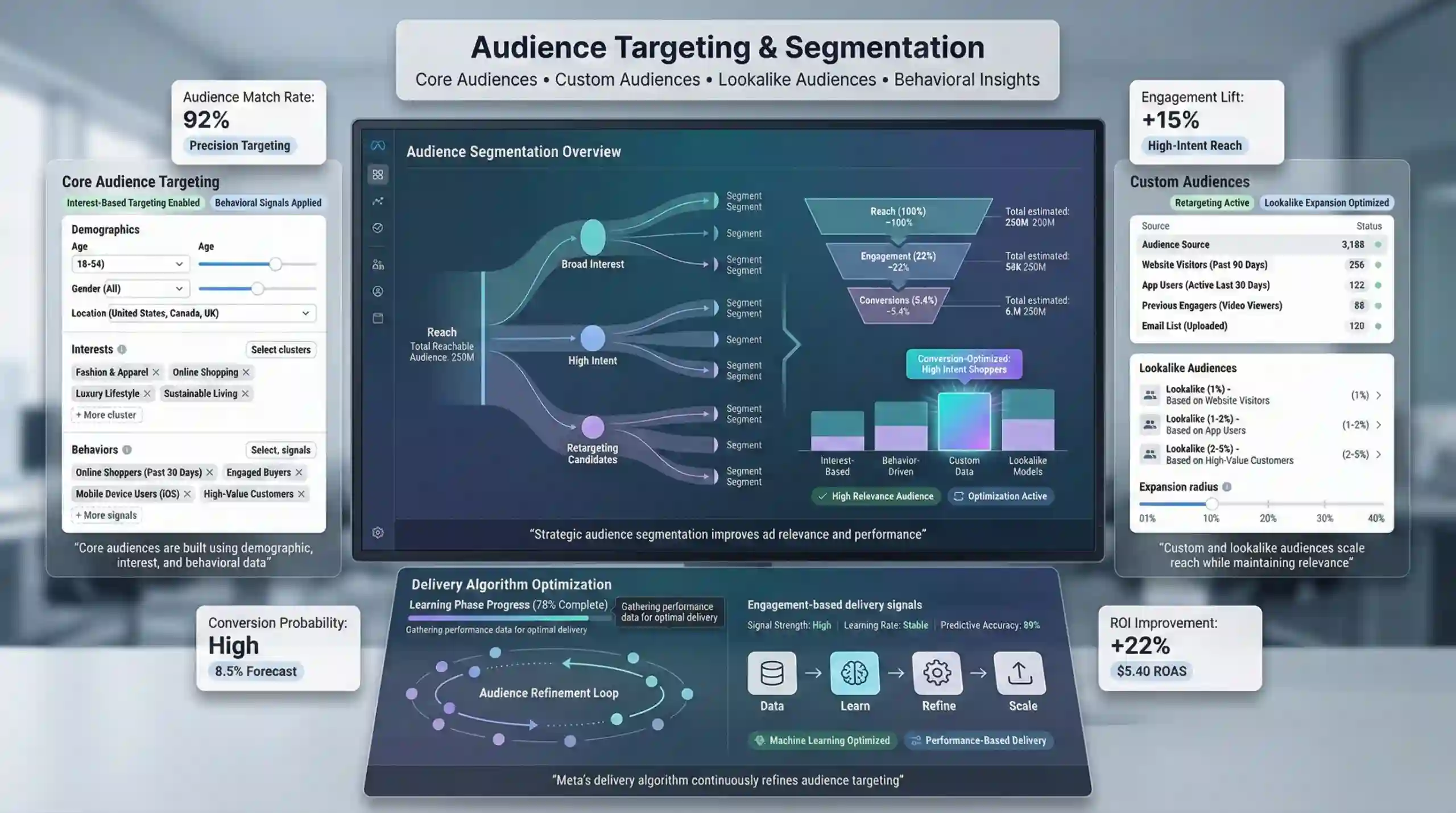
Audience targeting is the core of effective social media advertising. Meta’s platform offers advanced segmentation tools such as core audiences, lookalike audiences, and custom audiences. Core audiences involve defining users based on demographic, interest, and behavioral data, making ads highly relevant.
Lookalike audiences enable advertisers to reach new users who resemble existing customers, enhancing reach efficiency. Custom audiences allow targeting of users who have interacted with the brand previously, such as website visitors or app users, enabling retargeting strategies.
Leveraging demographic, interest, and behavioral data optimizes ad relevance, boosts engagement, and improves return on investment. The delivery algorithm then refines targeting based on user interactions, enhancing meta ad delivery performance.
Example:
A fashion retailer creates a custom audience comprising website visitors who viewed winter collection pages, then uses a lookalike audience based on this group to find new potential customers on Facebook and Instagram.
Practice Questions:
- What are core audiences in Meta advertising?
– Audiences defined by demographic, interest, and behavioral data. - How does a lookalike audience improve ad reach?
– By targeting users similar to your existing customers. - What is a custom audience?
– A target group made up of users who have previously interacted with your business. - Name one benefit of audience segmentation.
– Increased ad relevance and higher engagement rates. - How does behavioral data influence ad targeting?
– It allows targeting based on purchase behavior, device usage, and other actions.
Search Resource:
Meta Business Help Center – Audiences
Campaign Objectives & Structure
Meta advertising campaigns are built with a hierarchical structure: campaigns, ad sets, and ads. Selecting the proper campaign objective aligns your efforts with specific digital marketing goals such as brand awareness, traffic, engagement, lead generation, or conversions.
Campaign objectives guide the ad delivery system to optimize for desired actions. For example, selecting “Lead Generation” instructs Meta’s system to show ads to users more likely to complete lead forms, maximizing campaign efficiency.
A well-structured campaign includes segment-specific ad sets targeting different audiences or placements, enabling granular control over bidding, budgeting, and creatives.
Example:
A fitness brand launches a campaign with the “Conversions” objective, targeting different age groups with separate ad sets for better performance analysis within each demographic.
Practice Questions:
- Why is it important to choose the right campaign objective?
– It directs Meta’s algorithm to optimize for your specific marketing goal. - What are the three levels of campaign structure?
– Campaigns, ad sets, and ads. - What campaign objective would you select for collecting leads?
– Lead Generation. - How does campaign structure aid in budget management?
– It allows allocation of budgets at the ad set level for targeted control. - Can one campaign include multiple ad sets targeting different audiences?
– Yes.
Study Resource:
Facebook Ads Manager – Campaign Objectives
Creating Effective Meta Ads
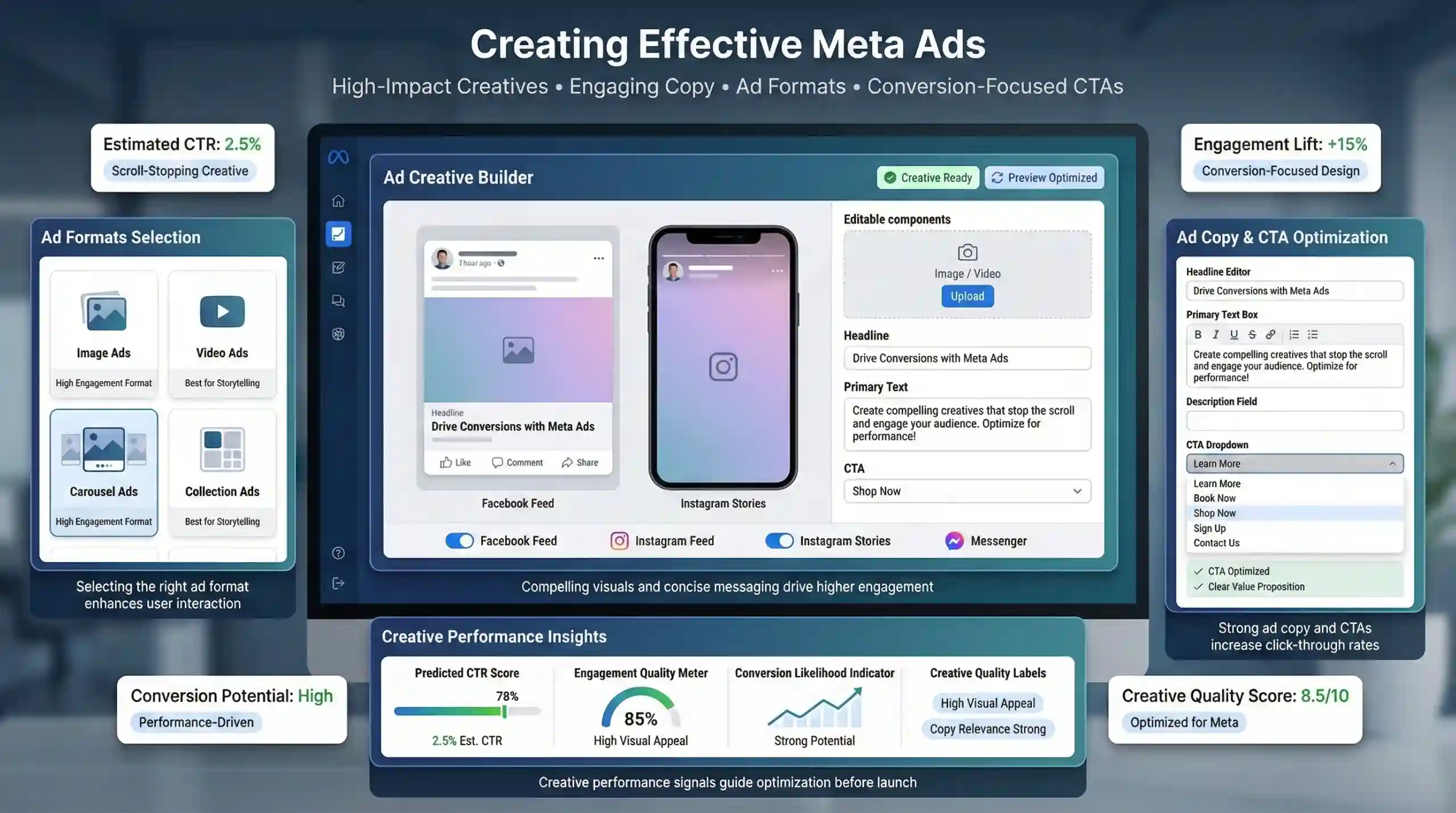
Ad creation involves designing compelling ad creatives and selecting appropriate ad formats. Meta offers diverse formats, including image ads, video ads, carousel ads, and collection ads. Each format serves different marketing purposes and can enhance engagement.
Writing ad copy that resonates with the target audience is essential. Clear, concise messaging combined with high-quality visual assets increases click-through rates (CTR) and conversions. Using calls to action (CTAs), highlighting value propositions, and maintaining brand consistency are best practices.
Example:
A travel agency uses a carousel ad showcasing various tour packages with appealing images, coupled with engaging copy and a clear CTA, resulting in higher booking inquiries.
Practice Questions:
- Name two popular Meta ad formats.
– Image ads, video ads. - Why is ad copy important?
– It communicates value, persuades users, and encourages action. - What is a carousel ad?
– An ad format displaying multiple images or videos in a single ad unit. - How can visual assets influence ad engagement?
– High-quality visuals attract attention and increase click-through rates. - What element is critical in writing effective ad copy?
– A strong CTA that specifies the action users should take.
Resource:
Meta Ads Creative Specifications
Budgeting & Bidding Strategies
Effective budget management ensures optimal ad spend and campaign profitability. Meta allows flexible budget control through options like daily budgets and total campaign budgets. It’s crucial to distribute budgets based on campaign goals and target performance.
Bidding strategies include automatic bidding, where Meta’s algorithms optimize bids to maximize results within your budget, and manual bidding, which gives you control over the maximum bid per action. You can also set cost controls to minimize costs per acquisition (CPA) and maximize Return on Ad Spend (ROAS).
Optimization involves selecting the right bidding type aligned with your campaign objectives. For instance, bidding for conversions requires focusing on CPA targets.
Example:
An e-commerce store uses automatic bidding to maximize sales within a set daily budget, allowing Meta’s algorithm to find the most probable buyers at the lowest cost.
Practice Questions:
- What is the difference between daily and total campaign budgets?
– Daily budgets set a spending limit per day; total campaign budgets cap overall spend. - What does automatic bidding optimize for?
– It optimizes to get maximum results within your budget automatically. - Why might a business choose manual bidding?
– To have precise control over bids and costs per result. - How can cost controls improve campaign efficiency?
– They help maintain costs within desired limits, improving ROI. - What does ROAS stand for?
– Return on Ad Spend.
Study Resource:
Meta Bidding Strategies
Ad Placement & Delivery Optimization
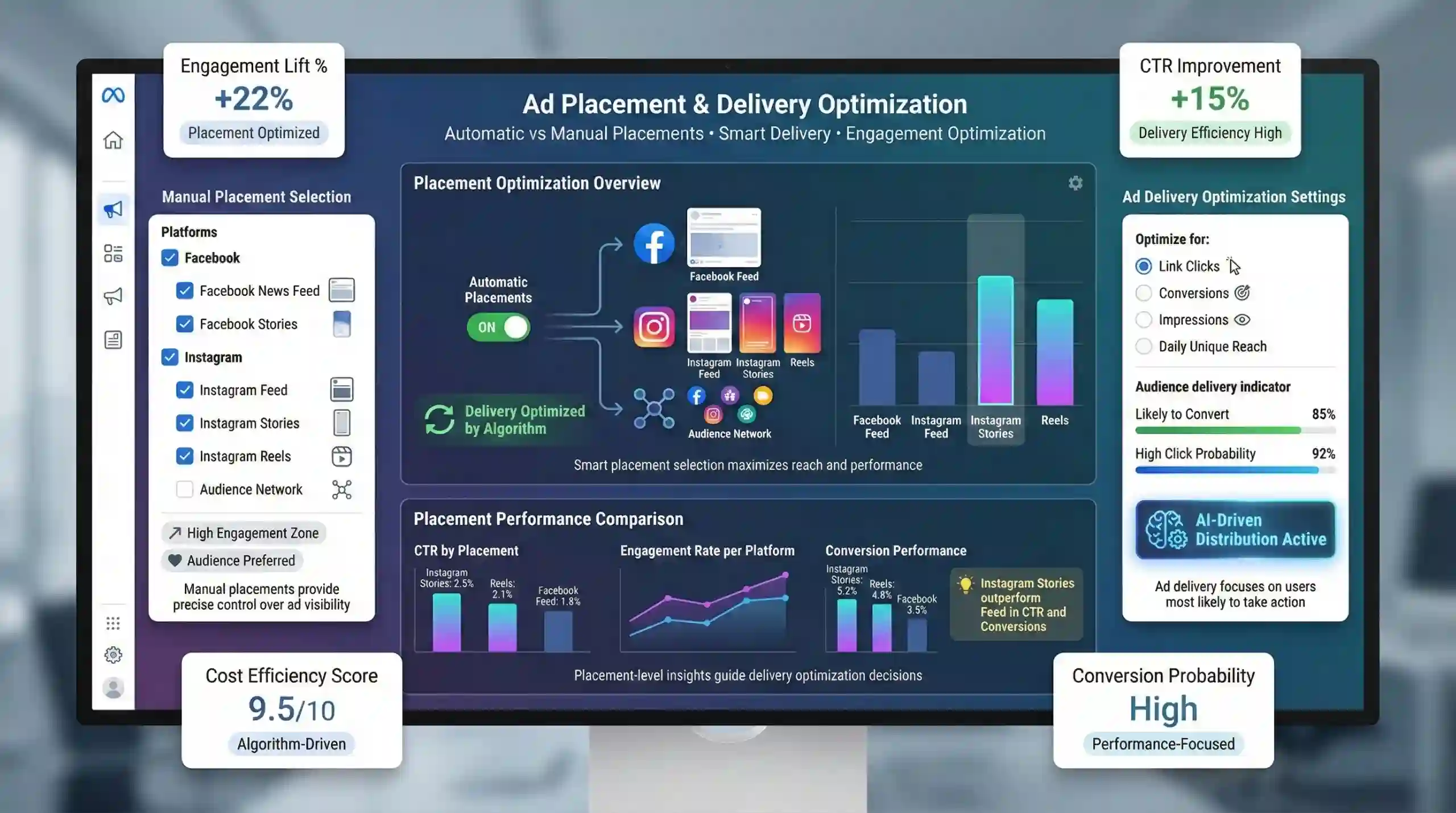
Choosing between automatic and manual placements impacts ad reach and targeting precision. Automatic placements allow Meta’s algorithm to distribute ads across all available placements to maximize efficiency. Manual placements enable precise targeting of specific locations, such as Instagram Stories or Facebook News Feed.
Ad delivery optimization focuses on delivering ads to users most likely to perform the desired action, such as clicks or conversions. Campaigns optimized for link clicks prioritize users likely to click, whereas campaigns aimed at impressions focus on ad exposure. Proper placement and delivery strategies improve overall campaign effectiveness.
Example:
A brand runs a campaign with manual placement targeting only Facebook feed and Instagram stories to focus ad exposure where their audience is most active, improving engagement.
Practice Questions:
- What is the advantage of automatic placements?
– Meta optimizes ad distribution for maximum efficiency. - How does manual placement differ from automatic?
– It allows marketers to select specific platforms and locations for ads. - Why is placement choice important?
– It affects ad visibility, engagement, and cost. - What does ad delivery optimization influence?
– How and where ads are shown to maximize results. - Which placement might be best for visual storytelling ads?
– Instagram Stories or Facebook Stories.
Resource:
Meta Placements Guide
Tracking & Analyzing Ad Performance
Meta provides comprehensive analytics via the Ads Insights Dashboard, presenting metrics such as CTR, CPC, CPM, conversion rate, and ad relevance diagnostics. These insights are crucial for understanding campaign performance and identifying areas for improvement.
Interpreting performance data involves analyzing trends, comparing ad sets, and identifying underperforming creatives. Data-driven campaign optimization involves tweaking audiences, creatives, bids, or placements based on these insights to improve results.
Example:
A lead generation campaign shows a high CPC but a low conversion rate. Marketers can analyze the ad copy’s relevance and adjust the creative or target audience to improve conversions.
Practice Questions:
- What metric indicates how many users clicked your ad?
– Click-Through Rate (CTR). - Why is CPC important?
– It shows the average cost per click, affecting budgeting decisions. - What does ad relevance diagnostics measure?
– How well an ad resonates with its audience. - How can analytics improve campaign results?
– By identifying and optimizing underperforming elements. - What is a key benefit of performance tracking?
– Continuous campaign improvement and ROI maximization.
Study Resource:
Meta Ads Insights and Analytics
A/B Testing & Optimization Techniques
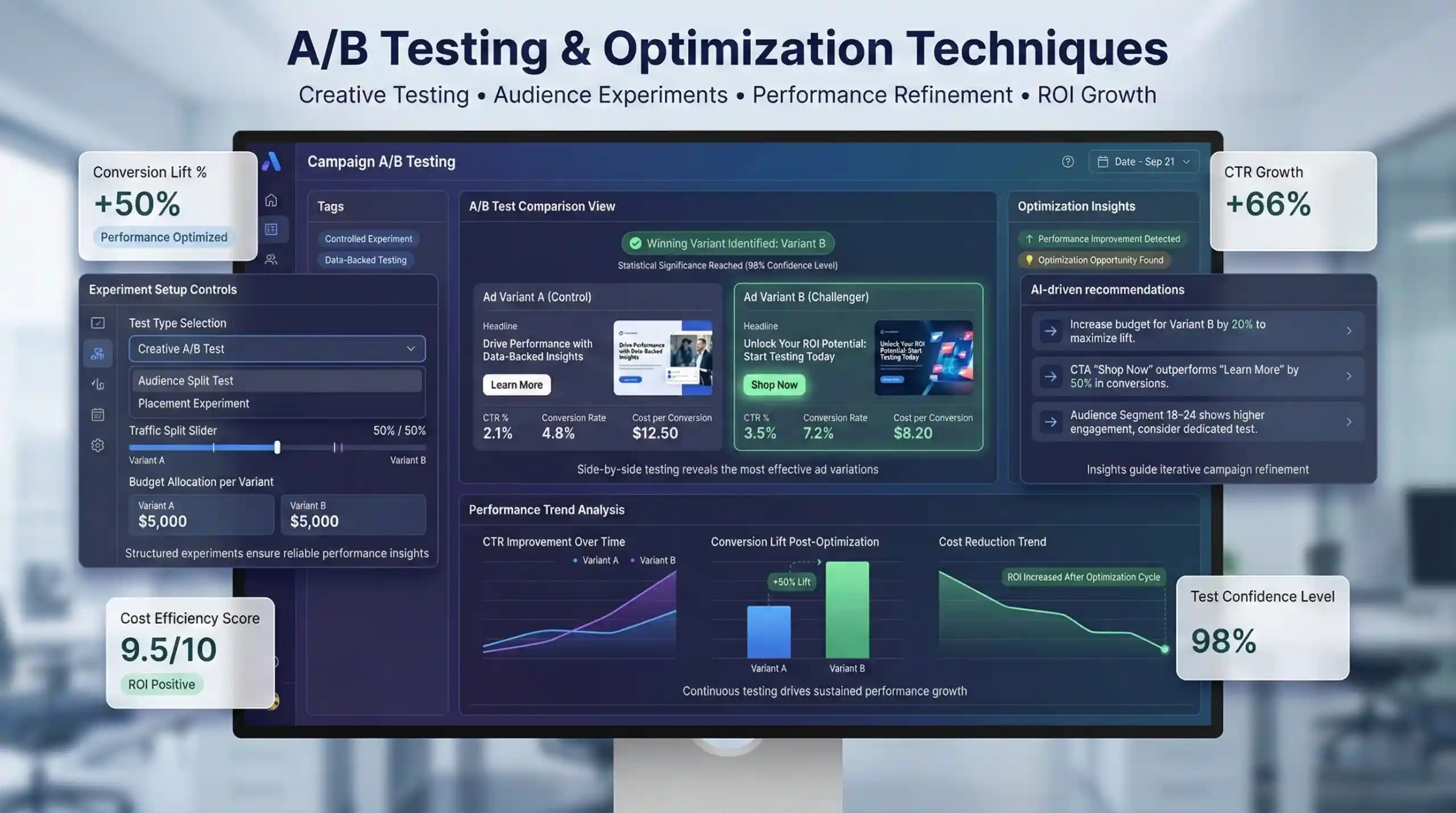
A/B testing involves creating multiple variations of ads, audiences, or placements to compare performance. By systematically analyzing which version performs best, marketers can refine their strategies iteratively, improving engagement and reducing costs.
Performance-driven refinement is the cornerstone of social media advertising success. Regular testing and optimization of creatives, targeting parameters, and bidding strategies enable sustained campaign improvement and ROI enhancement.
Example:
An online retailer tests two ad headlines to see which one leads to more conversions. The tested variations reveal that a direct call-to-action increases click rates, leading to further ad enhancements.
Practice Questions:
- What is the primary purpose of A/B testing?
– To compare different ad variations and select the most effective. - Name two elements you can test in A/B experiments.
– Ad headlines, images, audiences, placements. - Why is performance-driven optimization important?
– It allows ongoing improvements based on real data. - What metric is most useful in determining A/B test winners?
– Conversion rate or CTR. - How often should testing and optimization be performed?
– Continuously, as part of campaign management.
Resource:
Meta A/B Testing Best Practices
Compliance & Policy Adherence
Meta’s advertising policies and community standards establish guidelines for acceptable ads. These rules prevent ad rejection and account suspension by ensuring content complies with expectations around honesty, safety, and community standards.
Understanding these policies minimizes ad rejection risks and maintains account safety. Best practices include avoiding prohibited content (e.g., misleading info, adult content) and complying with industry-specific regulations.
Example:
A health supplement advertiser ensures their ad copy accurately states benefits and discloses necessary warnings to adhere to Meta’s community standards, avoiding ad rejection.
Practice Questions:
- Why is it important to follow Meta’s ad policies?
– To prevent ad rejection and preserve account health. - What kinds of content are typically prohibited?
– Misleading claims, adult content, or regulated goods without proper disclosures. - How can compliance influence campaign success?
– It ensures continuous ad delivery without suspension. - What should you verify before publishing an ad?
– That content aligns with Meta’s advertising policies. - What is the consequence of violating policies?
– Ad rejection, account disabling, or bans.
Study Resource:
Meta Advertising Policies
Future Trends & Advanced Strategies
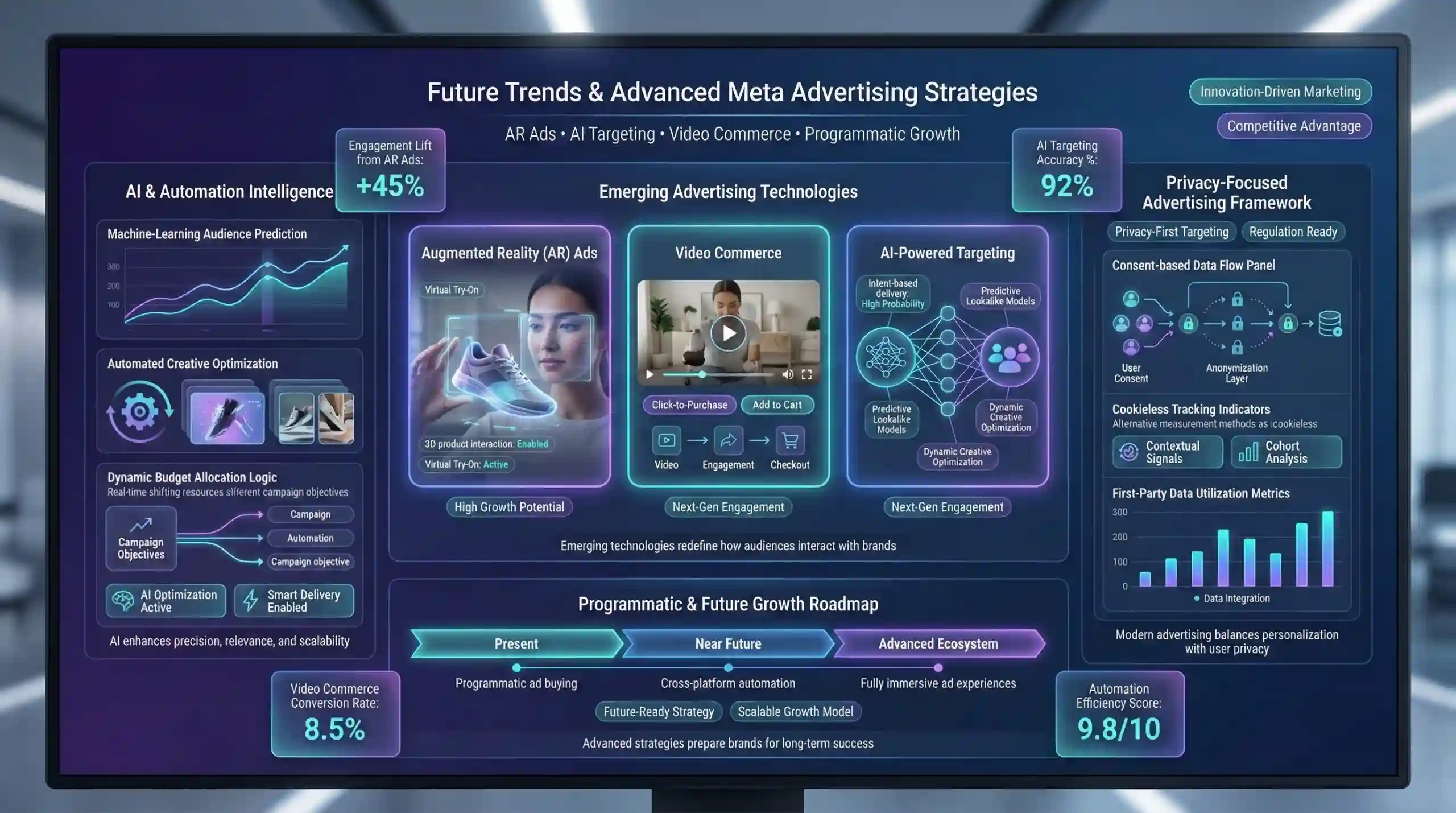
Emerging Meta advertising technologies, such as augmented reality (AR) ads, video commerce, and AI-powered targeting, are revolutionizing social media marketing. Staying updated with these innovations can provide competitive advantages.
Programmatic advertising and privacy-focused data strategies are also shaping future social media advertising. They enable more efficient ad buying and respectful user data management amid evolving privacy regulations.
Example:
Using AR ads on Facebook allows users to virtually try on products, increasing engagement and conversions through immersive experiences.
Practice Questions:
- Name an emerging Meta advertising technology.
– Augmented Reality (AR) Ads. - How does AI improve ad targeting?
– By analyzing vast data to predict and serve relevant ads. - What is programmatic advertising?
– Automated buying and selling of ad space through real-time auctions. - Why are privacy policies important in future advertising?
– They ensure compliance and foster user trust. - How can advertisers leverage new Meta tools?
– By integrating AR, video commerce, and AI-targeting features creatively.
Resource:
Meta Future Trends & Technologies
Conclusion
This Meta Ads Study Roadmap provides a comprehensive, SEO-optimized guide for students delving into social media advertising. By understanding core concepts such as campaign setup, audience segmentation, ad creation, budgeting, placement optimization, performance analysis, and policy adherence, students can develop a robust foundation for success in digital marketing.
Mastering these elements enables the creation of targeted, effective, and compliant social media campaigns that generate measurable results, preparing students for careers in social media marketing and digital advertising.
Additional Study Resources
- Meta Business Help Center
- Facebook Business – Ads Guide
- Google Digital Garage
- W3Schools – Social Media API Integration
- GeeksforGeeks – Digital Marketing Tutorials
This educational material combines theoretical concepts with practical insights, intended to foster deep understanding and effective application of Meta advertising strategies.
More Courses
- Social Media Marketing course with Gen AI
- Advance Digital Marketing & SEO course with Gen AI
- Advanced Certificate in Digital Design & Marketing course with Gen AI
- Meta & Google Ads course with Gen AI