
1. Introduction to Predictive SEO
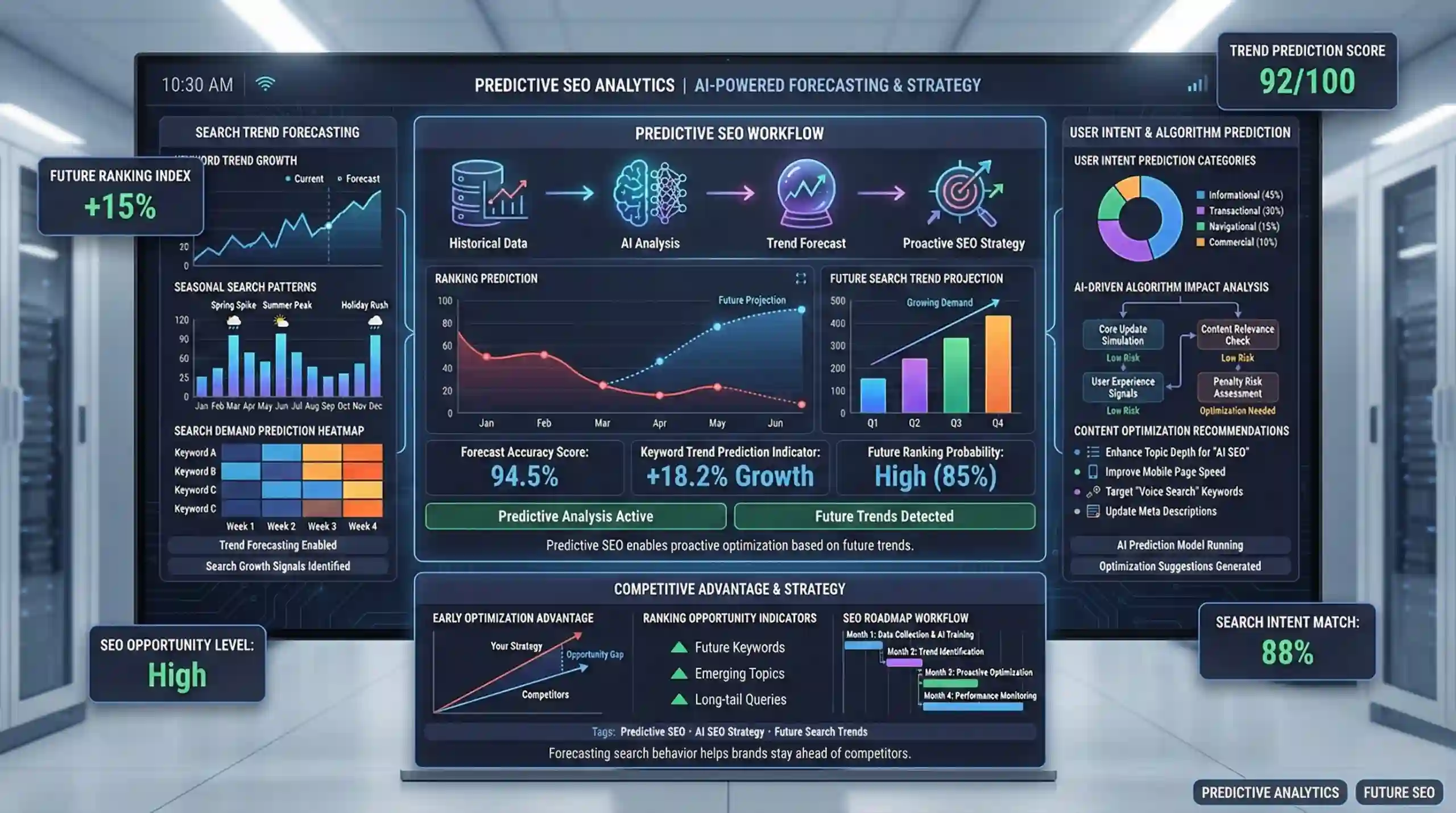
Predictive SEO is an emerging approach within digital marketing that leverages data analytics, machine learning, and statistical models to forecast how search engine rankings and user search intents will evolve over time. Unlike traditional SEO, which reacts to changes after they occur, predictive SEO aims to anticipate future shifts, enabling proactive optimization strategies. This approach helps maintain or improve search visibility by adapting to anticipated algorithm updates, content trends, and evolving user behaviors.
Example: Suppose an online retailer notices increasing search volume for “best smartwatches” during a certain season. Using predictive SEO, they can anticipate continued growth and optimize content accordingly before competitors react, improving their ranking in advance.
2. Foundational SEO Knowledge
On-Page SEO Basics
On-page SEO involves optimizing webpage elements to improve visibility in search engine results pages (SERPs). Key practices include:
- Keyword Optimization: Embedding relevant, high-volume keywords naturally in titles, headers, meta descriptions, and content.
- Meta Tags & Headers: Using descriptive meta titles and headers (H1-H6) to clarify content relevance.
- URL Structure: Creating clean, keyword-rich URLs reflecting the page’s topic.
www.example.com/seo-tools-2024.
Off-Page SEO Factors
These influence domain authority and rankings but are not on the webpage itself:
- Backlinks: High-quality backlinks from reputable sources improve credibility.
- Social Signals: Shares and activity on social media can increase content visibility.
Technical SEO Components
Technical SEO ensures the website’s infrastructure supports search engine crawling and user experience:
- Site Speed: Faster sites enhance engagement and rankings.
- Mobile-Friendliness: Responsive design ensures accessibility across devices.
- Structured Data: Schema markup enhances rich snippets, featured snippets, and overall search presence. Outcome: Properly optimized websites are better positioned to benefit from future ranking shifts, especially as search engines prioritize user experience signals.
3. Understanding Search Engine Algorithms
Search engine algorithms determine how content ranks in SERPs based on relevance and authority.
- Evaluation Process: Search engines evaluate content relevance through keyword matching and user satisfaction signals. They assess crawled pages against ranking factors such as content quality, backlinks, and technical health.
- Core Ranking Factors & Updates: Major updates like Google Panda (content quality), Penguin (link quality), and Core Updates (broad ranking changes) can cause ranking fluctuations. For instance, Panda penalized low-quality content, leading sites to improve content standards.
Impact: Keeping abreast of algorithm changes allows SEO professionals to forecast potential ranking impacts and modify strategies proactively.

4. Keyword Research & Search Intent Analysis
Keyword Research Tools
Effective keyword research involves identifying search terms that users enter for pertinent queries:
- Google Keyword Planner: Offers search volume estimates and keyword ideas.
- SEMrush & Ahrefs: Provide competitive analysis, keyword difficulty, and trend data.
Classifying Search Intent
Understanding search intent helps tailor content:
- Informational: Users seek knowledge (“how to bake a cake”).
- Navigational: Users look for specific sites or brands (“Apple official site”).
- Transactional: Users intend to purchase (“buy laptop online”).
- Commercial Investigation: Users compare products (“best smartphones 2024”).
Emerging Trends & Opportunities
Monitoring search volume trends helps identify rising keywords, seasonal fluctuations, or shifting user interests.
Example: An increase in searches for “electric scooters” during certain months signals the need for content targeting that rising search intent.5. Search Data Analysis & User Behavior Metrics
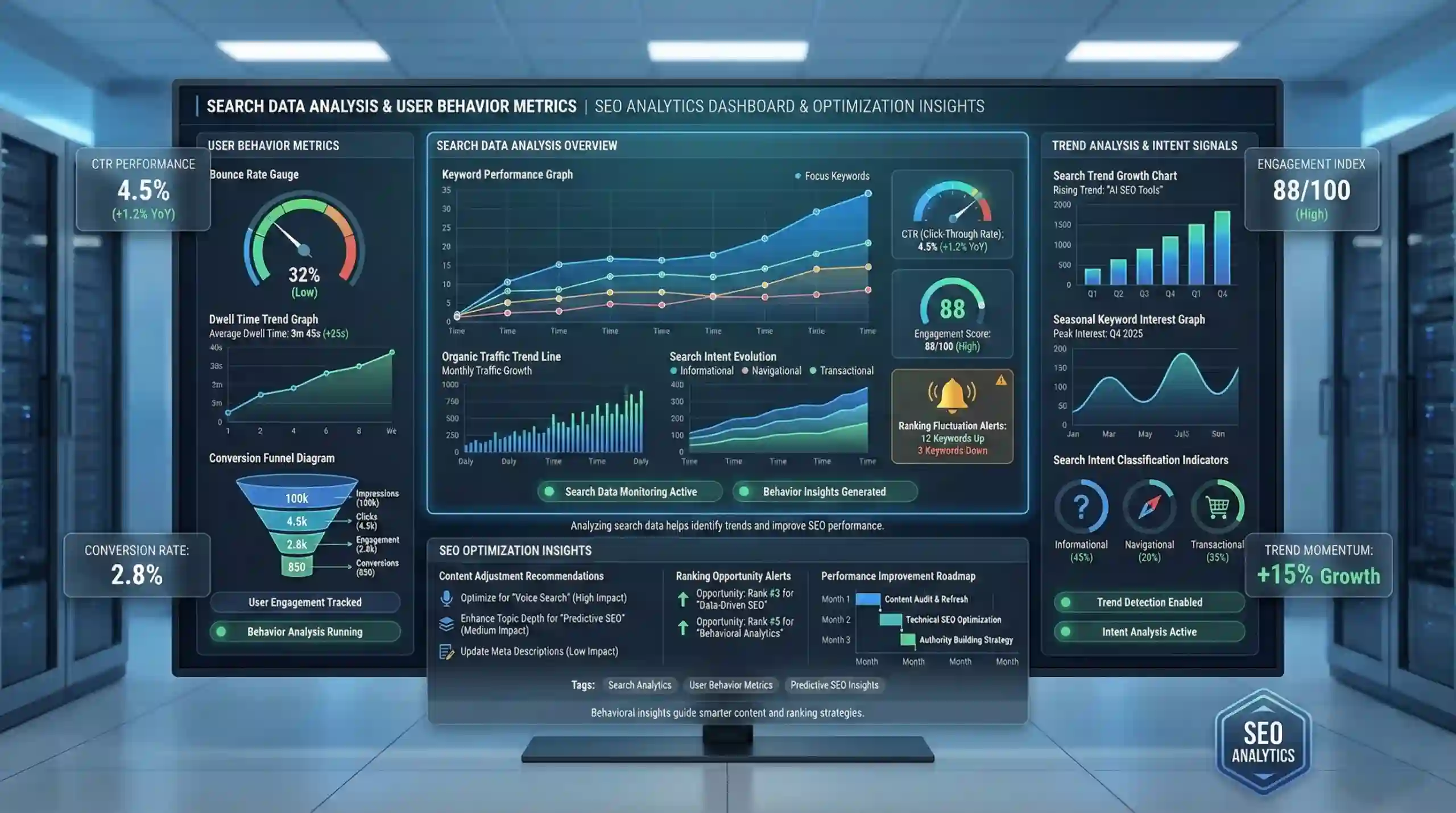
Analyzing search and behavioral data allows for early detection of ranking fluctuations and shifts in search intent.
- Tools: Google Search Console, Trends, and Analytics provide insights into keyword performance, traffic patterns, and engagement.
- Behavior Metrics:
- Click-Through Rate (CTR): Indicates attractiveness of meta titles/descriptions.
- Bounce Rate & Dwell Time: High bounce rates can signal misaligned content or changing user intent.
- Conversions: Tracking goal completions related to user search behavior.
6. Ranking Prediction Techniques
Rank Tracking Tools
Regular monitoring of keyword positions using tools like SEMrush Position Tracking or Ahrefs Rank Tracker reveals trends.
Predictive Analytics & Machine Learning
Advanced models analyze historical ranking data, backlink profiles, content freshness, and competitor strategies to forecast:
- Potential ranking increases (momentum).
- Risk of ranking drops.
- Emerging opportunities.
Practical Application
Utilize trend analyses to prioritize content updates, optimize keyword targeting, and allocate resources efficiently.
7. Forecasting Search Intent Shifts
Search Query Reports
Analyzing keyword and search phrase patterns identifies how user intent evolves.
Behavior Change Indicators
Emergence of features like featured snippets, People Also Ask, or voice search queries point toward changing search habits, signaling a shift in intent strategies.
SERP Features Monitoring
Tracking new or increasing rich snippets, video carousels, or local packs provides insights into what users seek and how to adapt content accordingly.
Example: An increase in voice search queries for “nearest coffee shop” suggests prioritizing local SEO and structured data.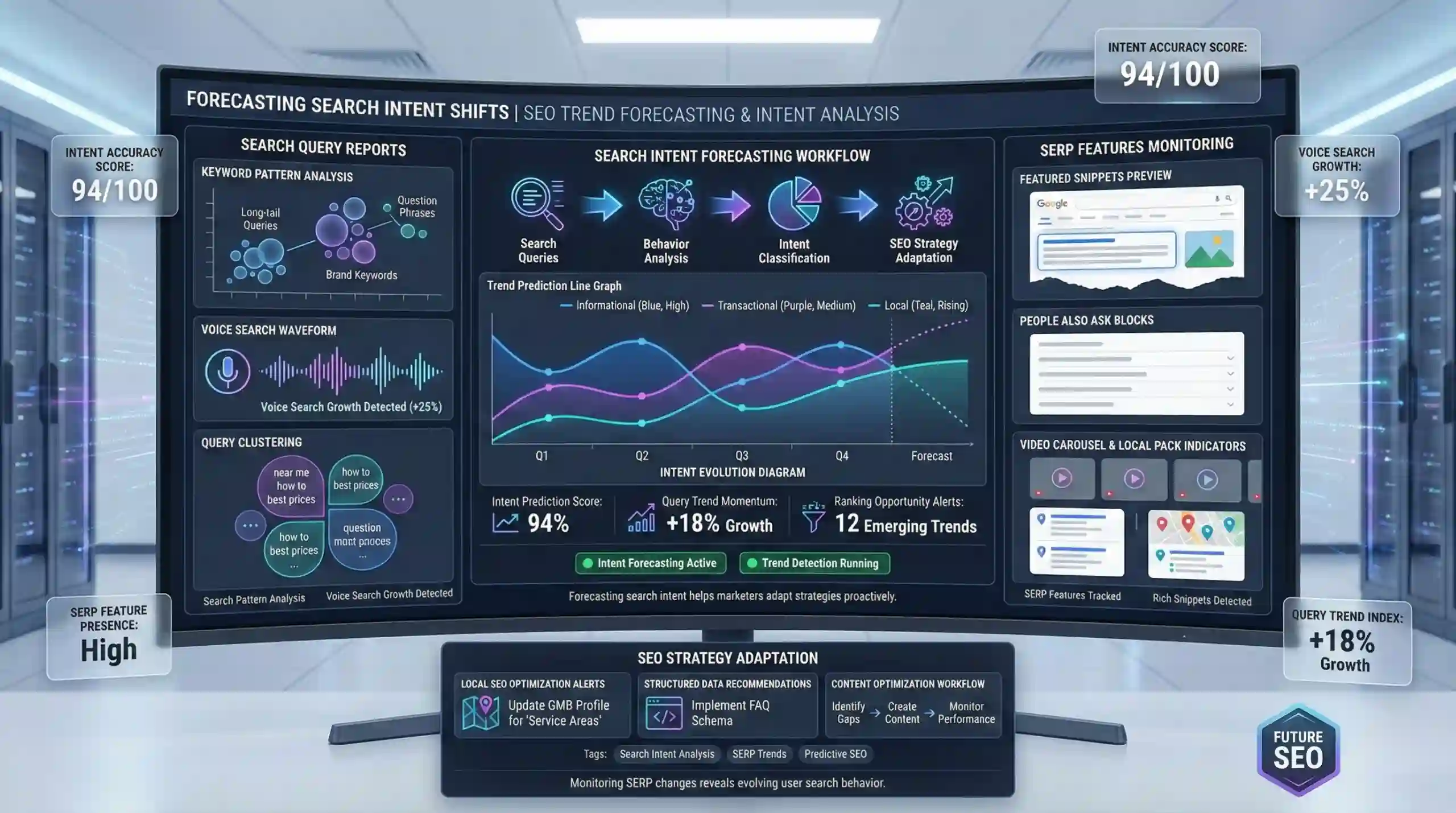
8. Keyword Opportunity & Competitor Analysis
Competitor Strategy Insights
Using SEO tools, identify which keywords competitors rank for and examine content gaps.
Anticipating Future Strategies
Forecast competitor moves based on observed ranking patterns, keyword targeting shifts, and emerging content themes, enabling preemptive optimization.
Outcome: Recognizing a competitor starting to rank for “AI-powered SEO tools” early allows your strategy to target that trajectory before it saturates.9. Content Optimization & Update Strategies
– Align Content with Search Intent: Modify existing pages to better match future search queries predicted through trend analysis.
– Content Refreshes: Update outdated or underperforming content based on forecasted keyword trends.
– Future Trend Prioritization: Concentrate efforts on rising keywords likely to grow in importance.
Example: Refresh blog posts on “latest SEO trends” to include predictions and upcoming algorithm changes.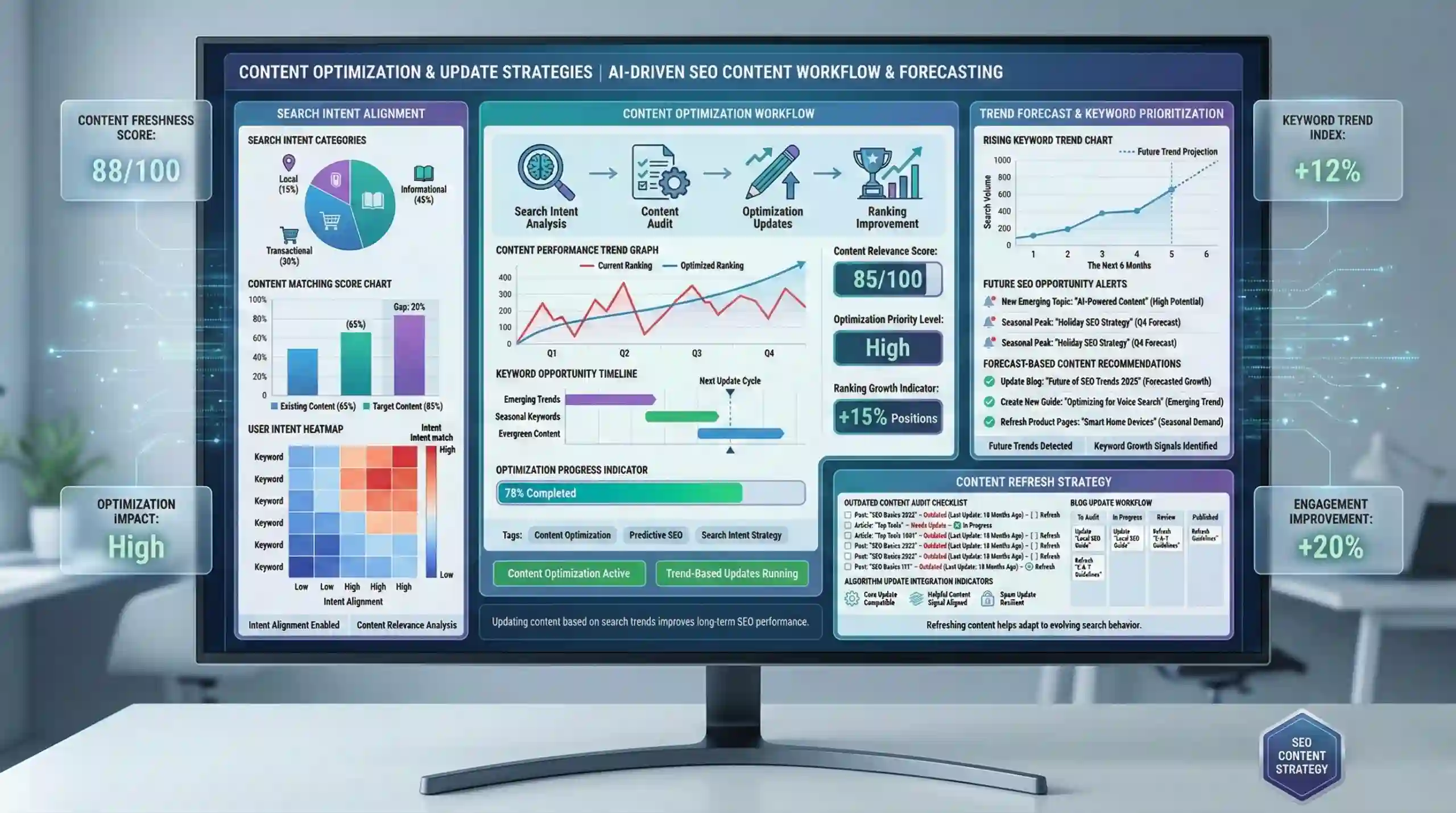
10. Technical and UX Optimization for SEO Forecasting
– Technical Improvements: Ensure crawlability and indexability through site auditing and structured data implementation to enable rapid adaptation to ranking signal changes.
– UX Enhancements: Improve navigation, page speed, and mobile responsiveness to remain aligned with user expectations and search engine preferences.
Outcome: Optimal technical health prepares the website for algorithm shifts, maintaining stable rankings in competitive environments.11. Monitoring & Adjustment
– Ongoing Tracking: Use dashboards and regular analytics reviews to monitor SERP positions, traffic, and search trends.
– Proactive Changes: Adjust content, backlink strategies, or technical SEO based on predictive insights before negative ranking impacts occur.
– Reporting & Refinement: Validate model predictions against actual outcomes, refining forecasting techniques over time.
Outcome: Continuous monitoring ensures agility in responding to forecasted changes, sustaining SEO performance.
12. Advanced Topics & Future Trends
- AI-Powered Tools: Adoption of AI-driven SEO tools for more accurate predictive analytics, keyword research, and search trend identification.
- Emerging Search Technologies: Staying updated with voice search, featured snippets, Google BERT, and mobile-first indexing influences search rank stability.
- Case Studies: Reviewing successful predictive SEO implementations illustrates practical application and effectiveness of forecasting models.
13. Summary & Best Practices
- Base your strategy on robust data analytics, combining search trend data, keyword performance, and user behavior metrics.
- Maintain flexibility to adapt to forecasted search landscape shifts and algorithm updates.
- Practice continuous monitoring and refine models for improved accuracy over time.
Practical Questions
- What distinguishes predictive SEO from traditional SEO approaches?Answer: Predictive SEO forecasts future ranking changes and search intent shifts using data analytics, enabling proactive strategy adjustments, unlike reactive traditional SEO.
- Name three core components of technical SEO relevant for forecasted ranking changes.Answer: Site speed, mobile-friendliness, and structured data implementation.
- How can search engine algorithm updates impact your SEO strategy?Answer: They can cause ranking fluctuations; understanding and forecasting these impacts allows preemptive strategy adjustments.
- Describe a method for classifying search intent.Answer: Analyzing the language and context of search queries to categorize them as informational, navigational, transactional, or commercial investigation.
- Why is monitoring SERP features important in predicting search intent evolution?Answer: SERP features like snippets or voice search signals reflect shifts in user behavior and search queries, informing future optimization strategies.
- Provide an example of how a rise in voice search queries could influence SEO planning.Answer: Prioritizing structured data and conversational keywords to optimize for voice search intent.
- What role does competitor analysis play in predictive SEO?Answer: It helps identify emerging keywords, content gaps, and strategies competitors are adopting or shifting toward, enabling proactive adjustments.
- How can machine learning enhance ranking prediction models?Answer: By analyzing historical ranking data and other SEO factors to identify patterns and forecast future ranking changes more accurately.
- Give an example of a content update based on predicted search trend changes.Answer: Updating a blog post about “social media marketing” to include future trends like AI automation and new platforms anticipated to grow.
- Why is continuous monitoring vital in predictive SEO?Answer: It allows verifying forecast accuracy, detecting real-time ranking or intent shifts, and making timely refinements to SEO strategies.
Resources for Study
- Moz Beginner’s Guide to SEO
- Google Search Central Blog
- Ahrefs Blog
- Semrush Blog
- Google Trends
- Gartner’s Guide to Predictive Analytics
This study guide aims to provide a deep, theoretical understanding of forecasting ranking changes and search intent shifts within SEO, equipping beginners to develop data-driven, proactive strategies for long-term search visibility.
More Courses
- Social Media Marketing course with Gen AI
- Advance Digital Marketing & SEO course with Gen AI
- Advanced Certificate in Digital Design & Marketing course with Gen AI
- Meta & Google Ads course with Gen AI