Introduction
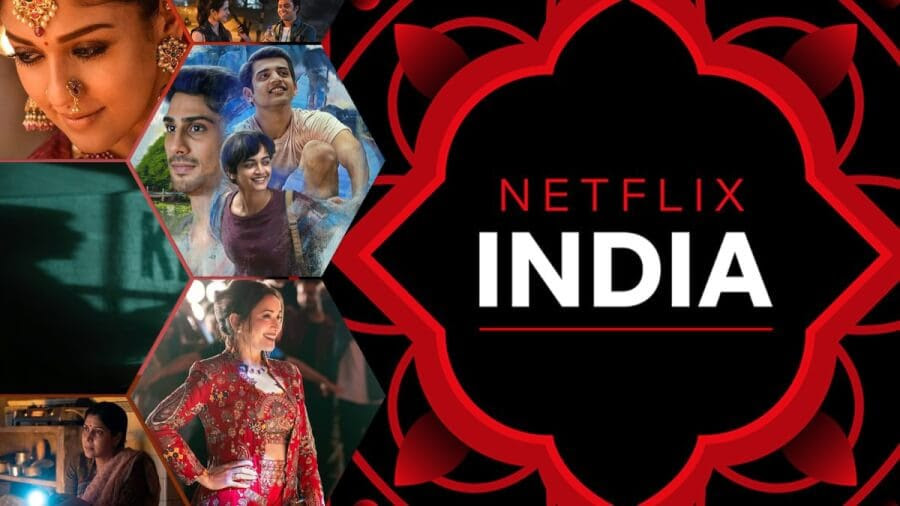
Just a few years ago, the idea of millions of Indians paying a monthly subscription to watch content online seemed far-fetched in a notoriously price-sensitive market. Yet, today, Netflix has become an integral part of India’s entertainment landscape, producing buzzworthy shows like Heeramandi and amplifying gems like Laapata Ladies. The journey of this global giant, which started as a DVD rental service in 1997, to convincing over 6.5 million Indians to subscribe is a masterclass in market adaptation, content strategy, and digital marketing. This case study decodes how Netflix didn’t just enter India; it rewrote the script for premium entertainment.
The OTT Revolution: Why India Was Ready for Netflix
Netflix’s entry in 2016 was perfectly timed. It wasn’t just Netflix that was ready for India; India was ready for a platform like Netflix, thanks to several converging factors that created the perfect storm for an OTT boom.
- The Jio Effect: The launch of Reliance Jio’s 4G network provided widespread, affordable high-speed internet access to hundreds of millions of Indians. This single event democratized data consumption and made video streaming a daily habit for a massive new audience.
- Creative Freedom & Less Restriction: Unlike traditional television, which is bound by fixed schedules and strict censorship, OTT platforms offered a space for bold and mature storytelling. Shows like Sacred Games, with its gritty themes, became a cultural phenomenon precisely because they couldn’t have existed on cable TV.
- A Platform for Experimentation: OTT platforms became a playground for new formats and genres. A biographical dramedy like Masaba Masaba found a willing and appreciative audience on Netflix, proving that unconventional narratives could succeed outside the traditional Bollywood formula.
- Spotlight on New Talent: Netflix provided a powerful platform for highly talented actors who might have been overlooked by mainstream cinema. The success of a show like Mamla Legal Hai, with its ensemble of underrated actors, showcased a new path to stardom.
- Catering to Niche Demographics: OTT allows for hyper-targeted content. A film like Kho Gaye Hum Kahan resonated deeply with Gen Z and young millennials by exploring the specific complexities of their digital lives, something broad-appeal television often struggles to do.
- Amplifying Underrated Cinema: Netflix has the power to turn critically acclaimed but commercially modest films into massive hits. The recent success of Laapata Ladies, which surpassed the viewership of a theatrical blockbuster like Animal on the platform, demonstrates how OTT can champion quality storytelling and give it a second life.
Digital Marketing & SEO Strategy
As a digital-first company, Netflix’s marketing is its content. Their strategy is not about selling subscriptions directly but about making their content so compelling and culturally relevant that a subscription becomes an essential purchase.
- SEO (Search Engine Optimization): Netflix’s SEO strategy is inherently content-driven. They don’t need to rank for generic keywords like “watch movies online.” Instead, they dominate search results for their own IP. When a user searches for “Heeramandi cast,” “Chamkila review,” or “Sacred Games theories,” Netflix’s own platform, YouTube channel, and social media pages are the top results. Their content library is their keyword strategy, capturing high-intent traffic from users already invested in their shows.
- YouTube Marketing: With a colossal 23.9 million subscribers, Netflix India’s YouTube channel is a content powerhouse in itself. Their strategy is multi-faceted:
- Hype & Promotion: They release trailers, teasers, and exclusive interviews with the cast and creators of upcoming shows, like the interviews for Chamkila, to build anticipation.
- Content Sampling (Freemium Model): They often release the first episode of a new series for free, as they did with Kaala Paani. This is a classic freemium tactic, giving viewers a taste of the quality and hooking them into subscribing to watch the rest.
- Creator Collaborations: Recognizing the power of India’s creator economy, they produce original content series with top comedians like Zakir Khan. These shows are entertaining in their own right and serve as a subtle promotional vehicle, driving millions of views and keeping the brand top-of-mind.
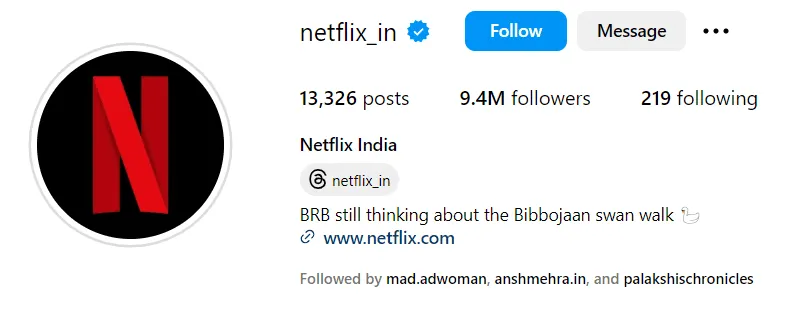
- Instagram Marketing: With 9.4 million followers and a trendy bio, Netflix India’s Instagram is the hub of its cultural conversation. The tone is casual, witty, and perfectly tuned for their Gen Z and Millennial audience. The goal is engagement and relatability, using memes, snippets, and fan-centric content to keep their shows trending and part of the daily social media discourse.
STP Analysis
- Segmentation:
- Demographic: Primarily targets urban and semi-urban youth—Gen Z and Millennials (ages 16-35)—who are digitally native and have access to smartphones and high-speed internet.
- Psychographic: Targets individuals who are “cord-cutters,” moving away from traditional TV. They value diverse, global content, appreciate bold and experimental storytelling, and see entertainment as a core part of their lifestyle.
- Behavioral: Segments based on consumption habits, targeting “binge-watchers” and users who are highly influenced by social media trends and peer recommendations.
- Targeting: The primary target is the globally-minded, digitally-savvy Indian youth who are seeking high-quality, exclusive, and unrestricted entertainment that traditional channels cannot provide.
- Positioning: Netflix has positioned itself as a premium, global entertainment service that is the exclusive home for high-quality Indian originals. They are the brand for bold, critically acclaimed, and conversation-starting content.
The 4 Ps of Marketing
- Product: The core product is the streaming service itself, which is a curated library of content. This can be broken down into three key pillars:
- Global Library: A vast collection of international movies and series, made accessible through high-quality dubbing and subtitling in major Indian languages.
- Indian Originals: This is their biggest differentiator. By investing heavily in shows like Sacred Games, Delhi Crime, and films like Heeramandi, they have created a portfolio of exclusive, must-watch Indian content.
- Strategic Acquisitions: They smartly acquire content that already has a proven audience. A key example is buying the popular YouTube series Little Things and producing subsequent seasons exclusively, effectively migrating an entire loyal fanbase to their platform.
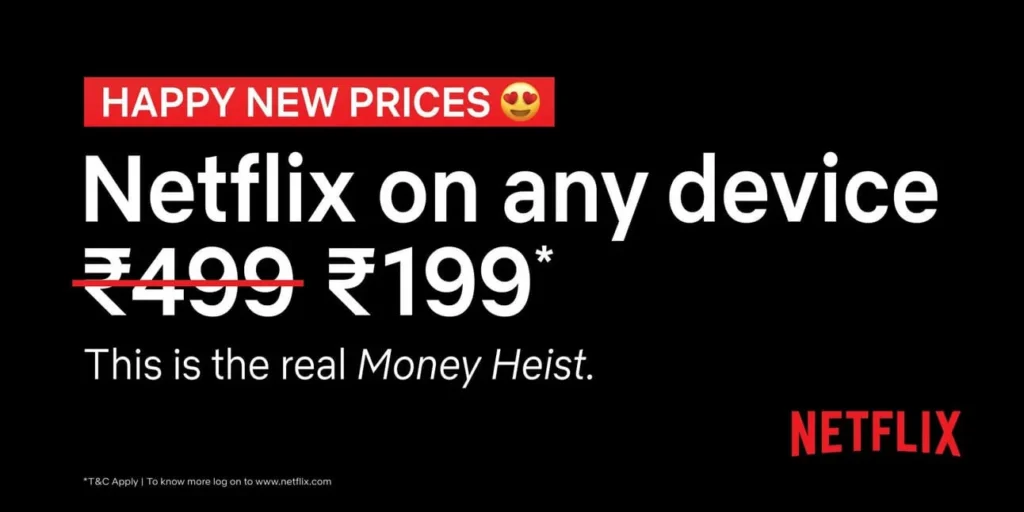
- Price: This is where Netflix showed its greatest adaptability. Their initial launch at ₹500/month failed to gain traction. Recognizing this, they pivoted to a multi-tiered pricing strategy, with the game-changing introduction of a ₹149 mobile-only plan. This masterstroke made the service accessible to a much wider, mobile-first audience.
- Place: The service is distributed purely through digital channels—the Netflix app on smartphones, tablets, smart TVs, and its website. Their entire distribution strategy is built around a mobile-first experience, which is essential for the Indian market.
- Promotion: As detailed above, Netflix’s promotion is its content marketing. They don’t run traditional “buy now” ads. Instead, they create entertaining and engaging content around their shows on YouTube and Instagram to generate organic buzz and desire.
Influencer Marketing & Collaborations
Netflix has a unique approach to influencer marketing: they turn their own talent into their primary influencers.
- Strategy: Instead of just paying influencers to promote their shows, they create original, high-engagement content with the stars and creators of their content.
- Types of Collaborations: This includes behind-the-scenes interviews, “Actors on Actors” style conversations, fun challenges, and original shows hosted by popular comedians like Zakir Khan featuring the stars of their upcoming films.
- Goal: The goal is to provide authentic, value-added content that fans genuinely want to watch. This deepens the audience’s connection with the shows and the talent, generating far more organic hype and loyalty than a simple sponsored post could.
Challenges & Competition
- Challenges:
- Intense Price Competition: India is a highly competitive market, and Netflix is still perceived as a premium, and therefore more expensive, option.
- Content Regulation: Navigating the complex and evolving landscape of content censorship and government regulations in India is a constant challenge.
- Regional Penetration: While strong in urban centers, penetrating deeper into Tier-2 and Tier-3 cities with diverse regional languages and tastes is an ongoing effort.
- Competition: The competition is fierce and multi-pronged:
- Amazon Prime Video: A major competitor, often bundled with the highly popular Amazon Prime subscription, making its value proposition very strong.
- Disney+ Hotstar: A powerhouse with a massive library of Disney, Marvel, and HBO content, and crucially, the streaming rights for major cricket tournaments like the IPL.
- SonyLIV and ZEE5: Strong domestic players with deep libraries of local and regional content.
- YouTube: The biggest free video platform, which remains a major competitor for audience attention.
All trademarks, logos, videos, and images are the property of their respective owners. Their use in this educational case study is for commentary and illustrative purposes, and does not imply any ownership or endorsement.


Connect With Us
Follow us for updates on our latest courses and events!