
Introduction
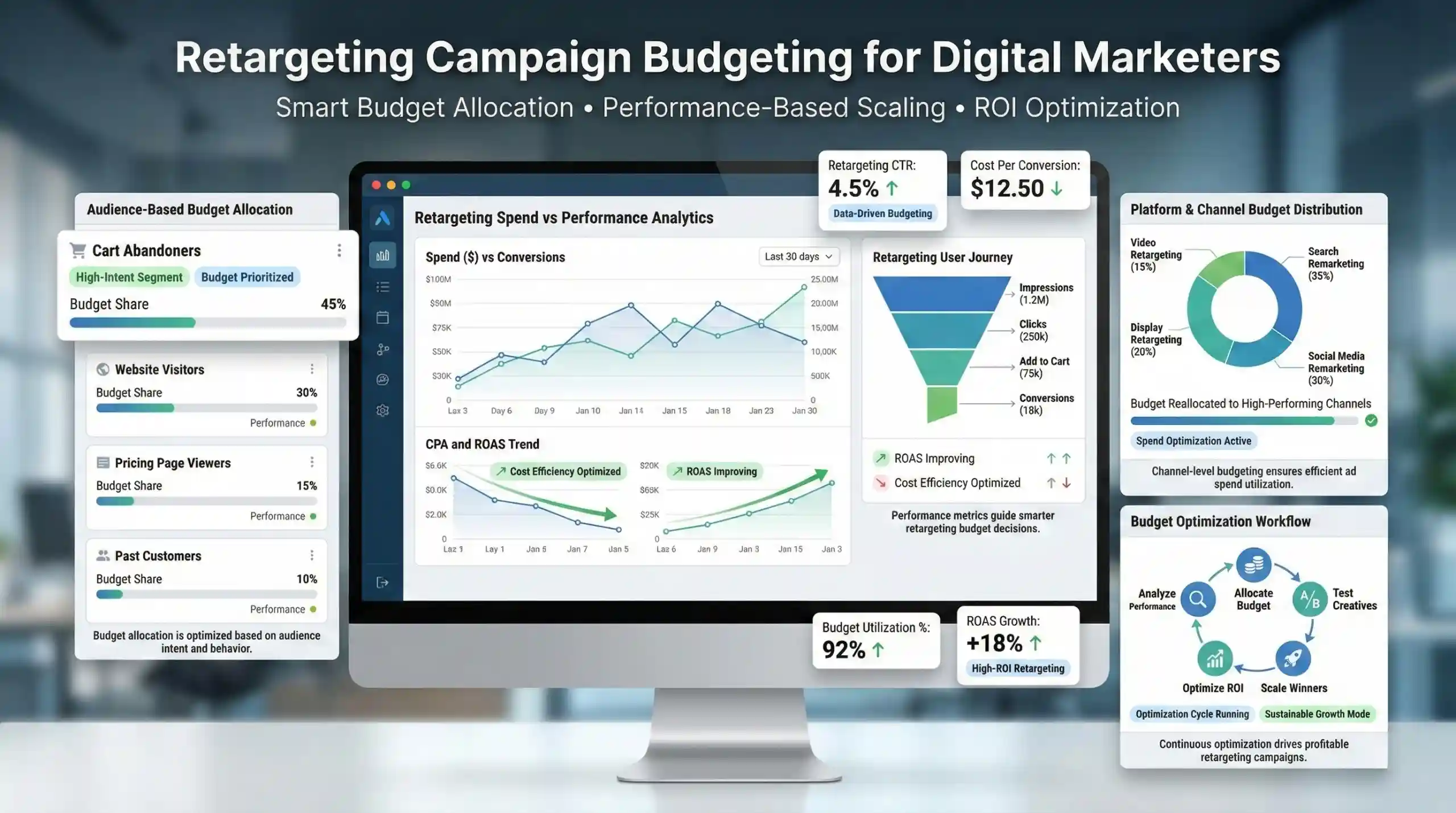
Retargeting campaigns, also known as remarketing, are critical strategies in digital marketing that focus on reconnecting with website visitors who did not convert initially. Effective budgeting for these campaigns ensures optimal use of advertising spend to achieve business objectives such as increased conversions, improved brand awareness, and higher return on ad spend (ROAS). This study material explores the theoretical foundations and practical considerations necessary to develop a strategic retargeting campaign budgeting roadmap. Emphasis is placed on integrating SEO keywords pertinent to digital marketing and remarketing, thereby enhancing content relevance and searchability.
1. Setting Clear Campaign Objectives for Retargeting Campaigns
Theoretical Explanation
Establishing explicit retargeting campaign objectives is fundamental to effective budget management. Goals like boosting conversions, enhancing brand recognition, or generating high-quality leads serve as guiding metrics, aligning advertising spend with desired performance outcomes. Clear objectives facilitate the development of KPI-driven strategies, ensuring that the retargeting ad spend directly supports business growth.
Budgeting strategies should be aligned with KPIs such as conversion rate, cost per acquisition (CPA), and return on ad spend (ROAS). For example, if a company’s primary goal is increasing sales, the budget allocation should aim to maximize conversions within planned cost limits, using KPIs as benchmarks for success.
Practical Example
A retail e-commerce store aims to increase product sales through remarketing. The campaign’s goal is to achieve a CPA not exceeding $20. The initial budget is allocated based on expected conversion rates, with periodic adjustments based on campaign performance against this KPI.
2. Identifying Target Audience Segments for Retargeting
Theoretical Explanation
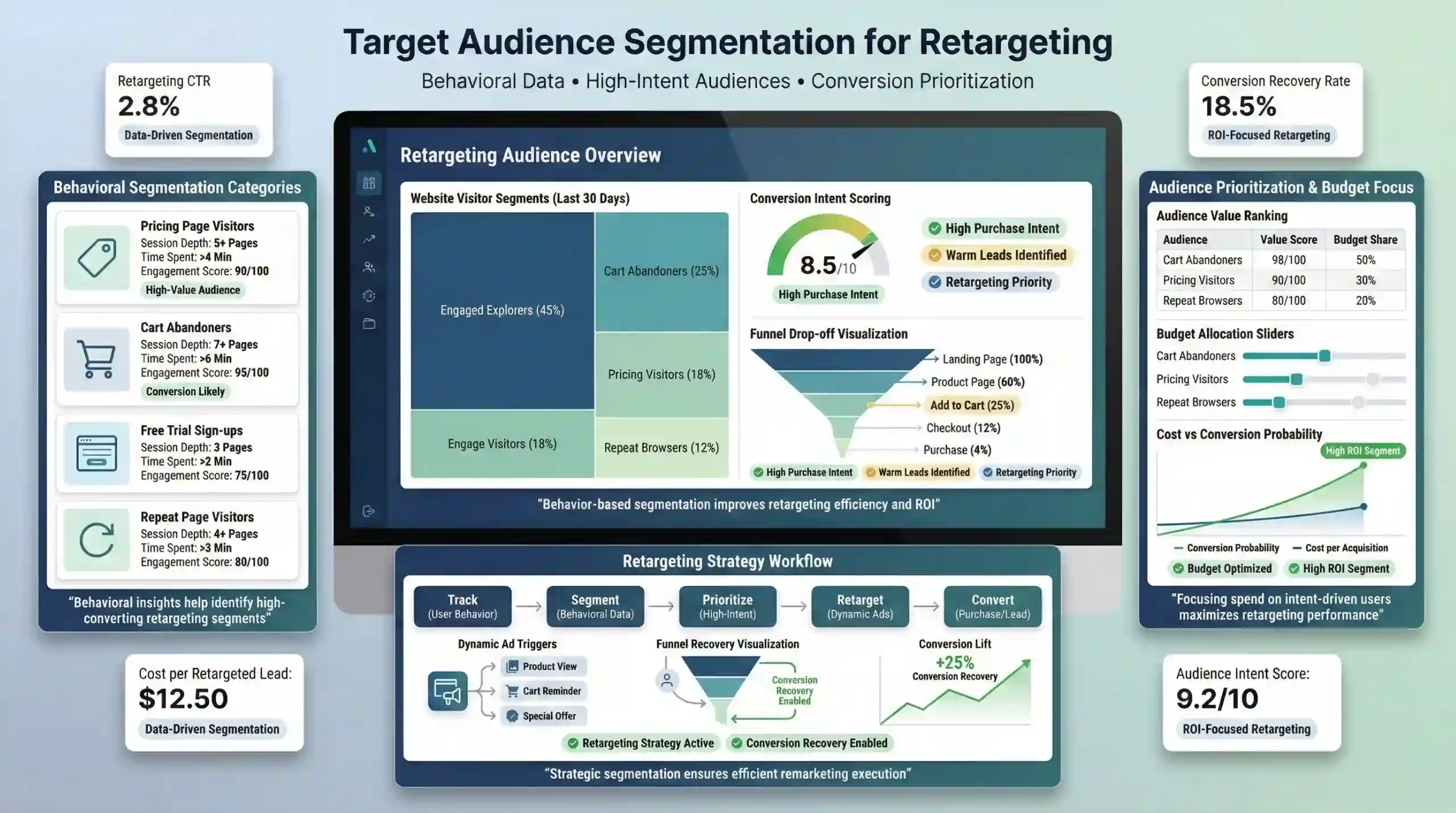
Segmentation is a cornerstone of effective remarketing. It involves categorizing website visitors based on behavioral data such as engagement, browsing patterns, cart abandonment, and purchase history. Behavioral segmentation allows digital marketers to craft highly relevant ads, which directly enhances retargeting ROI and reduces unnecessary ad spend.
Prioritizing high-value audiences—such as visitors who added products to the cart or replayed a specific page—ensures that budget is concentrated on segments with the highest potential to convert, thus maximizing ad spend efficiency.
Practical Example
A SaaS company segments website visitors into three groups: free trial sign-ups, visit to pricing pages, and abandoned signups. The Retargeting Ads focus more on those who visited the pricing page but did not convert, as these audiences show high purchase intent, leading to improved conversion rates.
3. Determining Overall Campaign Budget for Retargeting
Theoretical Explanation
Accurate budget estimation is driven by analyzing historical PPC data and industry benchmarks. This data-driven approach allows marketers to set realistic retargeting ad budgets, ensuring sufficient reach without overspending. Benchmarking against industry standards such as average CPC and CPM rates provides a contextual baseline for budget planning.
A proportionate budget allocation—for instance, dedicating 10-20% of the total digital marketing budget—depends on campaign scope, business size, and competitors’ activity levels. Strategic budgeting here ensures consistency and scalability in remarketing efforts.
Practical Example
An online fashion retailer reviews past PPC data and industry averages to allocate a monthly retargeting budget of $5,000, representing 15% of its overall digital advertising budget. They adjust this proportion periodically based on performance and market changes.
4. Choosing Appropriate Retargeting Platforms
Theoretical Explanation
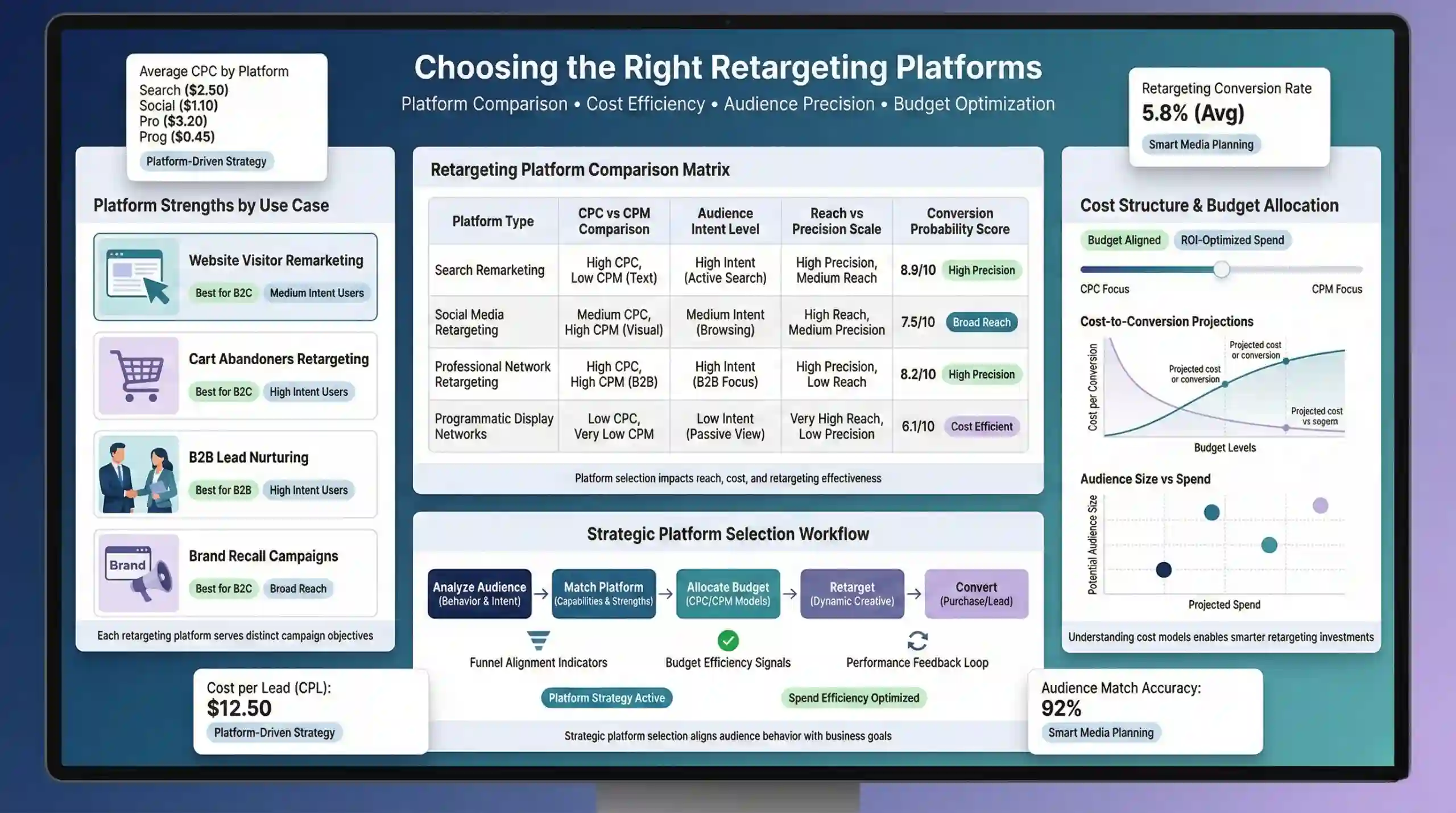
Selecting the right retargeting platforms—such as Google Ads remarketing, Facebook retargeting, LinkedIn, or programmatic networks—is crucial for maximizing reach and minimizing cost. Each platform offers unique audience targeting capabilities and cost structures (CPC, CPM).
Understanding platform-specific rates enables marketers to develop effective remarketing ad budgets. For instance, Google Display Network may have a lower CPC compared to LinkedIn but may reach a broader audience. Strategic platform selection aligns campaign objectives with audience behavior and budget constraints.
Practical Example
A B2B software company opts for LinkedIn retargeting for high-value enterprise prospects, accepting higher CPCs but gaining access to a targeted professional audience. The choice is driven by the platform’s precision in audience targeting, optimizing budget expenditure.
5. Setting Bidding Strategies & Budget Caps
Theoretical Explanation
Implementing smart bidding strategies such as target ROAS, maximize conversions, or enhanced CPC allows automated, data-driven bid adjustments. These strategies optimize ad spend in real-time based on user behavior, conversion likelihood, and market conditions.
Additionally, pre-setting daily and lifetime budget caps controls overall retargeting ad spend and prevents runaway costs while maintaining competitive bid levels to retain ad presence and efficacy.
Practical Example
A travel agency sets a daily budget cap of $500 while using target ROAS bidding to maximize profitable conversions during holiday seasons, ensuring ad spend remains within financial boundaries while capturing high intent traffic.
6. Testing and Optimizing Budget Allocation
Theoretical Explanation
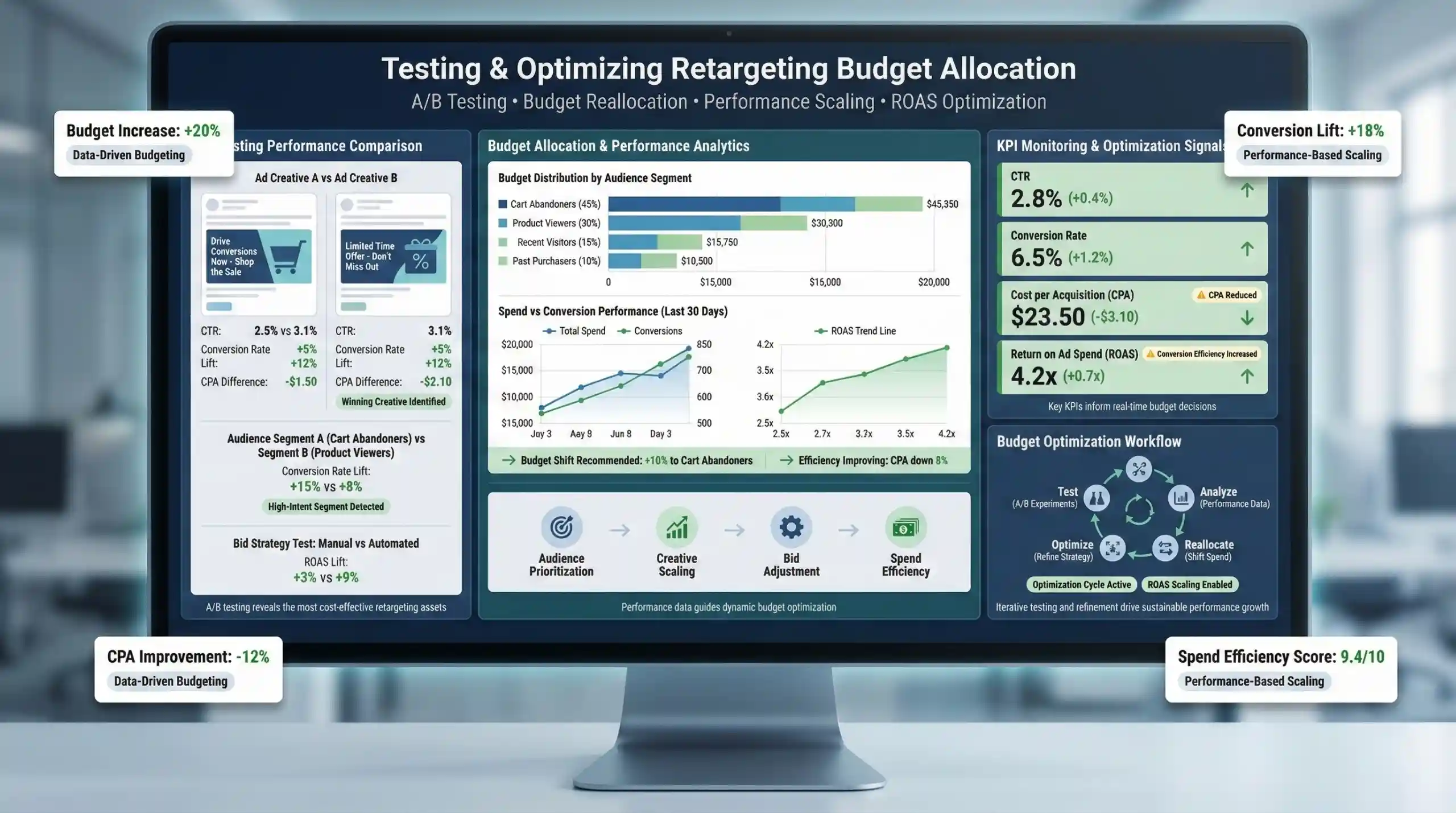
Continuous A/B testing of different audience segments, ad creatives, and bidding strategies allows marketers to identify the most cost-effective retargeting assets. Data from these tests inform budget reallocation, directing more spend toward high-performing segments or ads.
Metrics such as CTR, conversion rate, and CPA are crucial indicators for allocating the retargeting budget dynamically. This iterative process enhances ROAS and overall campaign efficiency.
Practical Example
A beauty products company tests two ad creatives targeting cart abandoners. The better-performing creative’s budget is increased by 20%, leading to higher conversions and improved ad spend efficiency.
7. Monitoring & Analyzing Campaign Performance
Theoretical Explanation
Regularly tracking key metrics such as CPA, ROAS, CTR, and impressions offers insights into campaign effectiveness. Performance analysis guides budget adjustments, such as reallocating funds from underperforming segments to high-performing ones, thus enhancing remarketing ROI.
Furthermore, employing analytics tools to interpret campaign data helps in making evidence-based ad spend decisions, ensuring continuous optimization.
Practical Example
A fitness app analyzes weekly ad performance reports, noticing a high CPA on certain audience segments. The marketer reallocates budget away from these segments toward more responsive groups, improving overall campaign profitability.
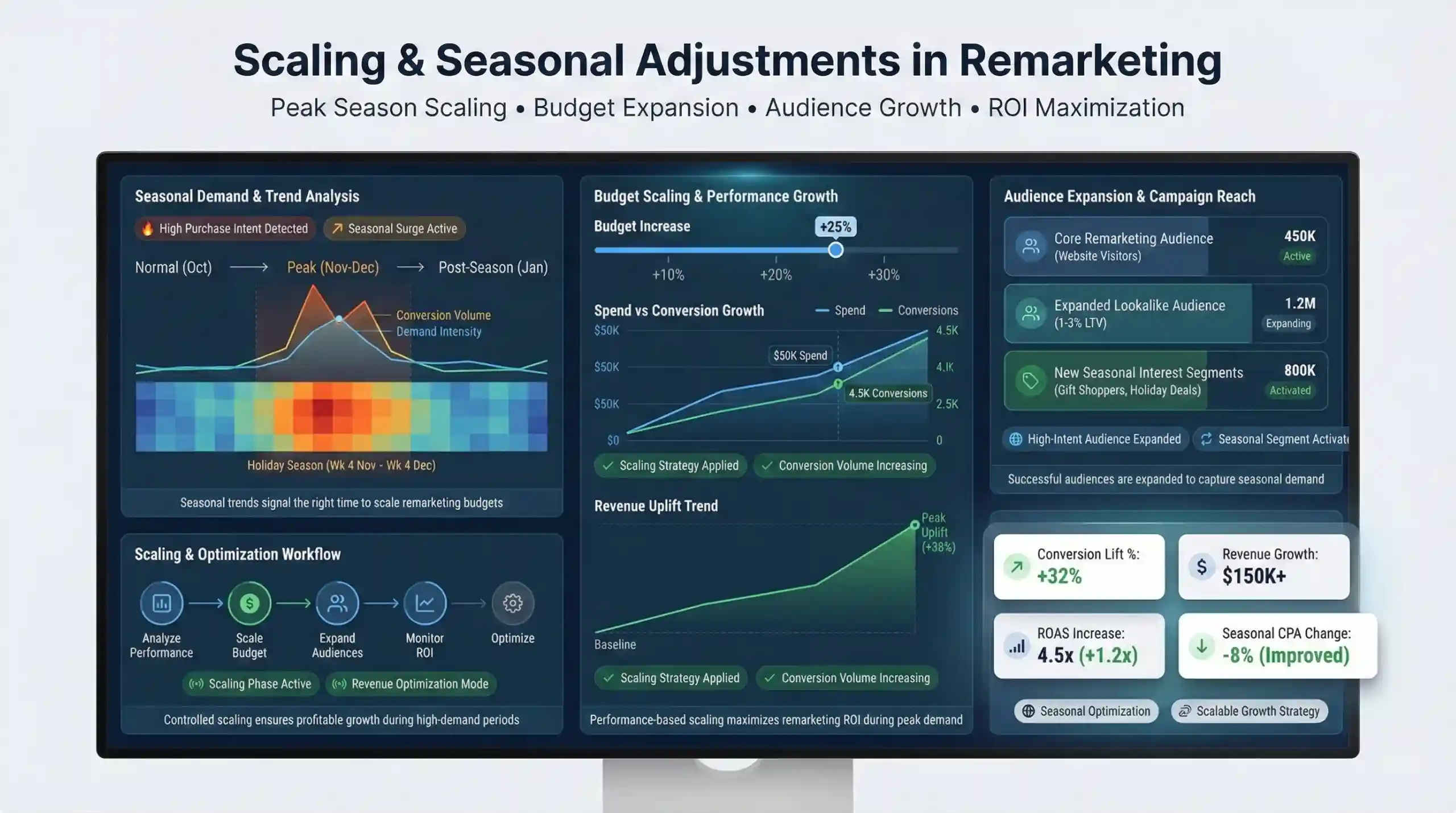
8. Scaling & Seasonal Adjustments in Remarketing
Theoretical Explanation
Strategic budget scaling involves increasing ad spend proportionally in response to positive performance or during peak seasons (e.g., holidays, Black Friday). Seasonal timing enhances the likelihood of conversions and overall ROI.
Effective scaling strategies include expanding successful remarketing audiences or extending campaigns to new segments, aligning with market demand cycles to maximize ad spend impact.
Practical Example
An electronics retailer increases its retargeting budget by 30% during the holiday shopping season, recognizing increased consumer intent, resulting in higher sales volume and better remarketing ROI.
9. Leveraging Automation & Dynamic Bidding Tools
Theoretical Explanation
Automation tools employing machine learning and AI algorithms enable real-time bid adjustments and audience targeting, significantly optimizing ad spend management. Programmatic retargeting platforms facilitate dynamic, efficient budget allocation, reducing manual oversight and improving responsiveness to market fluctuations.
By integrating these advanced technologies, marketers can enhance retargeting campaign ROI and ensure budget efficiency through precise ad spend control.
Practical Example
A media buyer uses an automated programmatic platform to adjust bids during a flash sale, maximizing impressions among high-value audience segments with minimal manual intervention, ultimately delivering stronger campaign results.
Conclusion
Developing a retargeting campaign budgeting roadmap requires a solid understanding of campaign objectives, audience segmentation, platform selection, bidding strategies, performance monitoring, and scaling considerations. Incorporating data-driven decision-making, automation, and continuous optimization ensures that digital marketers maximize ad spend efficiency, enhance remarketing ROI, and meet their overarching business goals.
Practice Questions
- Why is it important to align retargeting campaign objectives with KPIs such as CPA or ROAS?
- How does behavioral segmentation improve remarketing ad relevance?
- What factors influence the percentage of the digital marketing budget allocated to retargeting campaigns?
- Compare CPC and CPM metrics in the context of platform selection for remarketing.
- Explain how automated bidding strategies like target ROAS optimize ad spend.
- Describe how A/B testing can influence budget reallocation in remarketing.
- Why is continuous monitoring essential for retargeting campaign success?
- How can seasonal adjustments impact retargeting ad spend?
- Discuss the advantages of using programmatic platforms with AI-driven automation.
- What are key performance metrics to analyze for refining remarketing budgets?
Sample Output (Code Snippets for Practical Understanding)
# Example: Simple budget allocation based on audience segments

total_budget = 10000  # Total retargeting budget in dollars

# Segments and their initial portion of budget
segments = {
    'Cart Abandoners': 0.5,
    'Product Browsers': 0.3,
    'Loyal Customers': 0.2
}

# Allocate budgets
allocated_budgets = {segment: total_budget * portion for segment, portion in segments.items()}

for segment, budget in allocated_budgets.items():
    print(f"{segment}: ${budget:.2f}")

# Output:
# Cart Abandoners: $5000.00
# Product Browsers: $3000.00
# Loyal Customers: $2000.00
Resources for Further Learning
- Google Ads Remarketing Help
- Facebook Business Remarketing Guidelines
- W3Schools – Introduction to Digital Marketing
- GeeksforGeeks – Bidding Strategies in Google Ads
- HubSpot – Remarketing Campaign Strategies
This educational material offers a comprehensive, theory-based perspective on retargeting campaign budgeting, emphasizing strategic planning, platform selection, and continuous optimization to maximize ad effectiveness and remarketing ROI.
More Courses
- Social Media Marketing course with Gen AI
- Advance Digital Marketing & SEO course with Gen AI
- Advanced Certificate in Digital Design & Marketing course with Gen AI
- Meta & Google Ads course with Gen AI