1. Understand the Foundations of Landing Page Design
Landing Page Design Principles
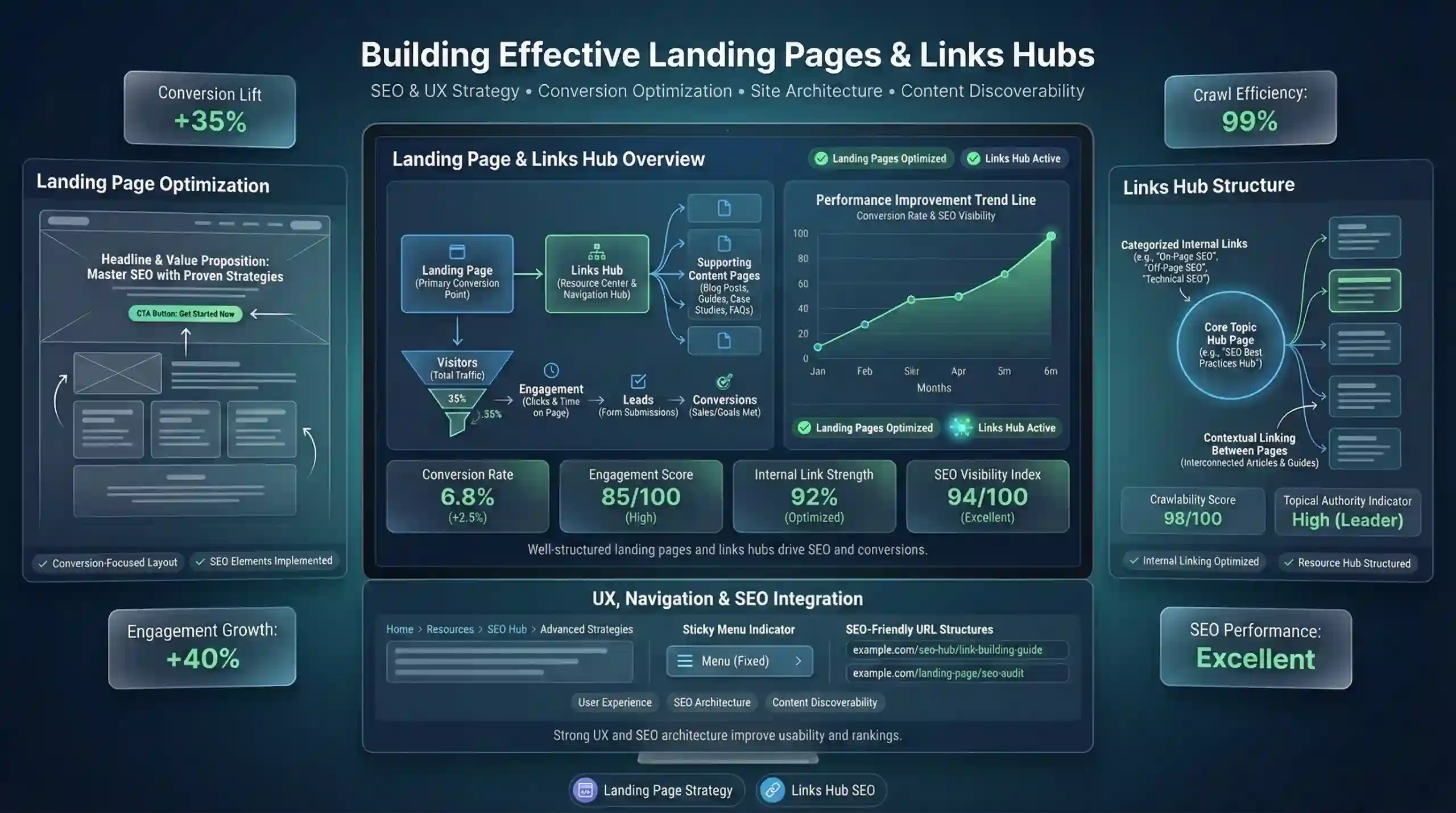
A high-converting landing page seamlessly guides visitors toward a specific goal, such as making a purchase, subscribing, or downloading content. The foundational principles involve creating a minimalist layout that reduces extraneous information, emphasizing clarity. A visual hierarchy arranges elements so that the most critical components — headlines, CTA buttons — draw attention first. Content should be user-focused, addressing visitor needs, pain points, and expectations.
Example: A successful webinar registration page places the registration form above the fold, uses contrasting colors for the CTA, and minimizes distractions to boost conversions.
User Experience (UX) Optimization
Optimizing UX involves designing interfaces that are intuitive, fast-loading, and mobile-responsive. Easy navigation allows users to find information quickly; quick load times prevent abandonment, especially on mobile devices. Proper responsiveness ensures the design adapts to different screen sizes, vital for maintaining engagement and reducing bounce rates.
Outcome: A mobile-optimized product landing page with fast load times and clear navigation leads to higher user retention and increased conversions.
Call-to-Action (CTA) Strategy
Powerful CTAs act as directional signals prompting user actions. Effective CTAs use action-oriented language like “Download Now” or “Get Started,” stand out visually through size and color, and are strategically placed where user attention peaks.
Example: A CTA button with contrasting color, placed at the end of persuasive copy, can improve click-through rate significantly.
2. Research Best Practices in Links Hub Development
Internal Linking Strategies
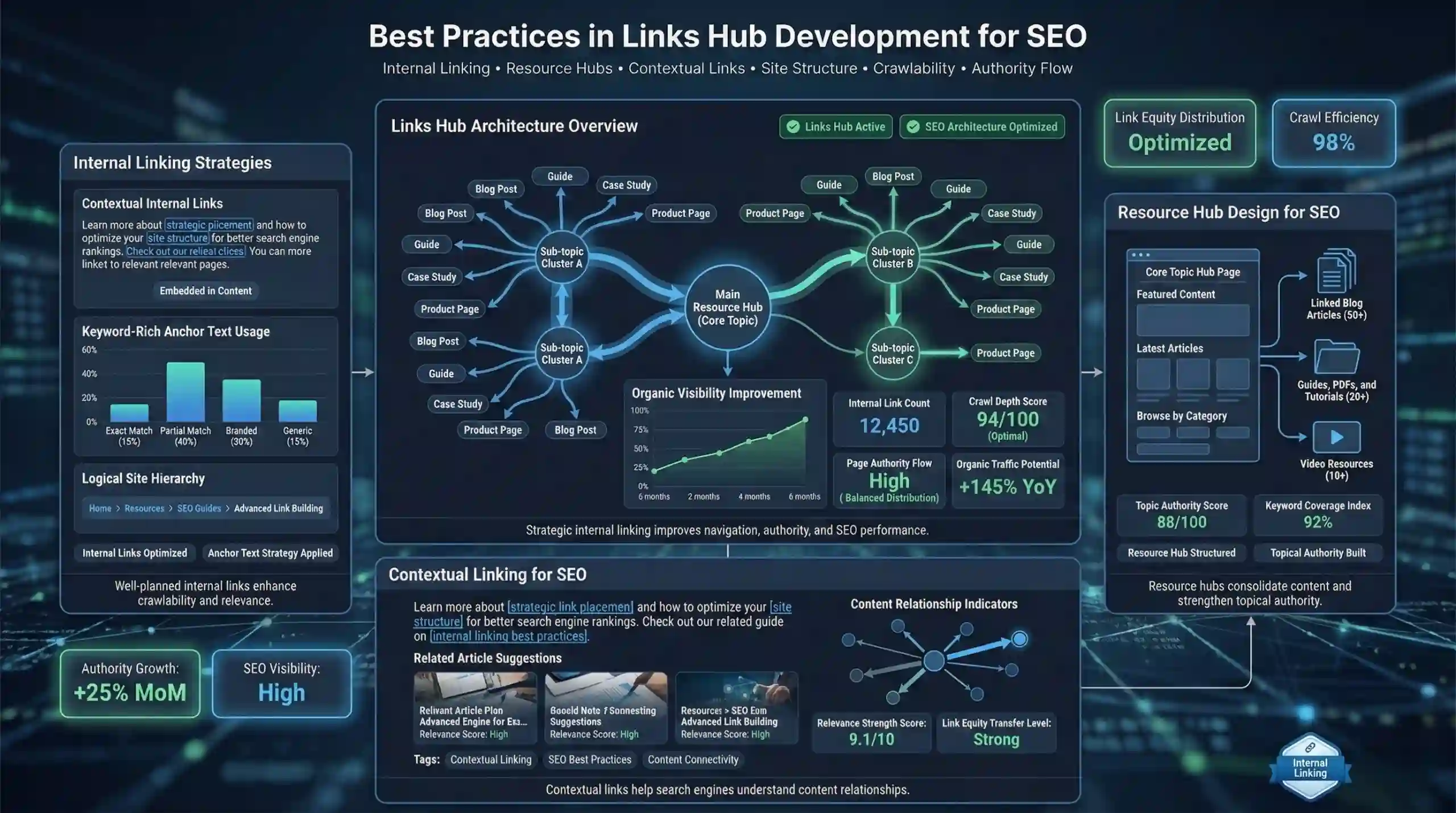
Internal links connect related content within a website, improving site crawlability and distributing SEO link equity. Proper strategies include linking relevant pages contextually, using descriptive anchor texts that reflect target keywords, and creating a logical site structure.
Example: Linking a blog post about “SEO Strategies” to a resource hub about “Digital Marketing Tools” enhances both pages’ authority and user navigation.
Designing Resource Hubs for SEO
Resource hubs serve as comprehensive content collections centered around core topics, integrating related keywords and providing informational resources and downloadables. They help establish site authority and improve organic visibility.
Outcome: A well-structured resource hub about “Content Marketing” featuring blog articles, PDFs, and tutorials improves keyword rankings and attracts niche traffic.
Utilizing Contextual Links for SEO
Embedding contextual links naturally within relevant textual content helps search engines understand content relationships and page relevance. This boosts page authority transfer and enhances search engine visibility.
Example: Embedding links to related articles like “SEO Optimization Tactics” within a comprehensive content marketing post.
3. Conduct Keyword Research for Landing Pages & Links Hubs
Keyword Research Tools
Tools like Google Keyword Planner, SEMrush, and Ahrefs help identify high-volume keywords relevant to your niche. They provide data on search volume, competition, and keyword difficulty, enabling informed selection of target keywords.
Practical use: Discovering that “digital marketing strategies” has high search volume, guiding content focus.
Keyword Types & Targeting
- Short-tail keywords (e.g., “SEO”) offer broad reach but high competition.
- Long-tail keywords (e.g., “how to improve local SEO for small businesses”) target specific intent, often converting better.
Align keywords with search intent—informational, navigational, transactional—for tailored content.
SEO Keyword Optimization
Incorporate primary keywords naturally into headers, meta descriptions, and body content. This enhances relevance to search queries and improves search engine rankings.
4. Plan and Structure Your Landing Page & Links Hub
Information Architecture for SEO
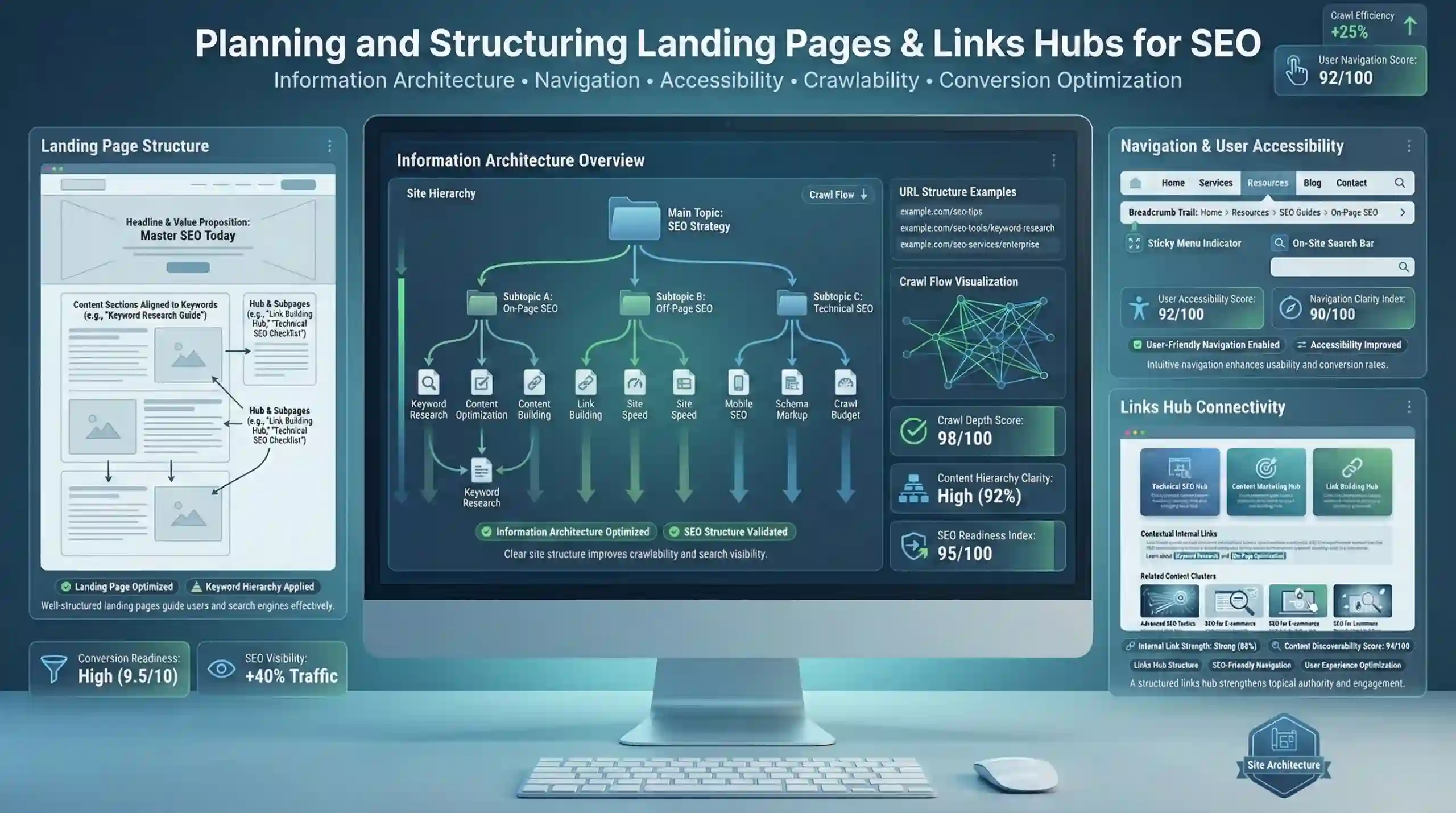
Design a logical content hierarchy comprising main topics, subtopics, and related keywords. Use clear URL structures (e.g., /seo-tips, /seo-tools) that reflect content hierarchy, facilitating easier search engine crawling.
Outcome: A site structured around categories like “Content Marketing” with subcategories improves visibility.
Navigation & User Accessibility
Implement intuitive menus, breadcrumb navigation, and search features that improve user experience and assist search engines in understanding site structure. Clear navigation minimizes user frustration and improves conversion rates.
Example: Sticky menus that remain visible during scrolling enhance accessibility.
5. Design for Conversions & SEO Optimization
Responsive & Mobile-First Design
Ensure landing pages are mobile-friendly with responsive layouts, optimized images, and readable fonts. Page load speed influences user experience and search rankings; hence optimizing for both mobile and desktop improves SEO outcomes.
Meta Tags & Headings Optimization
Create SEO-optimized meta titles and descriptions that include targeted keywords to improve click-through rates (CTR) in search results. Properly structured header tags (H1, H2, H3) guide both users and search engines through the content hierarchy.
Compelling Headlines & Value Propositions
Use benefit-driven copy that emphasizes value propositions. Clear headlines attract attention, and persuasive content increases user engagement and lead conversions.
6. Implement SEO Elements & Schema Markup
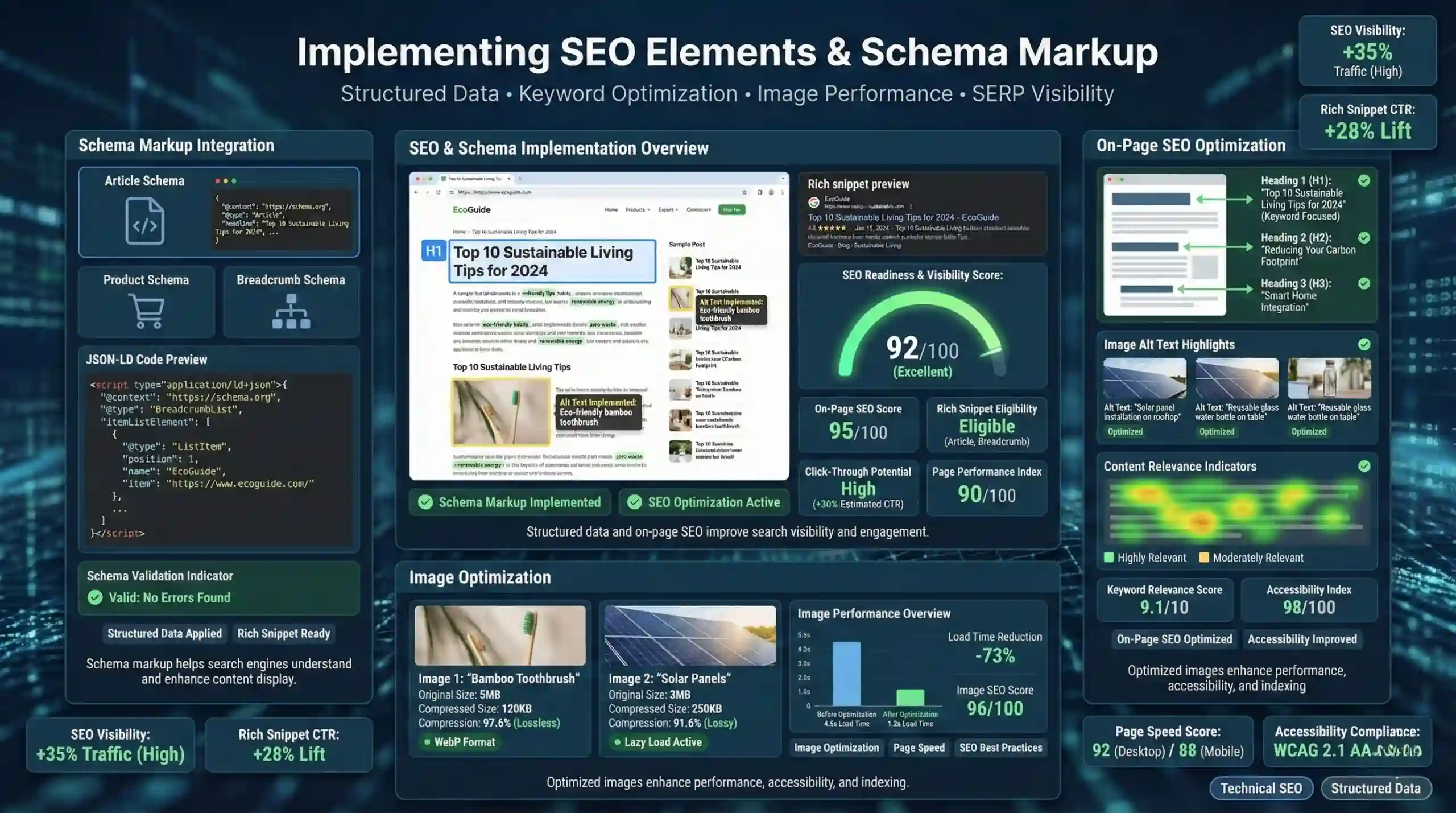
Schema Markup Integration
Adding structured data schemas (e.g., Product, Article, Breadcrumb) helps search engines generate rich snippets in SERPs, increasing visibility and click-through rates.
Example:
{
  "@context": "https://schema.org",
  "@type": "Article",
  "headline": "Ultimate Guide to SEO Optimization",
  "author": "Jane Doe",
  "datePublished": "2023-10-01"
}
On-Page SEO Optimization
Integrate target keywords into headers, alt tags for images, and within the body content naturally. Use descriptive image alt texts to enhance SEO and accessibility.
Image Optimization
Compress images for faster load times and provide descriptive alt text to improve search engine indexing and user accessibility.
7. Develop Content Strategy for Landing Pages & Links Hubs
Keyword-Rich Content Creation
Produce valuable, targeted content that addresses searcher intent. Include blog articles, resource guides, checklists, and downloadables aligned with selected keywords to boost organic traffic.
Content Diversification
Incorporate multimedia content like videos, infographics, and podcasts to enhance visitor engagement and increase time on page, positively impacting SEO metrics.
Content Updating & SEO Optimization
Regularly review and update existing content with current data, trending keywords, and fresh insights to sustain and improve search visibility.
8. Test & Optimize Landing Pages & Links Hubs
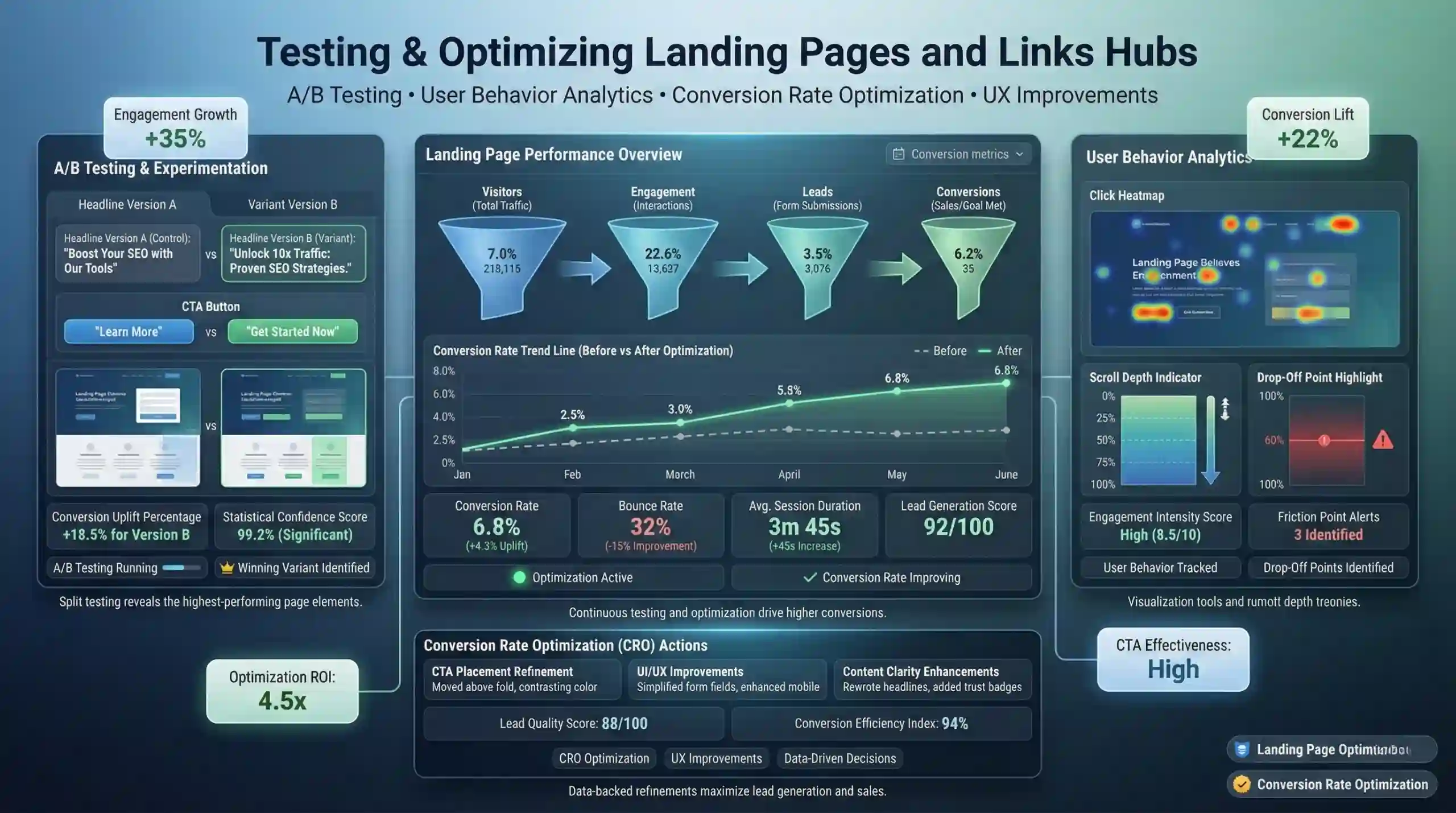
A/B Testing
Use split testing for different headlines, CTA buttons, and layouts to determine which variations lead to higher conversion rates.
User Behavior Analytics
Leverage tools such as Google Analytics and Hotjar to analyze visitor interactions, identify drop-off points, and understand user behavior.
Conversion Rate Optimization (CRO)
Refine UI/UX, CTA placement, and content based on data insights, continuously improving lead generation and sales performance.
9. Promote and Build Backlinks
Guest Posting & Outreach
Engage with industry influencers and bloggers through guest posting to secure quality backlinks. Focus on providing valuable, shareable content to naturally attract backlinks.
Content Marketing & Social Media Promotion
Distribute content across social channels, forums, and directories to increase brand exposure and attract link opportunities.
Earned Backlinks & Domain Authority Growth
Create link-worthy content such as comprehensive guides, infographics, or studies that earn natural backlinks, boosting domain authority and search rankings.
10. Maintain and Update Content Regularly
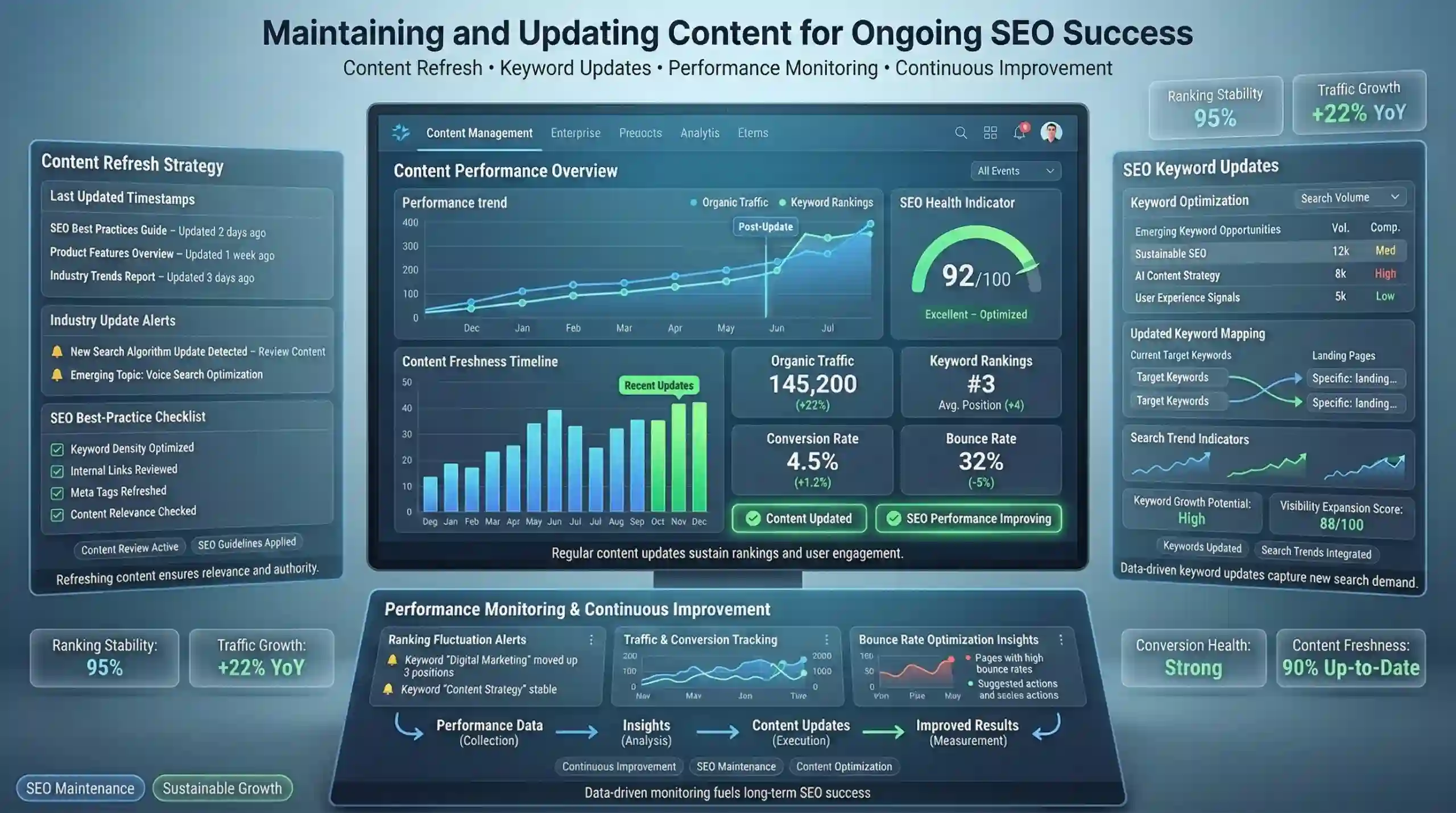
Content Refresh Strategy
Regularly review and update landing pages and links hubs with latest SEO practices, industry updates, and new keywords to ensure ongoing relevance and ranking.
SEO Keyword Updates
Stay informed about emerging keywords via tools and trends, updating existing content to target new opportunities and maintain search engine visibility.
Performance Monitoring & Continuous Improvement
Track keyword rankings, traffic, conversion metrics, and bounce rates to watch for areas needing improvement. Use insights to refine your SEO strategies and content periodically.
Conclusion
Following this comprehensive SEO-focused roadmap will empower students to master creating effective landing pages and links hubs. These skills drive organically driven traffic, improve search engine rankings, and enhance digital marketing effectiveness. Success in building optimized landing pages for SEO keywords ensures sustainable online growth.
Relevant Study Resources
- Moz Beginner’s Guide to SEO: https://moz.com/beginners-guide-to-seo
- Google SEO Starter Guide: https://support.google.com/webmasters/answer/7451184
- Ahrefs Blog & Resources: https://ahrefs.com/blog/
- SEO Tools & Tutorials (SEMrush): https://www.semrush.com/blog/
- GeeksforGeeks SEO Articles: https://www.geeksforgeeks.org/tag/seo/
This study guide presents a structured approach to understanding and implementing effective landing pages and links hubs, emphasizing both theoretical foundations and practical applications, grounded in SEO best practices.
More Courses
- Social Media Marketing course with Gen AI
- Advance Digital Marketing & SEO course with Gen AI
- Advanced Certificate in Digital Design & Marketing course with Gen AI
- Meta & Google Ads course with Gen AI