
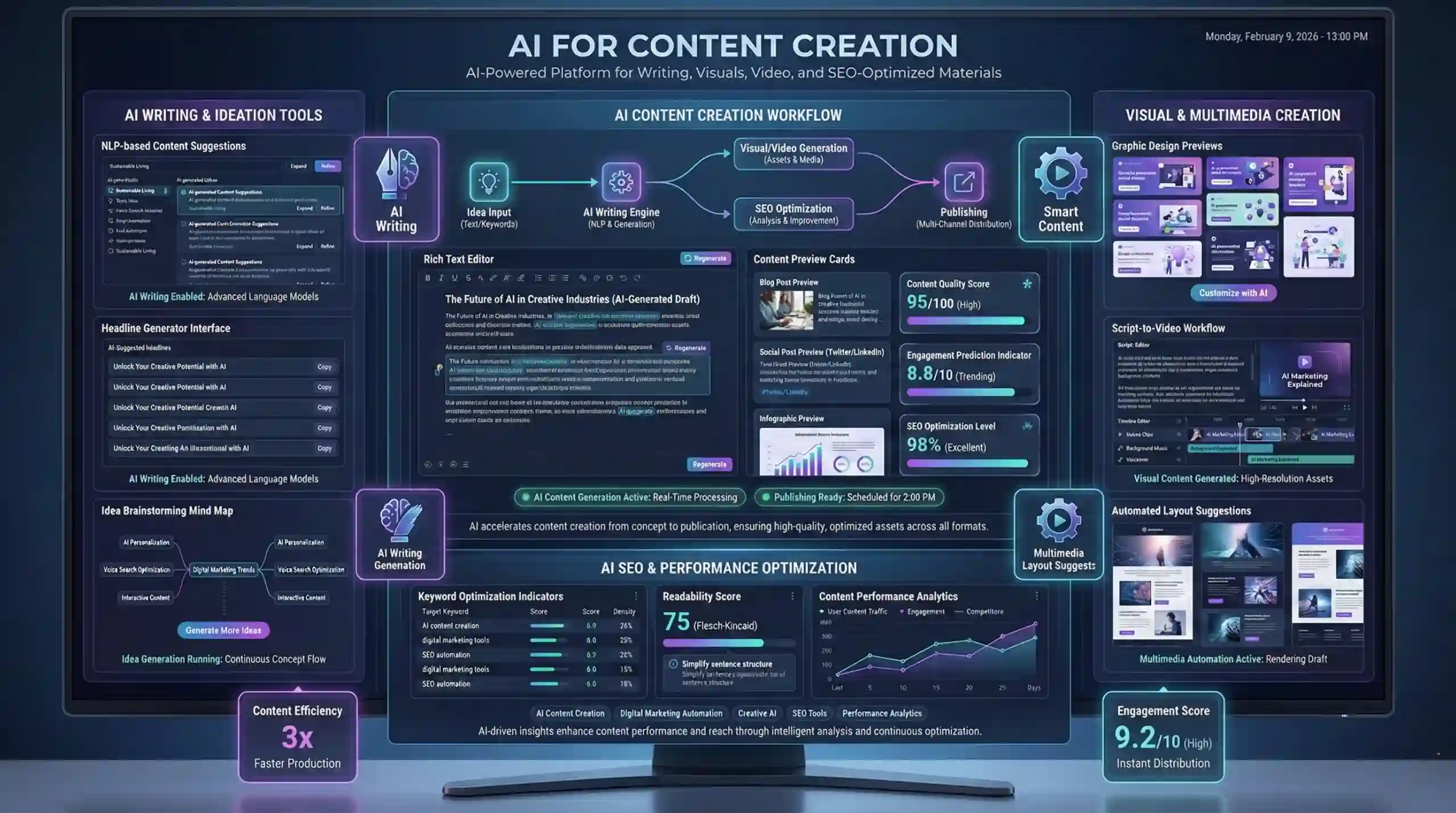
1. Introduction to AI in Content Creation
Role of Artificial Intelligence in Digital Content Generation
Artificial Intelligence (AI) significantly transforms the landscape of digital content creation by automating tasks and enhancing output quality. AI-driven tools facilitate the generation of diverse content formats such as blogs, articles, social media posts, videos, and infographics by leveraging algorithms capable of understanding and producing human-like language and multimedia. For example, AI-powered writing assistants like GPT-4 can draft articles or social media updates, saving time and expanding creativity. These technologies enable content creators to produce personalized, scalable, and engaging content efficiently, pushing the boundaries of digital marketing strategies.
Evolution of AI-Driven Content Marketing
The development of AI in content marketing has evolved through several key phases. Initially, rule-based systems were used for basic automation. With advancements in natural language processing and machine learning, AI tools now interpret data, predict consumer behavior, and generate content autonomously. Early milestones include the adoption of chatbots for customer engagement and algorithms for content recommendation. Over time, sophisticated AI models such as transformers have enabled the creation of nuanced, contextually relevant content, leading to enhanced personalization and targeted marketing campaigns.
Impact of AI Writing Tools on Journalism and Blogging
AI writing assistants, including GPT-based models, are reshaping journalism and blogging. These tools assist in drafting news summaries, generating content ideas, and automating routine reporting tasks. For instance, media outlets use AI for rapid news updates, allowing journalists to focus on investigative reporting. Freelance bloggers benefit from AI tools that generate drafts or suggest headlines, increasing productivity. While AI enhances efficiency, ethical considerations such as authenticity, bias, and transparency remain critical. Overall, AI significantly influences editorial workflows and content authenticity.
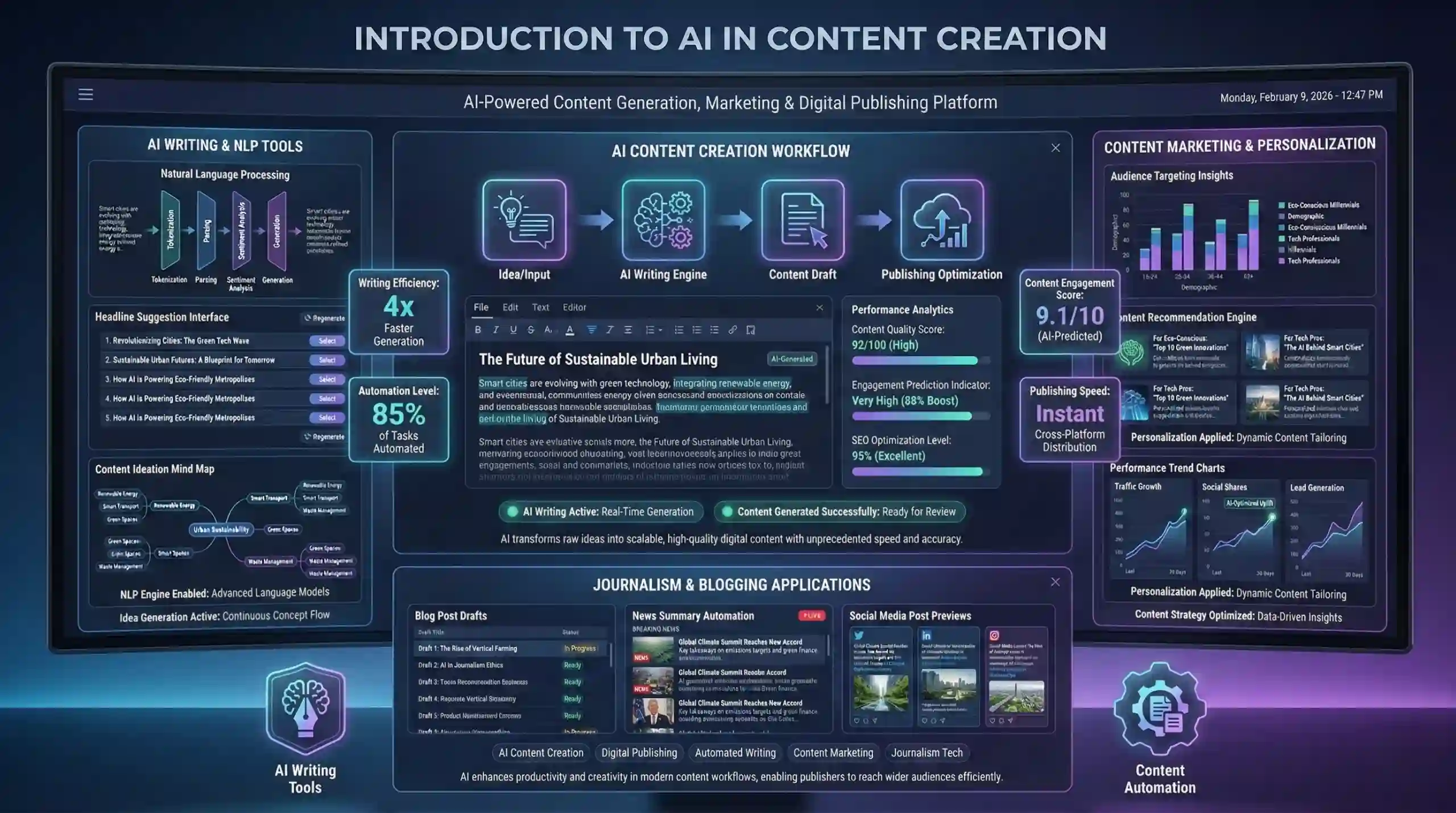
2. Fundamentals of AI and Machine Learning
AI Basics and Machine Learning Concepts
AI refers to systems that mimic human intelligence to perform tasks like understanding language, recognizing images, and decision-making. Machine learning (ML), a subset of AI, involves training algorithms on data to make predictions or decisions without explicit programming. ML techniques are classified broadly into supervised learning (using labeled data for prediction) and unsupervised learning (finding patterns in unlabeled data). For content creation, supervised learning can classify content topics, while unsupervised learning can detect trending themes or audience preferences.
Natural Language Processing (NLP) and Content Automation
NLP enables machines to interpret, generate, and analyze human language. Techniques such as sentiment analysis determine emotional tone, text summarization condenses lengthy articles, and language modeling predicts the next word in a sentence. These capabilities underpin AI content generation systems. For example, GPT models utilize advanced NLP techniques to produce coherent, contextually relevant text, powering chatbots, virtual assistants, and automated writing tools.
Deep Learning Algorithms for Content Generation
Deep learning involves neural networks with multiple layers that learn hierarchical representations of data. Architectures such as Recurrent Neural Networks (RNNs) process sequential data like text, while Transformers—like BERT and GPT—are designed for understanding context in language tasks. Generative models based on these architectures can produce human-like text, images, and videos. For multimedia content creation, deep learning models facilitate realistic image synthesis, video editing, and voice generation.
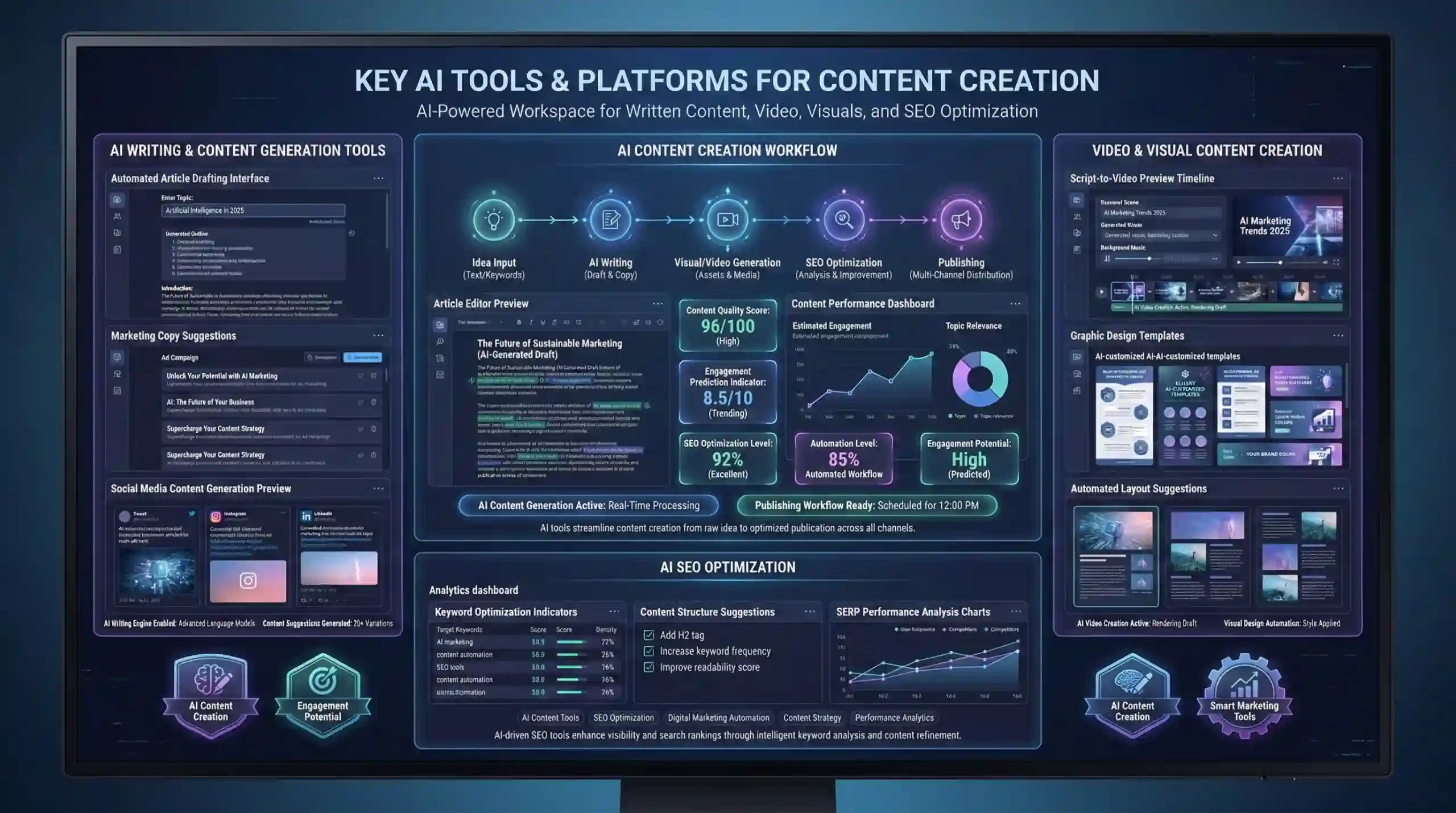
3. Key AI Tools & Platforms for Content Creation
AI Content Generators (GPT Models, Jasper, Copy.ai)
Popular AI content generation platforms utilize large language models to automate content creation. GPT-based tools can draft articles, generate product descriptions, and assist with social media posts. For example, Jasper.ai uses GPT-3 to produce marketing copy tailored to target audiences, significantly enhancing productivity and creativity in digital marketing.
AI-Based Video Creation & Visual Content Generation Tools
Tools like Lumen5 and Synthesia automate video production by transforming scripts into videos with minimal manual editing. Canva’s AI features enable quick graphic design and visual content creation. These platforms leverage AI for scene selection, text-to-video synthesis, and design suggestions, making multimedia content production faster and more accessible.
AI-Powered SEO Optimization Tools
SEO-focused AI tools such as Surfer SEO and MarketMuse analyze content and suggest improvements for higher search engine ranking. They optimize keyword density, content structure, and readability. For example, Surfer SEO examines top-ranking pages and provides actionable insights to craft SEO-optimized content, increasing organic traffic.
4. Content Strategy & AI Integration
AI Content Strategy Development
Integrating AI into content planning involves leveraging data-driven insights for decision-making. Analyzing audience behavior, trends, and competitors using AI tools helps formulate effective content strategies. For instance, identifying trending topics with BuzzSumo can guide blog post ideas aligned with audience interests, ensuring relevance and engagement.
AI Analytics & Data-Driven Content Planning
Analytics platforms like Google Analytics and Hotjar track content performance and user engagement. AI enhances these insights by segmenting audiences, predicting future behaviors, and suggesting new content avenues. Data-driven decision-making ensures resource optimization and tailored content delivery.
Automated Content Scheduling & Personalization
Platforms like Hootsuite and Buffer automate scheduling, optimizing posting times based on audience activity patterns. Personalization engines such as Adobe Target dynamically adjust content presentation to individual user preferences, improving engagement and conversion rates.
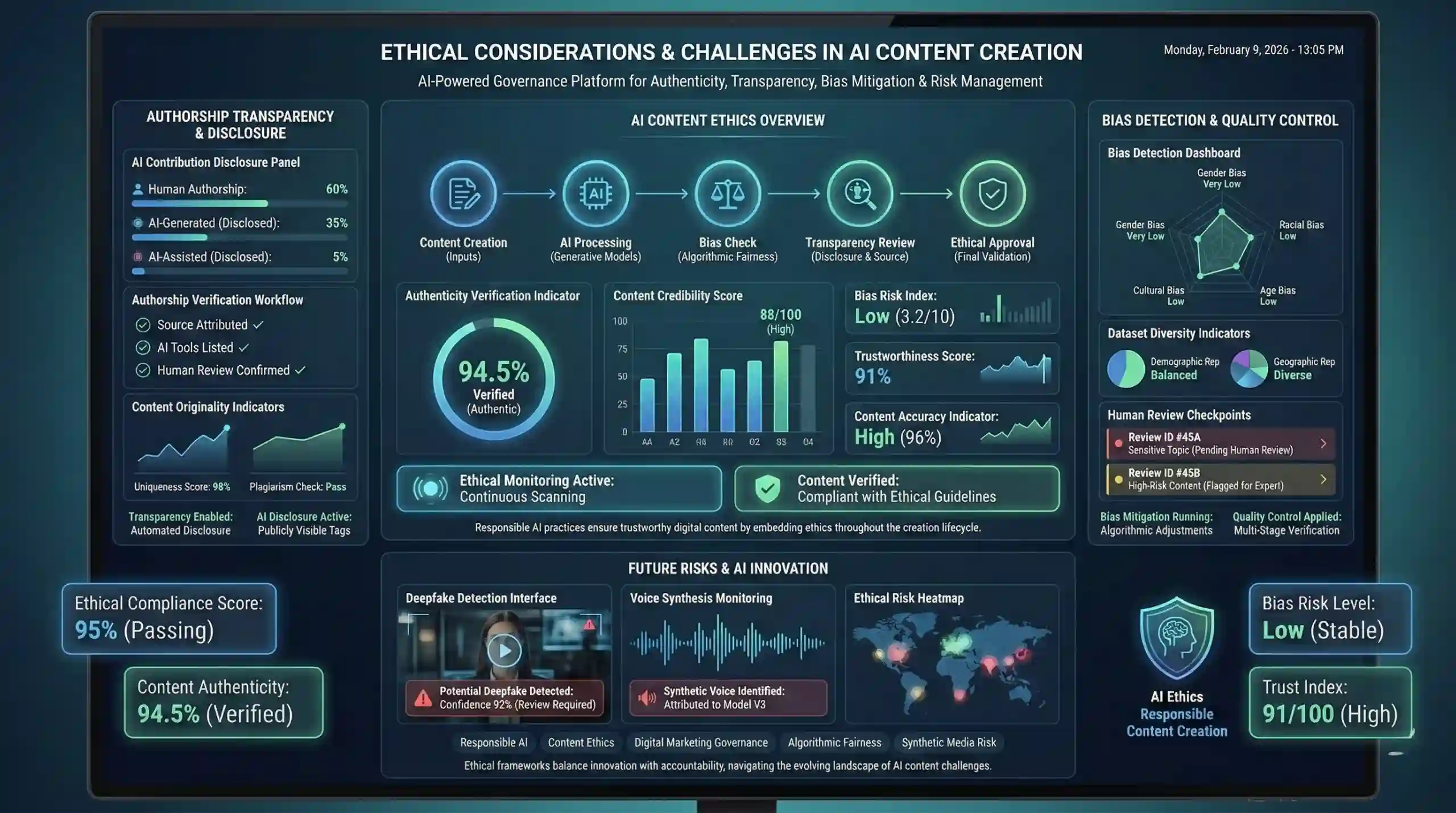
5. Ethical Considerations & Challenges
AI Content Ethics & Authorship Authenticity
The rise of AI-generated content raises questions around authorship, originality, and transparency. Ethical practices involve clearly disclosing AI involvement and ensuring the authenticity of information. For example, misrepresenting AI-generated insights as human-authored can undermine trust and credibility.
Recognizing AI Bias & Quality Control
AI models trained on biased datasets can produce prejudiced or inaccurate content. Implementing quality control measures—such as human review and bias mitigation techniques—is essential to maintain high standards. Regular audits and diverse training data help minimize bias.
Future Implications of AI in Content Creation & Digital Marketing Trends
Advancements in AI, including deepfake media and voice synthesis, offer new creative possibilities yet pose ethical dilemmas. Regulatory frameworks and responsible use are critical to prevent misuse while harnessing AI’s potential for innovation in digital marketing.
6. Practical Applications & Case Studies
Successful AI Content Marketing Campaigns
Case studies reveal that AI-driven personalization boosted user engagement and sales. For example, Netflix’s AI algorithms recommend personalized content, increasing viewer retention and subscription renewals.
Creating AI-Generated Articles, Blogs, & Social Media Posts
Hands-on application involves using AI tools to generate draft content, which is then refined by humans. For instance, using GPT-3 for article outlines that serve as initial drafts significantly accelerates content production workflows.
AI Content Performance Metrics & ROI Analysis
Evaluating success involves KPIs such as click-through rate (CTR), engagement, conversion rate, and return on investment (ROI). Tracking these metrics before and after AI tool implementation measures effectiveness and guides future strategies.
7. Advanced Topics & Future Trends
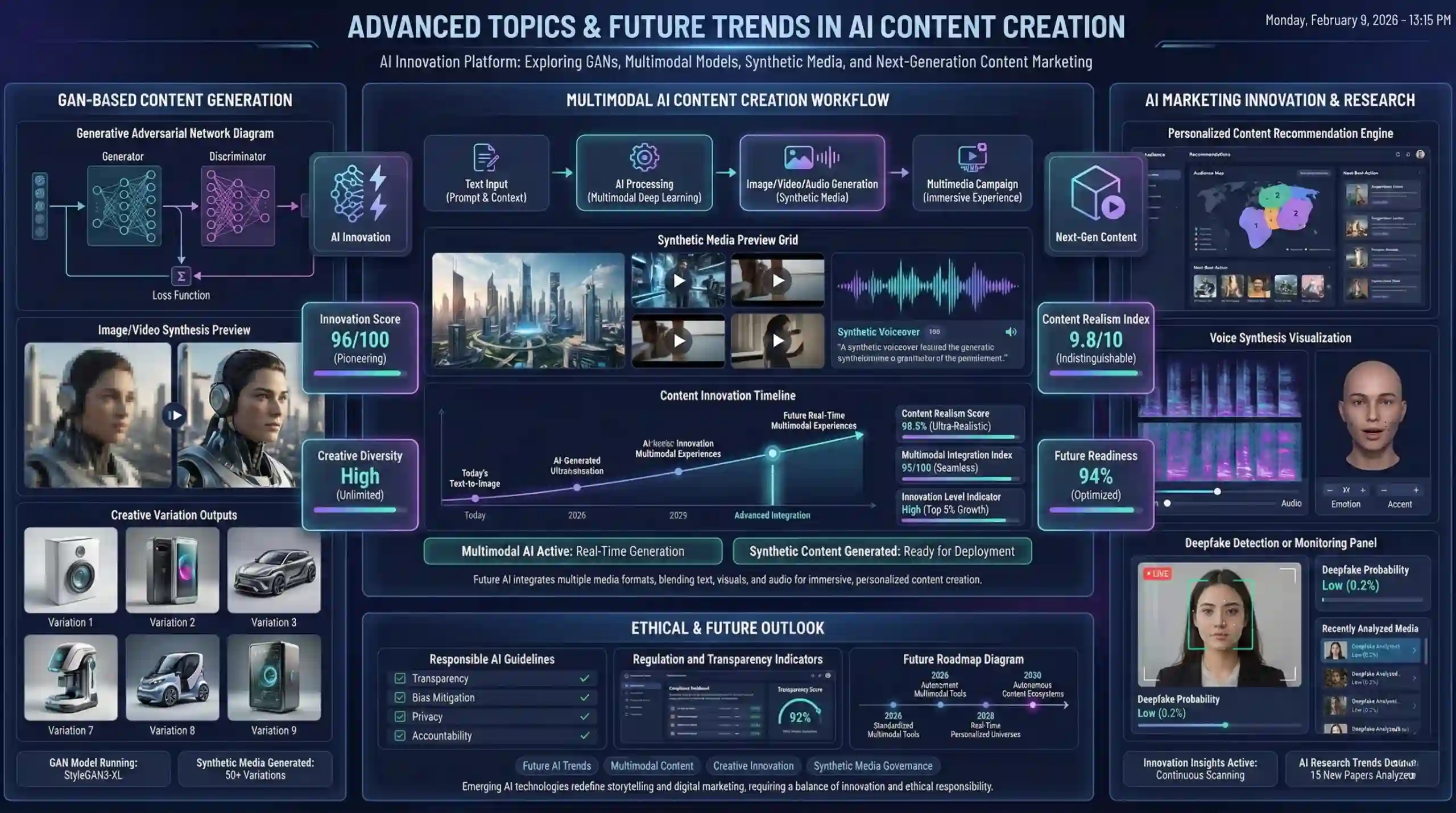
Emerging AI Technologies (GANs) for Content Creation
Generative Adversarial Networks (GANs) produce realistic images, videos, and synthetic media. For example, GANs create deepfake videos or generate lifelike avatars, enabling novel storytelling techniques.
Multimodal AI Models (Text, Images, Video)
Future AI systems will seamlessly integrate multiple media formats, producing immersive experiences. For example, AI models that combine text, images, and videos can craft interactive, multimedia marketing campaigns.
Latest Research & Innovations in AI-Powered Content Marketing
Innovations include AI-driven deepfake content, sophisticated voice synthesis, and personalized content platforms. Researchers are exploring ethical frameworks and regulatory mechanisms to balance innovation with societal responsibility.
Practice Questions
- Explain the difference between supervised and unsupervised learning with examples relevant to content creation.
- Describe how transformers improve natural language processing tasks in AI content generators.
- List three AI tools used for visual content creation and briefly explain their functionalities.
- How can AI analytics tools enhance content strategy development?
- Discuss ethical considerations associated with AI-generated content and ways to address them.
- Provide an example of how AI personalization engines can improve user engagement.
- Write a simple Python code snippet that uses OpenAI’s GPT-3 API to generate a short blog paragraph.
- Analyze the potential risks of using AI-based deepfake media in digital marketing.
- Describe a real-world case where AI improved content marketing ROI.
- How might multimodal AI models transform future content marketing strategies?
Code Output Example (GPT-3 Content Generation)
Suppose the following Python code is used to generate content:
import openai

openai.api_key = 'your-api-key'

response = openai.Completion.create(
  engine='text-davinci-003',
  prompt='Write a brief paragraph on the future of AI in content marketing.',
  max_tokens=100
)

print(response.choices[0].text.strip())
Output:
“The future of AI in content marketing involves increasingly intelligent systems capable of creating personalized, immersive experiences. These systems will leverage multimodal data to deliver tailored content across various media formats, enhancing engagement and efficiency in digital marketing campaigns.”
Study Resources
More Courses
- Social Media Marketing course with Gen AI
- Advance Digital Marketing & SEO course with Gen AI
- Advanced Certificate in Digital Design & Marketing course with Gen AI
- Meta & Google Ads course with Gen AI