
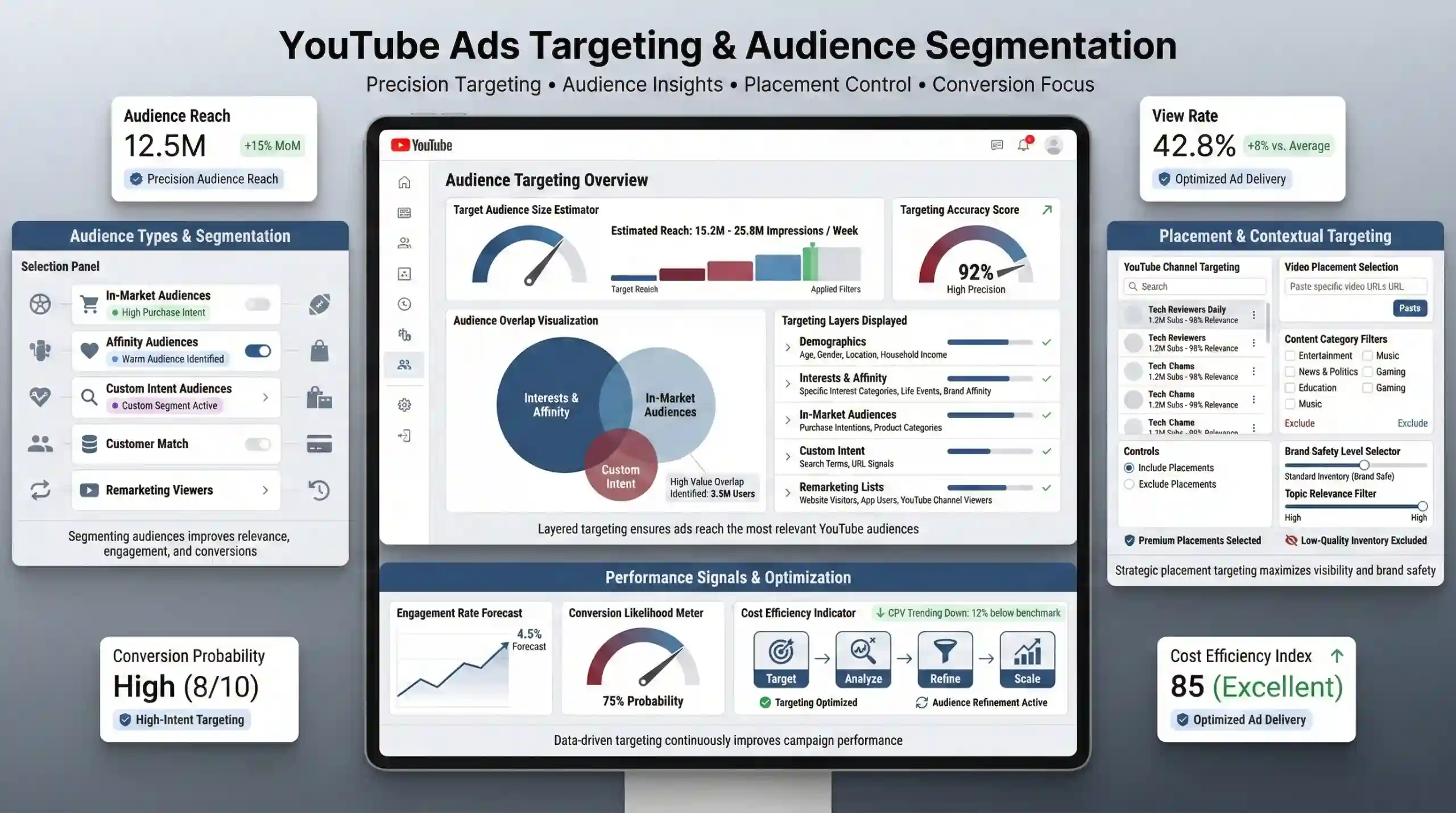
1. Understand Your YouTube Advertising Campaign Objectives
Theoretical Foundations
Defining the primary objectives of a YouTube advertising campaign is fundamental to developing an effective targeting strategy. Specific goals such as brand awareness, lead generation, or conversions shape how audiences are segmented and which targeting options are employed. For example, campaigns aimed at increasing brand exposure typically focus on broad audience reach, whereas conversion-focused campaigns require precise targeting of users more likely to convert.
Identifying your target audience personas involves developing detailed profiles simulating typical viewers. These personas encompass demographics like age, gender, geographic location, interests, and user behaviors. This process ensures that your advertising efforts are aligned with the preferences and behaviors of your ideal customers.
Practical Example
Suppose a new athletic shoe brand wants to increase sales amongst young adults interested in fitness. The objective is conversions, targeting viewers who are already engaging with fitness content on YouTube. The persona is males and females aged 18–30, interested in running, gym workouts, and sports.
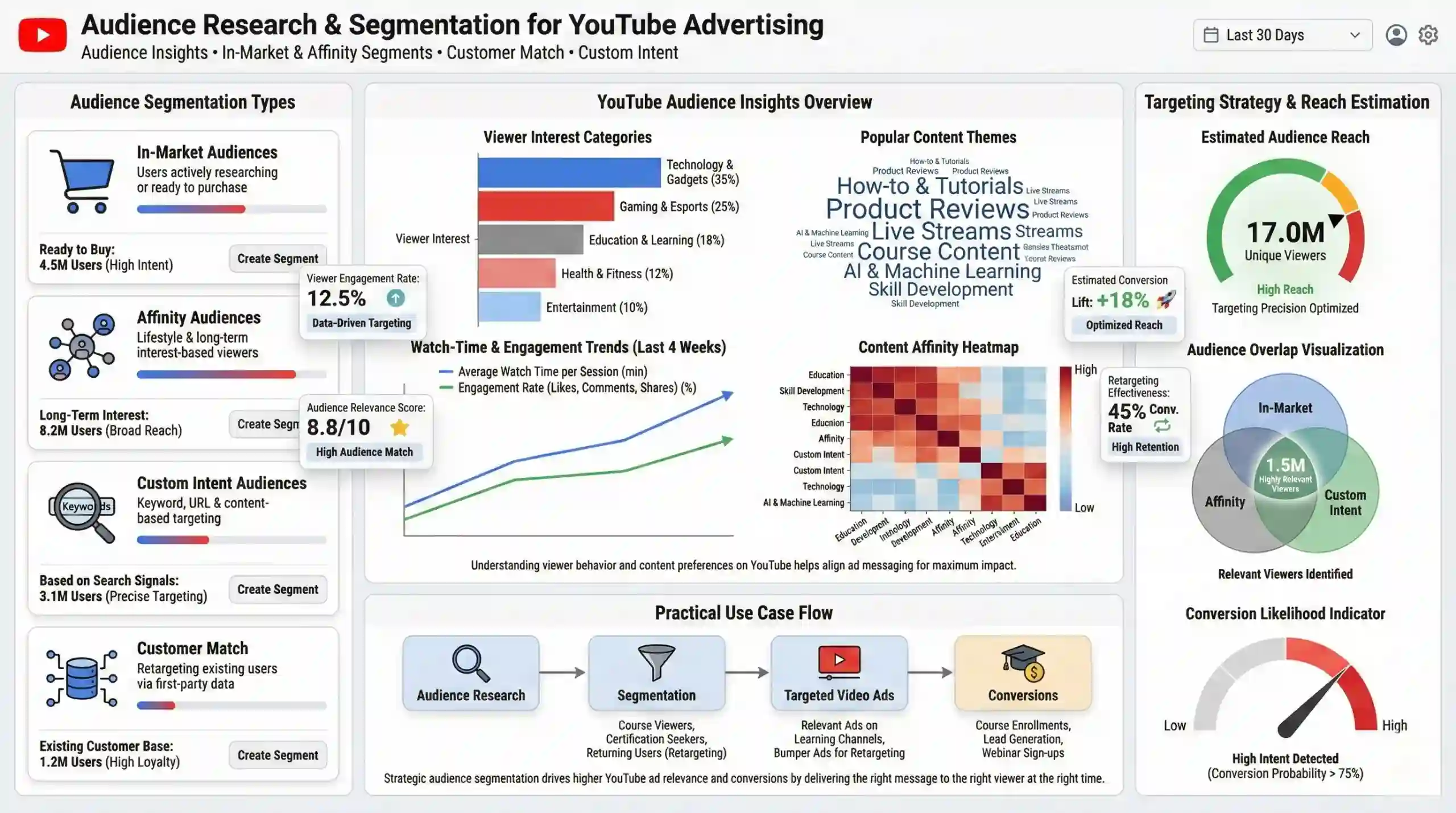
2. Audience Research & Segmentation for YouTube Advertising
YouTube Audience Insights
Using tools such as YouTube Analytics and Google Audience Data allows advertisers to uncover viewer trends, preferences, and content categories popular within a niche. These insights reveal which topics and videos resonate with Targeted audiences, informing content relevance strategies.
Segmentation Strategies
Segmentation employs In-Market Audiences—users actively researching or considering a purchase—and Affinity Audiences, which target users based on broader interests and lifestyles. Customer Match—using existing customer data via email lists—helps retarget known customers, while Custom Intent Audiences enable targeting based on specific keywords, URLs, or content viewed aligned with your conversion goals.
Practical Example
An online education platform can use Customer Match to retarget users who previously enrolled or viewed course pages. Additionally, it can target in-market viewers searching for certification courses and feature videos relevant to their learning interests.
3. Keyword & Contextual Targeting Strategies for YouTube Ads
Keyword Research & Targeting
Effective YouTube keyword research involves identifying high-volume search terms relevant to your niche using tools such as Google Keyword Planner or YouTube Search Suggestions. Incorporating these keywords into your ad targeting improves ad relevance and visibility, resulting in higher engagement rates.
Contextual & Topic Targeting
Matching your ads to videos that are contextually relevant enhances ad effectiveness. Video contextual targeting aligns ads with content themes, ensuring your message reaches interested viewers. Additionally, Topic Targeting allows ad placement on entire categories like “Fitness & Exercise” or “Technology,” broadening reach within relevant themes.
Practical Example
A tech gadget retailer might bid on keywords like “best smartphones 2024” and target tech review videos to ensure the ads appear where technically interested audiences are watching.
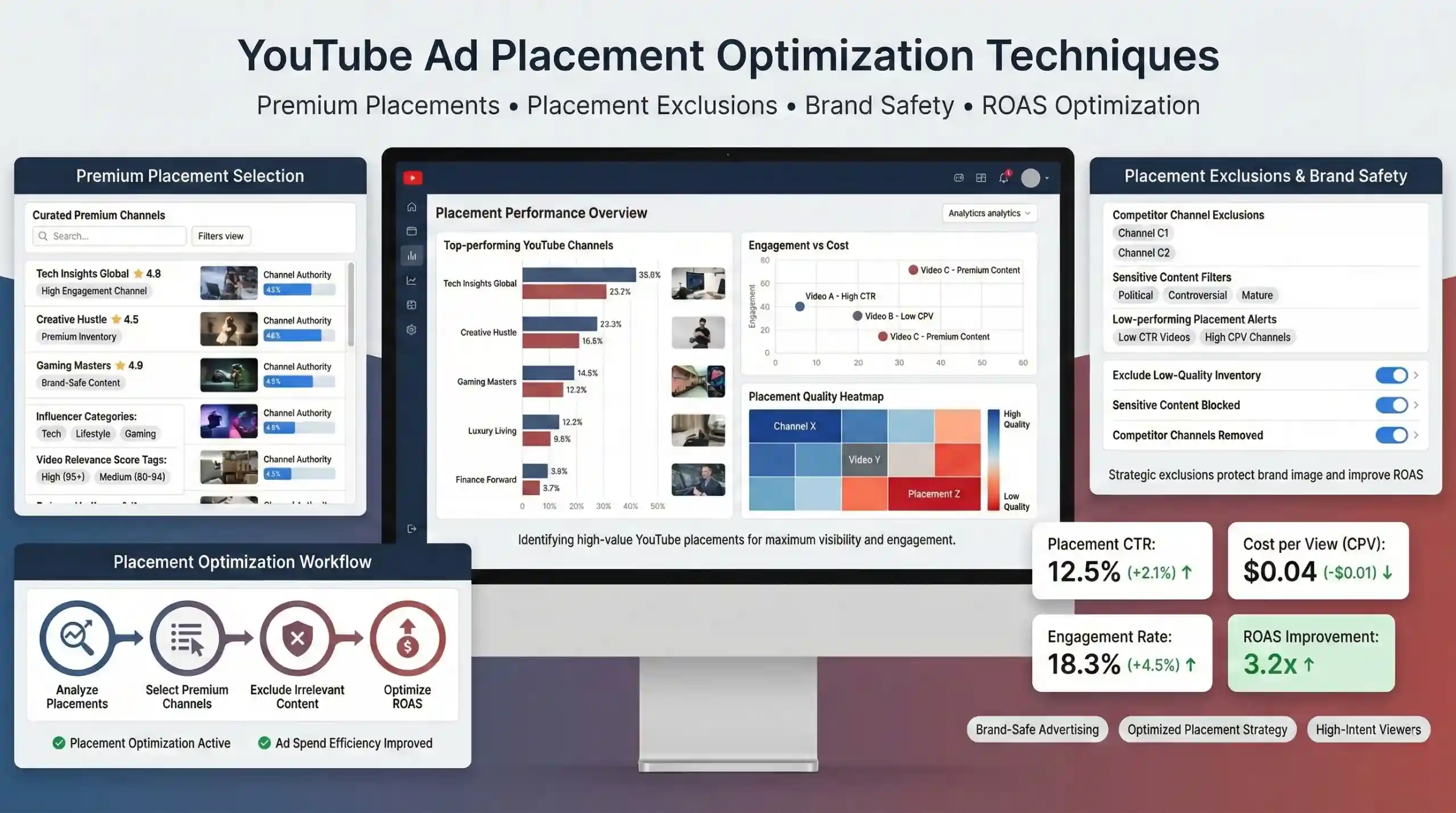
4. YouTube Ad Placement Optimization Techniques
Selecting Premium & Relevant Placements
Prioritizing placements on premium channels and top-performing videos ensures high visibility and engagement. Precise control over placements via the Google Ads Placements UI allows advertisers to focus on valuable channels and prevent wastage on irrelevant or low-quality inventory.
Placement Exclusions
Employing exclusions helps filter out undesired placements—such as competitor channels, sensitive topics, or low-performing videos—maintaining ad relevance and optimizing return on ad spend (ROAS).
Practical Example
A luxury watch brand may exclude placements on news channels or channels with sensitive content, focusing instead on high-end fashion and lifestyle influencers’ channels for better targeting.

5. Demographic & Behavioral Targeting for YouTube Ads
Demographic Targeting
Using YouTube Demographic Targeting, advertisers can specify age ranges, gender, parental status, and household income levels to craft highly tailored campaigns. For example, targeting higher income brackets for luxury products ensures ad relevance.
Behavioral & Life Events Targeting
Behavioral targeting involves reaching users based on their interests, prior content viewing, and online activities. Life Event Targeting elevates precision by focusing on moments like marriage, moving, or childbirth, which can significantly influence purchasing decisions.
Practical Example
A home furniture retailer might target newlyweds or individuals moving homes, based on life event data, to promote moving-in discounts and essential furniture pieces.
6. Remarketing & Custom Audience Strategies on YouTube
Remarketing Campaigns
Remarketing re-engages users who have previously interacted with your content, whether by watching videos, visiting your channel, or clicking ads. This builds familiarity and increases conversion potential.
Video Engagement Retargeting
Focusing on viewers who watched a substantial portion of your videos (e.g., 75% or more) ensures that your remarketing efforts target highly engaged audiences, thereby improving campaign efficiency.
Lookalike Audiences
Creating lookalike or similar audiences based on your highest-value viewers or existing customers helps scale your YouTube ads reach while maintaining relevance.
Practical Example
A fashion retailer retargets viewers who watched a recent product launch video and seeks to reach new users with similar interests using lookalike audiences to expand outreach.
7. Campaign Setup & Optimization for YouTube Advertising Success
Choosing Ad Formats
Select suitable YouTube ad formats based on objectives:
- TrueView: Skippable ads suitable for awareness and engagement.
- Bumper Ads: Short, non-skippable ads ideal for brand reinforcement.
- Discovery Ads: Show up in search results and related videos.
- Masthead: Premium placement for maximum reach.
Continuous Testing & Optimization
Implement A/B testing on audience segments, creatives, and bidding strategies to identify what performs best. Regularly monitor metrics like view rate, engagement, and conversions through YouTube Analytics and Google Ads Reports to refine targeting and creative strategies.
Practical Example
An e-commerce campaign tests targeting based on different age groups and interest categories, adjusting bids and creative messaging based on performance metrics to improve ROI.
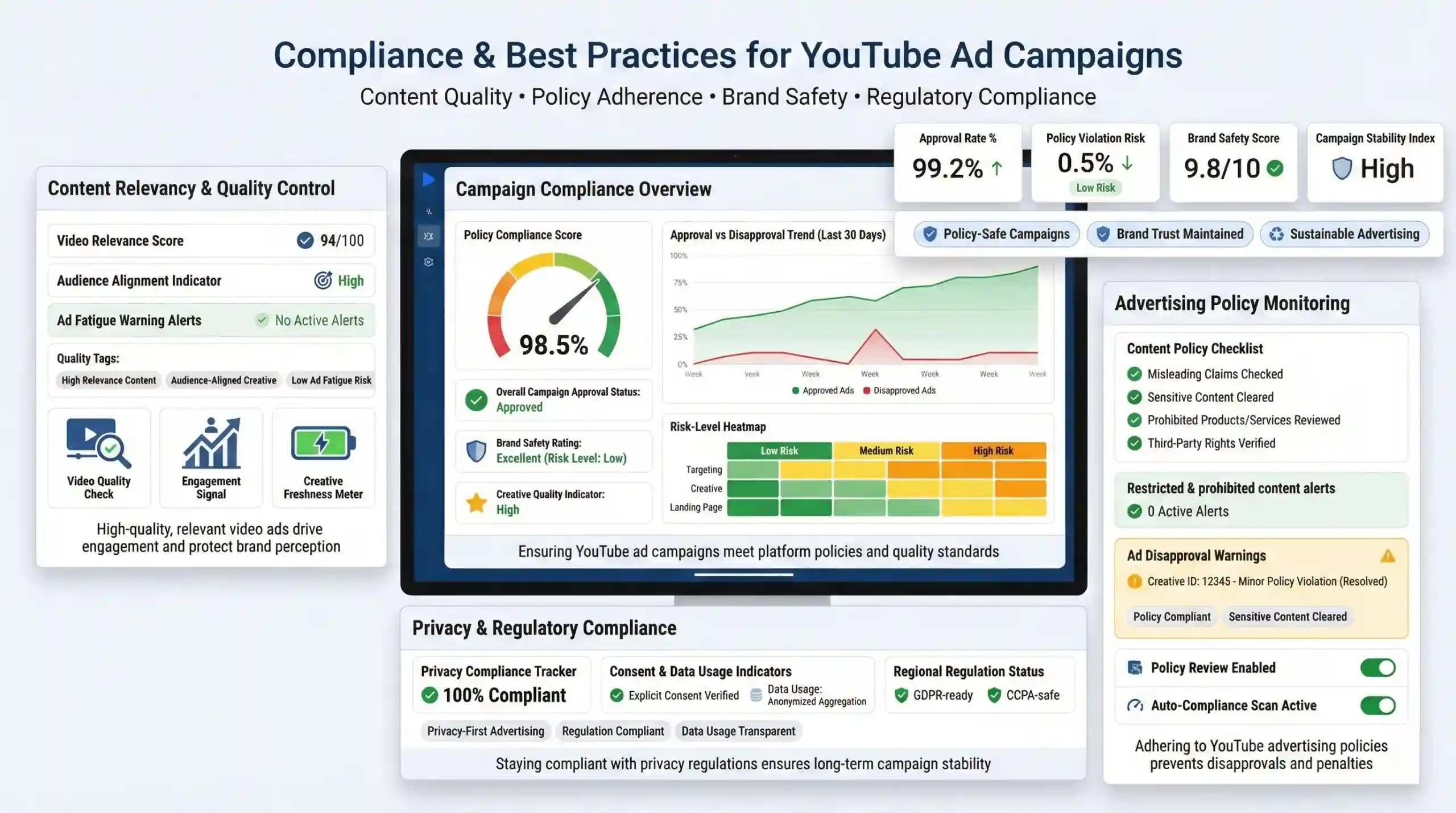
8. Compliance & Best Practices for YouTube Ad Campaigns
Content Relevancy & Quality
Create YouTube video ads that align clearly with audience interests, ensuring high relevance to boost engagement and reduce ad fatigue. Good quality creative supports brand perception and increases ad effectiveness.
Advertising Policies
Adhere to YouTube Advertising Guidelines, avoiding prohibited content such as misleading claims, inappropriate material, or unapproved products to prevent disapproval or penalties.
Staying Informed
Keep updated on YouTube Ads targeting trends, privacy policies like GDPR, and platform changes to ensure ongoing regulatory compliance and campaign efficiency.
Practice Questions with Answers and Outputs
- 1. What is the primary advantage of using In-Market Audiences in YouTube ads?
- Answer: They target users actively researching or intending to purchase, increasing likelihood of conversions.
- 2. Explain the difference between Affinity and In-Market audiences.
- Answer: Affinity audiences are broad interest-based segments, while In-Market audiences are users demonstrating purchase intent.
- 3. Which YouTube ad format is most suitable for brand awareness campaigns with short messages?
- Answer: Bumper Ads (short, non-skippable, 6 seconds).
- 4. How does Keyword Targeting improve YouTube ad relevance?
- Answer: By matching ads to search terms relevant to viewers’ interests, increasing the likelihood they engage with the ad.
- 5. What is the purpose of excluding placements on certain channels or videos?
- Answer: To prevent ads from appearing on irrelevant or undesirable content, ensuring ad relevance and optimal ROI.
- 6. What role does Life Events targeting play in YouTube advertising?
- Answer: It allows targeting users experiencing significant life changes, which can influence buying behaviors.
- 7. Describe how remarketing enhances YouTube advertising campaigns.
- Answer: It re-engages users who previously interacted with your content, increasing conversion chances due to familiarity.
- 8. Why is continuous testing important in YouTube ad campaigns?
- Answer: To optimize targeting, creatives, and bidding strategies based on performance data, improving overall efficiency.
- 9. Give an example of a successful audience segmentation for a health supplements brand.
- Answer: Targeting users aged 25–45 interested in fitness and healthy living, who have watched comparable health videos.
- 10. What should advertisers ensure before launching a YouTube ad campaign?
- Answer: That ad content complies with YouTube advertising policies and is relevant to the targeted audience.
Resources for Further Learning
- Google Ads Help Center
- YouTube Ads & Marketing Resource
- W3Schools – Google Ads Tutorials (search for Google Ads tutorials)
- GeeksforGeeks – Digital Marketing Articles (search for YouTube marketing)
This study guide offers a comprehensive, theory-focused overview of YouTube Ads targeting strategies. It combines foundational concepts with practical applications to empower learners in designing effective and optimized YouTube advertising campaigns while adhering to best practices and compliance standards.
More Courses
- Social Media Marketing course with Gen AI
- Advance Digital Marketing & SEO course with Gen AI
- Advanced Certificate in Digital Design & Marketing course with Gen AI
- Meta & Google Ads course with Gen AI