
1. Understanding AI Content Generation
Fundamentals of AI-Powered Content Creation
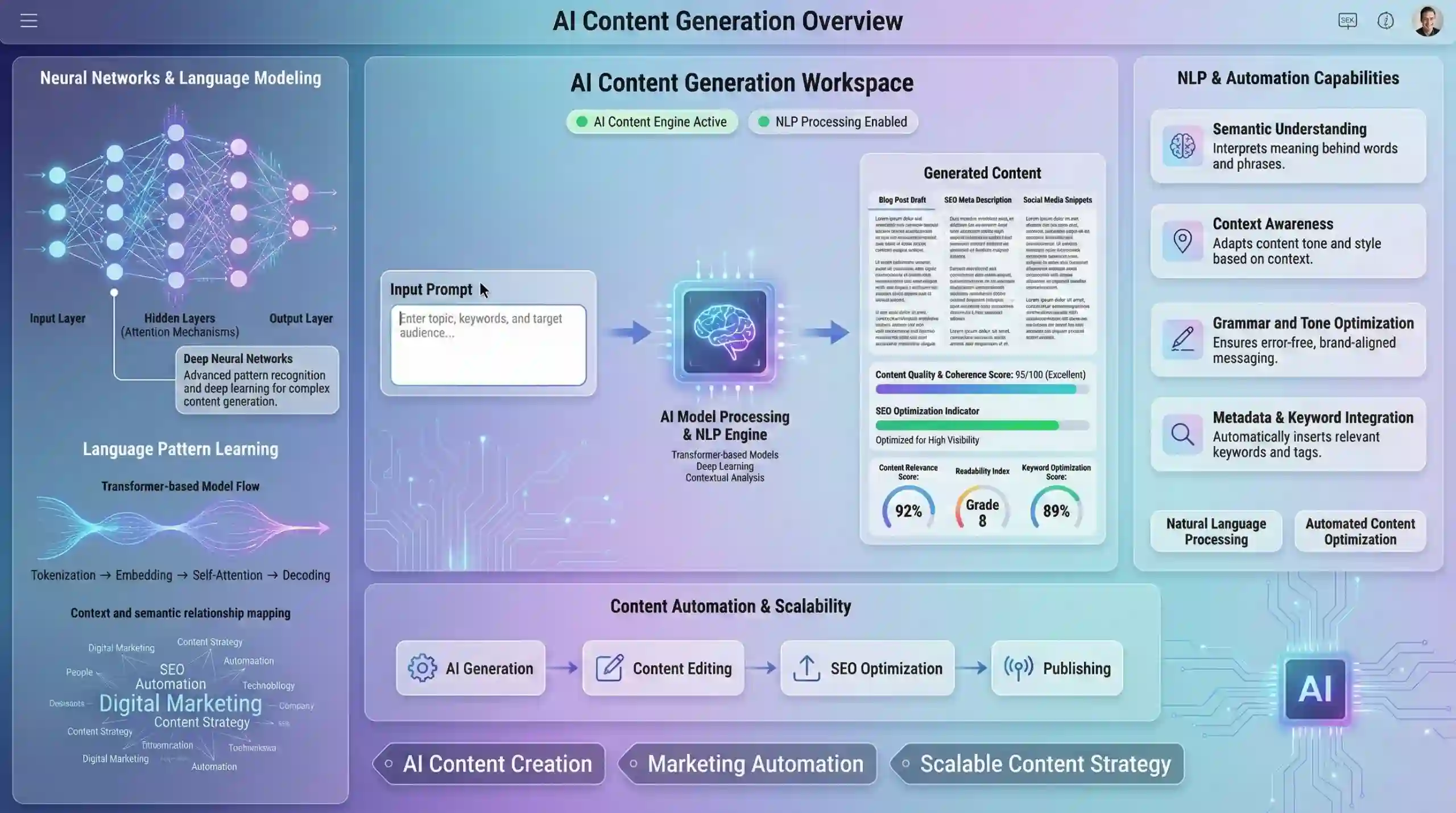
Artificial Intelligence (AI) leverages large language models (LLMs) such as GPT-4 to automatically generate text that mimics human language. These models are trained on vast datasets comprising books, articles, and web content, enabling them to understand language structures, semantics, and context. AI-generated content is extensively used in digital marketing, blogging, and content marketing strategies to produce scalable and consistent text output. For example, AI can craft blog summaries or product descriptions that adhere to specific tone and style parameters, enhancing operational efficiency in content workflows.
Neural Networks and Natural Language Processing (NLP)
Neural networks underpin AI’s ability to process language data. These are computational models inspired by biological neural systems, composed of interconnected nodes or neurons that learn patterns from data. In NLP, deep neural architectures such as transformers facilitate understanding of lexical semantics, syntax, and contextual relationships. Content generated by neural networks is coherent because these models capture long-range dependencies and semantic nuances, which are crucial for producing human-like text.
Role of Artificial Intelligence in Automating Content Development
AI automates content creation by generating, editing, and optimizing text with minimal human intervention. Automation tools, powered by NLP and machine learning, streamline the production of SEO-optimized content—helping in keyword integration, metadata generation, and readability enhancement. This automation supports faster turnaround times, consistent quality, and scalability, critical for digital marketers aiming to meet aggressive SEO strategies and personalized content delivery.
2. Importance of Fine-Tuning in AI Content Optimization
Significance of Fine-Tuning for High-Quality Content
Pre-trained LLMs provide a foundational understanding of language but are generic about specific domains. Fine-tuning involves additional training on domain-specific datasets, aligning AI models toward particular content goals. This customization ensures the generated content is more accurate, relevant, and engaging for targeted audiences, ultimately improving user satisfaction and SEO rankings. For instance, fine-tuned models in healthcare can generate precise medical content, enhancing credibility.
Enhancing Relevance and Specificity with Niche Datasets
Using niche datasets—collections of texts concentrated on specialized topics—sharpens an AI model’s ability to produce expert-level content. This approach improves contextual relevance, allowing the AI to address specific user queries more effectively. For example, training on local SEO data enables the AI to generate geographically relevant content, boosting local search visibility.
Impact on SEO Content Strategy
Fine-tuning enables deeper keyword integration and alignment with user intent, which are vital for improving search engine rankings. Customized models can generate content with appropriate keyword density, structured headings, and meta descriptions aligned with SEO best practices. Consequently, high-quality, niche-focused AI output enhances overall content visibility and page ranking.
3. Data Collection for Effective Fine-Tuning
Gathering High-Quality Training Data
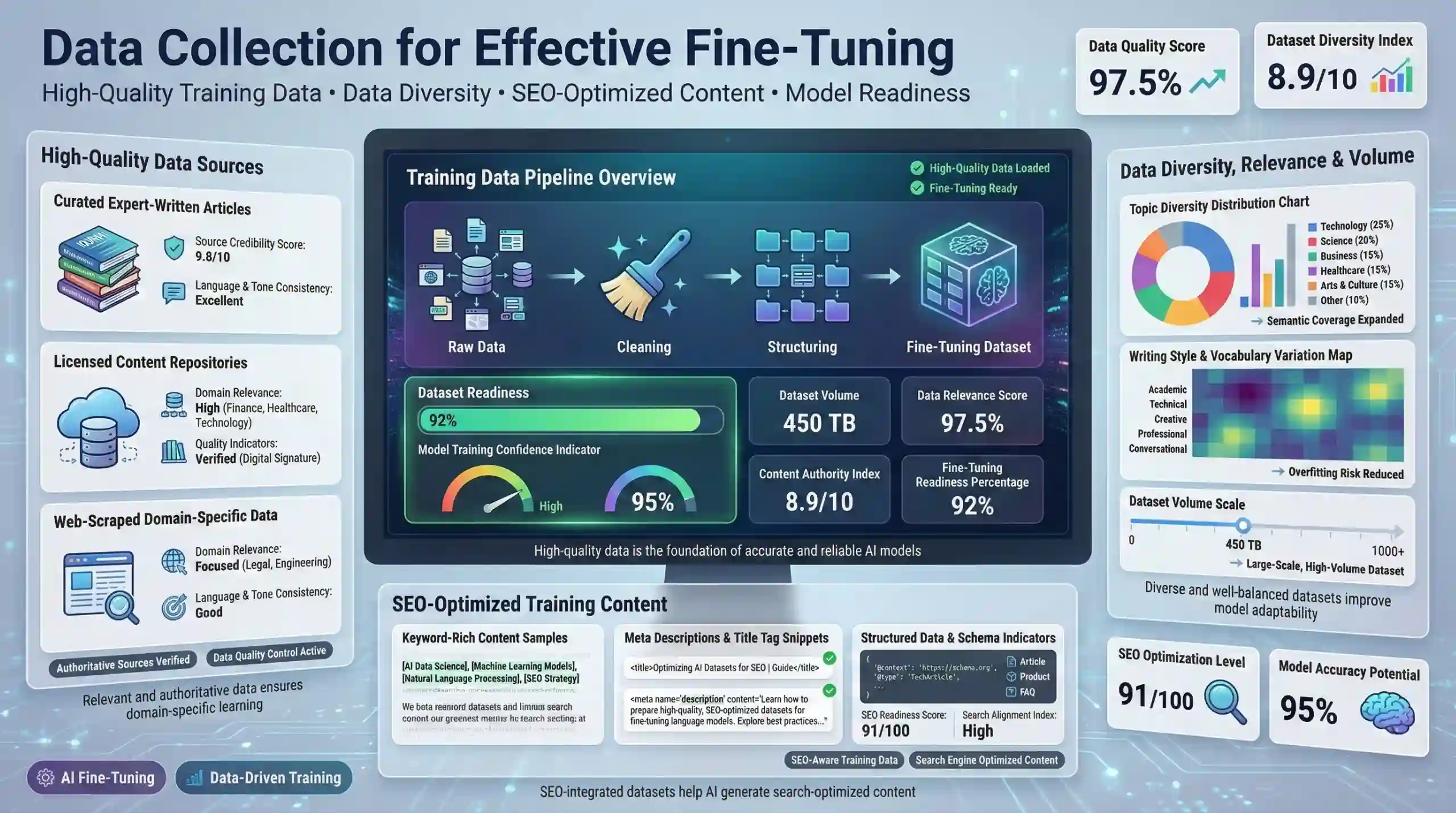
Effective fine-tuning demands datasets that are relevant, authoritative, and well-structured. Sourcing high-quality data can involve web scraping, curated databases, or licensed content that reflects the target domain’s language and style. For example, collecting expert-written articles for a tech blog ensures the AI learns industry-specific terminology and tone, leading to more authoritative output.
Importance of Data Diversity, Relevance, and Volume
Diverse datasets expose the AI to various topics, vocabulary, and writing styles, enhancing its adaptability and broadening semantic understanding. Adequate volume ensures the model captures complex patterns without overfitting to limited data. For instance, incorporating multiple sources like forums, official documents, and reviews can help the AI generate comprehensive content that caters to varied user queries.
Utilizing Content for SEO Optimization
Training data must include SEO elements such as keyword-rich articles, meta descriptions, structured data, and schema markup. Incorporating these elements helps the AI internalize SEO best practices, leading to optimized content that aligns with search engine algorithms and improves organic visibility.
4. Preparing and Annotating Training Data
Data Cleaning and Formatting for SEO Content
Data cleaning involves removing irrelevant or redundant information, correcting grammatical errors, and standardizing formats. Proper formatting includes consistent use of headings, bullet points, and structured data schemas, ensuring the AI effectively learns the appropriate content layout and SEO metadata. For example, stripping HTML tags from web scraped data enhances model understanding.
Annotation and Keyword Optimization
Annotating datasets with relevant SEO metadata—such as target keywords, heading tags, and schema types—guides the AI toward producing search engine optimized output. Keyword tagging helps in emphasizing important terms during training, enabling the AI to naturally incorporate keywords within relevant contexts.
Structured Data and SEO Metadata Integration
Embedding schema markup during data preparation improves the AI’s tendency to generate content with rich snippets and enhanced visibility. Including structured meta tags like <title>, <meta description>, and schema.org annotations ensures generated content is aligned with search engine standards for rich results.
5. Implementing Fine-Tuning Techniques
Frameworks for Model Fine-Tuning
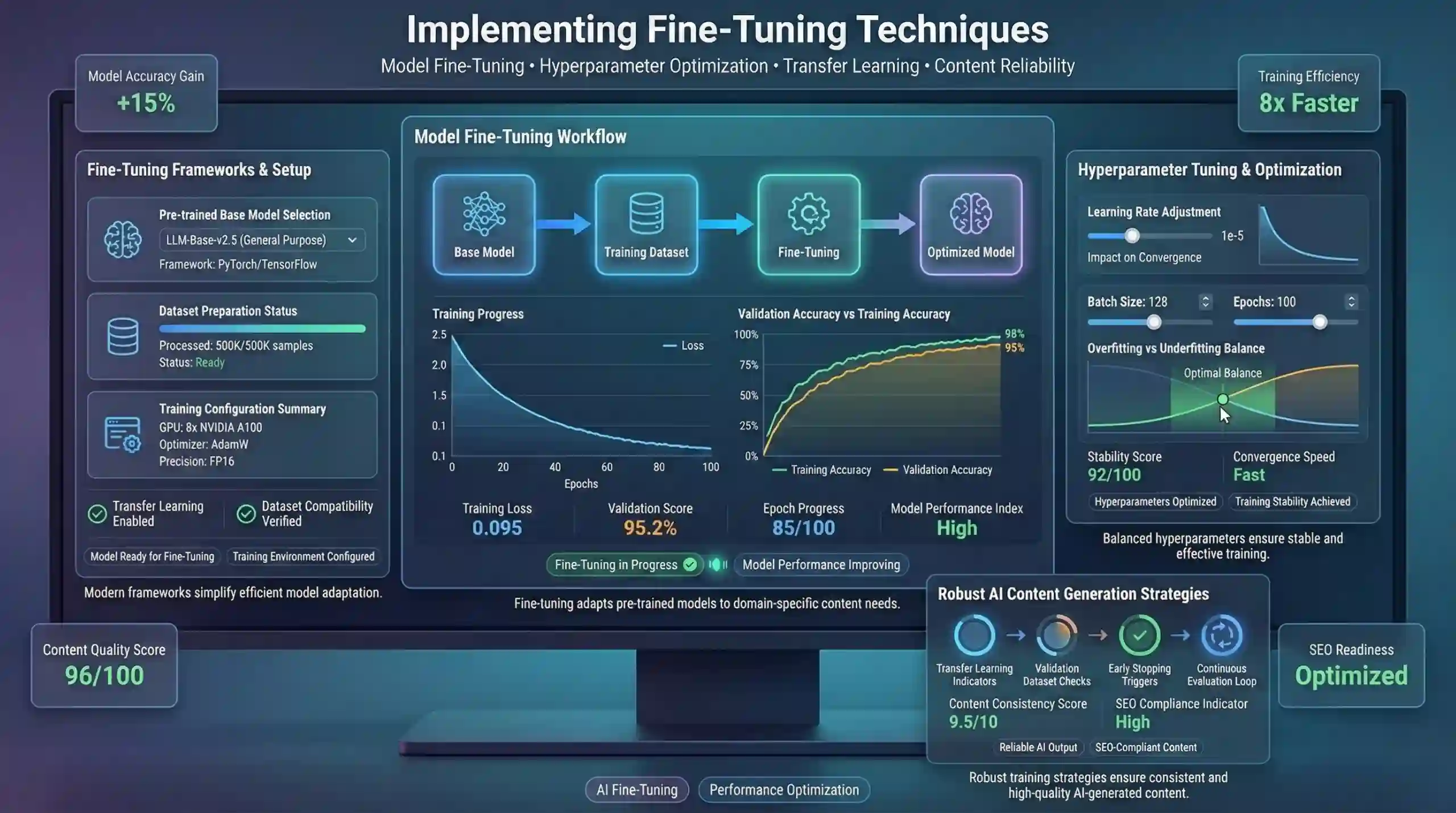
Popular deep learning frameworks such as Hugging Face Transformers and OpenAI’s API provide accessible tools for fine-tuning. These platforms support transfer learning, enabling a pre-trained model to adapt to new data efficiently. Implementation typically involves selecting a base model, preparing a dataset, and running training scripts.
Hyperparameter Tuning and Optimization
Adjusting hyperparameters—including learning rate, batch size, and epochs—is vital for optimal model performance. Proper tuning prevents problems like overfitting or underfitting, leading to more relevant and high-quality content generation. For instance, excessively high learning rates may cause unstable training, while too low may slow convergence.
Strategies for Robust AI Content Generation
Incorporating transfer learning, validation datasets, and early stopping techniques ensures reliable outputs. Regular evaluation during training helps fine-tune the model further, leading to consistent SEO-compliant content that effectively targets user queries.
6. Evaluating Fine-Tuned Content Quality
Assessing Accuracy and Relevance with Metrics
Metrics such as BLEU and ROUGE evaluate how closely generated content matches reference texts. Semantic similarity measures, like cosine similarity over embeddings, assess relevance to user intent. These quantitative metrics help in monitoring and improving content quality.
SEO Content Analysis Tools
Tools like SEMrush, Yoast SEO, and Ahrefs analyze keyword density, readability, meta tags, and page structure. Such tools provide actionable insights into how well AI-generated content adheres to SEO standards, guiding necessary adjustments.
Search Engine Optimization (SEO) Effectiveness
Testing content’s ranking performance on actual search queries validates its SEO effectiveness. Monitoring metrics like click-through rate (CTR), bounce rate, and conversion rate elucidates the content’s real-world impact, informing subsequent fine-tuning iterations.
7. Iterative Optimization and A/B Testing
Continuous Improvement Through Fine-Tuning
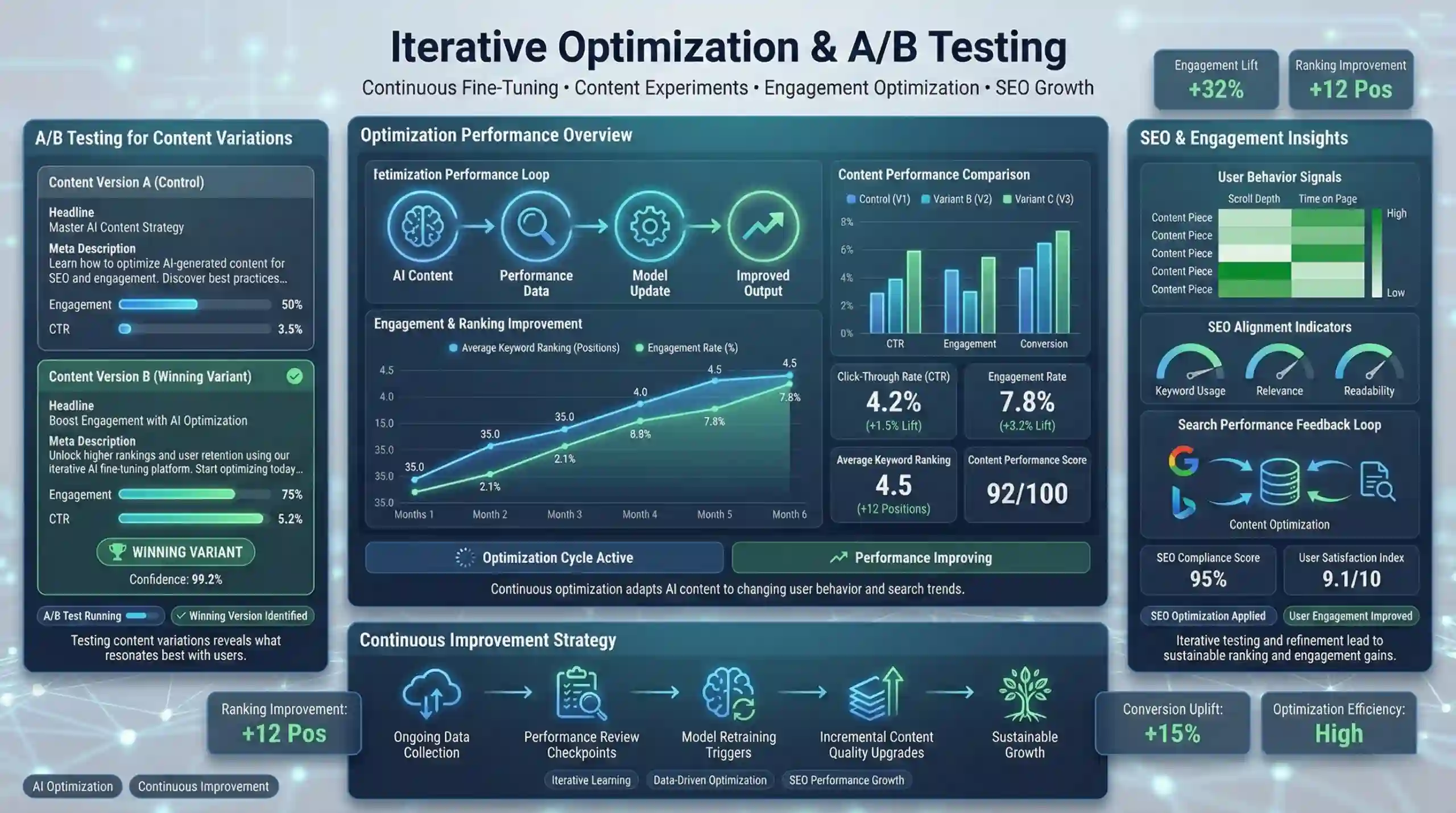
Ongoing data collection and retraining refine the AI models, adapting to evolving search engine algorithms and trends. Iterative processes involve analyzing performance data, identifying weaknesses, and updating training datasets to enhance content quality.
A/B Testing for Content Variations
Deploying multiple versions of AI-generated content allows measurement of engagement and ranking improvements. For example, testing two headlines generated by AI helps determine which yields higher click-through rates, guiding future content optimizations.
Optimizing for Engagement and SEO Rankings
Applying insights gained from testing ensures the content aligns more closely with user preferences and SEO best practices, ultimately achieving higher rankings, increased traffic, and better user engagement.
8. Ensuring Ethical and Responsible AI Content Generation
Addressing Content Bias and Misinformation
Implement safeguards like bias detection algorithms and fact-checking procedures during model training. For example, filtering training data for biased narratives prevents the AI from propagating harmful stereotypes or inaccuracies, maintaining content credibility.
Copyright and Fair Use Compliance
Ensure training data and generated content respect intellectual property rights by sourcing licensed or public domain materials. Proper attribution further aligns with legal and ethical standards, which also favorably impacts SEO.
Responsible AI Usage and SEO Best Practices
Transparency about AI-generated content, avoiding deceptive practices, and following search engine guidelines foster trustworthiness. Ethical content creation supports sustainable SEO strategies and long-term online reputation.
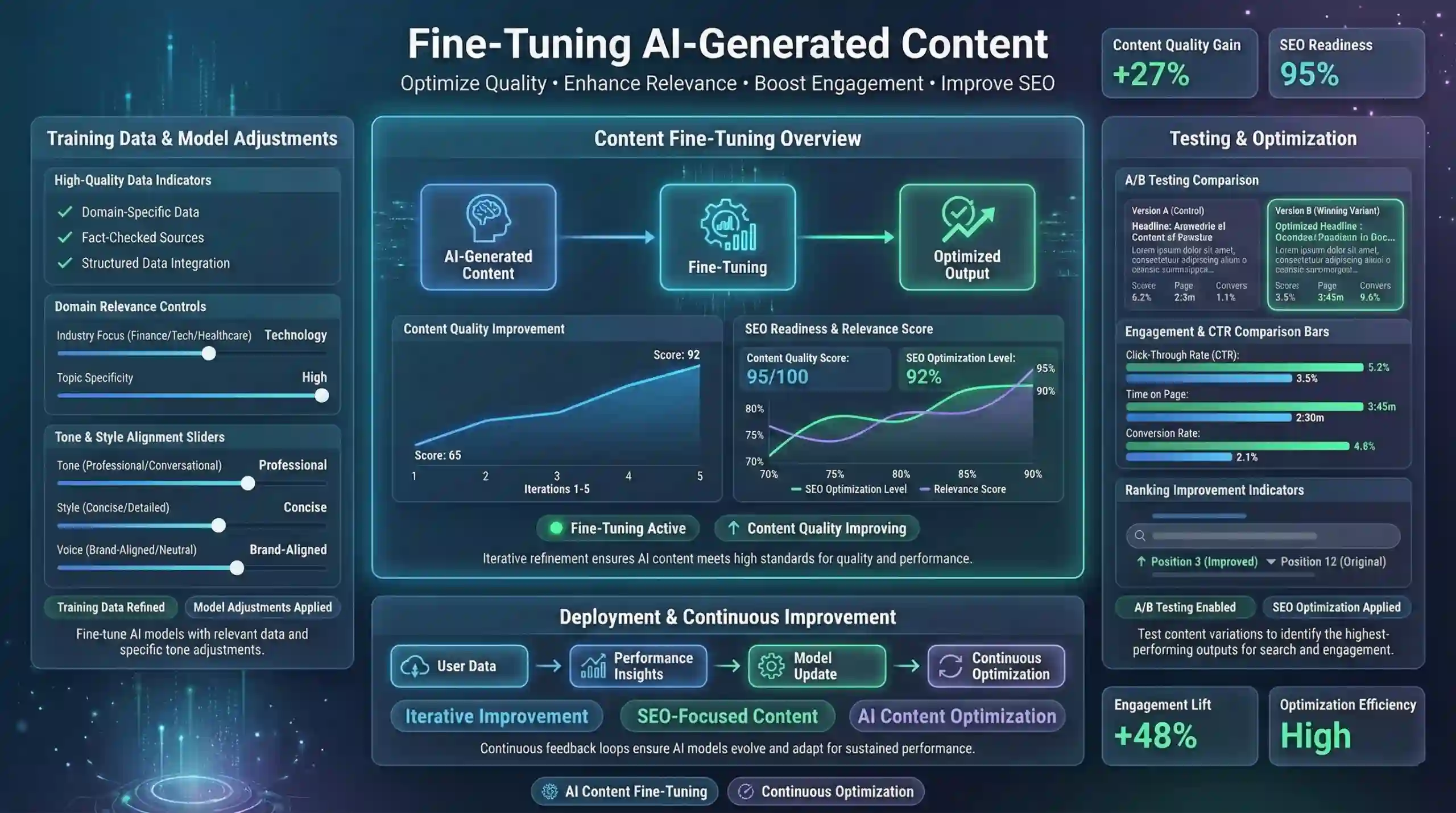
9. Deployment and Monitoring of Fine-Tuned AI Models
Implementing Content Optimization in CMS and Digital Marketing
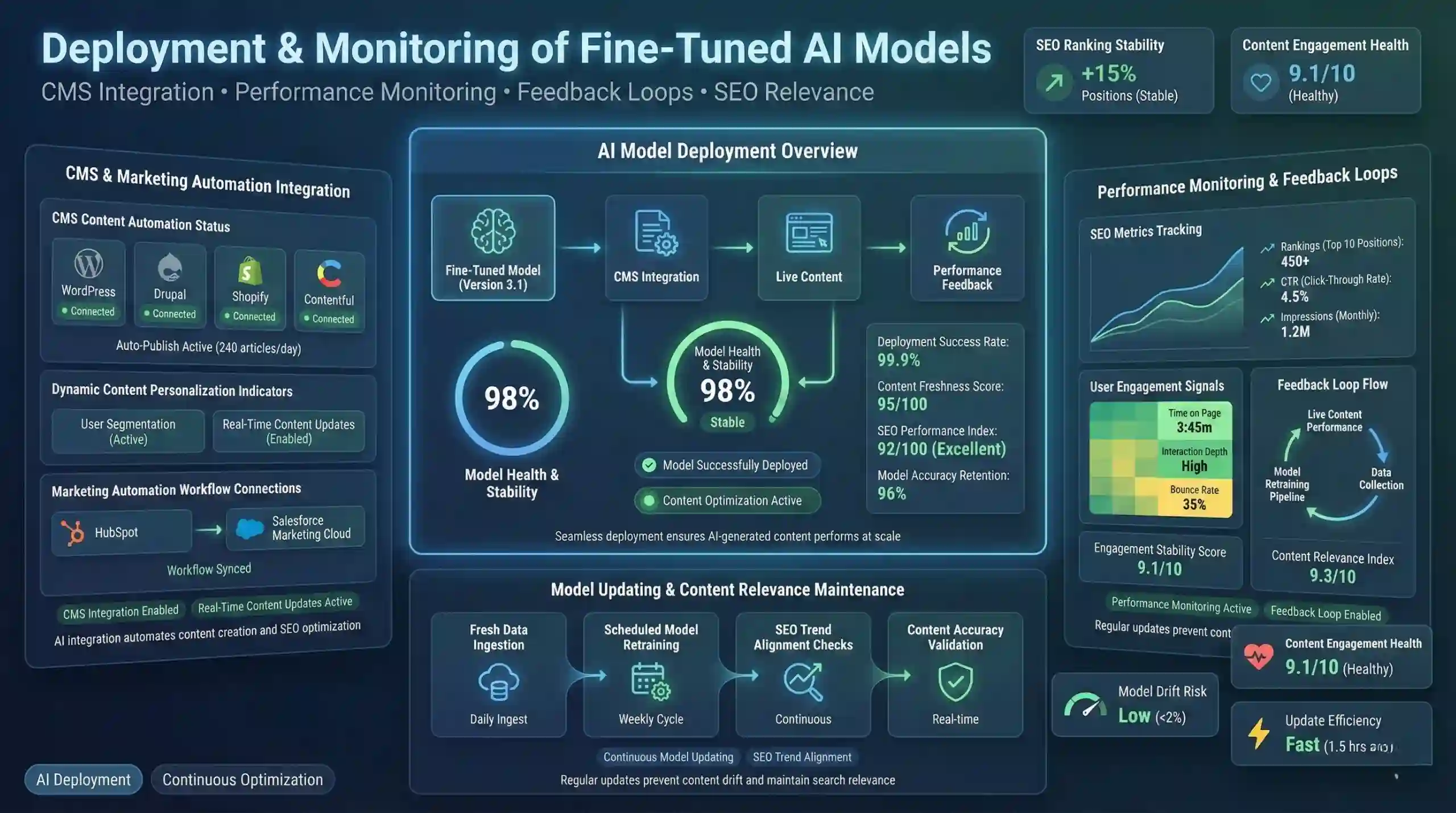
Deploying fine-tuned models into Content Management Systems (CMS) automates content production and updates. Integration with marketing automation tools supports dynamic content personalization and real-time SEO adjustments.
Performance Monitoring and Feedback Loops
Regular tracking of SEO metrics, user engagement, and content relevance helps identify drift or degradation in content quality. Feedback loops involving user interaction data can be utilized to retrain and improve models continuously.
Model Updating and Content Relevancy Maintenance
Frequent retraining with fresh data ensures content remains accurate and aligned with current SEO trends. This iterative updating prevents content obsolescence and sustains high search engine rankings.
10. Future Trends and Advancements in AI Content Fine-Tuning
Emerging Technologies in AI Content Optimization
Advances like multimodal models combine text with images, and zero-shot learning enables generating content about unseen topics. These innovations broaden creative possibilities and enhance SEO strategies in a competitive digital landscape.
Leveraging Automated SEO and AI Content Tools
Automated tools for keyword research, content scoring, and ranking predictions streamline SEO workflows. Integrating these with AI content generation maximizes efficiency, accuracy, and impact.
Adapting Strategies for Next-Generation AI Content
Staying abreast of evolving algorithms, voice search capabilities, and AI-driven personalization techniques ensures content remains relevant and highly discoverable. Future strategies involve continuous learning and adaptation to AI-driven search ecosystems.
Practice Questions
1. Explain the role of neural networks in natural language processing for AI content generation.
Sample output: Neural networks process language data by learning patterns through interconnected neurons, enabling models like transformers to understand context and semantics crucial for generating coherent text.
2. Describe how fine-tuning improves AI-generated content relevance in SEO.
Sample outcome: Fine-tuning on niche datasets allows AI to incorporate targeted keywords naturally, producing content better aligned with specific search queries, improving ranking.
3. List key steps involved in preparing training data for SEO-focused AI content fine-tuning.
Answer: Data collection, cleaning, formatting, annotation with keywords and metadata, and embedding structured data schemas.
4. How does hyperparameter tuning affect the quality of AI content?
Sample explanation: Proper hyperparameter tuning helps balance learning speed and accuracy, reducing overfitting or underfitting, leading to more relevant and consistent output.
5. Provide an example of an SEO-rich dataset annotation.
Sample: Tagging keywords like “digital marketing,” marking headings with <h1>, and including schema markup for articles.
6. What metrics are used to evaluate the relevance and quality of generated content?
Answer: BLEU, ROUGE, semantic similarity scores, keyword density, readability scores, and SEO performance analytics.
7. How can A/B testing improve AI-generated content strategies?
Answer: By comparing different content versions to see which performs better in user engagement and search rankings, enabling continuous optimization.
8. Discuss methods to prevent AI models from propagating bias during content generation.
Answer: Filtering training data for fairness, incorporating bias detection algorithms, and implementing fact-checking during content creation.
9. Why is regular retraining important for maintaining content relevancy?
Answer: To adapt to changing search engine algorithms and user preferences, preventing content from becoming outdated.
10. Describe future technological trends that will influence AI fine-tuning for content optimization.
Sample: Multimodal models (text + images), zero-shot learning, automated SEO tools, and AI personalization algorithms.
More Courses
- Social Media Marketing course with Gen AI
- Advance Digital Marketing & SEO course with Gen AI
- Advanced Certificate in Digital Design & Marketing course with Gen AI
- Meta & Google Ads course with Gen AI