
1. Introduction to AI and SEO
Theoretical Explanation
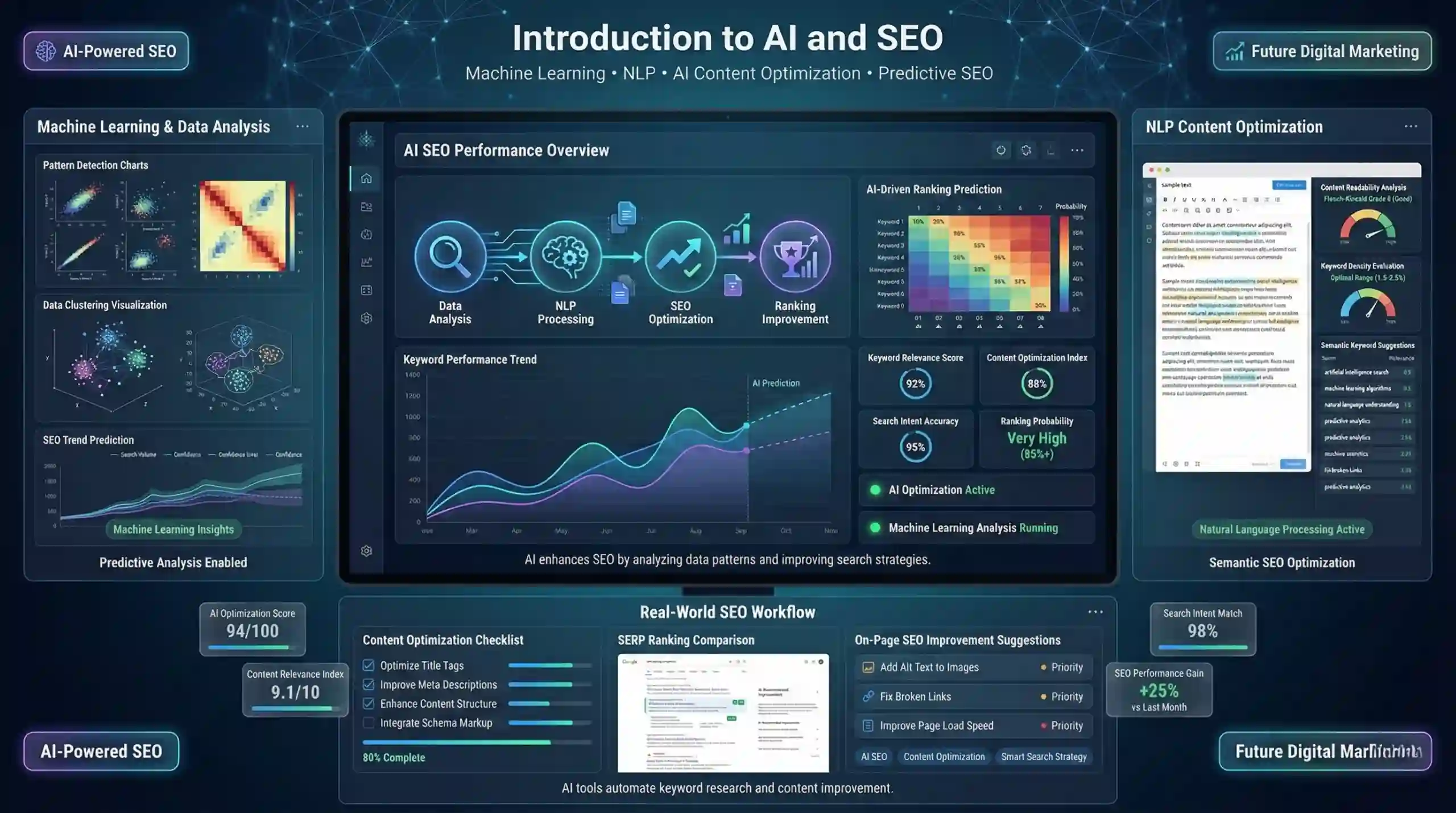
Artificial Intelligence (AI) has revolutionized many sectors, including digital marketing and Search Engine Optimization (SEO). AI encompasses algorithms and systems that enable machines to perform tasks requiring human intelligence, such as learning, reasoning, and problem-solving. In SEO, AI tools automate and enhance tasks like keyword research, content optimization, site analysis, and ranking strategies.
Fundamentally, AI-powered SEO involves algorithms that analyze large datasets to uncover patterns, predict trends, and tailor search strategies. Core AI technologies in SEO include Machine Learning (ML), which enables systems to learn from data and improve over time; and Natural Language Processing (NLP), which helps understand and generate human language, thereby improving content relevance and search interpretation.
Real-World Example:
A content creator uses an AI-powered tool like Surfer SEO to optimize a blog post. The tool analyzes top-ranking pages for a target keyword, identifies keyword density and content structure, and provides suggestions to improve on-page SEO, leading to better search engine rankings.
Practice Questions:
- Define Artificial Intelligence and explain its role in SEO.
- Describe how machine learning impacts keyword optimization in SEO.
- Explain natural language processing and its significance in content relevance.
- Give an example of how AI automation can streamline SEO tasks.
- Identify two AI technologies used in SEO and briefly describe their functions.
2. Fundamentals of SEO
Theoretical Explanation
SEO encompasses strategies to improve a website’s visibility on search engines. It can be categorized into keyword research, on-page SEO, off-page SEO, and technical SEO.
- Keyword Research Using AI: AI-powered tools like Ahrefs and SEMrush facilitate automatic discovery of relevant keywords, analyze search volume, and identify competitor keyword gaps. This process ensures targeting of high-impact keywords with minimal manual effort.
- On-Page SEO: Optimization of meta tags, headers, content structure, and internal linking. AI assists by suggesting relevant keywords, content enhancements, and readability improvements, which enhance relevance and user engagement.
- Off-Page SEO: Building high-quality backlinks and brand mentions influence rankings. AI tools evaluate backlink profiles, highlight authoritative sites for link-building, and detect potential toxic links.
- Technical SEO: Ensuring site health involves improving speed, mobile responsiveness, and crawlability. AI-based site audits identify crawl errors, duplicate content, or schema markup opportunities.
Real-World Example:
A website owner runs an AI-driven site audit using DeepCrawl. The report highlights broken links and slow load times. Implementing AI suggestions fixes these issues, resulting in improved crawlability and higher rankings.
Practice Questions:
- How does AI improve keyword research in SEO?
- List three on-page SEO elements optimized through AI suggestions.
- Describe how AI tools can assist in backlink analysis.
- Why is technical SEO critical for search engine rankings?
- Provide an example of an AI tool used for site audits and its benefits.
3. AI Tools for SEO Automation
Theoretical Explanation
There exists a multitude of AI-powered tools designed to automate SEO tasks:
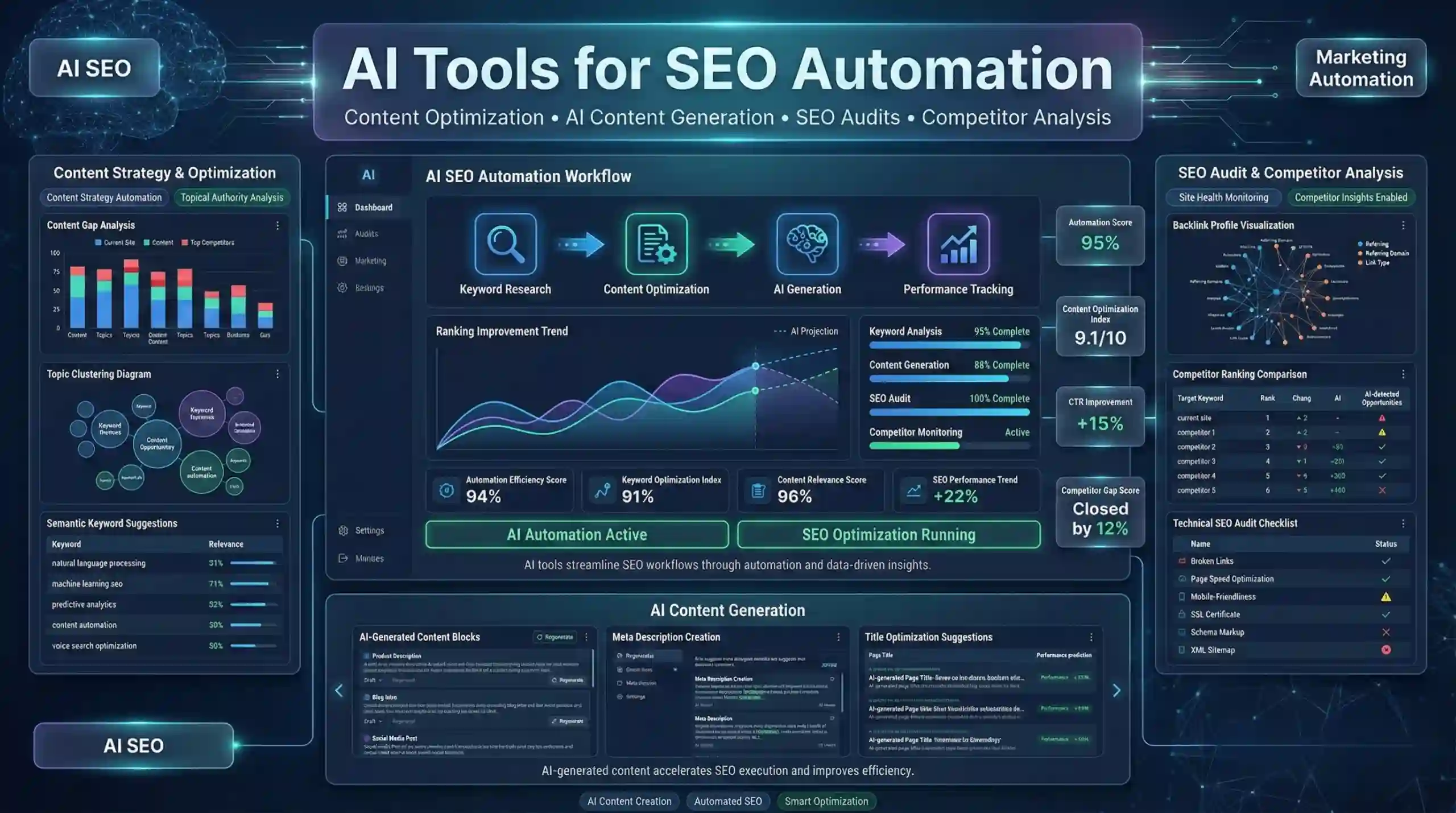
- Content Strategy and Optimization: Tools such as MarketMuse and Surfer SEO automate keyword analysis, content gap identification, and topical relevance, enabling strategic content planning with minimal manual input.
- Content Generation: AI content generators like ChatGPT, Jasper, or Writesonic help create SEO-optimized articles, meta descriptions, and titles rapidly. They analyze target keywords and context to produce high-quality content aligned with search engine algorithms.
- SEO Audits and Competitor Analysis: Tools such as SEMrush and Ahrefs automate site health checks, track rankings, and analyze competitors’ backlink profiles. This allows continuous monitoring and adaptation of SEO strategies.
Real-World Example:
A digital marketer uses Jasper AI to generate a set of SEO-friendly meta descriptions for a batch of blog posts, increasing the click-through rate (CTR) from search results by 15%.
Practice Questions:
- Name three AI tools used for SEO content creation and their primary functions.
- How do AI-driven SEO audits help in maintaining website health?
- Describe the role of AI in analyzing competitor backlinks.
- Give an example of how automated content generation can save time.
- Explain the significance of automation tools in maintaining SEO competitiveness.
4. Content Optimization with AI
Theoretical Explanation
Content optimization ensures that web content aligns with what search engines favor while providing value to users. AI-based content analysis tools evaluate keyword density, readability, and overall relevance.
- AI-Based Content Analysis: Tools like Grammarly and Hemingway evaluate readability and grammatical correctness while AI SEO tools assess keyword usage, semantic relevance, and content structure.
- Semantic Search Techniques: AI facilitates understanding of context and intent through semantic SEO strategies, focusing on topic clusters and related keywords rather than exact keywords. This aligns content more closely with natural language and user intent.
- Automated Meta Data: AI algorithms generate attractive and SEO-friendly meta descriptions and title tags, ensuring consistency and saving time for content creators, ultimately improving click-through rates.
Real-World Example:
Using Clearscope, a content writer receives real-time suggestions for adding semantically related keywords, improving the content’s relevance for voice and semantic searches.
Practice Questions:
- How does AI improve readability and SEO relevance of content?
- What is semantic search and why is it critical in modern SEO?
- Provide an example of an AI tool that generates meta descriptions.
- Explain the importance of topic clusters in AI-driven SEO.
- How can AI improve the effectiveness of content metadata?
5. Link Building Automation
Theoretical Explanation
High-quality backlinks are a cornerstone of off-page SEO. AI simplifies backlink analysis and outreach:
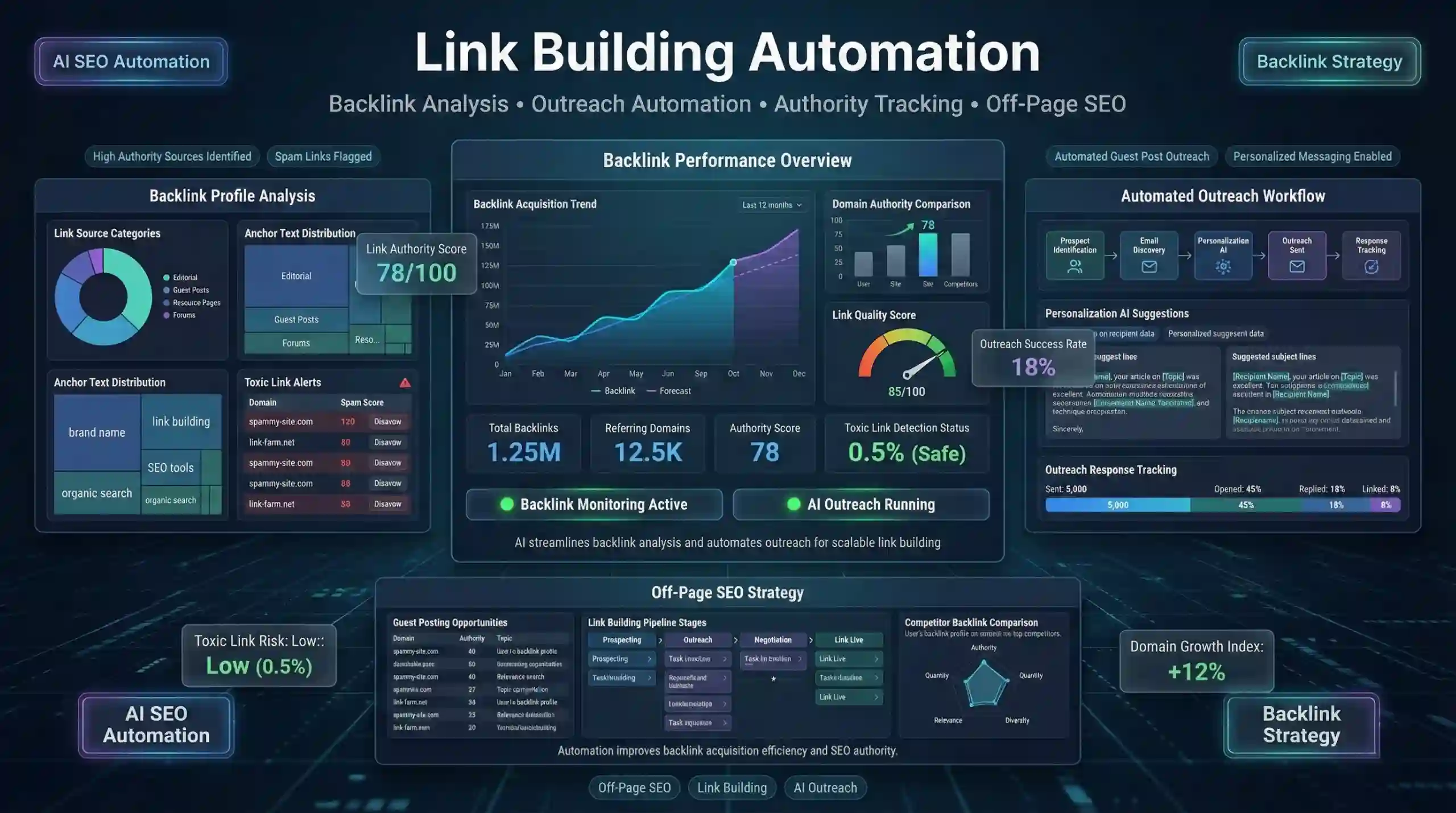
- Backlink Analysis: AI tools evaluate backlink profiles, identify authoritative sources, and detect toxic or spammy links that could harm rankings.
- Outreach Automation: AI-powered outreach platforms automate email campaigns, personalize outreach messages, and track responses, increasing engagement efficiency and backlink acquisition success rates.
Real-World Example:
Using Linkody integrated with AI, an SEO specialist identifies high-authority sites for guest posting and automates outreach with personalized emails, achieving more backlinks in less time.
Practice Questions:
- Describe how AI tools assist in backlink quality assessment.
- Why is toxicity analysis important in backlink profiles?
- Explain how AI automates outreach in link building.
- Illustrate with an example how automated outreach improves efficiency.
- Quote benefits of using AI in backlink management.
6. Technical SEO Automation
Theoretical Explanation
Technical SEO ensures a website’s technical infrastructure aligns with search engine requirements:
- Site Crawling & Error Detection: AI tools like Screaming Frog perform automated site audits, identifying 404 errors, duplicate content, and crawl issues.
- Structured Data & Schema Markup: AI aids in implementing schema markup that helps search engines understand content context (e.g., reviews, products). Automation reduces manual coding efforts.
- Monitoring & Optimization: AI dashboards track site health metrics, traffic trends, and ranking fluctuations, enabling timely interventions and continuous improvements.
Real-World Example:
An automated sitemap update using AI ensures the website’s latest pages are crawled and indexed efficiently, boosting visibility.
Practice Questions:
- How does AI help automate site crawling and error detection?
- What is schema markup, and how does AI facilitate its implementation?
- Describe the significance of monitoring site health for SEO.
- Provide an example of automation in technical SEO.
- Explain how AI tools improve crawl efficiency and error correction.
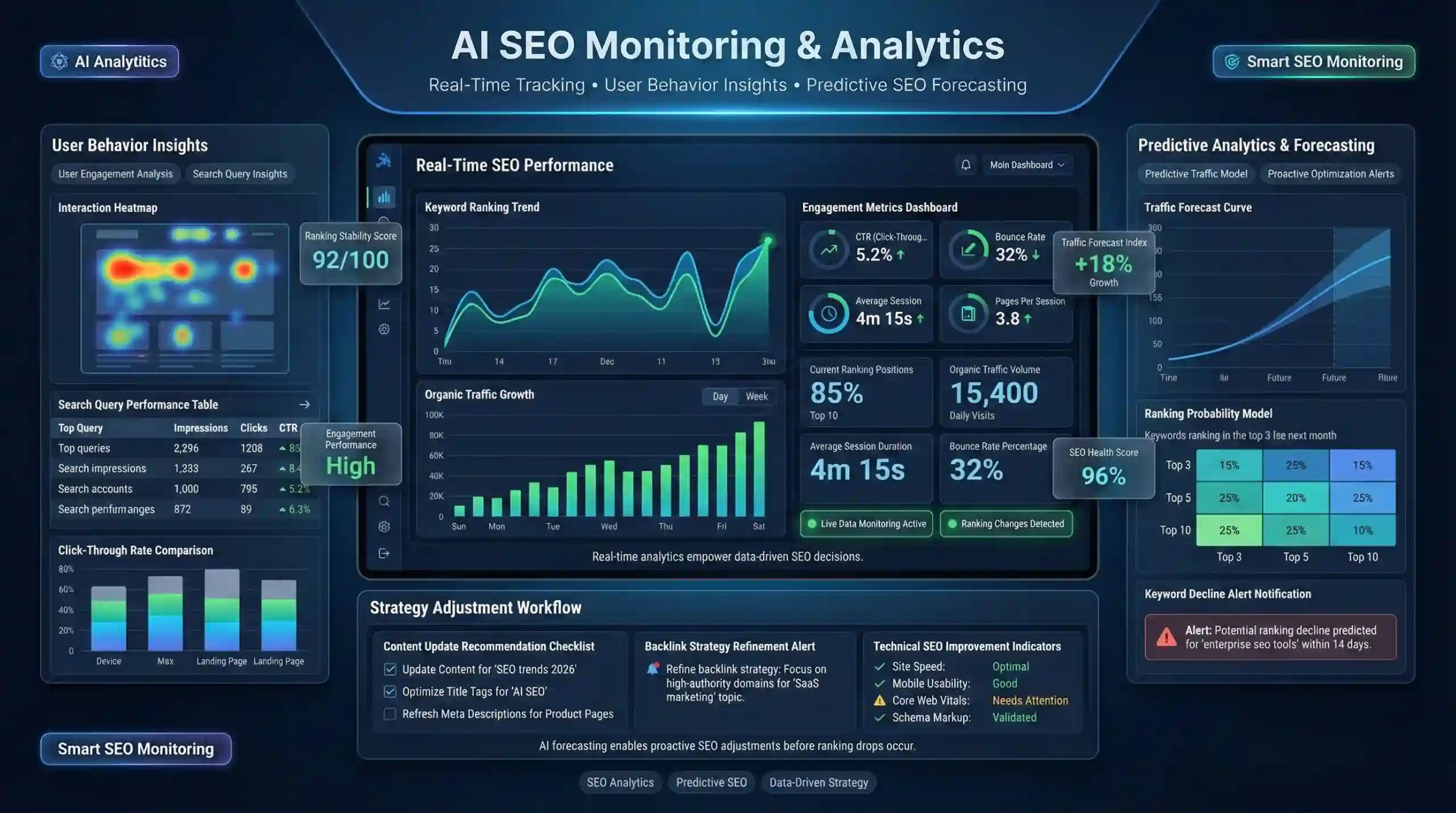
7. Monitoring & Analytics
Theoretical Explanation
Consistent monitoring enables data-driven SEO decisions:
- Real-Time Performance Tracking: AI-integrated analytics tools like Google Data Studio allow real-time tracking of rankings, visitors, and engagement metrics.
- Insights & User Behavior: Analyzing search queries, bounce rates, and session durations helps optimize content and user flow.
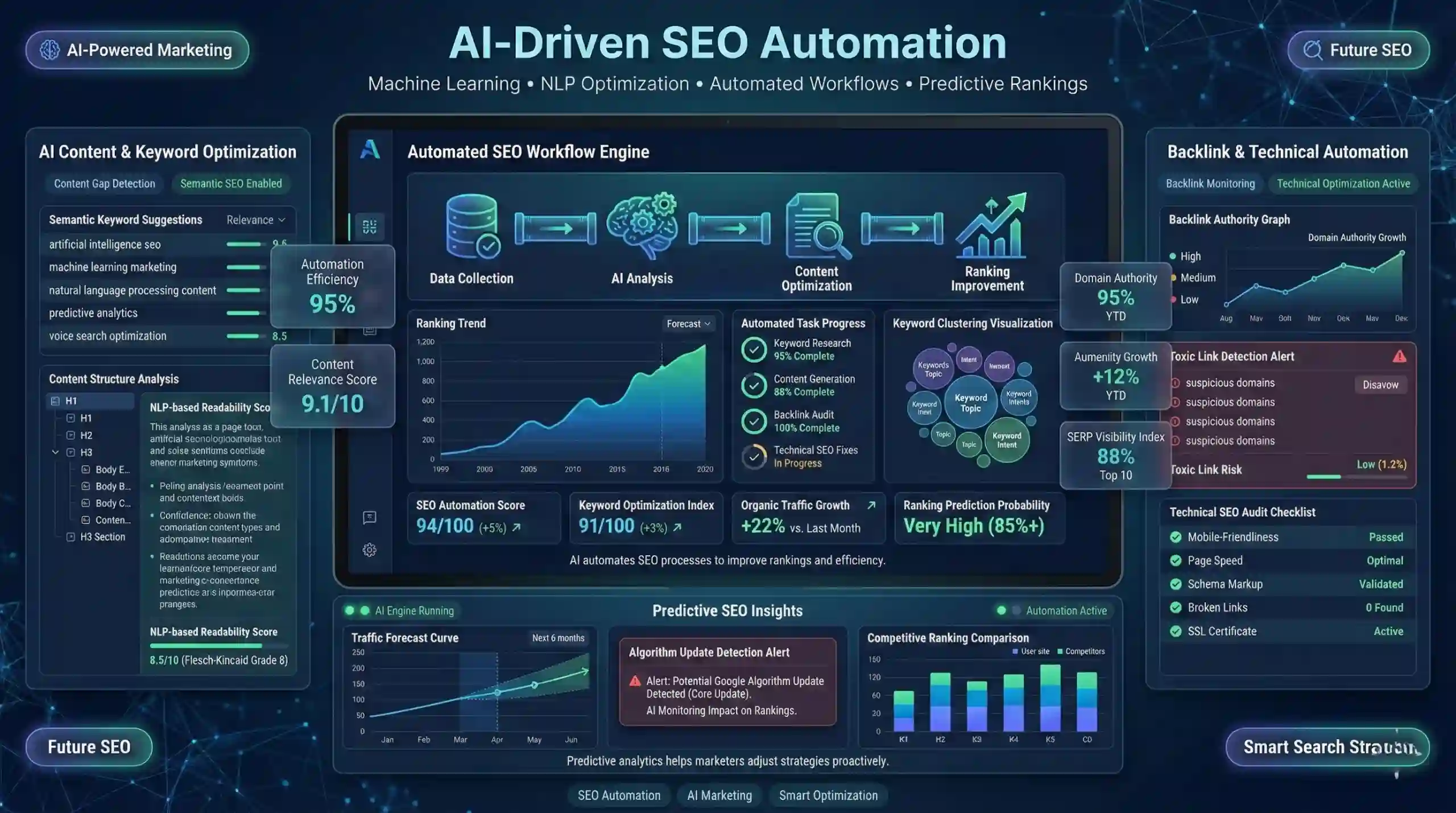
- Predictive Analytics: AI models forecast future traffic trends and rankings, enabling proactive adjustment of strategies before declines occur.
Real-World Example:
Predictive analytics indicate a decline in rankings for a targeted keyword, prompting the SEO team to update the content, which restores rankings swiftly.
Practice Questions:
- How do real-time analytics benefit SEO management?
- What user behavior metrics are valuable for SEO analysis?
- Explain how predictive analytics influence SEO strategy adjustments.
- Describe a scenario where analytics led to content optimization.
- Which AI tools facilitate automated SEO monitoring?
8. Ethical Considerations & Future Trends
Theoretical Explanation
While AI enhances SEO efficiency, ethical practices are vital:
- Responsible Automation: Avoiding black-hat tactics like spammy backlinks or duplicate content ensures long-term sustainability.
- Emerging Trends: Voice search optimization, personalized search experiences, and AI-generated content are shaping future SEO paradigms. Staying updated with algorithms helps leverage AI advances responsibly.
Real-World Example:
Implementing AI-generated content with human oversight ensures compliance with ethical standards and maintains quality.
Practice Questions:
- Why is responsible AI use important in SEO?
- Identify potential risks of unethical automation.
- Discuss future trends like voice search and AI content updates.
- How can SEO practitioners stay updated with AI-driven changes?
- Provide an example of ethical AI use in SEO.
Practice Questions with Output
Question 1:
Use Python to perform simple keyword density analysis on a sample content.
content = "AI-driven SEO automates keyword research and content optimization. AI tools enhance SEO results."
keywords = ["AI", "SEO", "content", "optimization"]
for kw in keywords:
    count = content.lower().split().count(kw.lower())
    print(f"Keyword '{kw}' occurs {count} times.")
Output:
Keyword 'AI' occurs 2 times.
Keyword 'SEO' occurs 1 times.
Keyword 'content' occurs 1 times.
Keyword 'optimization' occurs 1 times.
Question 2:
Explain with an example how AI improves the accuracy of search ranking predictions.
Answer: AI models trained on historical search data can forecast future search trends. For example, a machine learning model predicts that a spike in searches for “voice search SEO” will occur within two weeks, allowing proactive optimization.
Resources and Study Links
More Courses
- Social Media Marketing course with Gen AI
- Advance Digital Marketing & SEO course with Gen AI
- Advanced Certificate in Digital Design & Marketing course with Gen AI
- Meta & Google Ads course with Gen AI