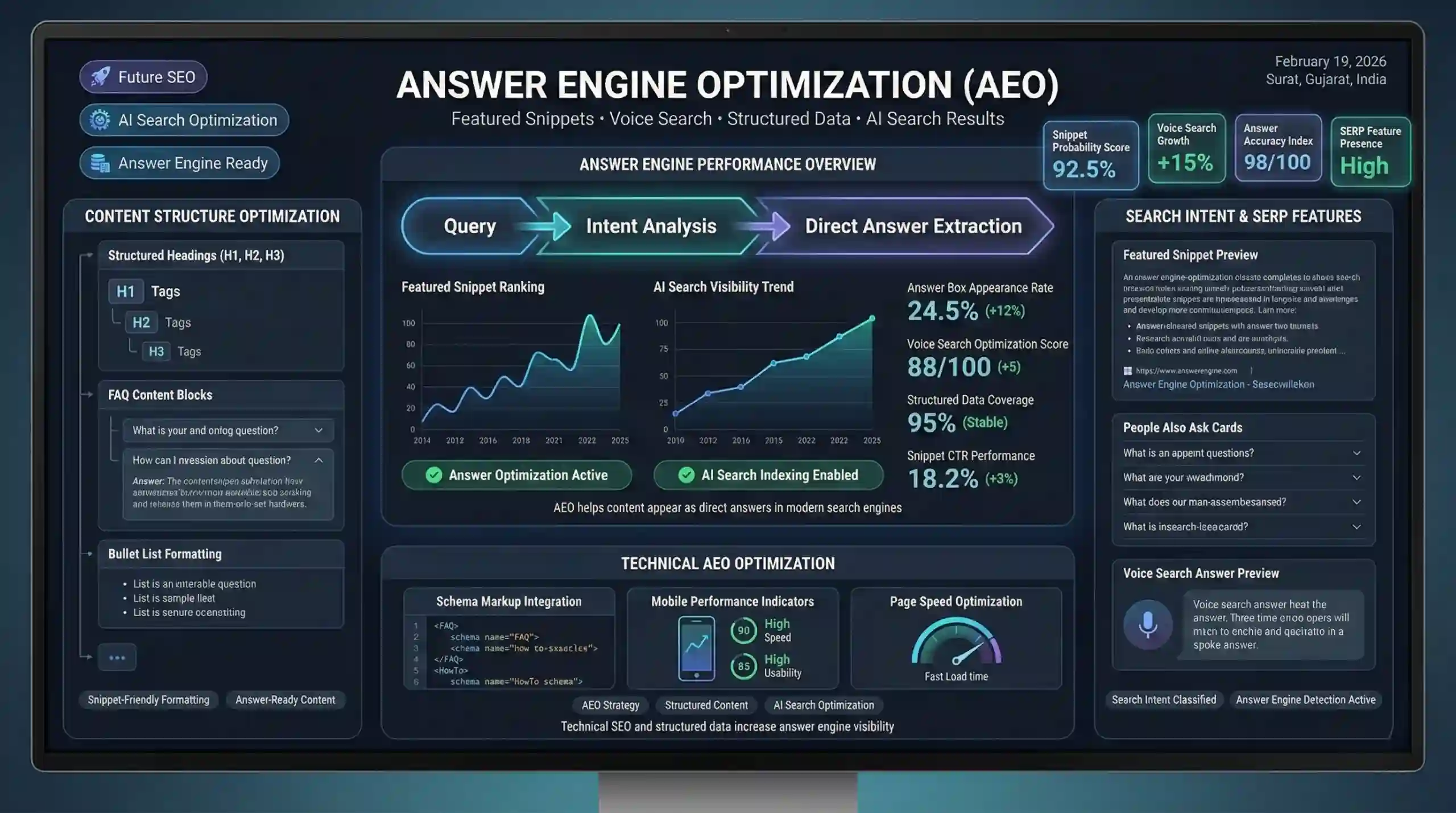
1. Introduction to Answer Engine Optimization (AEO)
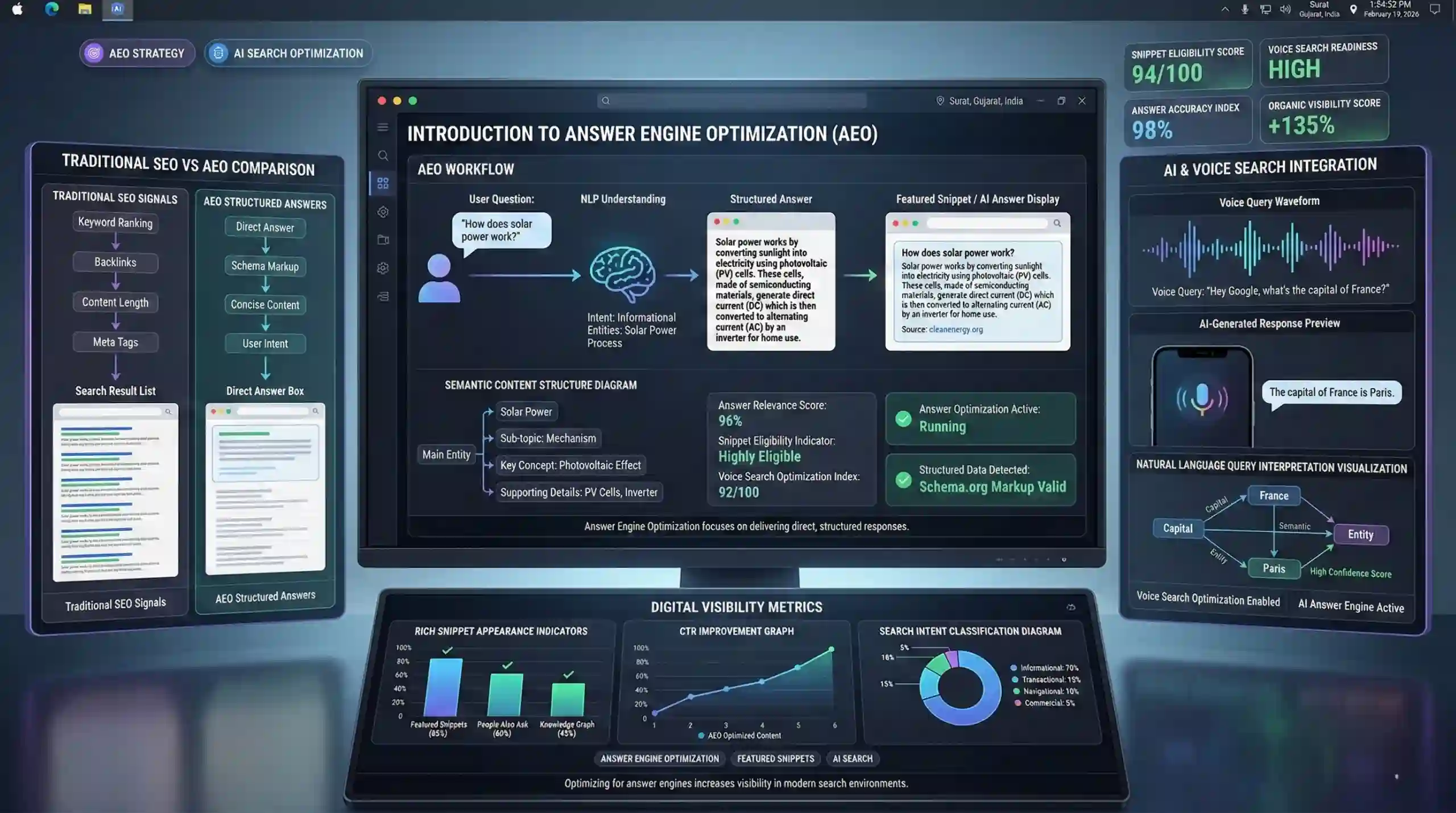
Understanding AEO and Its Difference from Traditional SEO
Answer Engine Optimization (AEO) is a distinct subset of Search Engine Optimization aimed at enhancing a website’s visibility in answer engines such as Google’s featured snippets, voice assistants, and AI-driven platforms. Traditional SEO focuses on improving rankings for specific keywords to attract organic traffic, often through keyword density, backlinks, and site authority. In contrast, AEO concentrates on structuring content to directly answer queries, thereby increasing the chances of being highlighted in answer boxes, voice search results, and rich snippets.
Real-World Example: A blog post optimized for AEO might directly answer “How to tie a tie?” in the first paragraph, increasing the likelihood that Google displays it as a featured snippet for this query.
Evolution of Search Engines into Answer Engines
Initially, search engines relied heavily on keyword matching and backlink profiles to determine rankings. Over time, advancements in artificial intelligence (AI), natural language processing (NLP), and machine learning have led search engines to evolve into answer engines capable of understanding context and intent. These platforms now deliver direct responses rather than merely listing links, shifting the focus from traditional SEO to Answer Engine Optimization.
Importance of AEO in Digital Visibility
AEO enhances visibility by positioning content directly in answer boxes, voice responses, or rich snippets—features that capture user attention and foster higher click-through rates. This is crucial in a competitive digital environment where users increasingly prefer quick, concise, and accurate information. Mastering AEO allows brands and content creators to secure a strategic advantage in organic search and voice search markets.
2. Keyword Research for Answer Optimization
Focus on Long-Tail and Question-Based Keywords
Effective AEO begins with identifying questions and long-tail keywords that users frequently type in conversational or natural language. These keywords often resemble the way people speak, such as “What is SEO for beginners?” or “How do I bake a chocolate cake?” Long-tail keywords are less competitive, more specific, and tend to generate relevant, answer-ready traffic.
Practical Example: Instead of targeting “SEO,” focusing on “How to do keyword research for SEO?” increases the probability of appearing as a featured snippet for detailed guides.
Tools for Finding Answer-Driven Keywords
Tools like Google Keyword Planner, SEMrush, Ahrefs, and Answer the Public help uncover common questions and search queries. For instance, Answer the Public visualizes questions related to a seed keyword, providing insights into what users are asking.
Align Content with Search Intent
Understanding whether a query is informational, navigational, transactional, or answer-seeking enables content to be tailored accordingly to meet user expectations. For answer engine optimization, prioritizing informational and question-based queries ensures your content provides direct, concise answers that could feature in answer boxes.
Practice: If the user’s intent is to find a quick how-to, then content should prioritize step-by-step instructions in a clear manner.
3. Understanding User Intent and Search Behavior
Classify Search Queries
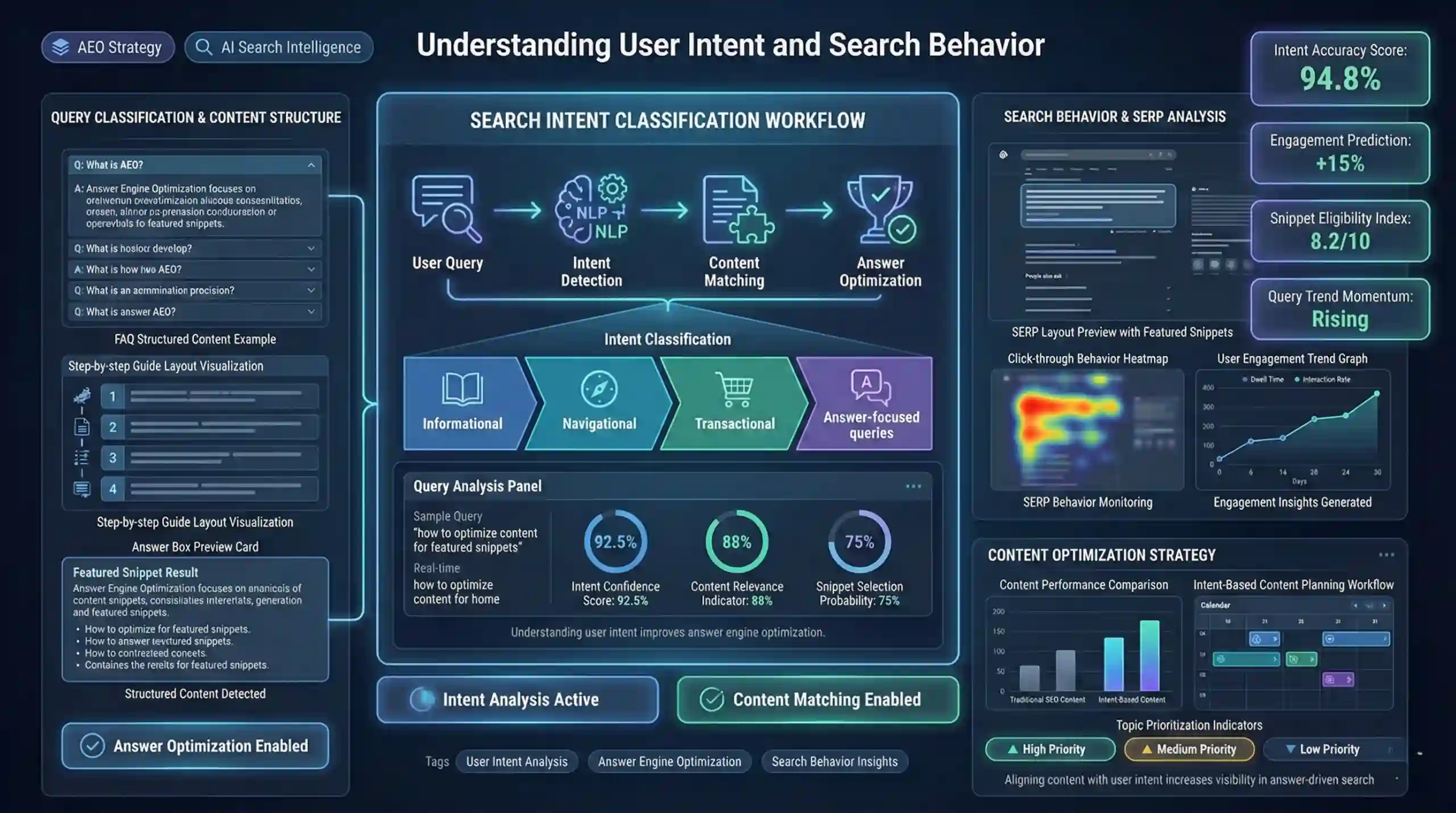
Understanding the different types of search intent is crucial. Informational queries seek knowledge (“What causes rain?”), navigational ones target specific websites (“Facebook login”), transactional involve purchases (“Buy wireless headphones”), and answer-seeking queries require quick, concise responses (“How to fix a leaky faucet?”).
Match Content with User Search Intent
Content should be crafted to meet the expectations of each query type. For answer-focused content, FAQs, step-by-step guides, and concise summaries serve best, increasing chances of being selected for snippets.
Example: For “How to bake a cake,” a structured recipe with clear steps will be more likely to be featured.
Analyze Search Behavior Patterns
Examining SERPs and user interactions, using tools like Moz and Ahrefs, reveals which content types get clicked, how users engage with answer snippets, and their preferences. This understanding guides optimization practices toward topics and formats that perform well.
4. Creating Content Optimized for Answer Engines
Develop Question-Answer Content
Content aimed at AEO must directly address common questions using natural language, clarity, and brevity. The goal is to produce authoritative answers that can be easily extracted by search engines.
Example: An article answering “What is blockchain?” with a succinct, comprehensive paragraph is more answer engine-friendly.
Structure Content Using FAQs, How-to Guides, and Listicles
Structured formats facilitate easier parsing by search engines. FAQs use question-answer pairs, how-to guides provide stepwise instructions, and listicles organize information logically.
Implement Structured Data Markup (Schema.org)
Using schema markup helps search engines understand your content’s purpose and context. Specific schemas like FAQ, HowTo, or Product markups enhance the chance of your content can be featured prominently as rich snippets.
Focus on Content Quality and Relevance
Accurate, comprehensive, and relevant content that directly answers questions increases the likelihood of earning featured snippets. Authority, clarity, and trustworthiness are essential factors.
5. Technical SEO for Answer Engines
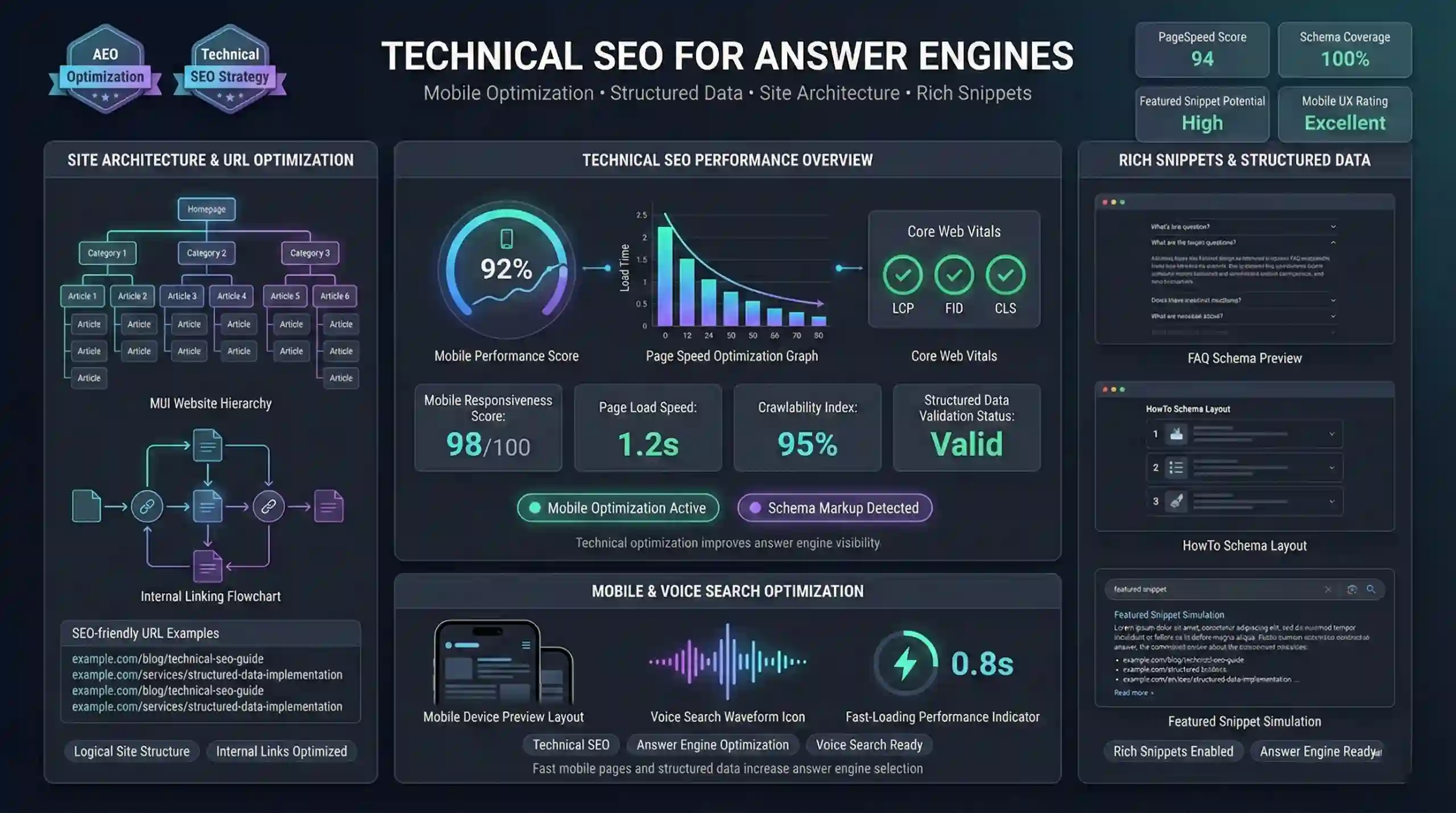
Mobile Optimization and Fast Page Loads
With the rise of voice search and answer engine features, mobile responsiveness is critical. Use tools like Google PageSpeed Insights to ensure your site loads swiftly and performs flawlessly on mobile devices, aligning with answer engine requirements.
Optimize Site Architecture
A clear site hierarchy, logical internal linking, and descriptive URLs help search engines easily crawl and understand your content, increasing the chances of being selected for answer snippets.
Use Rich Snippets and Structured Data
Adding schema types like FAQ, HowTo, Review, or Product enhances search listings with additional visuals, ratings, or question-answer boxes—fostering better answer engine visibility.
SEO-Friendly URL Structure
Descriptive, concise URLs containing relevant keywords facilitate indexing and improve trustworthiness, influencing answer engine ranking.
6. Voice Search Optimization
Incorporate Natural Language Queries
Content should mimic natural speech patterns, answering questions in conversational tones, as voice searches tend to be more colloquial compared to typed searches.
Example: Instead of “best ways to learn SEO,” optimize for “What are the best ways to learn SEO?”
Use Conversational and Long-Tail Keywords
Target phrases like “How do I start learning SEO?” or “Best methods to improve website ranking” to align with voice search queries.
Provide Direct, Concise Answers
Summaries and brief, clear answers placed at the top of content serve voice assistants reading aloud, increasing the chance of your content being selected.
Target Featured Snippets for Voice Results
By optimizing content for snippets, voice assistants often read aloud the highlighted answer, increasing exposure and traffic.
7. Content Formatting for Better Visibility
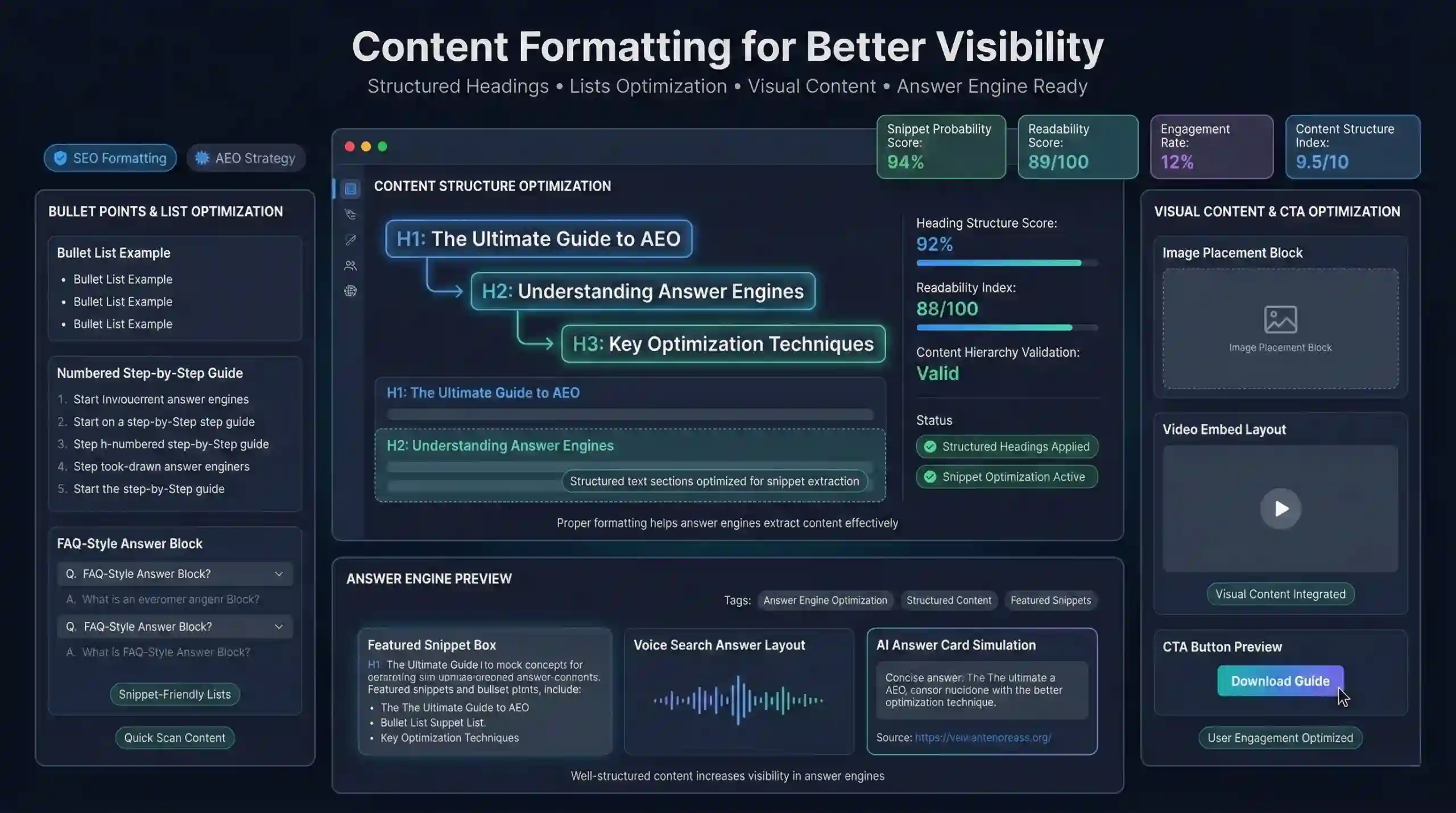
Use Structured Heading Tags (H1, H2, H3)
Organizing content hierarchically with headings helps search engines understand key sections, enabling better extraction and display.
Highlight Key Points with Bullet Points and Lists
Lists and bullet points improve legibility and are favored in answer snippets for clarity and quick scanning.
Incorporate Visual Aids
While this material is text-based, in practice, images, videos, and charts support key points and can be referenced in schema markup.
Include Clear Call-to-Action (CTA)
Effective CTAs guide user engagement, dwell time, and further interaction, indirectly supporting answer engine positioning.
8. Monitoring and Analytics
Track Progress Using Search Console and Analytics
Google Search Console provides data on impressions, clicks, CTR, and featured snippet performance, enabling assessment of AEO efforts.
Analyze Traffic Driven by Questions
Identify which questions lead to high engagement and snippet features, refine content based on these insights.
Test and Optimize Content Based on Data
Regularly update content, improve answer clarity, and adjust schema markup to optimize answer engine performance.
Adapt to Algorithm Changes
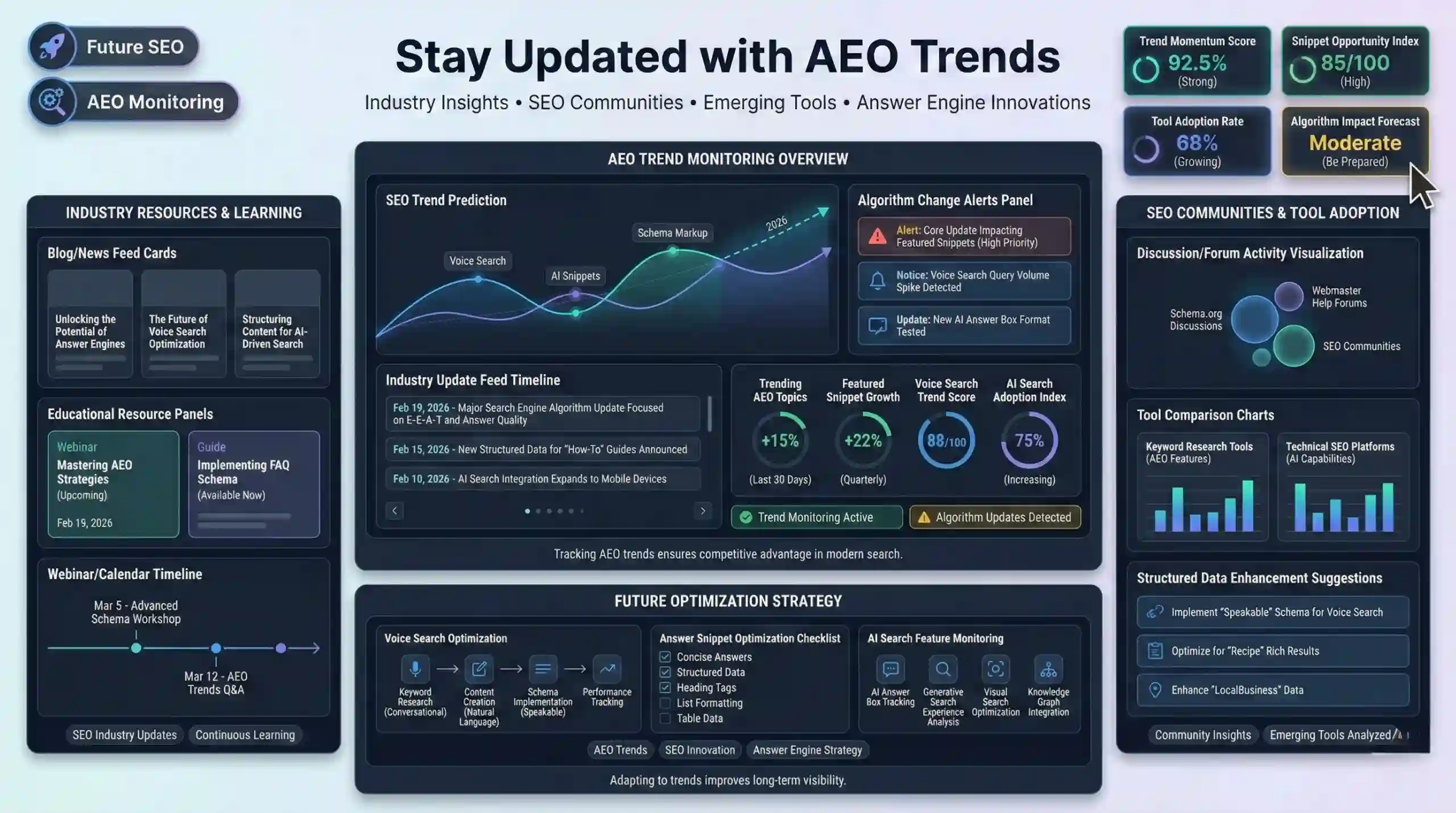
Stay updated with algorithm updates via SEO resources, adjusting strategies promptly to retain or improve visibility.
9. Stay Updated with AEO Trends
Follow Industry Leaders and Resources
Engage in Online Communities
Participate in forums, social groups, and webinars focused on SEO and AEO techniques for continuous learning.
Experiment with New SEO Tools
Adopt emerging tools that analyze answer snippets, voice search optimization, and structured data enhancements to stay competitive.
10. Practical Application and Continuous Learning
Implement Strategies on Personal Projects or Dummy Websites
Test various content formats, schema markups, and technical improvements risk-free for effective learning.
Regularly Update Content
Keep content aligned with evolving search trends, user questions, and search engine algorithm updates to maintain standing.
Participate in Webinars, Online Courses, and Certifications
Platforms such as Coursera, Udemy, and Google’s SEO fundamentals courses enhance expertise in AEO.
Summary
Mastering Answer Engine Optimization requires a thorough understanding of user intent, strategic content creation, technical excellence, and continuous adaptation. This roadmap provides a foundational framework to explore, learn, and implement AEO techniques effectively.
Practice Questions
- Explain how Answer Engine Optimization differs from traditional SEO.Answer: AEO focuses on structuring content for direct answers in snippets and voice results, whereas traditional SEO aims to rank high for keywords through backlinks, keywords, and authority.
- Why are long-tail keywords important for AEO?Answer: They are specific, mirror natural language, and are more likely to trigger answer snippets or voice responses.
- How does schema markup improve chances of being featured in answer boxes?Answer: Schema provides search engines with structured, explicit information about your content, making it easier for them to display rich snippets.
- Give an example of a question-based keyword suitable for AEO.Answer: “How to improve website loading speed?”
- What role does content relevancy play in answer engine visibility?Answer: Relevant, authoritative content precisely answering user queries increases the likelihood of earning featured snippets.
- Write a simple FAQ schema markup for the question “What is SEO?” and its answer.
{ "@context": "https://schema.org", "@type": "FAQPage", "mainEntity": { "@type": "Question", "name": "What is SEO?", "acceptedAnswer": { "@type": "Answer", "text": "SEO is Search Engine Optimization, which enhances a website's visibility in organic search results." } } } - How can mobile optimization influence answer engine rankings?Answer: Google prioritizes mobile-friendly websites because most voice searches and answer snippets are retrieved on mobile devices.
- Why is content structure important for answer engine performance?Answer: Organized, hierarchical content with clear headings and FAQs makes it easier for search engines to identify key information and display it as answer snippets.
- List two tools useful for identifying answer-driven keywords.Answer: Answer the Public and Google Keyword Planner.
- Describe how voice search optimization aligns with AEO principles.Answer: It involves optimizing content with natural language, concise answers, and long-tail queries, increasing chances of being read aloud by voice assistants.
Resources for Further Study
This material aims to provide a comprehensive, yet straightforward, understanding of Answer Engine Optimization fundamentals, suitable for beginners eager to develop foundational knowledge and practical skills for effective digital visibility.
More Courses
- Social Media Marketing course with Gen AI
- Advance Digital Marketing & SEO course with Gen AI
- Advanced Certificate in Digital Design & Marketing course with Gen AI
- Meta & Google Ads course with Gen AI