
Introduction
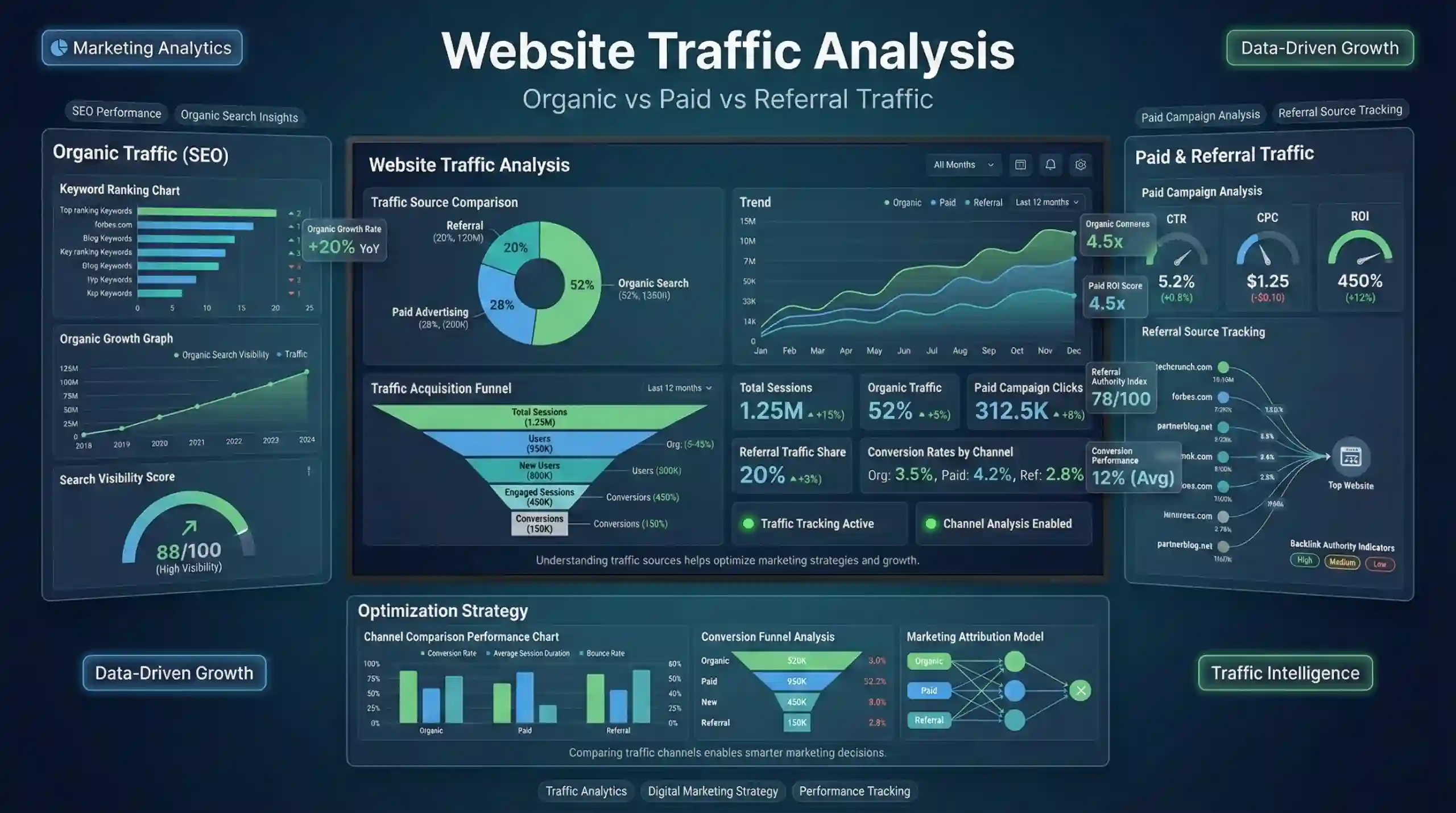
Understanding website traffic analysis is fundamental for assessing the effectiveness of digital marketing efforts. It involves examining the quantity and quality of visitors to a website, providing insights into user behavior, engagement, and conversion pathways. Accurate analysis enables marketers to allocate resources efficiently, optimize campaigns, and improve overall online presence.
The primary concepts in traffic analysis include:
- Organic Traffic: Visitors arriving through unpaid search engine results, reflecting the success of SEO strategies.
- Paid Traffic: Visitors originating from paid advertising platforms, such as Google Ads or Facebook Ads, representing immediate and targeted outreach.
- Referral Traffic: Visitors arriving via backlinks or partnerships, signifying the influence of backlink building and external content promotions.
Website analytics tools like Google Analytics and Google Search Console serve as pivotal instruments for collecting, interpreting, and utilizing traffic data. These tools facilitate tracking key metrics, understanding source contributions, and guiding strategic decisions for digital marketing success.
Fundamentals of Website Traffic Sources
Organic Traffic
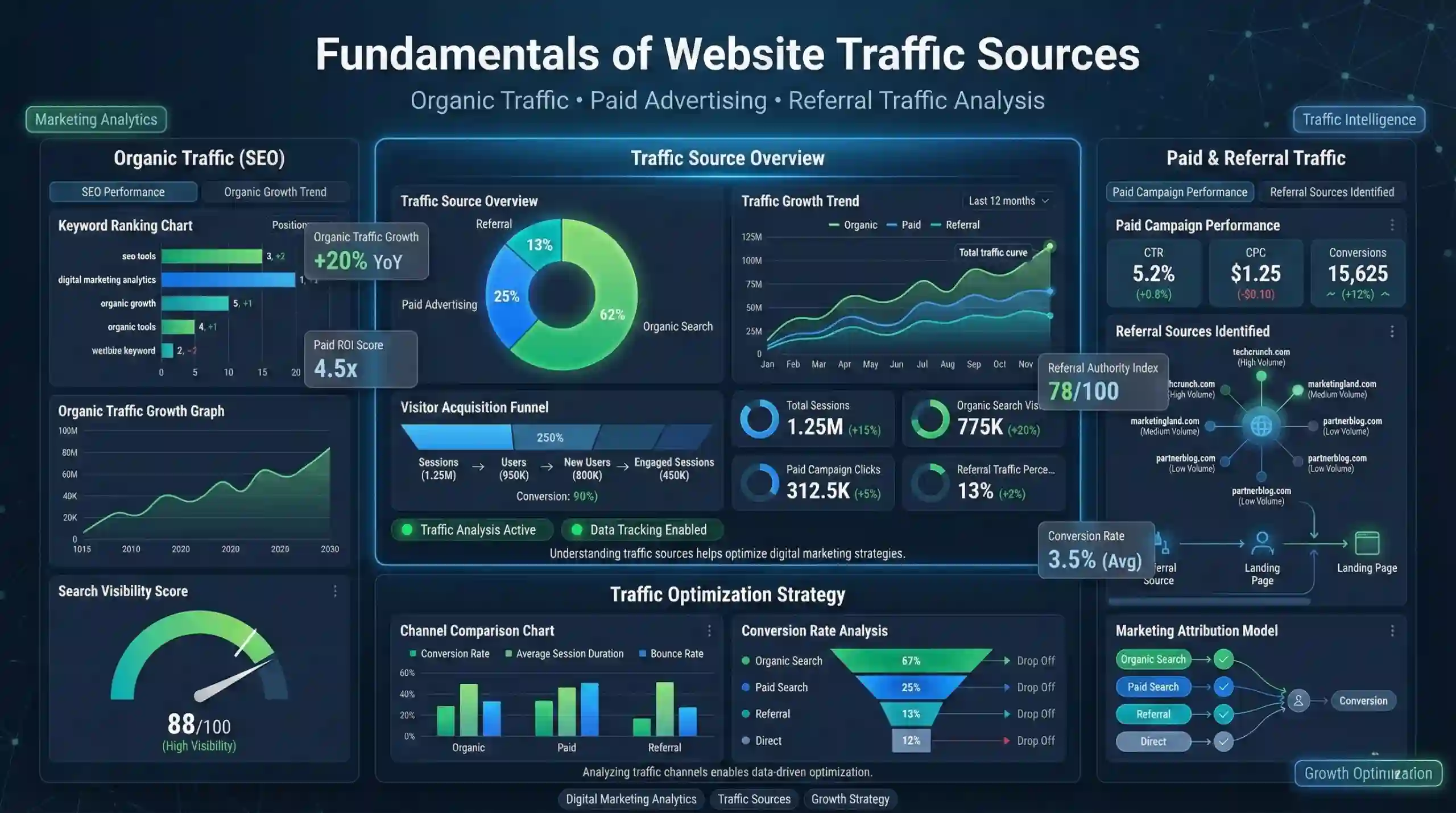
Generated via SEO (Search Engine Optimization), organic traffic provides a sustainable flow of visitors by optimizing website content for search engines. High organic traffic correlates with better search rankings, increased brand visibility, and long-term growth. For example, a blog post ranking #1 on Google for a relevant keyword can consistently attract visitors without ongoing ad spend.
Paid Traffic
Created through paid advertisements like Google Ads, Facebook Ads, or Microsoft Advertising, paid traffic allows precise targeting and quick results. Advertisers can control ad demographics, keywords, and placements to attract specific audience segments. For example, running a Google Ads campaign for a new product can generate immediate traffic and sales rather than waiting for organic rankings.
Referral Traffic
Generated through external websites linking to your content—via backlinks, guest blogging, or partnerships—referral traffic helps build domain authority and expand reach in niche communities. For instance, a popular industry blog linking to your website can drive highly targeted referral visitors eager to engage.
Setting Up Traffic Tracking
Implement Website Analytics (Google Analytics)
Set up involves adding a tracking code snippet to your website, which collects data on visitor interactions, source, and behavior. Ensuring correct installation and enabling Enhanced Ecommerce if applicable enhances data accuracy.
Configure Goals and Conversions
Define specific goals like newsletter sign-ups or purchase completions within Google Analytics. Setting up conversion tracking pixels on thank-you pages ensures attribution of transactions to appropriate channels.
Use UTM Parameters
Adding UTM parameters (e.g., campaign source, medium, name) to marketing URLs allows detailed attribution of traffic sources, especially critical for paid and referral campaigns. For example:
https://yourwebsite.com/?utm_source=facebook&utm_medium=cpc&utm_campaign=summer_saleThis data helps identify which specific campaign generated the traffic and conversions.
Analyzing Organic Traffic
Monitor Search Keywords and Landing Pages
Google Search Console provides data on search queries bringing traffic and landing pages. For example, if a particular blog post ranks high for “best digital marketing strategies,” analyzing this can reveal valuable keywords and content opportunities.
Optimize Content for SEO
Incorporating relevant keywords into meta titles, descriptions, and content enhances visibility. Improving internal linking and site structure facilitates crawling by search engines, further increasing organic reach.
Evaluate SEO Metrics
Metrics such as organic sessions, bounce rate, and average session duration help assess content relevance and user engagement. For instance, a high bounce rate on certain pages indicates content mismatch or poor user experience, warranting content restructuring.

Analyzing Paid Traffic
Explore Ads Platform Metrics
Platforms like Google Ads provide data on CTR (Click-Through Rate), CPC (Cost Per Click), and Quality Score. For example, a high CTR with low CPC suggests well-targeted ads.
Measure ROI and Conversions
Tracking conversions through conversion pixels (via tools like Google Tag Manager) links ad efforts to outcomes such as sales or sign-ups. For example, if an ad campaign results in 50 sales from a \$500 ad spend, the ROI is favorable.
A/B Testing
Testing different ad copies and landing pages helps discover the most effective combinations. For instance, changing a CTA button color might increase conversions, which can then be used universally in campaigns.
Analyzing Referral Traffic
Identify High-Quality Sources
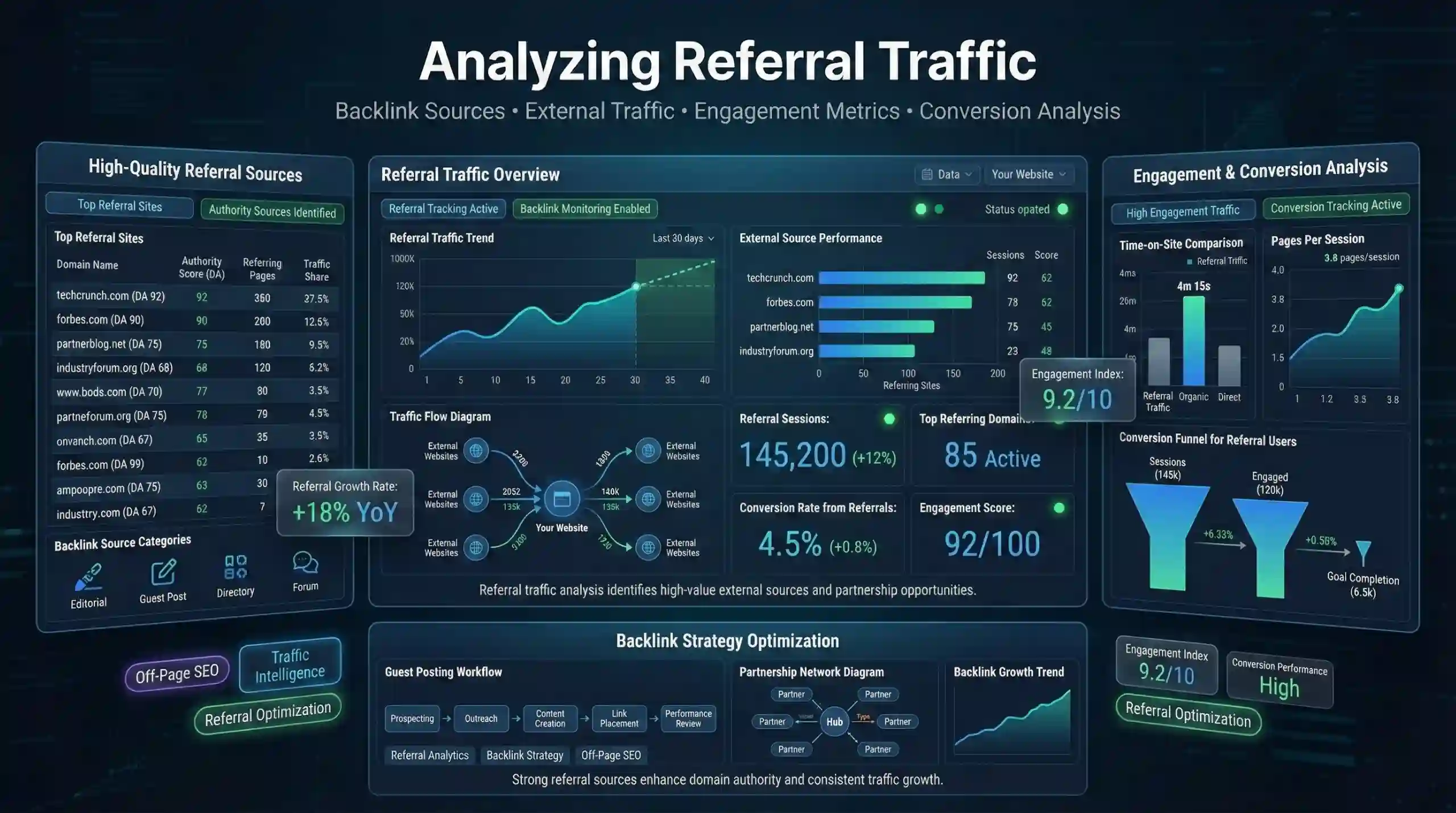
Google Analytics Referral Reports show which external sites send visitors. Recognizing top referral sites enables targeted outreach efforts.
Enhance Backlink Strategy
Building backlinks from reputable sites improves domain authority and can attract consistent referral traffic. Guest posting and partnerships serve as effective methods.
Assess Engagement and Conversion
Evaluating engagement metrics like time on site, pages per session, and conversion rate of referral visitors helps determine the quality of referral sources. High engagement indicates relevant traffic, encouraging further outreach.
Combining Data for Comprehensive Insights
Unified dashboards, such as Google Data Studio, compile multiple data sources for an overall view:
- Comparing bounce rates, goal completions, and revenue across organic, paid, and referral channels reveals which sources are most effective.
- Segmenting data by device, location, or behavior pattern offers detailed insights to refine strategies.
This holistic approach supports data-driven decision-making and continuous optimization.
Conducting SEO & Paid Campaign Audits
SEO Audits
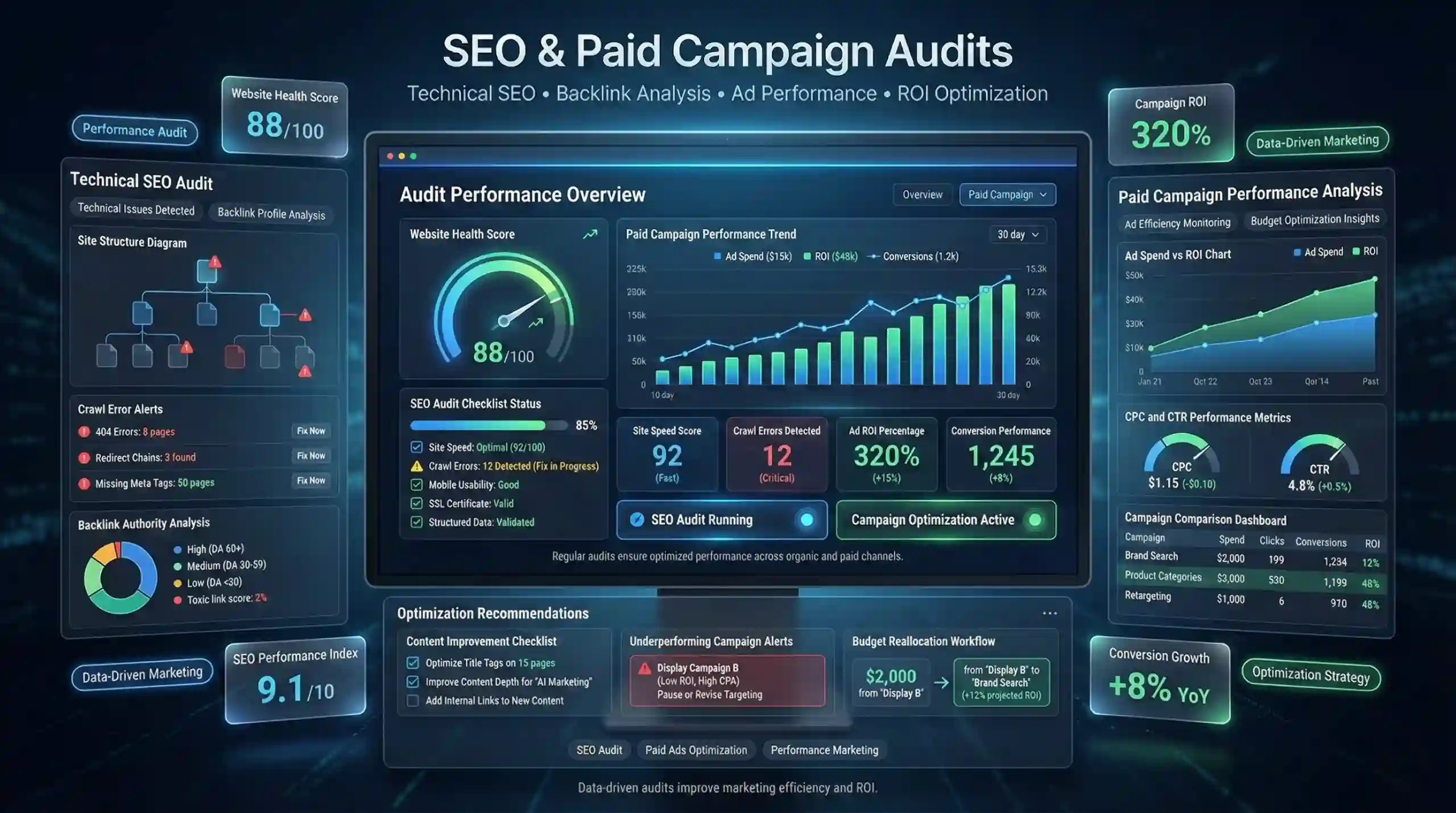
Evaluate website health via technical SEO checks (site speed, crawl errors), backlink profiles, and content relevance. Tools like Screaming Frog assist in identifying issues.
Paid Campaign Audits
Analyze ad spend efficiency, performance metrics, and creative relevance. Pause or optimize underperforming campaigns based on data insights and reallocate funds to high ROI channels.
Competitive Analysis
Studying competitors via tools like SEMrush or Ahrefs reveals their SEO and PPC strategies:
- Discover trending keywords and backlink opportunities.
- Understand competitors’ ad creatives and landing pages.
- Adjust your strategy to fill content gaps or target high-value keywords they rank for.
Staying Updated with Industry Trends
Continuous learning involves following respected blogs (e.g., Moz, Neil Patel, HubSpot), attending webinars, and engaging in digital marketing communities. Staying informed about search engine algorithm updates and new tools guarantees your approach remains current and effective.

Conclusion
Mastering website traffic analysis—including organic, paid, and referral traffic—provides the foundation for effective digital marketing. Building an understanding of SEO fundamentals, leveraging analytics tools, and making data-driven decisions enable beginners to optimize campaigns, improve rankings, and increase conversions sustainably.
Practice Questions & Code Outputs
- Explain the difference between organic traffic and referral traffic. Provide a real-world example.
- What are UTM parameters, and how do they help in campaign tracking? Show an example URL with UTM parameters.
- Describe how you would optimize a landing page to improve organic search performance.
- List three key metrics to evaluate the success of a paid Google Ads campaign.
- Given the following data: 200 visitors from a referral site, a bounce rate of 70%, and 20 conversions, calculate the conversion rate for this referral source.
- If a website’s organic traffic increases by 25% after content optimization, what could be the probable reason?
- Write a brief SQL query to retrieve all traffic sources from a database logging traffic data.
- Identify at least two methods to improve the quality of referral traffic.
- Describe how you would conduct an SEO audit for a new website.
- Suppose your paid campaigns have a low CTR but high conversion rate. Analyze what this indicates and suggest improvements.
Sample Output:
| Metric | Value | Interpretation |
|---|---|---|
| Conversion Rate | 10% | 20 conversions / 200 visitors * 100 indicates moderate efficiency of referral traffic. |
Resources for Further Learning
More Courses
- Social Media Marketing course with Gen AI
- Advance Digital Marketing & SEO course with Gen AI
- Advanced Certificate in Digital Design & Marketing course with Gen AI
- Meta & Google Ads course with Gen AI