
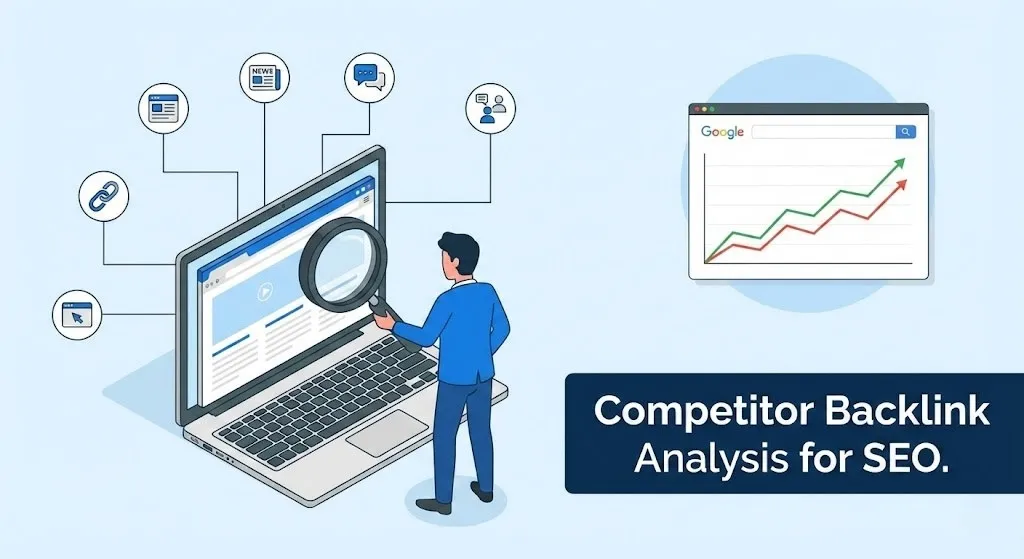
If you want your website to rank higher on Google, learning how to analyze your competitors’ backlink strategies is one of the smartest things you can do. Instead of guessing what works, you learn directly from websites that are already ranking above you. That means you save time, avoid mistakes, and build stronger SEO results — something every learner understands deeply while studying in an SEO certification course.
Many students, business owners, and marketers learn this concept in a SEO training institute , a Professional SEO course, or a Digital marketing training institute , because competitor backlink analysis is an important part of Advanced SEO training and even included in an SEO certification course. But even if you are not learning from any institute, this blog will guide you in a simple, human, and practical way 😊
⭐ What Are Backlinks and Why Do Competitors Matter?
Backlinks are links from other websites that point to your website. Google treats them like “votes of trust.”
More high-quality backlinks = more trust = better rankings 📈
Now think logically…
If your competitor is ranking above you, it means:
✔ They are doing something better
✔ Google trusts them
✔ Their backlink profile is strong
So instead of starting from zero, your goal should be:
👉 Who is linking to them?
👉 What type of content gets them links?
👉 Which strategies are working?
When you understand this, improving your SEO becomes much easier and smarter 💡
🔎 Step 1: Identify Your Real Competitors
Your real competitors are not always businesses you know personally.
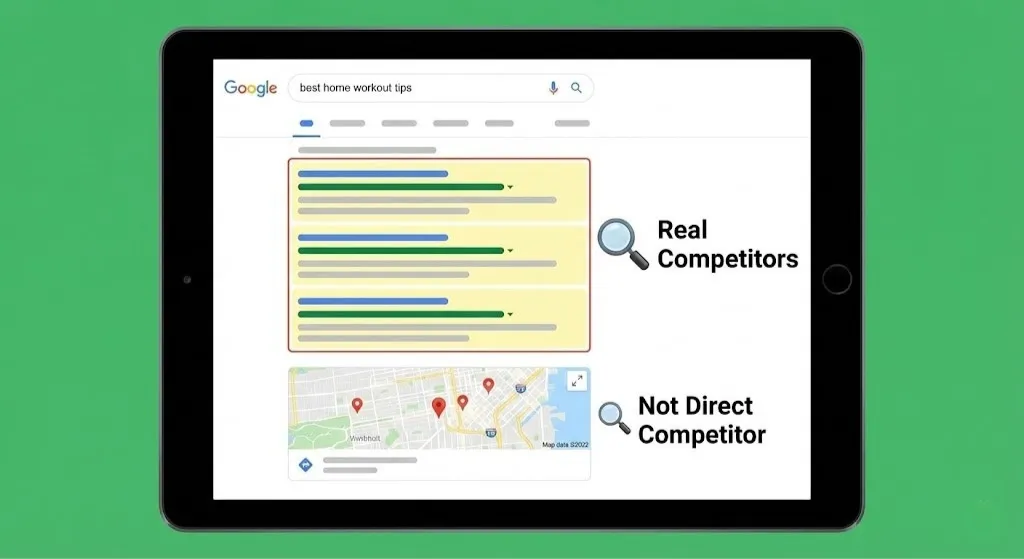
Your TRUE competitors are the websites ranking on Page 1 of Google for your target keywords.
For example:
If you have a fitness blog and you search “best home workout tips,” the websites ranking at the top are your real competitors — not the local gym near your house.
Check:
✔ Who ranks consistently?
✔ Which websites appear most?
✔ Who is directly in your niche?
These are the websites you will analyze.
🌐 Step 2: Check Where Their Backlinks Come From
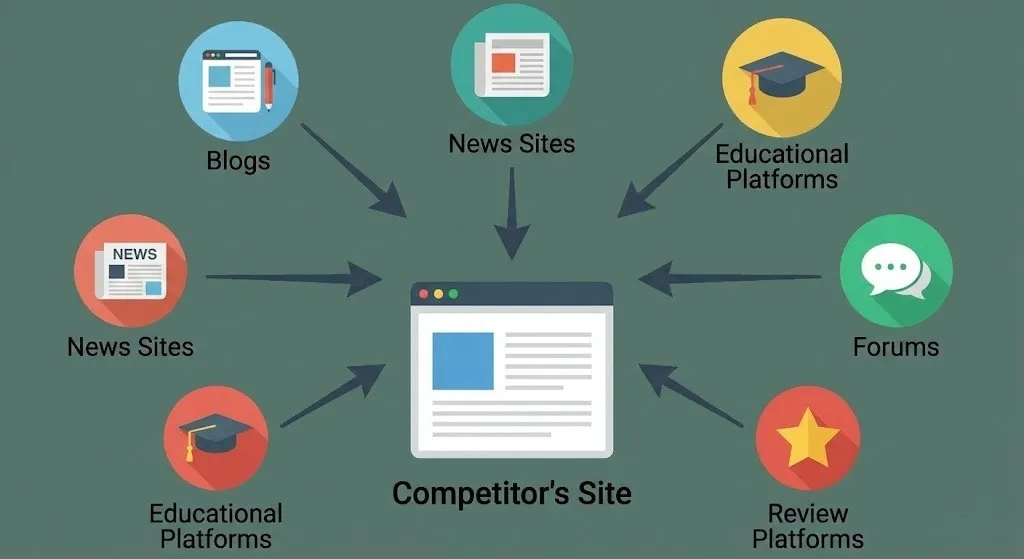
Once you know your competitors, the next step is understanding where their backlinks come from.
Most backlinks come from:
- Blogs & articles ✍️
- News websites 📰
- Educational platforms 🎓
- Forums & communities 💬
- Business directories 📚
- Review platforms ⭐
When you study their backlinks, you get ideas like:
💡 “This kind of content gets them links”
💡 “These websites support this niche”
💡 “This platform allows guest posting”
This way, you don’t guess. You learn with clarity.
🏪 Real-Life Example 1: Local Business Story
A small café in Bangalore wanted to rank for “best café near me.”
But their competitor was already ranking at the top.
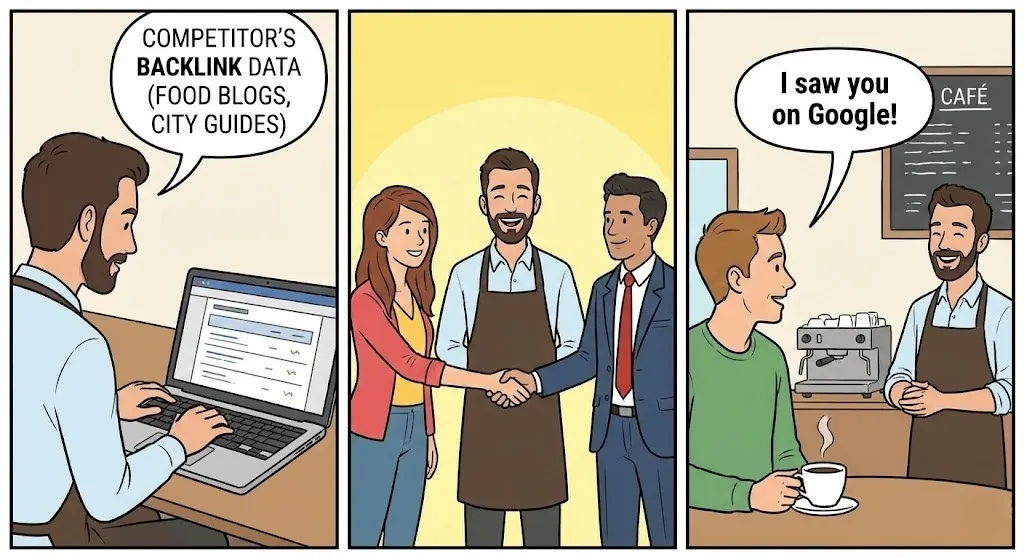
After analyzing competitor backlinks, they found:
- The competitor was listed on multiple food blogs 🍽️
- They appeared in city recommendation articles 🏙️
- They had mentions on travel websites ✈️
So the café owner:
👉 Contacted similar blogs
👉 Listed their café on local sites
👉 Collaborated with food influencers
Result?
Within 3 months, their rankings improved, website traffic increased, and customers actually walked in saying:
“I saw you on Google!” 😍
That’s the power of competitor backlink analysis.
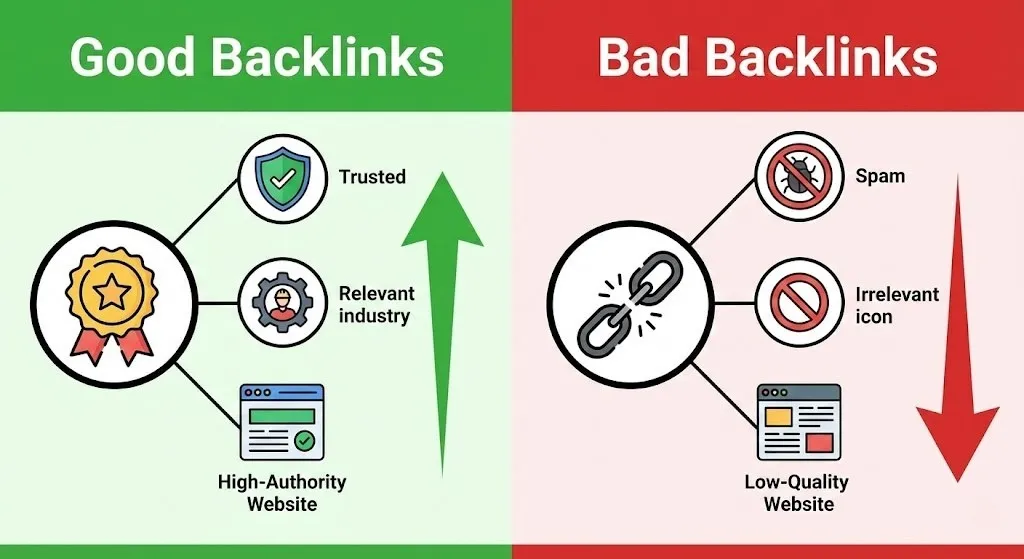
🏆 Step 3: Understand Which Backlinks Are Strong
Not all backlinks are equal.
Good backlinks come from:
✔ Trusted websites
✔ Relevant industry websites
✔ Popular platforms
✔ High authority sources
Bad backlinks come from:
❌ Spam sites
❌ Irrelevant industries
❌ Low-quality sources
So while analyzing your competitor, check:
👉 Which links look powerful?
👉 Which sites are trustworthy?
👉 Which links actually send traffic?
Focus on learning from their strongest backlinks.
👗 Real-Life Example 2: E-Commerce Brand Story
A small clothing brand wanted to compete with a well-known fashion company.
They analyzed competitor backlinks and discovered:
- Fashion magazines linked to their competitor 👗
- Bloggers posted style review articles 📝
- Influencers linked product pages 📸
So they:
👉 Sent free outfits to bloggers
👉 Collaborated with influencers
👉 Built relations with fashion platforms
Slowly, their backlinks increased, visibility improved, and so did their sales.
Competitor analysis helped them understand what truly works.
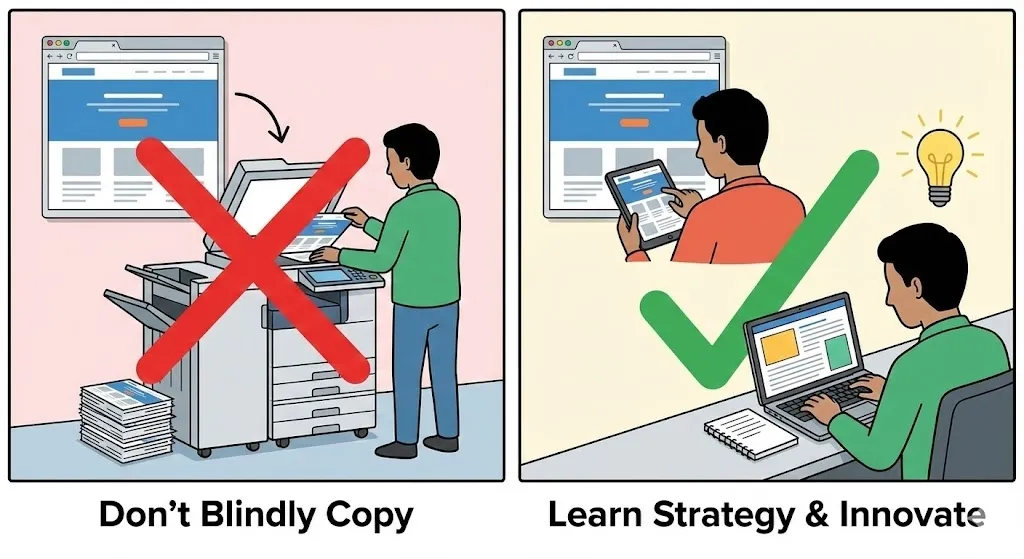
🧠 Step 4: Learn Strategy — Don’t Blindly Copy
Competitor analysis is about learning, not copying.
For example:
If your competitor gets backlinks from podcasts 🎙️
➡ Try to join relevant podcasts too
If they get links from education blogs 📚
➡ Publish helpful knowledge content
If they build links through guest posting ✍️
➡ Build meaningful relationships
But always stay original and valuable.
🎓 Real-Life Example 3: Education Industry
A ✨ Digital marketing training institute ✨ wanted to rank for “best SEO training institute.”
Competitor analysis revealed:
- Competitors got links from student review sites
- Education blogs featured them
- Skill development portals mentioned them
So they:
👉 Encouraged students to post reviews
👉 Published real success stories
👉 Associated with education platforms
Soon, they built strong backlinks and ranked higher too 🎯
This proves strategy learning works better than copying.
🧩 Bonus Tip: Keep Updating Your Strategy
SEO keeps evolving.
Competitors change strategies.
Google updates algorithms.
So competitor backlink analysis is continuous learning — something practiced in:
SEO training institute
Professional SEO course
Advanced SEO training
SEO certification course
Staying updated = staying ahead 💪
✅ Final Thoughts
Analyzing your competitors’ backlink strategies is like learning from someone who is already successful. Instead of wasting time, you directly understand:
✔ What type of backlinks work
✔ Where links come from
✔ How to build powerful links
Use the right approach, stay consistent, and keep improving.
Your rankings, authority, and traffic will grow — naturally and powerfully 🚀
Disclaimer: The images and videos used in this blog are for educational and illustrative purposes only. Some visuals may be generated using AI tools, while others are sourced from publicly available platforms. We do not claim ownership of any third-party images or videos. All rights and credits belong to their respective owners.